 Yueqing Yijin Electronics Co., Ltd.



What an Isolator Switch Is Used For in Electrical Service
An isolator switch is used to open a defined isolation path so a circuit section or piece of equipment can be separated from its electrical supply for service and inspection. If you are asking what is an isolator switch used for, the short answer is purpose, not protection: it creates a verified open state for work, not an automatic trip on overload. Below you will see that isolator switch purpose, how supply is separated from the work area, why a breaker is a different device, what infrequent manual isolation language means, and when a HD11F-250 protective opening knife switch matches the job.
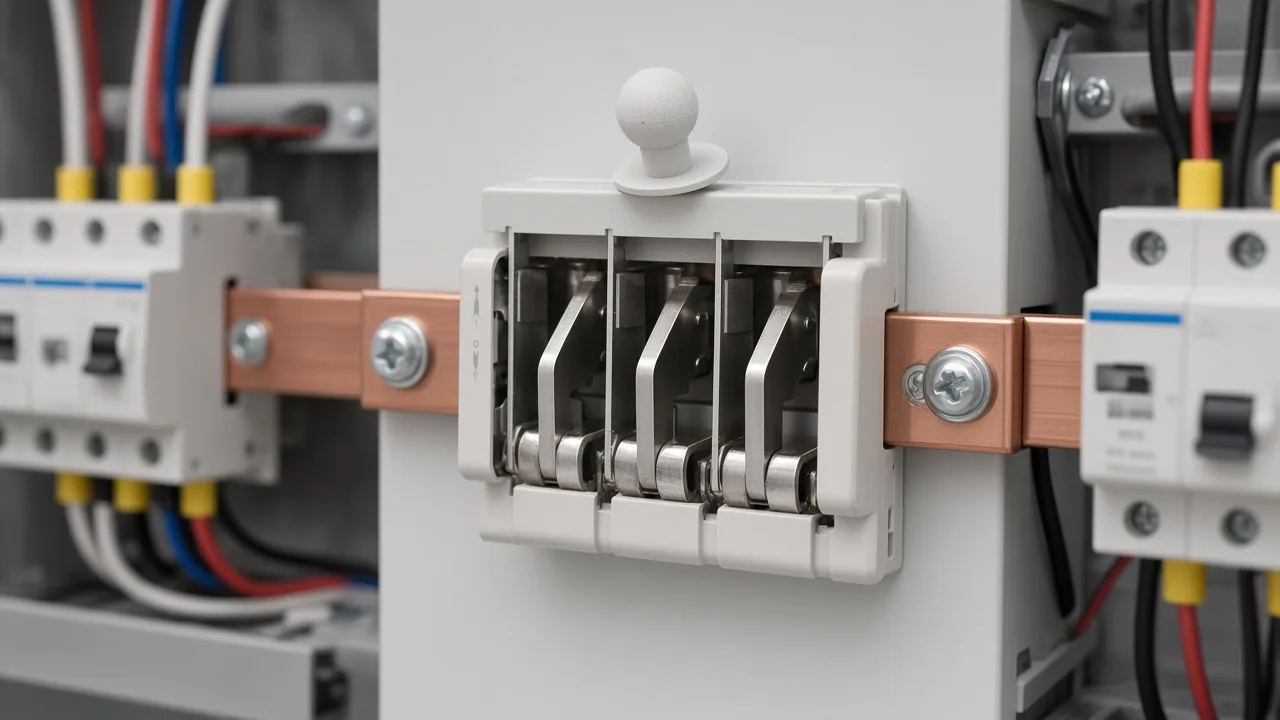
The Job an Isolator Switch Is Used For
An isolator switch is used to isolate supply from a circuit section or equipment so service can proceed.
In standards language, that job is the isolating function: cutting electrical energy away from all or a discrete part of an installation for safety reasons. In plain language, it is the deliberate “make this path dead for work” device, not the device that watches for overcurrent and trips.
US buyers often say disconnect switch for a closely related idea. The shared purpose is still isolation for maintenance or inspection, not normal day-to-day load control unless the hardware is specifically rated for that switching duty.
For a deeper form-factor definition of hinged-blade hardware, see what a knife switch is. For category browsing, start at the Isolating Switch hub.
Independent technical writing on switchgear families makes the same purpose point: a disconnector exists so a section can be separated from every source of electrical energy when the open position meets isolation requirements (Electrical Engineering Portal).
Keep that purpose label even when the catalog says “disconnect switch.” Disconnect switch isolation language and electrical isolator wording still point at the same service boundary; the enclosure style can change without changing the job.
Creating a Verified Open Path for Service
The open path is useful when you can confirm the isolation state before work.
Isolation is not only “handle moved.” The useful outcome is a verified open path: an indicated open position that meets the isolating function so a person can treat that path as separated before opening an enclosure or touching conductors downstream.
IEC 60947-3 describes a disconnector as a mechanical switching device that, in the open position, complies with the isolating function, and that is capable of making and breaking only negligible current unless another duty is declared.
In a real buying scenario, a technician does not want a vague “off” light alone. They want a clear isolation state they can confirm before service continues. That is why isolator switch purpose language keeps returning to verification, not just actuation.
Distributor education material frames the same reader need: isolators and switch-disconnectors exist so a length of circuit can be shut down and worked on safely, which is a different job from a circuit breaker’s protective trip (RS Isolators and Switch Disconnectors Guide).
Separating the Supply from the Work Area
Isolation separates electrical energy from the section or equipment under work.
The practical geography of the job matters. Supply stays on the upstream side of the open isolator; the work area is the equipment, feeder section, or enclosure that must stay separated while people inspect, adjust, or replace parts.
The isolator switch purpose is to hold that boundary, not to become the plant’s only protective device.
A procurement reader can picture a single outgoing circuit that must be dead for panel work while neighboring feeders stay in service. That is still an isolation purpose story, not a full application catalog.
Placement maps belong in where the isolator switch is located. HVAC outdoor disconnect shopping belongs in isolator switch for air conditioner.
Why Isolation Is Not Overcurrent Protection
Breakers clear overcurrent; isolators create an isolation boundary for service.
Mixing the two jobs is the most common purpose error. Overload and fault current sit with the protective device that is rated to trip.
Isolation hardware exists to establish a service boundary after the electrical path is in a state the device is allowed to open. Many designs are not intended as everyday load-break controllers or as automatic protective trips.
| Job | Typical device language | What the operator should expect |
|---|---|---|
| Isolation for service | Isolator / disconnector / isolating switch | Confirmed open path separating supply from the work area |
| Overcurrent protection | Circuit breaker / fuse | Automatic interruption on overload or short-circuit within ratings |
| Control stop | E-stop / stop circuit | Stops machine motion or control enable — not a substitute for energy isolation |
From the field: Circuit breakers trip on overcurrent; isolators do not. Source: https://www.eevblog.com/forum/projects/what-is-the-device-that-disconnects-your-solar-when-power-is-cut-from-the-grid/
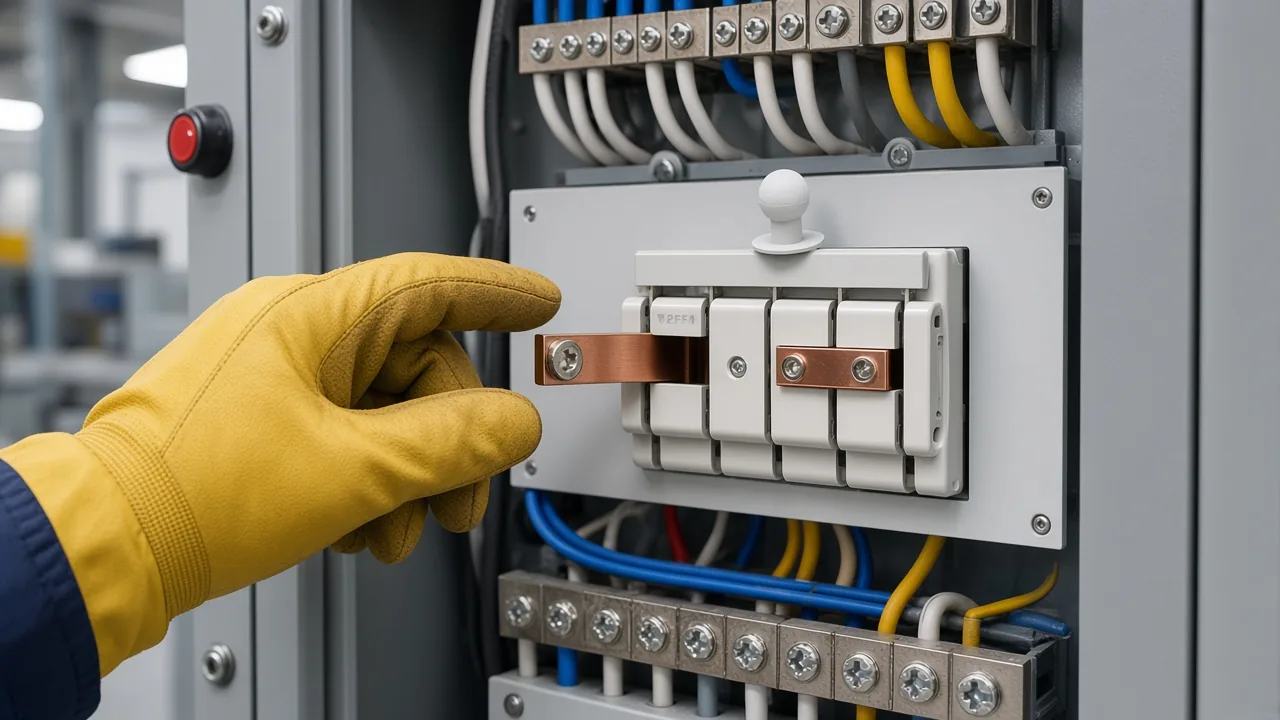
That community line is useful because it matches the isolator switch purpose without turning the page into a product review. If your question is DC-specific utilisation and load-break labeling, use what a DC isolator is rather than stretching this purpose page into a DC deep dive.
What Infrequent Manual Isolation Duty Language Means
AC-20B / no-load language means the isolation job is done when current is already off unless another rating is printed.
Purpose language and utilisation language have to stay together. IEC families distinguish disconnectors that isolate with negligible make/break current from switch-disconnectors that combine isolation with a declared load-making/breaking duty.
On many low-voltage knife isolators, the printed utilisation category tells you which job the hardware is allowed to perform.
On Yijin’s HD11F-250 protective opening knife switch, the live product page states utilisation category AC-20B and describes the series as mainly used in low-voltage distribution equipment for infrequent manual connection, disconnection, and isolation of power supply, with operation under no-load conditions. That is purpose language you can buy against: infrequent manual isolation, not continuous switching and not automatic protection.
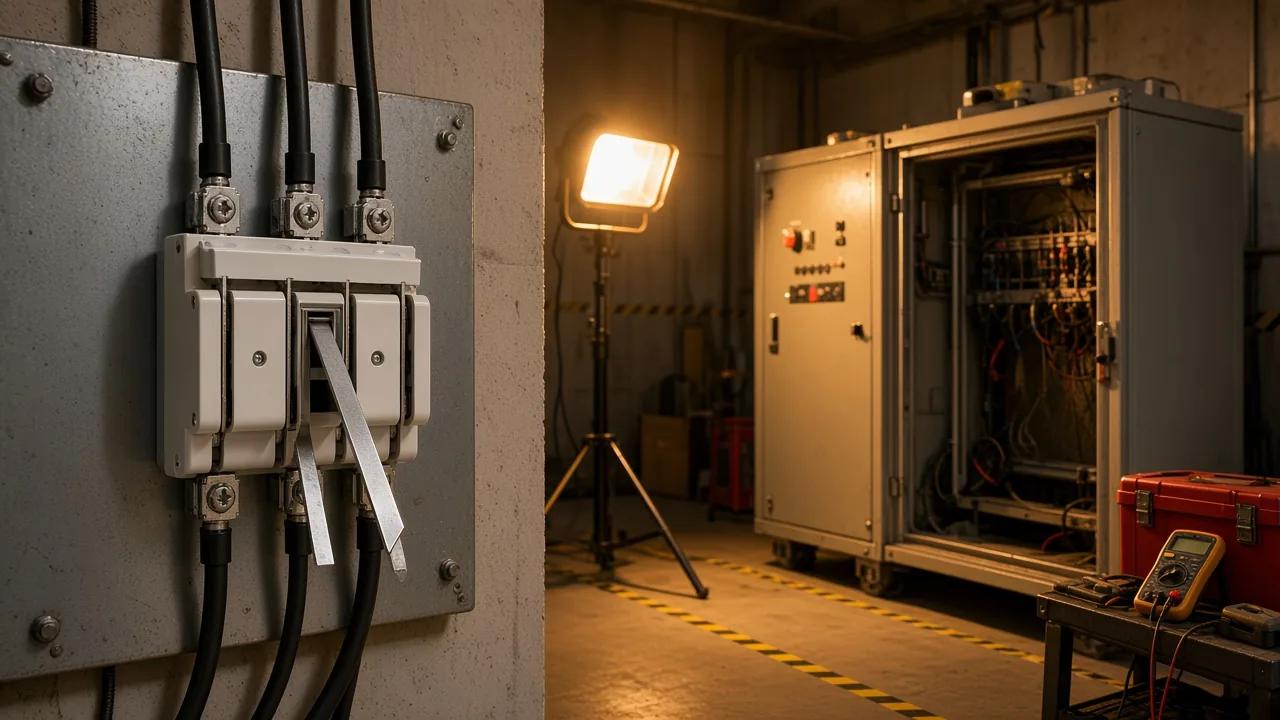
Independent power-systems education makes the same sequence clear: a disconnector’s primary purpose is isolation, and it normally operates after current has already been interrupted by another device unless a specific switching duty is assigned (Turn2Engineering on disconnectors).
Purpose Boundaries Buyers Confuse in US Practice
Disconnect/LOTO language is about energy isolation; e-stop and UL/NEC claims are different conversations.
In United States industrial talk, people often ask for a disconnect as the local isolation point used in lockout/tagout practice. That market context still points at energy isolation for maintenance.
It does not automatically mean every imported knife isolator is UL Listed or NEC-evaluated for a specific outdoor enclosure duty. No UL Listed or NEC compliance claim is made here for these Yijin SKUs.
Another common mix-up is treating an emergency stop as isolation. An e-stop can remove a control enable or stop motion, but it is not the same as opening the supply isolation boundary and securing that open state for service.
If your plant procedure requires a lockable energy-isolating device, buy and document to that isolation purpose. Do not substitute a control stop because the labels sound similar.
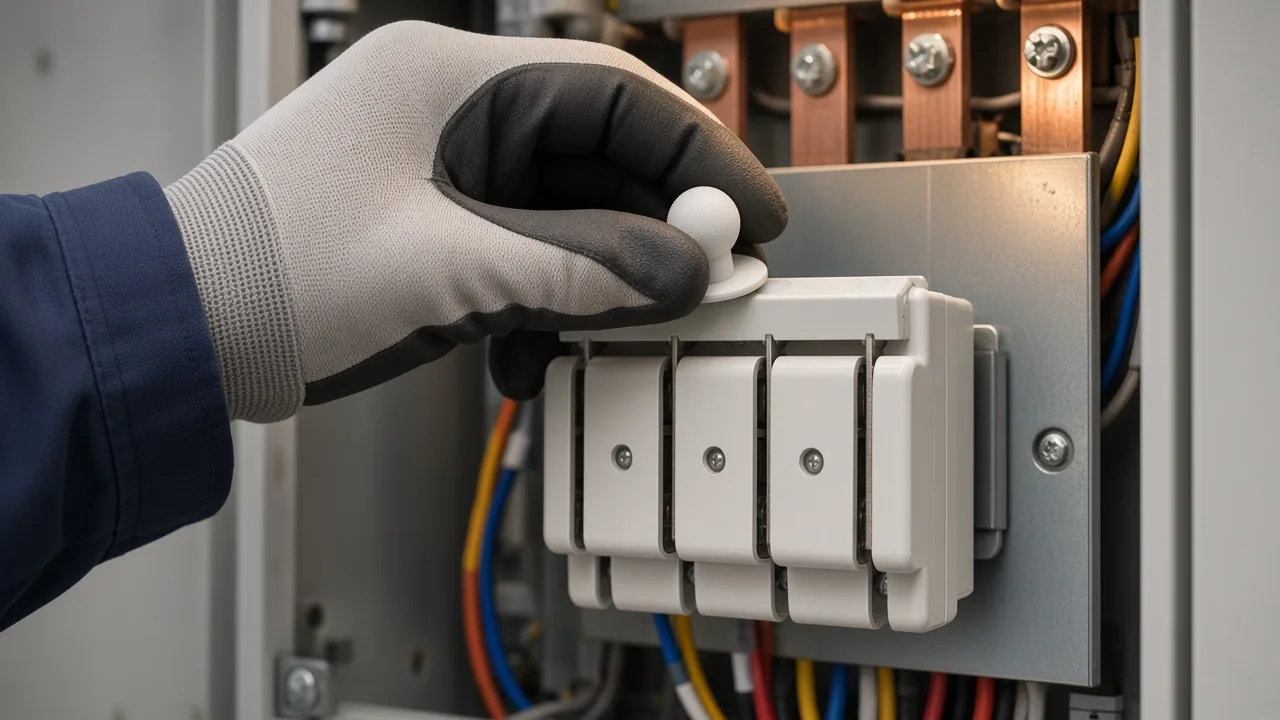
Finally, the Isolating Switch category on this site mixes knife isolators with other device families. For the isolation purpose discussed here, stay with knife isolator SKUs such as HD11F and HK18 rather than treating a WiFi breaker or reclosing protector as the answer to “used for isolation.”
Product recommendation: HD11F-250 for Isolation Purpose
Choose HD11F-250 when you need AC-20B infrequent no-load isolation on the printed AC ratings — not a breaker substitute.
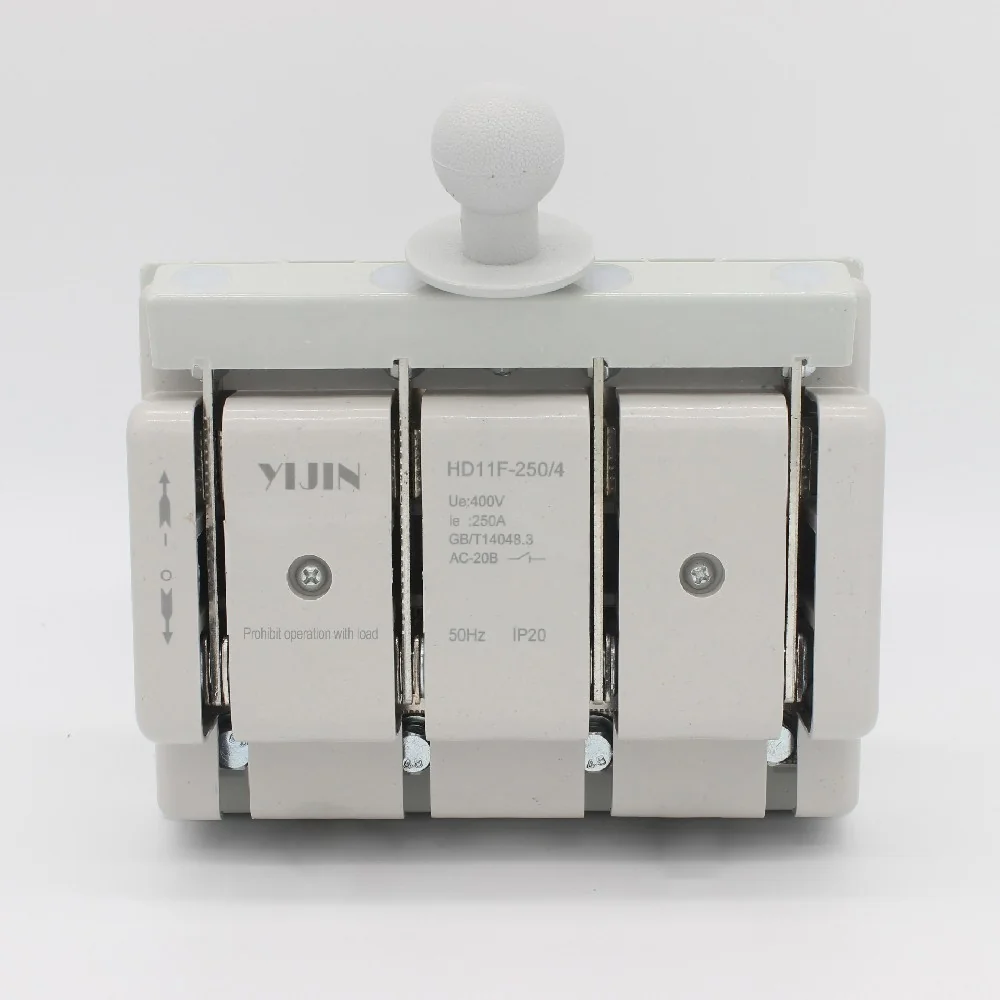
The HD11F-250 protective opening knife switch is the primary match for this isolation-purpose decision.
The live page lists rated operational voltage Ue 400 V, rated insulation voltage Ui 1000 V, conventional thermal current 250 A with rated working current options 160 A, 180 A, 200 A, 225 A, and 250 A, rated frequency 50 Hz, impulse withstand Uimp 8 kV, utilisation category AC-20B, rated short-time withstand current Icw 3 kA, and compliance with GB/T14048.3 and IEC60947-3.
Scope language on the page points to infrequent manual connection, disconnection, and isolation under no-load, with installation conditions that exclude rain or snow invasion.
| Parameter | HD11F-250 (published) | HK18-125 (published cross-link) |
|---|---|---|
| Rated operational voltage Ue | 400 V | 400 V |
| Rated working current options | 160–250 A | 63 / 80 / 100 / 125 A |
| Impulse withstand Uimp | 8 kV | 6 kV |
| Utilisation category | AC-20B | AC-20B |
| Short-time / making notes | Icw 3 kA | Icw 1.89 kA; Icm 2.69 kA |
| Standards cited | GB/T14048.3, IEC60947-3 | GB/T14048.3, IEC60947-3 |
| Working-conditions note | No rain or snow invasion | No rain or snow invasion |
You may also cross-check the HK18-125 type knife switch for photovoltaic applications when a lower current AC-20B knife isolator is enough. The word “photovoltaic” in that title is first-party naming on an AC 50 Hz / AC-20B page; it is not evidence of a UL outdoor DC-PV string isolator listing.
Do not choose these knife isolators when you need automatic overcurrent protection, declared on-load motor switching beyond the printed AC-20B duty, outdoor rain/snow exposure, or a claimed UL Listed / NEC-listed enclosed safety disconnect. Next step: open the HD11F-250 product page for the full parameter set, or return to the Isolating Switch hub for related isolator options.
FAQ
What is an isolator switch used for in plain terms?
It is used to separate a circuit section or equipment from supply so people can service or inspect that area with a confirmed open isolation path.
Why do I need an isolator if I already have a breaker?
A breaker protects against overcurrent. An isolator creates the isolation boundary used for service. Many systems need both jobs, not one device pretending to be both.
Is an isolator the same as a disconnect switch?
In US practice the words often point at the same isolation purpose. Always read the actual device rating and listing language rather than assuming the names are interchangeable hardware.
Can I use an isolator to switch normal load current?
Only if the device is rated for that make/break duty. AC-20B knife isolators such as HD11F-250 are published for no-load / infrequent isolation, not as general on-load controllers.
Is an emergency stop enough instead of isolation?
No. An e-stop is a control function. Isolation for maintenance is an energy-isolation job and is commonly secured through a disconnect/isolator point in plant procedures.
When does an HD11F-250 match this isolation purpose?
When you need infrequent manual AC isolation on the published 400 V / AC-20B / no-load ratings in conditions without rain or snow invasion, and you still provide separate overcurrent protection upstream as required by the design.
Does “photovoltaic” on HK18-125 mean it is a UL outdoor DC isolator?
No. The live HK18-125 page publishes AC-20B AC isolation language. The title word is not a substitute for UL outdoor DC-PV listing evidence.
What does AC-20B tell me about the job?
It tells you the printed utilisation duty is no-load / infrequent isolation class language for that product family. Match the job to that stamp instead of assuming load-break or protective trip capability.
References
- Differences between disconnectors, load switches, switch disconnectors and circuit breakers — Electrical Engineering Portal
- Disconnectors in Power Systems: Types & Uses — Turn2Engineering
- A Complete Guide to Isolators and Switch Disconnectors — RS
- What is the device that disconnects your solar when power is cut from the grid — EEVblog Forum
- Circuit breaker for workbench — EEVblog Forum