 Yueqing Yijin Electronics Co., Ltd.



What a DC Isolator Is and How Isolation Duty Works
A what is a dc isolator question is really a job question: it is a manually operated switch used to isolate a DC circuit so a person can confirm that path is open for service. It is not a DC breaker trip unit, and it is not automatically “safe to open” just because the handle says OFF. This B2B explainer stays on the principle: isolation versus breaking, load-break versus no-load language, poles and polarity, then an honest look at Yijin’s HK18-125 knife isolator.
What a DC Isolator Is in Plain Electrical Language
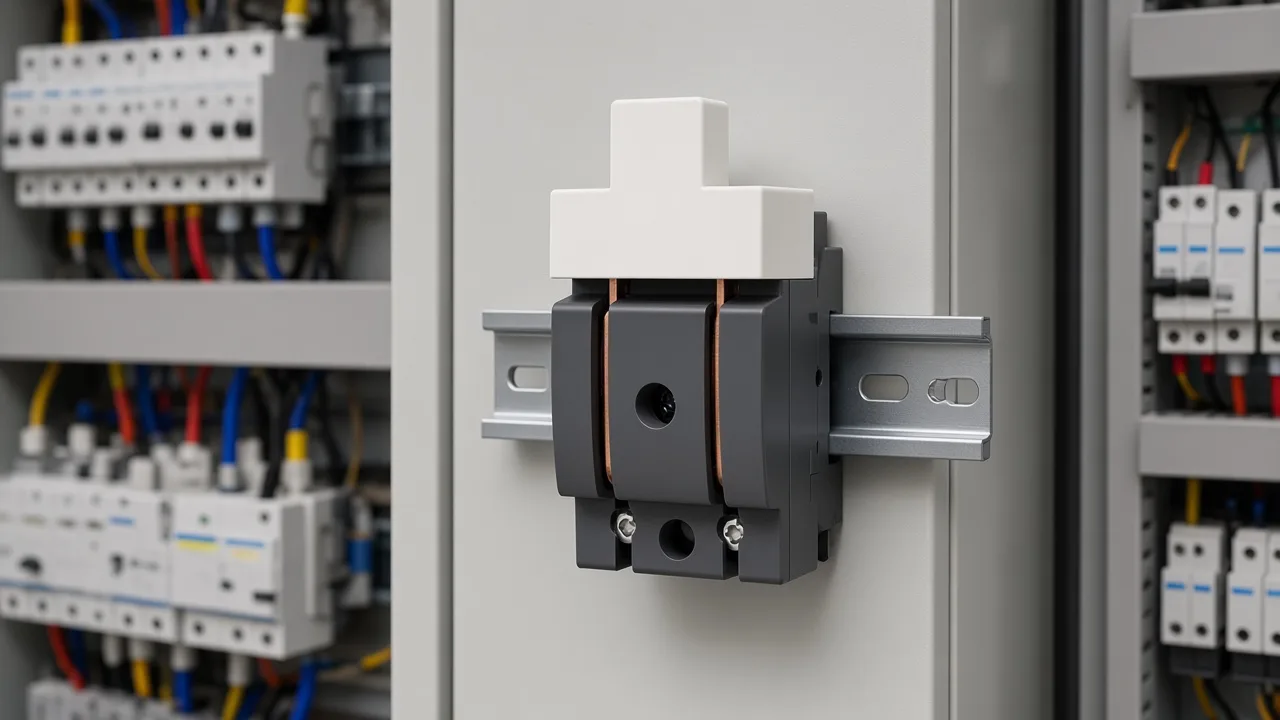
A DC isolator — also sold as a DC isolator switch or DC isolating switch — is a manual device whose job is to isolate a DC circuit for work, inspection, or shutdown, not to sense overload. When the mechanism reaches the open position, the contacts should leave a gap large enough for the rated voltage, and that open should be visible or otherwise verifiable.
Procurement language often treats “isolator” as a generic OFF handle. The useful distinction is the duty: some products only isolate after current has already been stopped, while others are built as switch-disconnectors with a declared making and breaking rating. The next sections keep those jobs separate so a catalogue name does not get copied onto the wrong task.
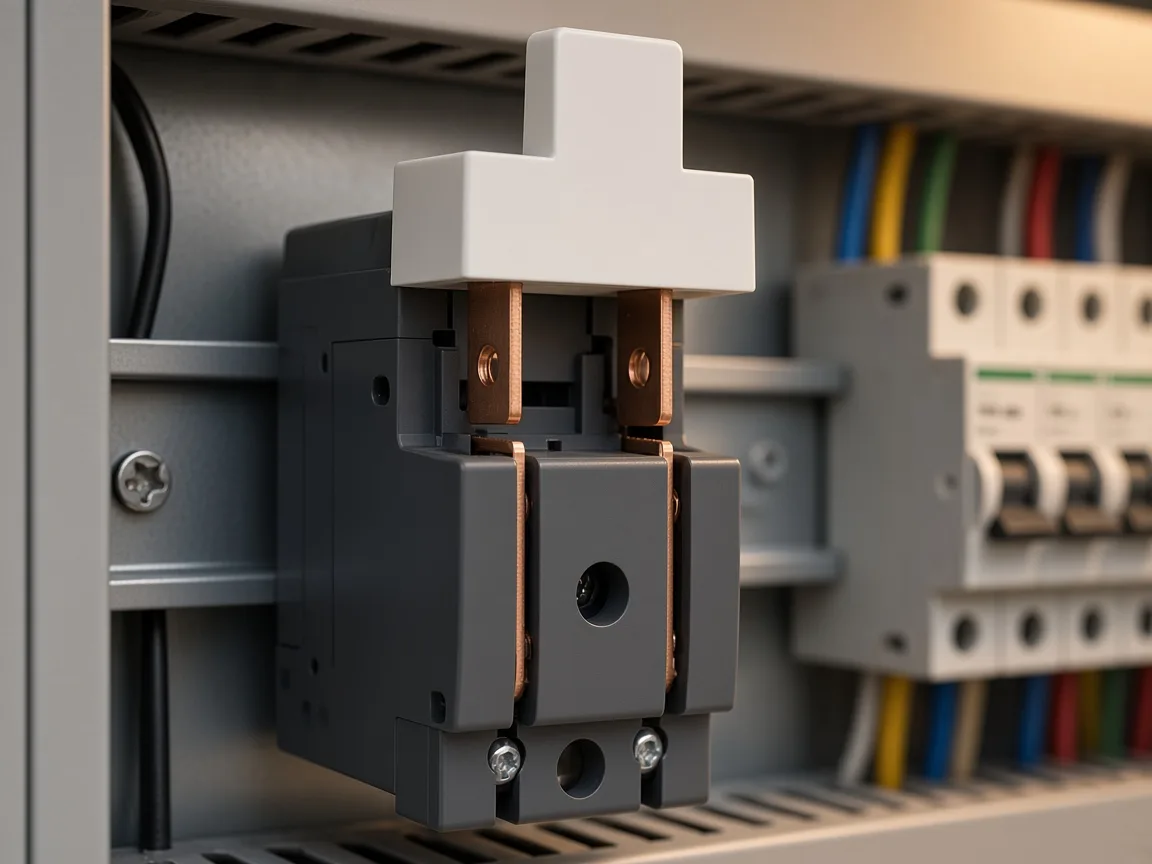
In US English B2B talk you will also hear “DC disconnect.” That phrase can mean an enclosed listed disconnect, a PV array disconnecting means, or a simple isolation handle. This page defines the isolation job itself. Path layout for solar strings and two-pole shopping live on sibling articles.
Isolation Versus Breaking: Disconnector and Switch-Disconnector
Isolation opens a verified path; breaking is a declared current-interrupting duty; a circuit breaker adds automatic overcurrent interruption. Those three jobs share a handle in the aisle, which is why the same word “isolator” causes RFQs to mix hardware.
A DC disconnector (isolator) in electrical-engineering language is there so a circuit can be de-energized for service. Typical disconnectors are off-load: they are not the device you use to kill a living DC arc.
A switch-disconnector still provides isolation, but it is also rated to make and break a stated current. A circuit breaker is designed to interrupt overload or short-circuit current automatically and then be reset. The LV product family that names switches, disconnectors, and switch-disconnectors is IEC 60947-3.
| Job | Typical hardware language | What the operator should expect |
|---|---|---|
| Isolation | Disconnector / isolator | Confirm an open after current is already negligible, unless the product is also a switch-disconnector |
| Breaking (declared load) | Switch-disconnector | Make/break the utilisation current, then remain open as isolation |
| Automatic protection | Circuit breaker | Trip on specified overcurrent; not the same as a manual isolator |
If a drawing says “isolator” and the buyer hears “it will trip,” the RFQ is already wrong. Pair isolation hardware with whatever protective devices the circuit actually requires.
Load-Break Versus No-Load Language on the Device
Open under load only if the utilisation category says the device may make and break that current. Commercial “DC isolator” labels often hide that split.
IEC teaching for PV switch-disconnectors uses categories such as DC-PV0, DC-PV1, and DC-PV2. DC-PV0 is opening and closing when no current is flowing — a disconnector duty, not a make/break rating.
DC-PV1 covers opening and closing single strings or circuits where significant overcurrent is not expected. DC-PV2 covers circuits where significant overcurrent and current in both directions may occur. Those labels are education for reading a genuine DC-PV device; they are not a stamp to invent onto every photovoltaic-named knife.
| Label you might see | What it is saying | What it is not saying |
|---|---|---|
| DC-PV0 | Isolation with no current flowing | Safe load-break on a live string |
| DC-PV1 / DC-PV2 | Declared PV make/break duties | Automatic overload trip |
| AC-20B | No-load isolation on the AC utilisation printed for that product | Outdoor DC-PV string isolator listing |
| “DC isolator” on a brochure | Marketing shorthand | Proof of any one of the rows above |
From the field: Installer threads treat most DC isolators as manual isolation, with no automatic cut-off when a fault appears — so swapping a breaker for an isolator (or the reverse) is a job mix, not a synonym. Source: r/SolarPakistan discussion.
If the datasheet is silent on making and breaking, treat the handle as isolation after another device has already stopped the current.
Why Direct Current Makes the Arc Job Different
DC has no AC-style zero crossing, so the Direct current arc does not get a free pause every half-cycle. On 50 Hz AC, voltage crosses zero every 10 milliseconds, which helps an arc collapse. Direct current stays one way, so contacts that part under load see a stronger, longer arc unless the product is built and rated for that duty.
That is why a DC isolator switch and an AC isolation knife are not interchangeable by ampere number alone. Extra contacts or poles on DC hardware often exist to stretch and cool that arc, not because someone wanted a prettier catalogue photo. IET guidance on DC switch-disconnectors walks the same physics before it talks PV string maths.
None of this is a lab report from our bench. It is the reason utilisation categories exist: so “OFF” is not treated as a universal permission to open a live DC feeder.
Poles and Polarity: What the Count Is For
Poles count how many conductors open together; polarity and series poles are about opening the DC path, not a shopping matrix. A 2-pole block that opens positive and negative at once is a different idea from a 1-pole AC lighting breaker that leaves a grounded conductor untouched.
On ungrounded or high-voltage DC, field talk often wants both live conductors opened because a ground fault can sit on either pole. Series-linked poles show up when one air gap is not enough for the DC voltage being broken.
Those are principle statements. They are not a substitute for the 2-pole product-family article that walks SKU ampere bands and series links.
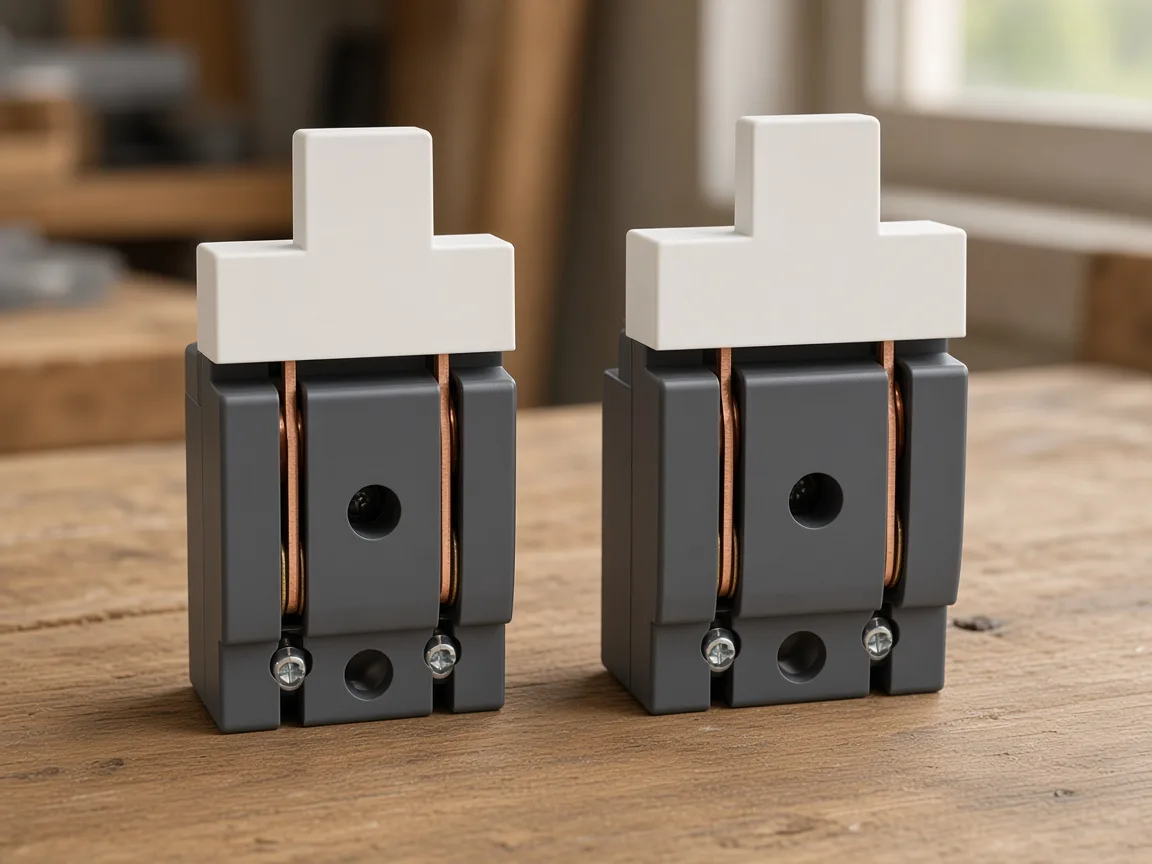
Polarity-sensitive DC breakers are a third story: some protective devices care about current direction. An isolator’s pole count still does not give it a trip curve. If you came here from a 2-pole RFQ, finish the definition here, then use the 2-pole DC isolator switch page for family geometry.
Choose an HK18-125 Knife Isolator for Isolation Duty
Choose the HK18-125 knife isolator when you need a compact knife for infrequent manual isolation on the duty that page actually prints — not when you need a listed outdoor DC-PV string isolator or a DC breaker.
The live HK18-125 page states AC 50 Hz, rated voltage up to 400 V, and a 6 kV impulse figure. Utilisation category is AC-20B.
Current options are 63 A, 80 A, 100 A, and 125 A in 2P, 3P, or 4P. Installation notes say no rain or snow invasion. The product family cites GB/T14048.3 and IEC60947-3.
“Photovoltaic” in the title is not a printed DC-PV1, DC-PV2, DC-21B, IP66, or UL Listed row on that page.
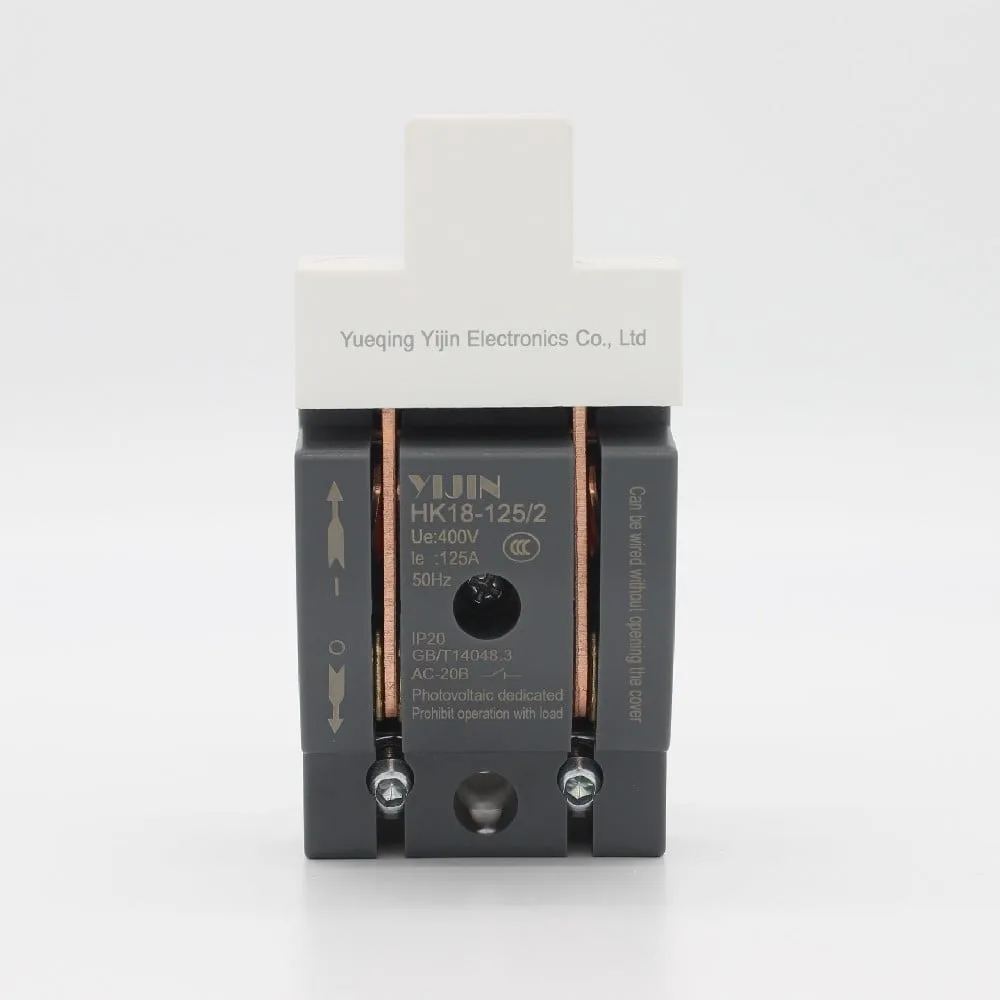
The table below reprints only the isolation duty the HK18-125 page supports.
| Printed on HK18-125 | Use that as | Do not stretch it to |
|---|---|---|
| AC-20B | No-load isolation language | Load-break on a live DC string |
| Up to 400 V AC, 50 Hz | The AC circuit class on the page | A 1000 V DC PV Voc design |
| 2P / 3P / 4P | How many poles the knife offers | Proof of a DC-PV utilisation stamp |
| No rain or snow invasion | Protected-bay install | Outdoor IP66 rooftop isolator |
Skip HK18-125 when the project needs automatic overcurrent protection, a listed US enclosed disconnect, or an outdoor DC-PV switch-disconnector with a printed DC utilisation. For string-path placement after you already understand the definition, use DC isolator for solar panels. The isolating-switch hub remains Yijin’s isolating switch category.
This is not a hands-on review. No switching test was run for this article.
FAQ
What is a DC isolator switch?
It is a manually operated DC isolator switch used to isolate a DC circuit so the open can be confirmed for service. It does not automatically trip on overload.
Is a DC isolator the same as a DC circuit breaker?
No. An isolator is a manual isolation device. A circuit breaker is built to interrupt specified overcurrent automatically.
Some breakers can also serve as a disconnecting means when their listing allows it; that still does not turn an isolator into a trip unit.
Can you open a DC isolator under load?
Only when the utilisation category and datasheet give a make/break duty for that current and voltage. A no-load / DC-PV0 / AC-20B style isolation device is meant to open after current is already negligible.
Why do DC isolators often use two poles?
Two poles open both DC conductors together, which matches ungrounded or either-pole fault talk. Extra poles can also be series-linked to stretch a DC arc.
Pole count is not a substitute for overcurrent rating.
Does a DC isolator protect against overload?
No. Manual isolation has no trip curve. Overload and short-circuit still need fuses, breakers, or other protective devices the circuit requires.
What is the difference between a disconnector and a switch-disconnector?
A disconnector provides isolation, typically off-load. A switch-disconnector still isolates, and it is also rated to make and break declared current.
Why is interrupting DC harder than interrupting AC?
AC at 50 Hz crosses zero every 10 milliseconds, which helps quench an arc. DC does not, so contacts that part under load must be built and rated for a sustained arc.
Does “photovoltaic” on HK18-125 mean it is a listed outdoor DC-PV isolator?
No. The live HK18-125 page prints AC-20B isolation on AC up to 400 V, with no rain or snow invasion. It does not print DC-PV1/DC-PV2, IP66, or UL Listed outdoor string-isolator rows.