 Yueqing Yijin Electronics Co., Ltd.


Where Is the Isolator Switch Located? A Placement Map
Where is the isolator switch located depends on which isolation job you mean: a main isolator near the meter or service panel, an equipment-local isolator beside the load, or a PV DC isolator near the array or inverter. This guide maps those roles, shows how to recognize the device, and checks placement before you buy an AC-20B knife isolator for a protected isolation point.
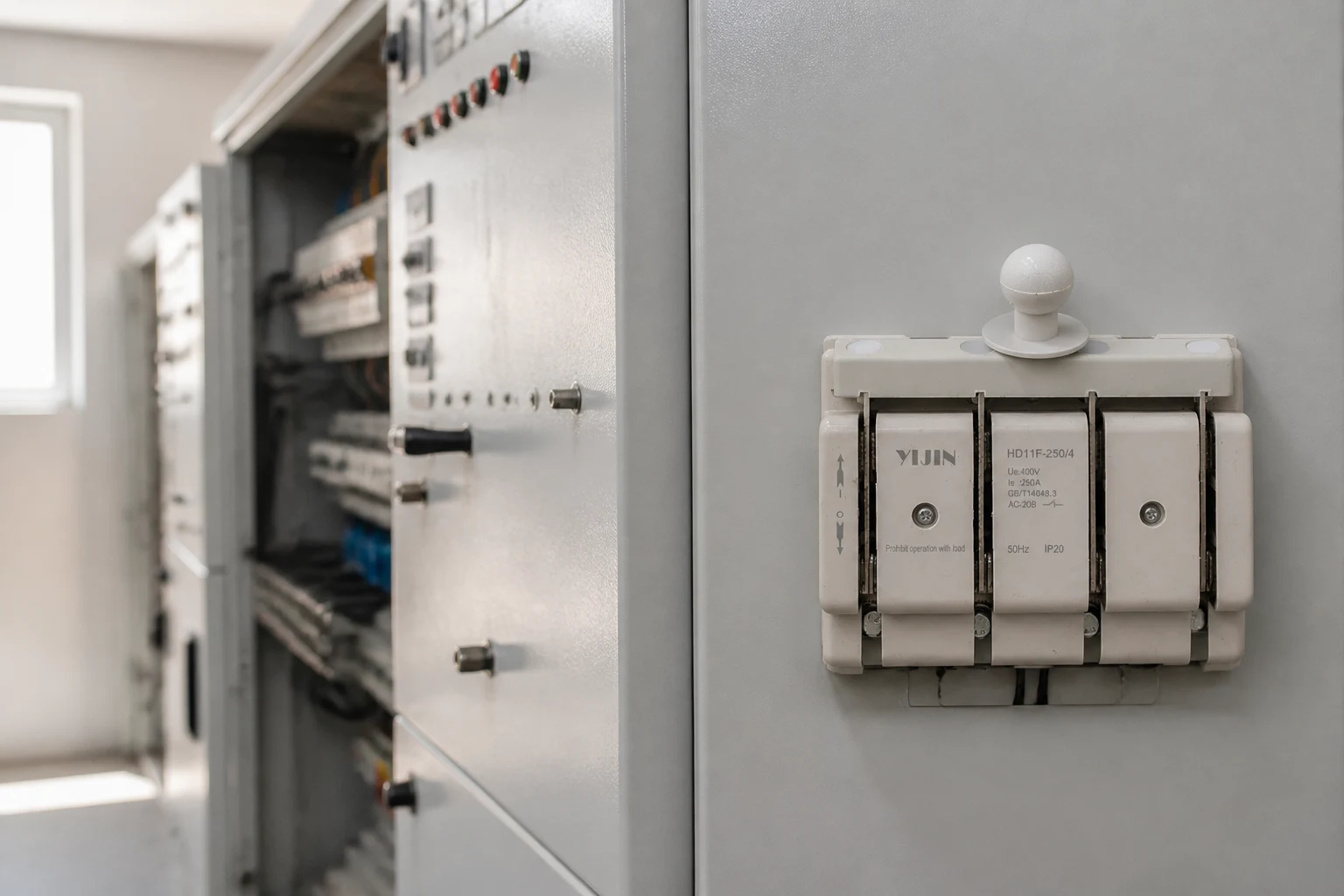
Isolator Location Map by System Role
Look by role first: main supply near the meter or panel, equipment-local beside the machine, and PV DC near the array or inverter.
Search results for isolator switch location mix those jobs into one phrase. A car battery isolator under a seat is not the same device as a distribution isolating switch, and a WiFi breaker in a mixed catalog is not the answer either.
| Role | Typical place to look | What to verify on site |
|---|---|---|
| Main isolator | Beside the electricity meter or at the main switch / consumer unit / service panel | Labeled main isolation; clear ON/OFF; whole-installation shutoff path |
| Equipment-local isolator | On the wall beside or above the appliance, machine, or outdoor equipment | Position makes the purpose obvious, or a durable label names the load |
| PV DC isolator | Near the solar array entry, combiner area, or adjacent to the inverter on the DC side | DC rating, access path, and local code/rapid-shutdown rules for that system |
| US HVAC disconnect | Within sight of and readily accessible from the outdoor unit | Enclosure rating for outdoors; ampacity from the nameplate — different shopping class from indoor knife isolators |
For a main isolator, electricians and homeowners usually start at the meter cabinet or the main panel. Many installations use a separate gray or black on/off enclosure next to the fuse box or consumer unit.
For an equipment-local isolator, stand at the equipment and look for a dedicated isolation device for that load. Boiler, cooker, fan, and similar circuits often carry a local isolator so service does not force a whole-panel outage.
For a PV DC isolator, installers commonly place isolation on the DC side near the modules’ entry point or next to the inverter so maintenance can open that path without guessing. That placement is a system design choice, not a license to treat every AC knife switch as an outdoor PV disconnect.
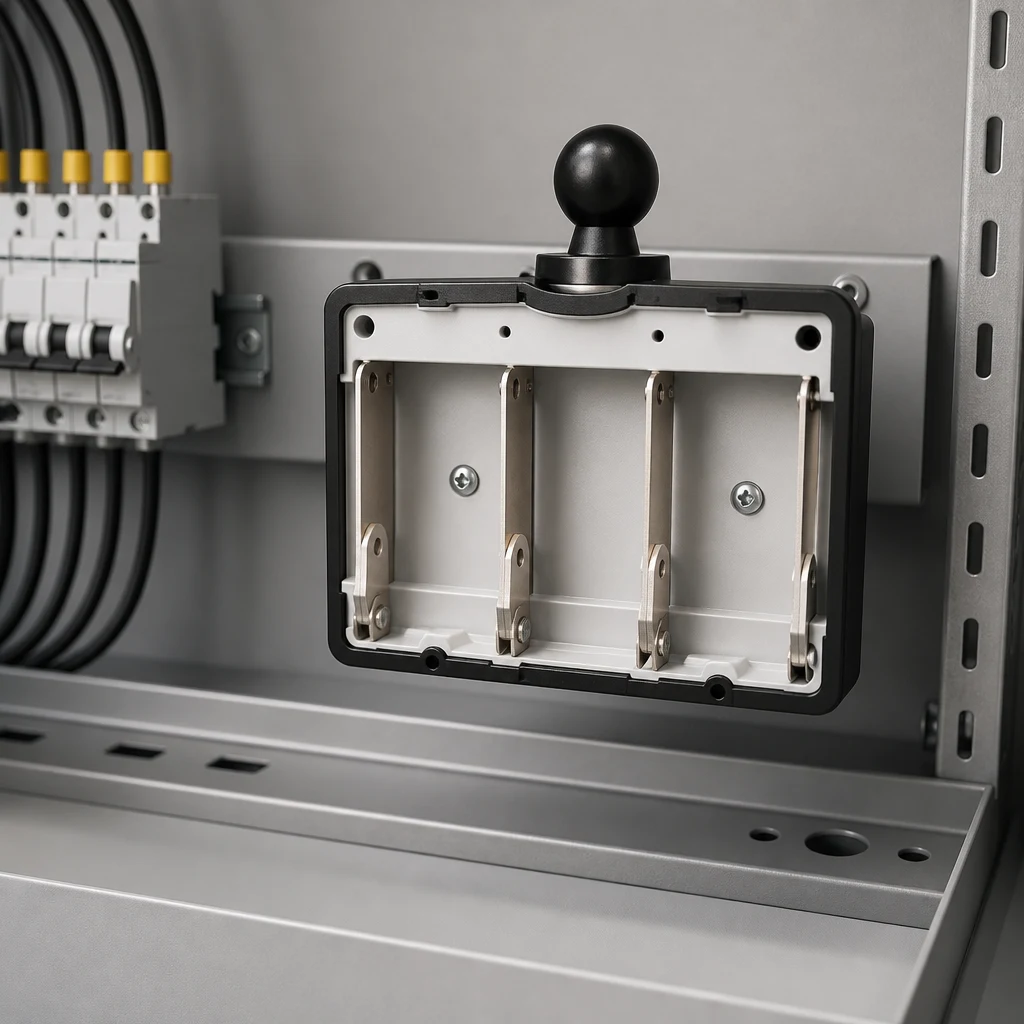
What an Isolator Switch Looks Like in the Field
Expect a dedicated isolation device with a clear open/closed state—not every breaker handle—and a knife switch when that form factor is used.
A main isolator often looks like a compact enclosure with a rotary or toggle handle marked ON/OFF. It sits apart from ordinary lighting branch breakers even when it shares the same cupboard.
An equipment-local isolator may be a double-pole wall switch, a fused spur style isolator, or an enclosed disconnect beside outdoor equipment. The common cue is that the device is meant for that load, not for every circuit in the building.
A knife switch shows hinged blades that seat into jaws. That visible open helps crews confirm isolation when the product is designed for that form. Open knives also remind operators that load-breaking arcs are a real hazard if the duty rating forbids on-load opening.
Do not identify an isolator only by color or by “big handle.” Confirm the label, the circuit it feeds, and whether the device is rated for isolation versus automatic overcurrent tripping.
Placement Rules: Findable, Accessible, and Labeled
Place the isolator so its purpose is obvious by position or durable marking, and so workers can reach it for safe isolation.
Professional wiring education on isolation for mechanical maintenance states that devices for switching off shall be clearly identified by position or durable marking. If the isolator sits away from the equipment, durable marking is what keeps the “where” answer usable under time pressure.
Accessibility is the second rule. Lockout/tagout practice treats energy-isolating devices as tools authorized people must reach before work: the isolation point has to be somewhere they can apply isolation. A switch behind stacked crates fails that job even if the one-line diagram looks neat.
For US air-conditioning equipment, field practice and NEC education language expect a disconnecting means within sight from and readily accessible from the equipment. Forum threads still argue porch headroom, working space, and whether a remote panelboard can serve when it also feeds other loads. Treat that as HVAC disconnect practice—not as proof that an indoor IEC knife switch is an outdoor HVAC disconnect.
Isolating switch placement inside a panelboard or distribution enclosure is a different decision. Keep clearances, polarity, and enclosure integrity per the manufacturer’s install notes. Do not bury the handle behind hinged doors that stay locked during maintenance windows.
Important: If the isolator is not obvious by position next to the equipment, add durable marking that names the load. Remote, unlabeled isolation is a findability failure waiting for the next service call. — IET Wiring Matters: Isolation and switching for mechanical maintenance
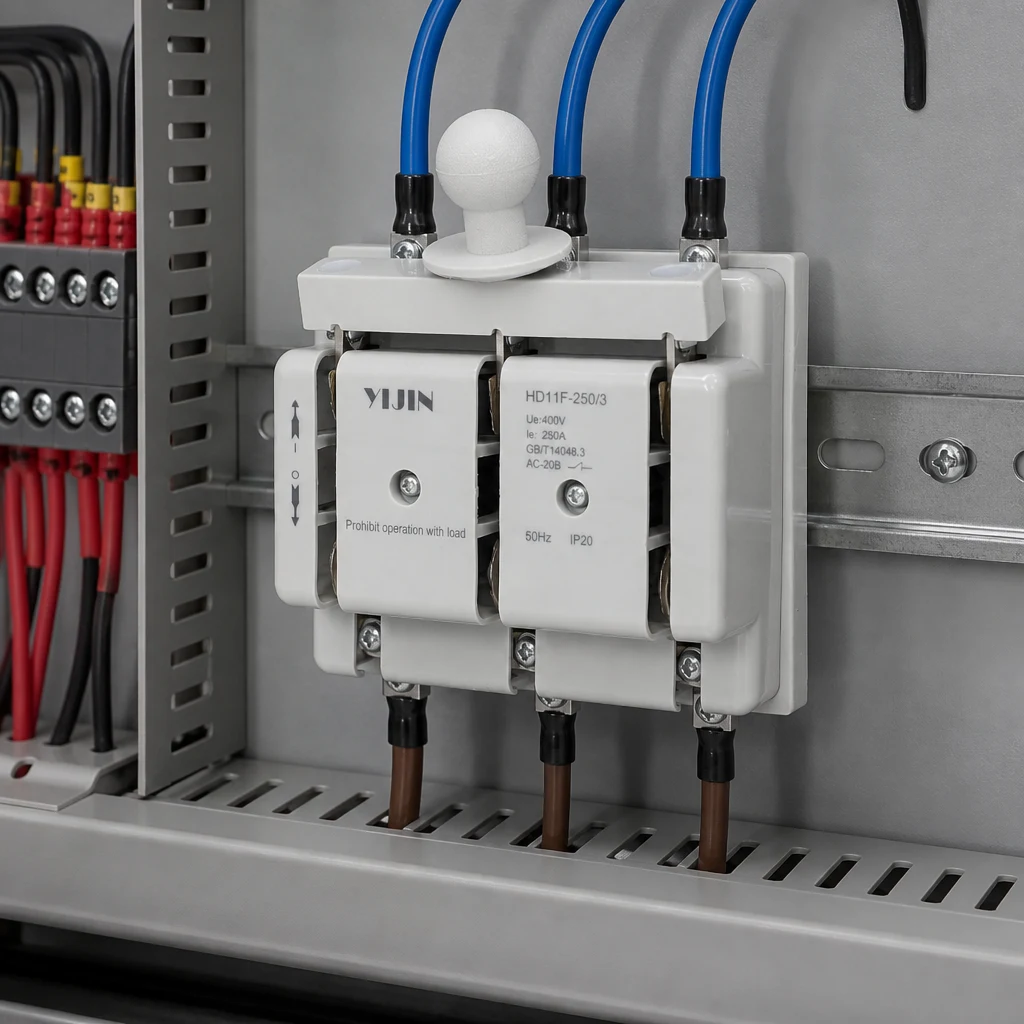
Why Isolator Location Matters for Safe Isolation
A hard-to-find isolator delays safe isolation; isolation itself is not overcurrent protection.
Safe electrical work depends on finding the correct isolation point, opening it, and proving the circuit is dead before contact. Guidance such as HSE safe-isolation practice and lockout/tagout education both assume that energy-isolating devices exist in reachable, known locations.
An isolator switch creates a deliberate open so maintenance can proceed with that portion intentionally de-energized. A circuit breaker still provides automatic overcurrent protection and may also be used for isolation in some designs, but the jobs are not identical. Confusing “I flipped a breaker somewhere” with “I isolated this machine at a labeled local point” is how crews lose time.
Location also shapes human factors. A switch at eye level beside the equipment gets used. A switch in a dark loft with no label gets skipped, and people rely on upstream devices that inconvenience the whole building.
Common Location Mistakes That Hide the Isolator
Blocked access, unlabeled remote mounts, and “breaker-only” assumptions are the usual failures.
Cable runs tempt crews to mount for wire length instead of service reach. If the only free wall sits behind future racking, the isolator becomes unreachable the day the first pallet arrives.
Remote mounts without durable marking hide the device even when the one-line diagram looks tidy. Wiring-matters education allows remote location when marking identifies the device; skipping the label recreates the student-housing complaint pattern where a second isolation switch exists but nobody can find it.
A dedicated circuit breaker at the panel does not automatically erase the need for an equipment-local isolator. Homeowners and buyers often ask why a local isolator is needed when the load already has its own breaker. Manufacturer instructions and service convenience still drive many local isolators, even when a panel breaker can isolate the circuit in principle.
Shopping results also blur outdoor-ready hardware with indoor isolation duty. Battery isolators, boat mounts, and US outdoor HVAC disconnect boxes answer different location constraints than an indoor AC-20B knife isolator.
From the field: Electricians debating a heat pump under a porch keep returning to the same idea—keep a disconnecting means very near the equipment that needs servicing, with workable access, not a panelboard serving unrelated loads tucked out of practical reach. — Mike Holt Forum: NEC 440.14 HVAC Disconnect Location
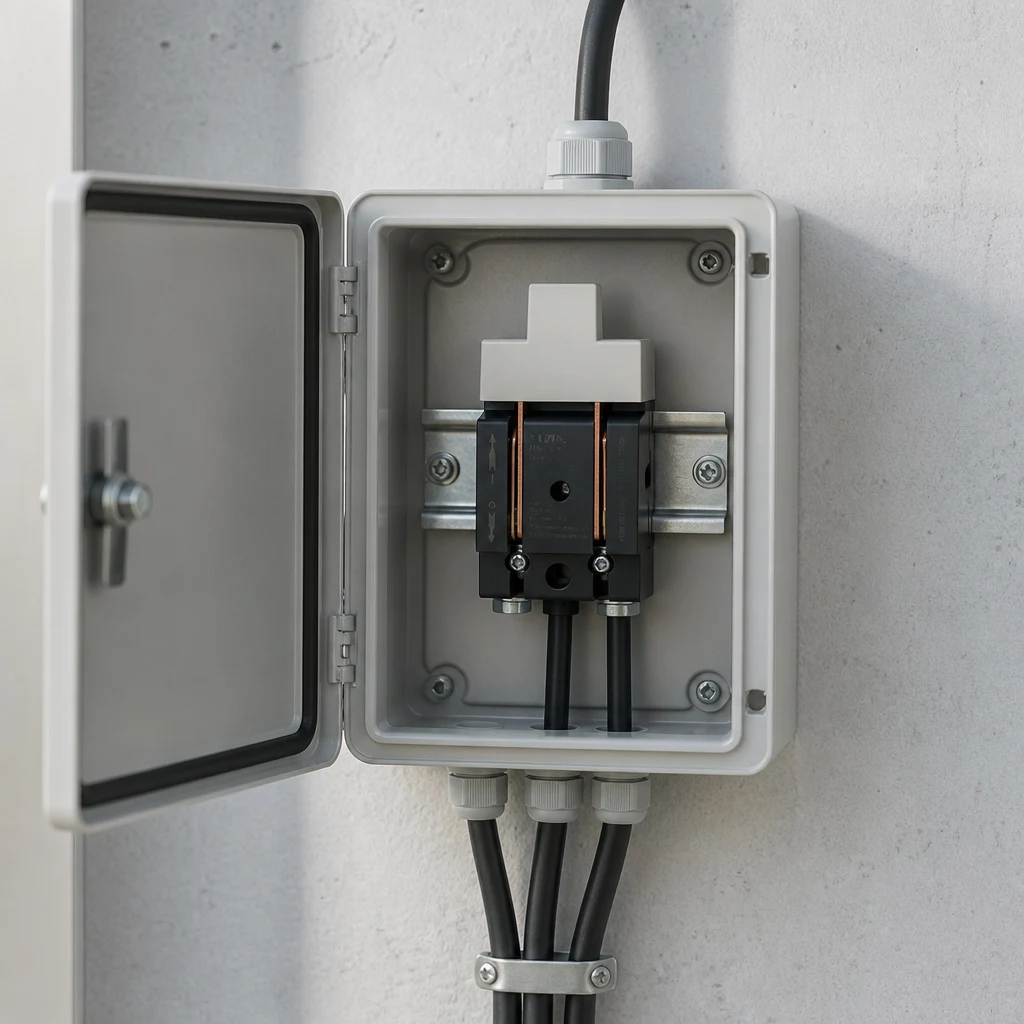
When HD11F or HK18 Knife Isolators Fit the Location Job
Use Yijin HD11F or HK18 AC-20B knife isolators for protected, no-load isolation points—not as outdoor US HVAC disconnect substitutes.
The isolating switch category on this site mixes knife isolators with other devices. For location and isolation duty, stay with knife-switch SKUs such as HD11F and HK18 rather than WiFi breakers in the same hub.
The HD11F-250 protective opening knife switch is published for AC 50 Hz circuits up to 400 V with utilization category AC-20B. The product page states infrequent manual connection, disconnection, and isolation under no-load conditions, and compliance with GB/T14048.3 and IEC60947-3. Normal working conditions include ambient limits from −25 °C to +70 °C, altitude not exceeding 2000 m, pollution degree 3, and installation without rain or snow invasion.
Published HD11F-250 parameters include rated working voltage 400 V, insulation voltage 1000 V, working-current options 160 A / 180 A / 200 A / 225 A / 250 A, impulse withstand 8 kV, and rated short-time withstand current 3 kA.
The HK18-125 type knife switch for photovoltaic applications is likewise AC-20B on the live page, with rated operational voltage 400 V, working-current options 63 A / 80 A / 100 A / 125 A, impulse withstand 6 kV, and 2P/3P/4P model options. The page positions it for infrequent isolation in household and industrial distribution contexts. That is still not evidence of UL listing or NEC outdoor PV disconnect compliance.
| Parameter | HD11F-250 | HK18-125 |
|---|---|---|
| Utilisation category | AC-20B | AC-20B |
| Rated voltage | 400 V | 400 V |
| Working current options | 160–250 A | 63–125 A |
| Impulse withstand Uimp | 8 kV | 6 kV |
| Standards stated on page | GB/T14048.3 / IEC60947-3 | GB/T14048.3 / IEC60947-3 |
| Placement cue from page | No rain or snow invasion; protected install | Compact distribution / isolation installs |
Choose HD11F-250 when the isolation point is a higher-current, protected distribution location and the circuit will be unloaded before operation. Choose HK18-125 when a lower current AC-20B knife isolator fits the board layout. Choose a listed outdoor HVAC disconnect or listed PV DC disconnect when the location is outdoor, weather-exposed, or jurisdiction-driven for equipment within sight.
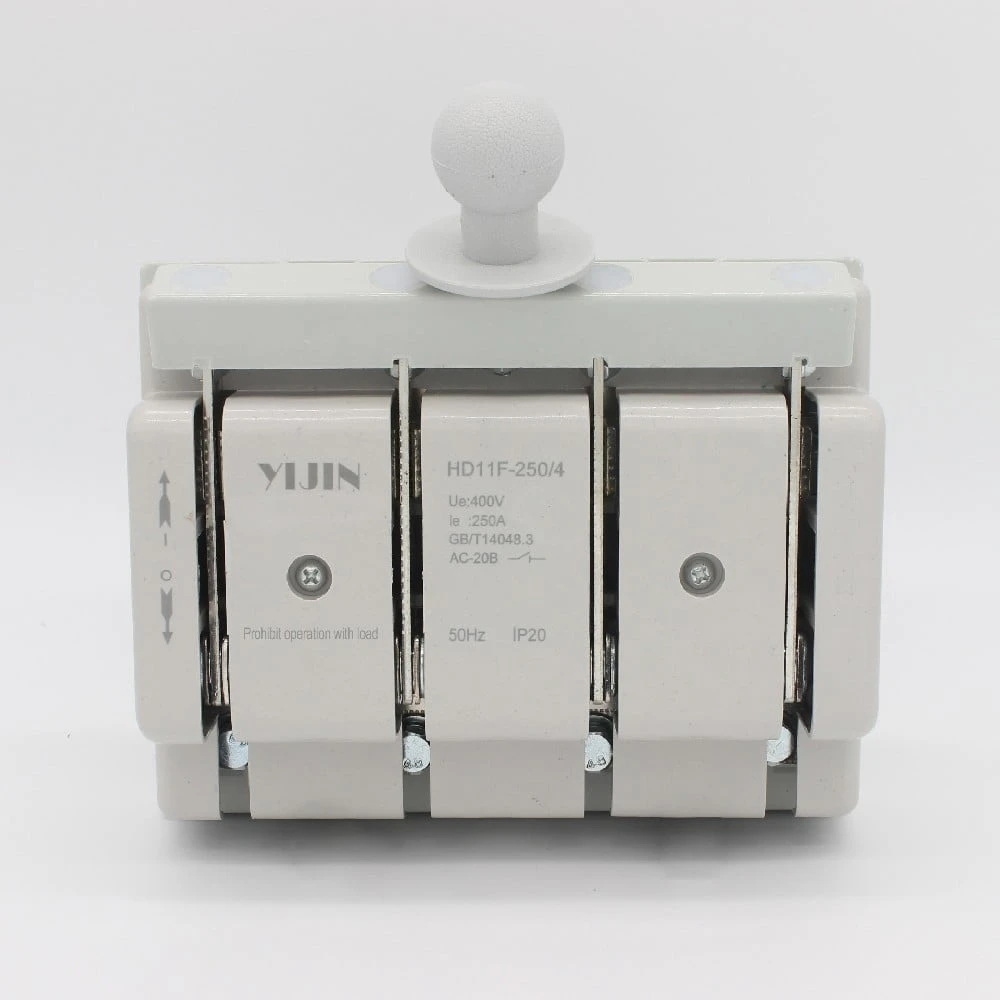
Tip: Operate AC-20B knife isolators under no-load conditions, and keep the install location free of rain or snow invasion per the HD11F working-condition notes. That placement rule is part of product fitness, not optional styling. — HD11F-250 product page
FAQ
Where is the isolator switch usually found?
Usually near the meter or main panel for supply isolation, beside the equipment for local isolation, or near the array/inverter for PV DC isolation. Confirm labels before you operate anything.
Where should an isolator switch be located?
Where its purpose is clear by position or durable marking, and where people can reach it for isolation and lockout. Remote mounts need durable labels.
What does an isolator switch look like?
Often a dedicated ON/OFF enclosure near the panel, a wall-mounted local isolator beside a load, or a knife switch with visible blades in distribution gear. Do not assume every large handle is an isolator.
What is the purpose of an isolator switch?
To isolate a circuit or equipment from supply so work can proceed with that portion intentionally de-energized. It does not replace a circuit breaker’s overcurrent protection job.
Is a panel breaker enough, or do I need a local isolator?
A dedicated breaker can isolate a circuit, but many installs still use an equipment-local isolator for service convenience and manufacturer instructions. Check the equipment manual and local rules.
Can I use an IEC knife isolator as a US outdoor HVAC disconnect?
Not as a default. US outdoor HVAC disconnect practice is a different form factor and listing conversation. HD11F/HK18 pages describe AC-20B no-load isolation with protected install conditions, not UL outdoor HVAC disconnect ratings.
Should the isolator be on or off during service?
For service on the isolated circuit, the isolator should be open (OFF) and locked/tagged as required. For normal equipment operation, follow the equipment and installation design—many local isolators stay ON while the unit runs.
Why can’t I find the isolator?
Common causes are unlabeled remote mounts, blocked access, or looking for a battery isolator or breaker when the device is a separate enclosure. Start at the meter/panel, then at the equipment, then any PV DC path.