 Yueqing Yijin Electronics Co., Ltd.




WiFi Timer Switch for Outdoor Lights: Plug, Wall Box, or Rail
A timer switch for outdoor lights wifi is a time switch that turns an outdoor lighting circuit on and off from a network schedule. US search results mostly show weatherproof outdoor smart plugs and indoor decorator switches. Panel buyers still have a third object: a DIN-rail APP time-control switch for street lights and advertising signs.
The next sections sort those three enclosures, set 3-way traveler boxes aside, then match hours (clock, photocell, dusk-plus-curfew) to the live KG316T WiFi rail module.
What a WiFi Outdoor Lighting Timer Actually Controls
It is a time switch with a network path for setting when outdoor lights close and open.
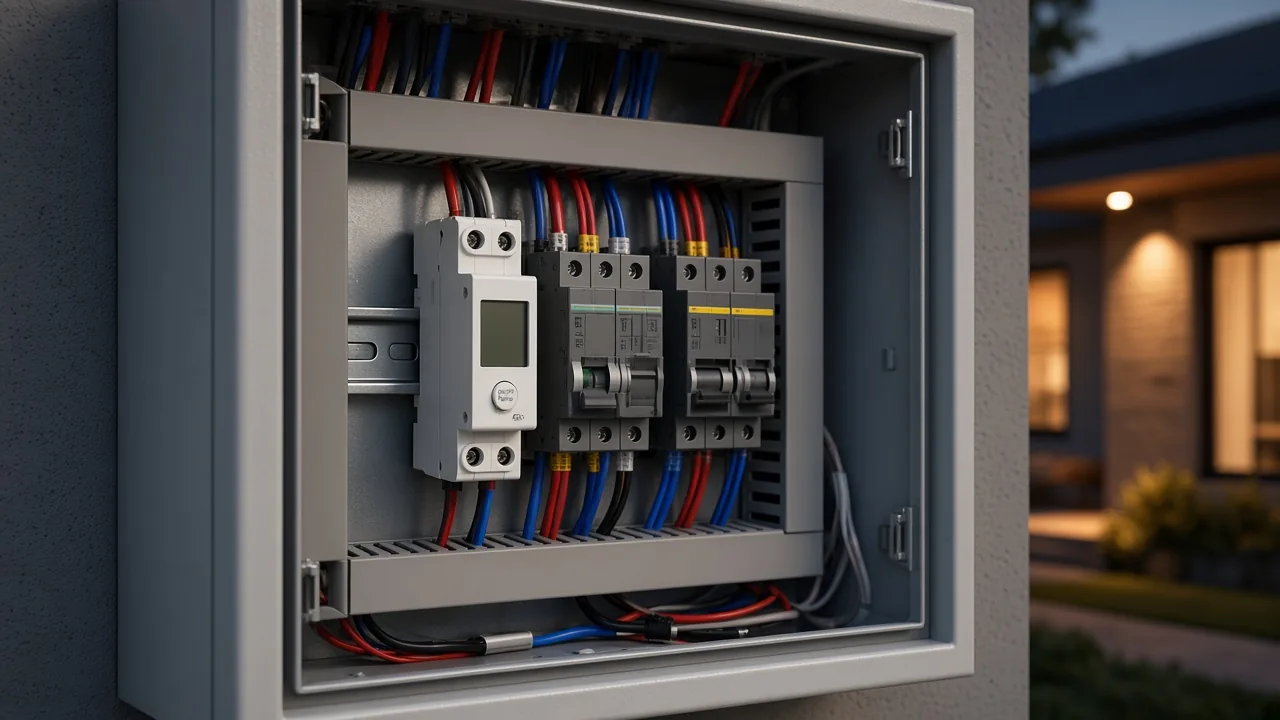
A time switch operates an electric switch from a timer. It may sit on an outlet with the load plugged into it, replace a wall switch, or drive a circuit through a rail module, a relay, or a contactor.
Wi-Fi does not change that job. It changes how a crew types the on/off list — from an app instead of from pegs or a keypad — and it still needs a real enclosure that matches rain, a wall box, or a cabinet.
US shopping pages for a wifi timer switch for outdoor lights almost always photograph a weatherproof plug feeding string lights or a landscape transformer. That is a real class. It is not the only class.
A smart timer switch for outdoor lights on a hardwired porch sconce is usually an indoor wall device. The fixture is outside. The electronics stay in a dry box.
Outdoor Plug, Indoor Wall Box, or DIN-Rail Panel
Match the enclosure to how the lights are fed, then worry about the app brand.
If the luminaires have cords and land on an exterior receptacle, the usual US object is an outdoor smart plug with a weather rating and an app schedule. If the luminaires are hardwired and already stop at a wall switch, the usual object is an in-wall timer switch in that indoor box.
An indoor timer switch for outdoor lights is still an indoor device. It does not become an outdoor listed timer because the load is a porch lantern.
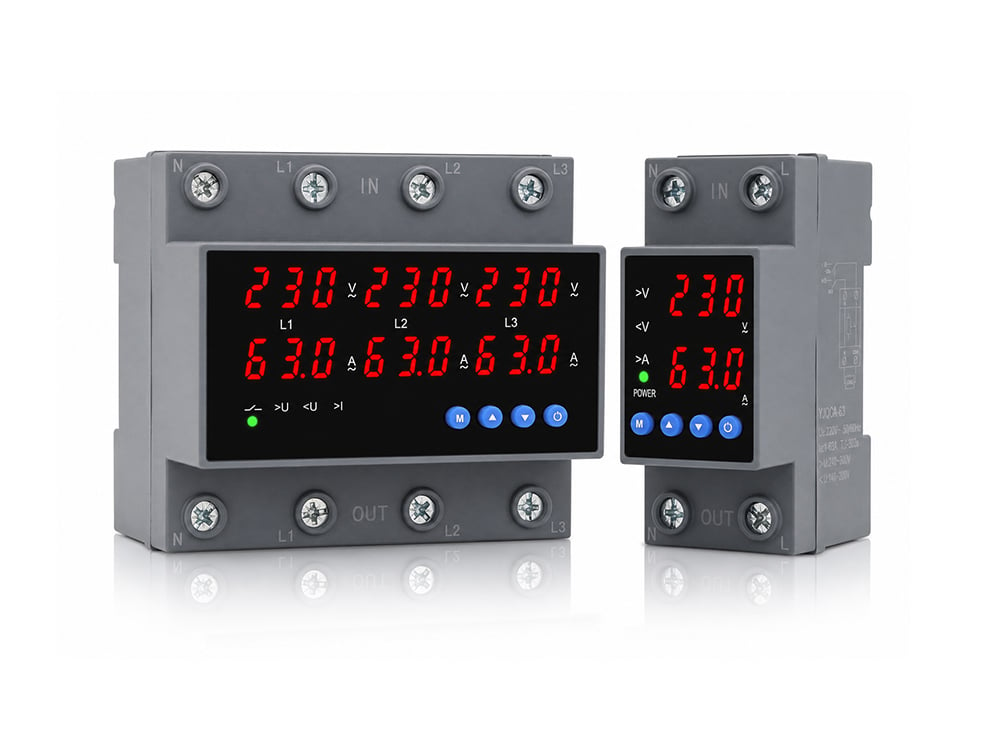
A DIN-rail APP time-control switch lives in a cabinet. Crews use that class when street lights, neon, or advertising signs are timed from a panel rather than from a decorator plate.
| How the lights are fed | Enclosure that fits | Typical US search object | Yijin live path |
|---|---|---|---|
| Cord into an exterior outlet | Weatherproof outdoor smart plug | IP-rated Wi-Fi outdoor plug | No first-party plug SKU |
| Hardwired fixture on a single-pole wall switch | In-wall timer in a dry box | Decorator smart switch | Decorator listing absent |
| Panel circuit for street or sign lighting | DIN-rail APP time-control | Rare on consumer SERPs | KG316T WiFi time control switch |
Many electronic wall timers need a Neutral wire in the switch box. Older US boxes built before the 1980s often have no white neutral bundle, so a Wi-Fi decorator SKU fails before the app opens.
Do not copy a plug’s weather rating onto a rail module, and do not copy a rail table onto a GFCI outdoor receptacle.
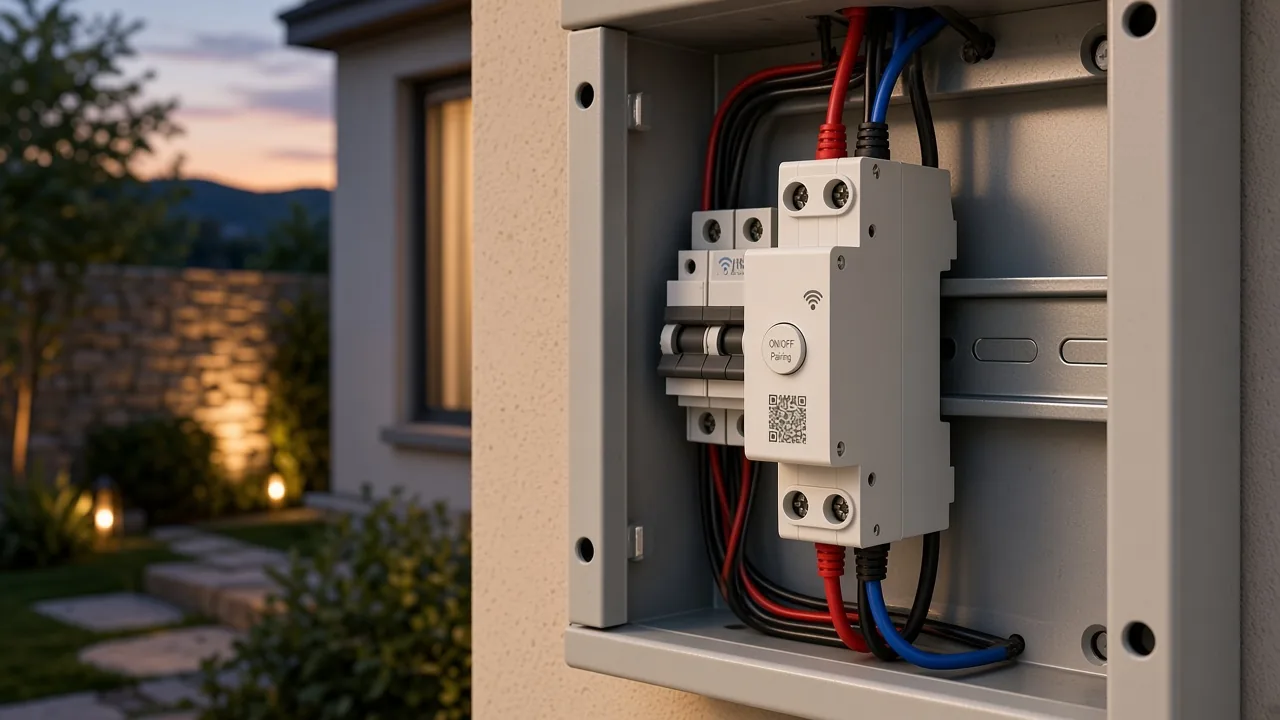
Three-Way Traveler Boxes Are a Different Outdoor Lighting Job
Two three-way switches on the same outdoor lights are a traveler job, not an APP rail timer.
A three-way traveler circuit lets a garage switch and an entry switch both run the same exterior lights. The extra traveler conductors are the product. A DIN-rail APP module does not replace those travelers.
Homeowners still ask for dusk-to-dawn on that layout. The lighting goal is real. The hardware is still a multi-location wall circuit until someone redesigns the switching point.
KG316T WiFi is a rail APP time-control switch. If the RFQ is “keep both hallway switches working and add Wi-Fi,” stay on a decorator multi-way SKU that is built for that box.
If the RFQ is “take the lighting schedule into the panel,” the 3-way plates can stay as local overrides or come out after a documented redesign. That redesign is electrical work, not an app setting.
App Schedules, Photocells, and Clock Hours for Yard Circuits
Darkness, civil closing time, and dusk-plus-curfew are three different programs.
A photocell watches outdoor light and is the classic dusk-to-dawn eye. A timer follows the clock. An astronomical time switch calculates sunrise and sunset for a location so the schedule moves with the seasons without an eye on the roof.
Porch jobs still start from a simple request: lights on at dusk and off at dawn. Crews then argue whether an indoor timer or a screw-in photocell is the more durable object, and whether the sensor will see its own bulb.
US energy-code education for dusk-to-dawn exterior lighting points at an astronomical time switch or a photocell so lights stay off in daylight. A Wi-Fi clock that always fires at 7:00 p.m. is a different job: it does not know June from December.
Photocells also fail in a way clocks do not. Clouds, snow, or an aging cell can turn luminaires on in daytime — a waste condition parking-lot guides call day burning.
From the field: Trade electricians still wire dusk-plus-curfew as photocontrol first, then a time clock, because the photocontrol needs to stay hot; putting the eye after the clock is a common miss — https://forums.mikeholt.com/threads/lighting-control-outdoor-w-dusk-and-time.2574776/
Resort-style shore lighting in that same thread wanted lights on before dusk, off around 1:00 AM, then on again before dawn. That is two on/off pairs around solar events, which is a cabinet schedule rather than a patio-plug scene.
Wi-Fi helps when a crew wants to edit those pairs from a phone. It still needs reliable coverage at the enclosure, which landscape contractors already flag as the Wi-Fi timer’s weak point.
Ratings Buyers Mix Up on WiFi Outdoor Lighting Timers
Copy the live rail table for a rail job; do not paste a US outdoor-plug ampere class onto it.
Consumer outdoor plugs are shopped as 120 V receptacle devices. KG316T WiFi is shopped as a rail-type time-control switch. Those sheets do not share a listing.
The live KG316T-Wifi table prints rated operational voltage AC230V and electric current 40A. Intro copy on the same product page states a control-supply range of 110V~240V and current of 40A.
Look at the contact row beside that 40 A line. Contact capacity on that table is AC-12 240V/10A. Treat it separately from a 15 A outdoor-plug class.
On a dusk landscape job the next rows are protective, not timer class. Overvoltage protection range is 275±5V with recovery 250±10V. Undervoltage protection range is 175±5V with recovery 195±5V.
Do not read those over/undervoltage rows as a WiFi breaker. Over/undervoltage protection stays a table function on this SKU.
Program this SKU from the APP. Maximum timed quantity is 100 sets. Working modes on the table include Timer (alarm clock), connection delay, interval delay, and loop delay.
None of those printed rows is a UL Listed US in-wall outdoor lighting timer, a Lutron faceplate, or an Intermatic Type 3 enclosure.
What the KG316T WiFi Page Publishes for Lighting Control
Functional copy on the live page names Street lights / advertising signs among the timed loads, plus neon.
The module snaps on as rail-type installation. Status lamps on the page describe Wi-Fi connection state: slow flash not connected, rapid flash connecting, steady on when connected.
Other listed functions include a manual switch and a latitude function. For full calculated dusk tracking, open the lat-long KG316TG sibling rather than stretching this APP SKU into that job.
The table lists a delay range of 1s~99h 59min 59s and ambient temperature −5℃~40℃.
Use those published rows when the lighting circuit is already a panel job. If the only hardware on site is a wet-location receptacle for holiday strings, this is the wrong object.
Family context sits on the timer switch hub and on the types of timer switch map. Weekly keypad programming is covered on the sibling weekly programmable timer switch page. Calculated dusk without an app enclosure debate lives on astronomical timer for outdoor lighting.
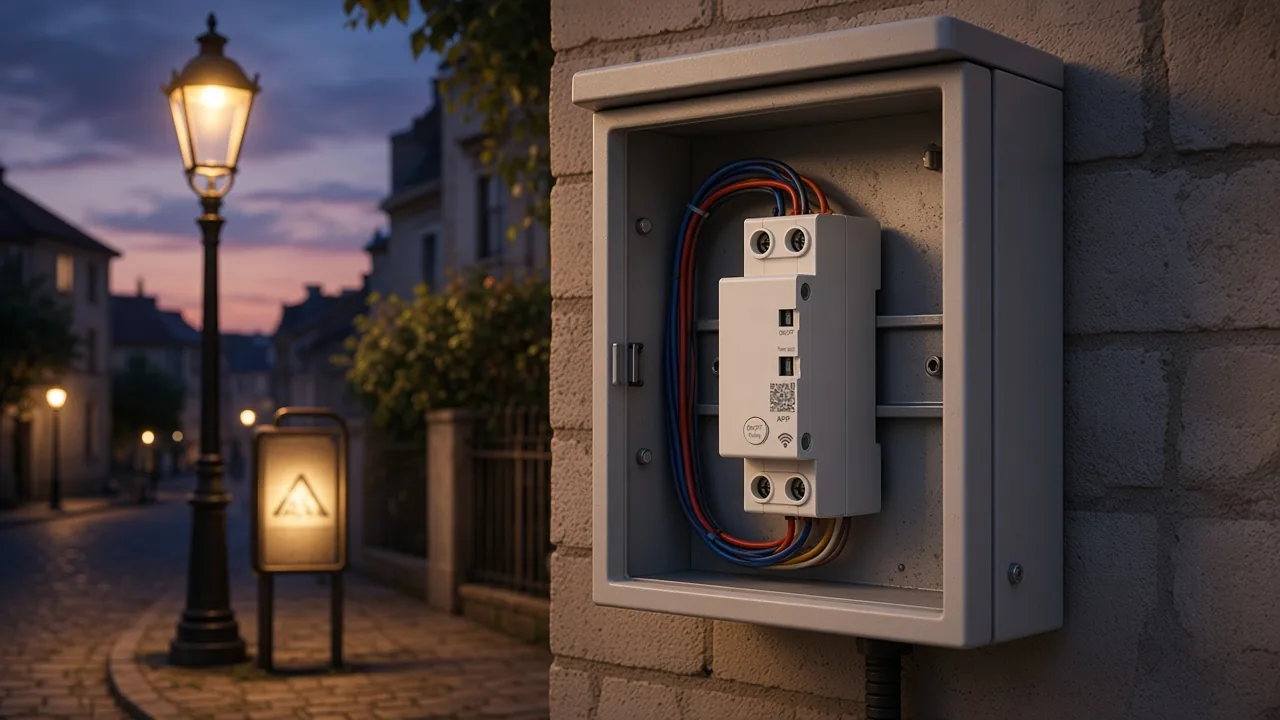
Product recommendation: KG316T WiFi for Outdoor Lighting Control
Open the KG316T WiFi time control switch when the outdoor lighting schedule belongs on a DIN rail and APP setting, not in a US decorator outdoor box.
That live page is the first-party match for panelized street lights and advertising sign lights that need timed on/off, including the printed 100 timed sets and AC230V / 40A table. It is the product to shortlist after the enclosure decision lands on rail.
Skip it when the purchase is a weatherproof outdoor plug, a 3-way traveler replacement, a listed in-wall outdoor lighting timer, Lutron or Intermatic hardware, or a WiFi breaker / recloser. Those are other classes.
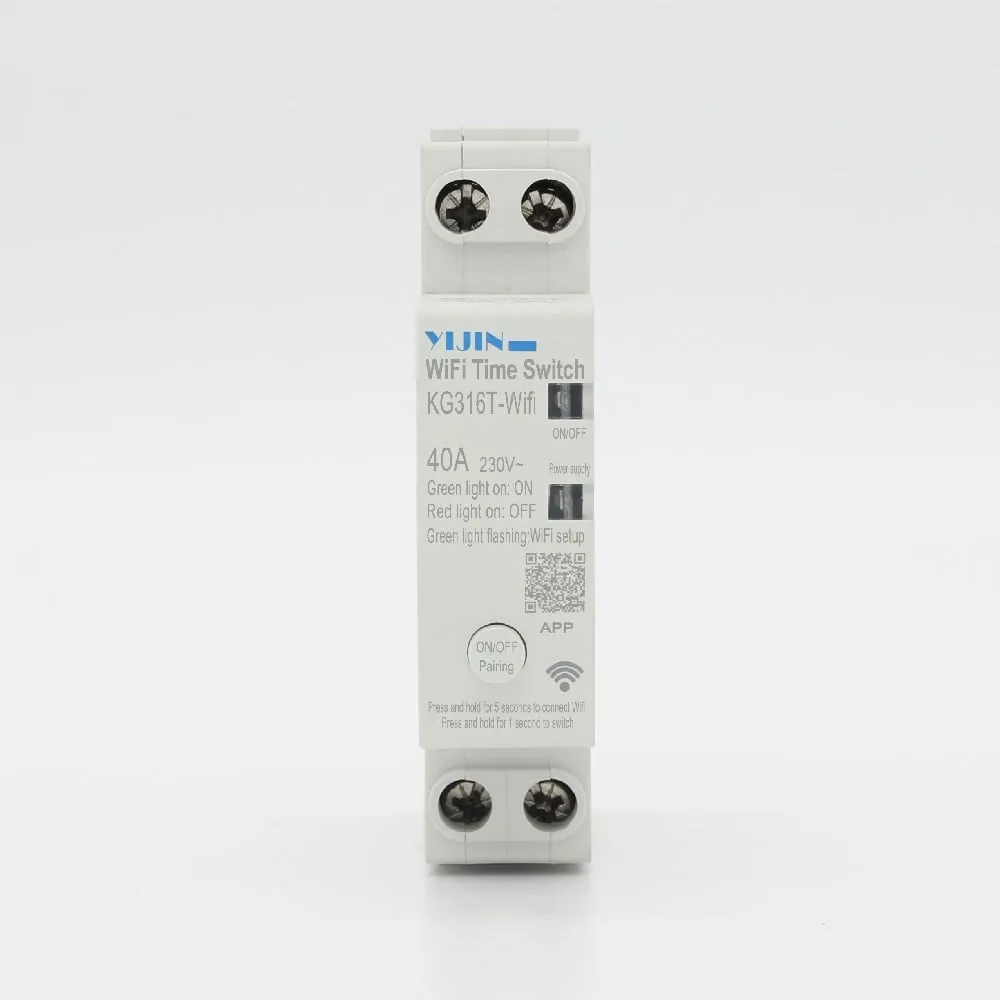
Confirm the live table against the circuit, then browse siblings on the timer hub if the job is weekly keypad control, lat-long dusk tracking, or a countdown release.
FAQ
Can I use a WiFi timer switch for outdoor lights?
Yes, if the enclosure matches the feed.
A weatherproof plug serves corded outdoor loads. An indoor wall timer can run hardwired porch lights. A DIN-rail APP module serves panelized street or sign circuits.
Outdoor smart plug or indoor wall timer — which one?
Use an outdoor smart plug when the lights plug into an exterior outlet. Use an in-wall timer when a hardwired fixture already stops at a wall switch.
Do outdoor WiFi plugs need GFCI protection?
US outdoor-plug manuals for that consumer class tell installers to use a GFCI-protected circuit. That instruction belongs to listed outdoor plugs. KG316T WiFi follows its own rail sheet.
Photocell vs WiFi timer for outdoor lights?
A photocell follows darkness. A Wi-Fi timer follows the schedule you typed, which may be clock hours or dusk-related events if the product offers them. Dusk-to-dawn code education still names an astronomical time switch or a photocell for all-night exterior lighting.
Do in-wall WiFi lighting timers need a neutral?
Many electronic wall timers do. Missing neutrals in older US boxes are a common blocker. Rail APP modules follow their own terminal sheet.
Can a 3-way outdoor lighting circuit use this WiFi timer?
Not as a drop-in traveler replacement. Two three-way switches are a multi-location wall circuit. KG316T WiFi is a rail APP time-control switch.
Is the KG316T WiFi an in-wall outdoor lighting timer?
No. It is a rail-type APP time-control switch.
The live page names street lights and advertising sign lights. It does not publish a US in-wall outdoor listing.
What published ratings does KG316T WiFi show for lighting control?
The table lists AC230V, 40A, APP setting, 100 timed sets, over/undervoltage ranges, and AC-12 240V/10A contact capacity. Intro copy also states 110V~240V control supply and 40A current.
References
- Time switch — Wikipedia (independent technical overview of plug-in, circuit, and astronomical time switches).
- BECP Resource Guide: Lighting — dusk-to-dawn exterior lighting controls (astronomical time switch or photocell).
- Guide to FEMP-Designated Parking Lot Lighting — photocell day burning versus timeclock control.
- Short screw in photocell for outdoor light fixture — Houzz (porch dusk-to-dawn and in-wall timer reliability talk).
- Lighting: Control Outdoor w/ Dusk and Time — Mike Holt’s Forum (dusk-plus-curfew wiring and photocontrol-hot practice).