 Yueqing Yijin Electronics Co., Ltd.



What Is Phase Failure Protection When the Name Says Phase Loss
what is phase failure protection is the practice of taking a three-phase motor off the line when one supply leg opens, before the remaining legs overheat the windings. The page then separates that lost-leg event from a swapped phase order and from a thermal overload. A module whose name includes phase loss can still print only an overvoltage trip and an undervoltage trip.
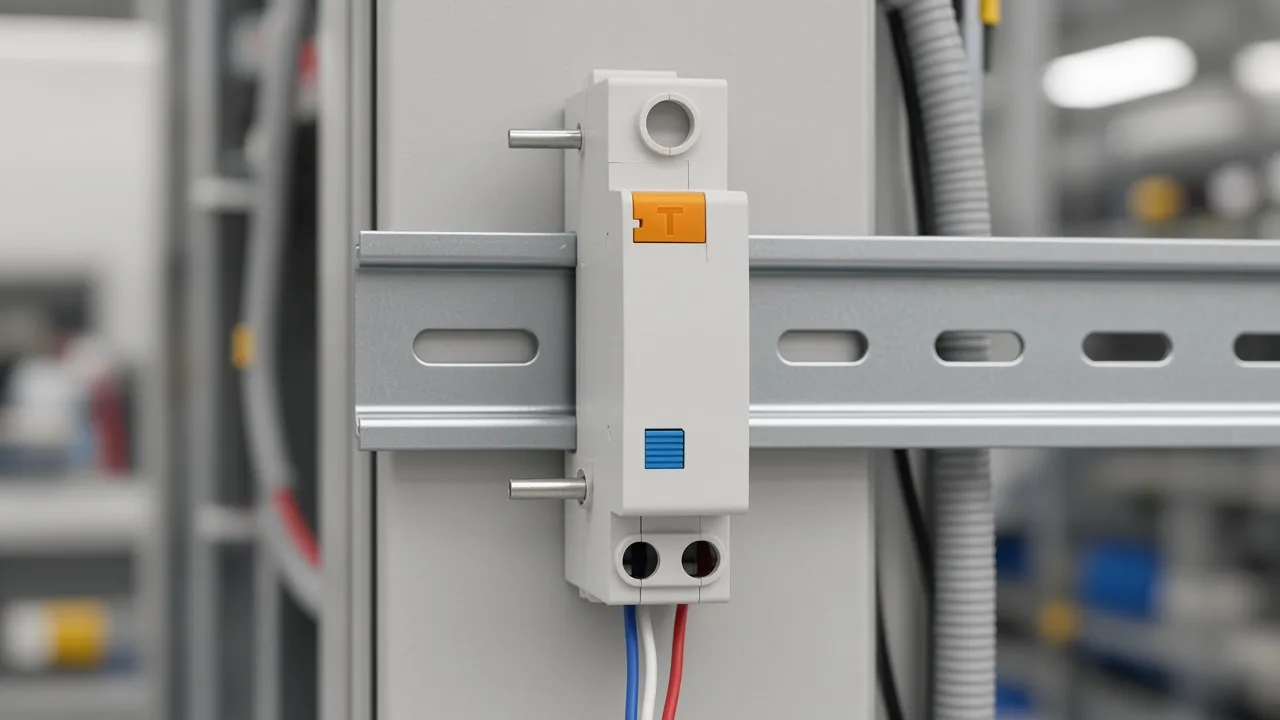
A lost supply leg is the failure the name is pointing at
A blown fuse, a worn contact, or a broken conductor can open one line while the other two stay energized. That event is what phase failure protection is aimed at, and shop language usually calls the aftermath single phasing.
Two moments matter, and they do not look the same on the motor. If the motor is already stopped and something calls for a start, the shaft often will not turn, and the windings sit in a stalled condition until a protective device opens. If the motor is already running a light load, it can keep turning on the two healthy legs and heat up while the process still looks normal.
From the field: A technician describing eutectic overloads wrote that a motor which tries to start after a phase is lost burns up almost every time in that experience, while a lightly loaded motor that is already running can keep going for a long time. Source: phase-loss thread on Mike Holt’s forum.
On a fan, a conveyor with no product, or a pump that is not yet pushing head, that second case is easy to miss. The shaft is moving, the contactor is in, and nobody has a reason to open the door until the winding smell arrives.
A running motor can still show voltage on the open winding
The spinning motor can induce voltage on the open winding. Electricians call that regenerated voltage back EMF, and it is the reason a magnitude-only check can look almost normal after a supply leg has already opened.
Relay notes describe the healthy three-phase set as sitting about 120 degrees apart, with a lost phase pushing that spacing out of place. A meter that only asks whether each reading is “about the same” can therefore pass a motor that is already single phasing. Current in the remaining legs, heat in the winding, and whether the shaft could have started from rest tell you more than one voltage glance.
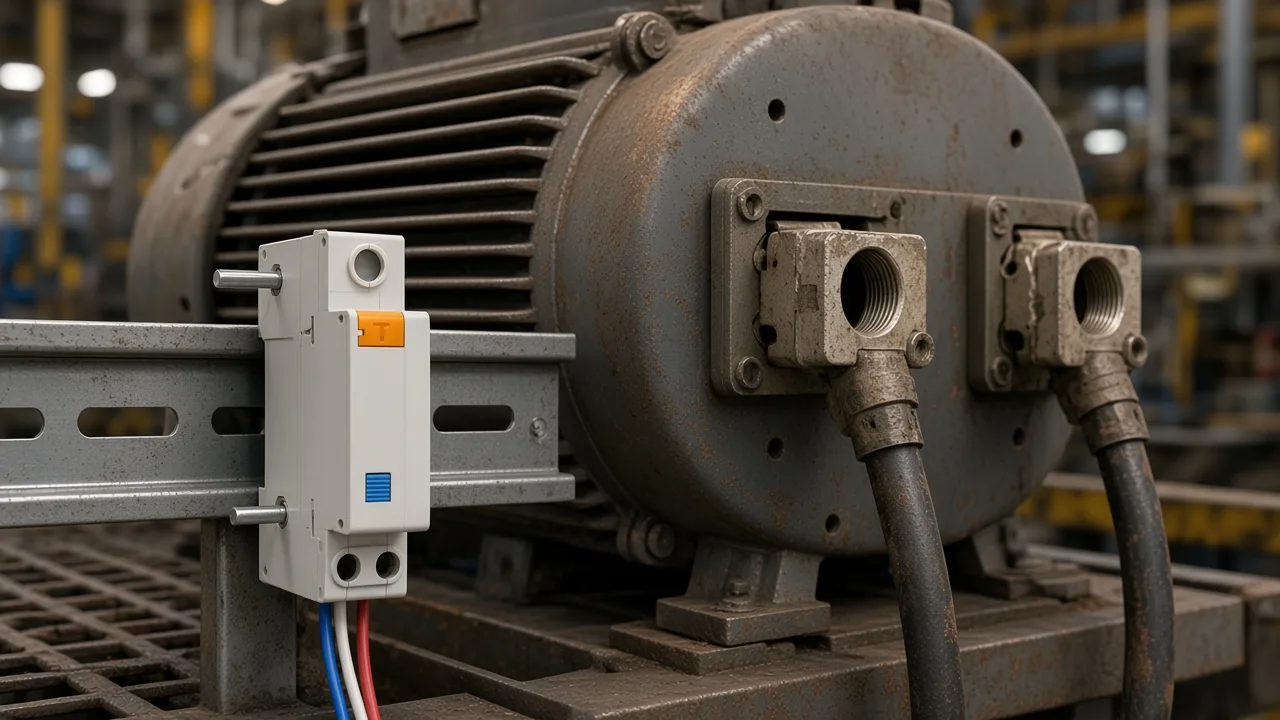
Jraef’s reply on the same forum thread puts the stalled current near 58% of locked-rotor current when the motor cannot start on the remaining legs. The overload curve, he notes, is drawn for full three-phase locked-rotor current, so the heater can take longer than the winding can stand.
An overload heater is a slow cousin of that trip
A heater or a thermal overload is built to sit near running current and to wait out the start. It is a real protection, and it is a different job from detecting that one supply leg has disappeared.
PG&E’s open-phase note for motors uses a motor already drawing about 70% of normal full-load amperes. In that illustration the phase current rises by the square root of three, and the draw sits about 20% above nameplate. An overload set at 125% of nameplate can still sit above the current that is heating the windings.
Mike Holt’s 2017 motor-calculation commentary lists single-phasing as an overload cause, one conductor of a three-phase circuit failing so the motor runs on two phases. Across-the-line starting typically draws about 5 times running current, so the breaker is sized to survive the start. That breaker is not the device that watches for a missing leg.
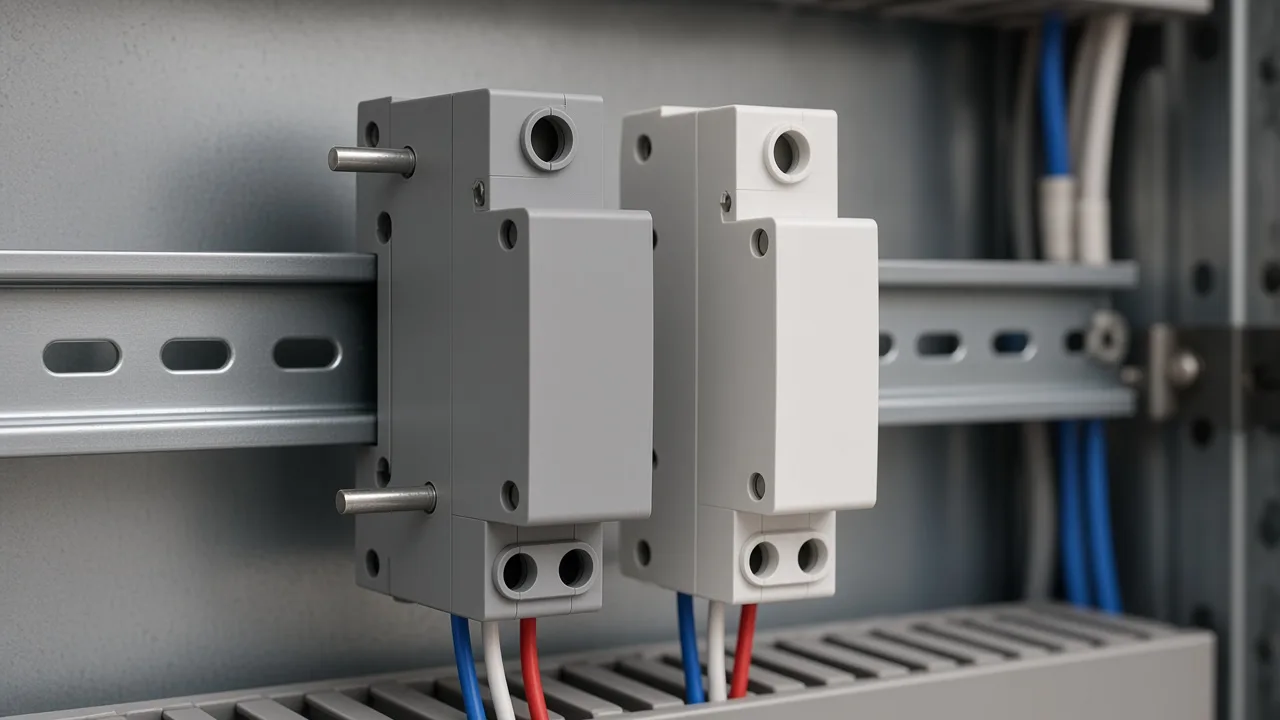
Buyers sometimes point at a starter and say the overload already covers phase failure. On a hard-working motor the heater may open in time. On a light load, or on a start attempt with one fuse open, the same heater can be late.
Phase reversal is a swapped pair, not a missing leg
Phase reversal means all three phases are present and two of them have been exchanged, so a motor can run backward and still draw a balanced-looking current. Phase failure means a leg is missing. Catalogs that answer what is a phase failure relay are describing a monitor for that missing leg, sometimes bundled with an order check.
How does a phase failure relay work on those monitor sheets: a correct three-phase supply picks the output up, and a missing phase or a reversed pair drops it so the contactor coil loses its path. That is a control-circuit relay, separate from the breaker accessory in the photograph.
The wiring article, the test article, and the letter-designation article on this site each take a different slice of the rotation job: phase sequence relay wiring, how to test phase sequence, and ABC and ACB phase sequence.
The hold band is the window before either printed trip
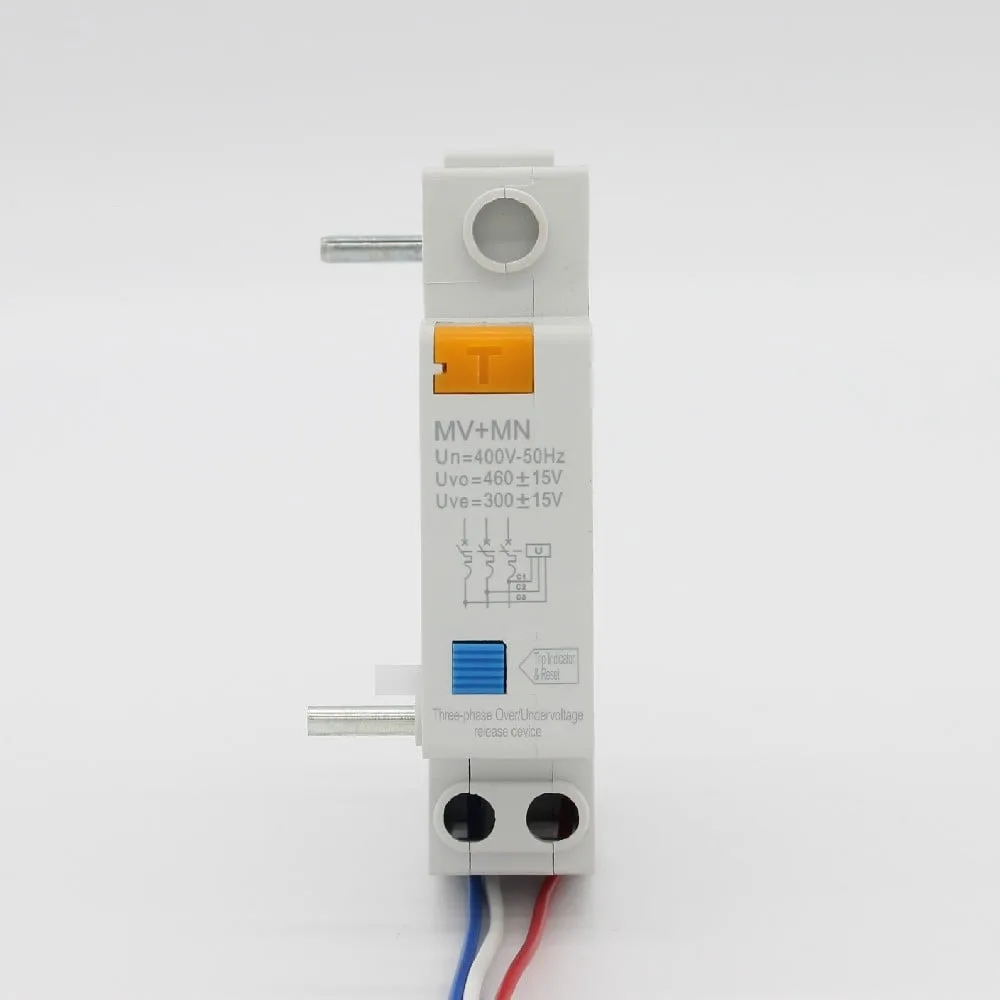
The MV+MN page does not describe a phase-angle test. It describes a hold window and two magnitude points for a release that drives a breaker.
The release is meant to hold the breaker while main-circuit voltage stays between 85% and 110% of Ue. The page lists rated working voltage Un as 380V.
The same action text opens the breaker when voltage rises to 460V ± 15V. It opens the breaker when voltage falls to 300V ± 15V.
Those four statements are the whole action story printed for this accessory. High voltage and low voltage are overvoltage and undervoltage. Neither sentence says what voltage remains on a winding after one conductor opens, and neither sentence sets a phase-rotation check.
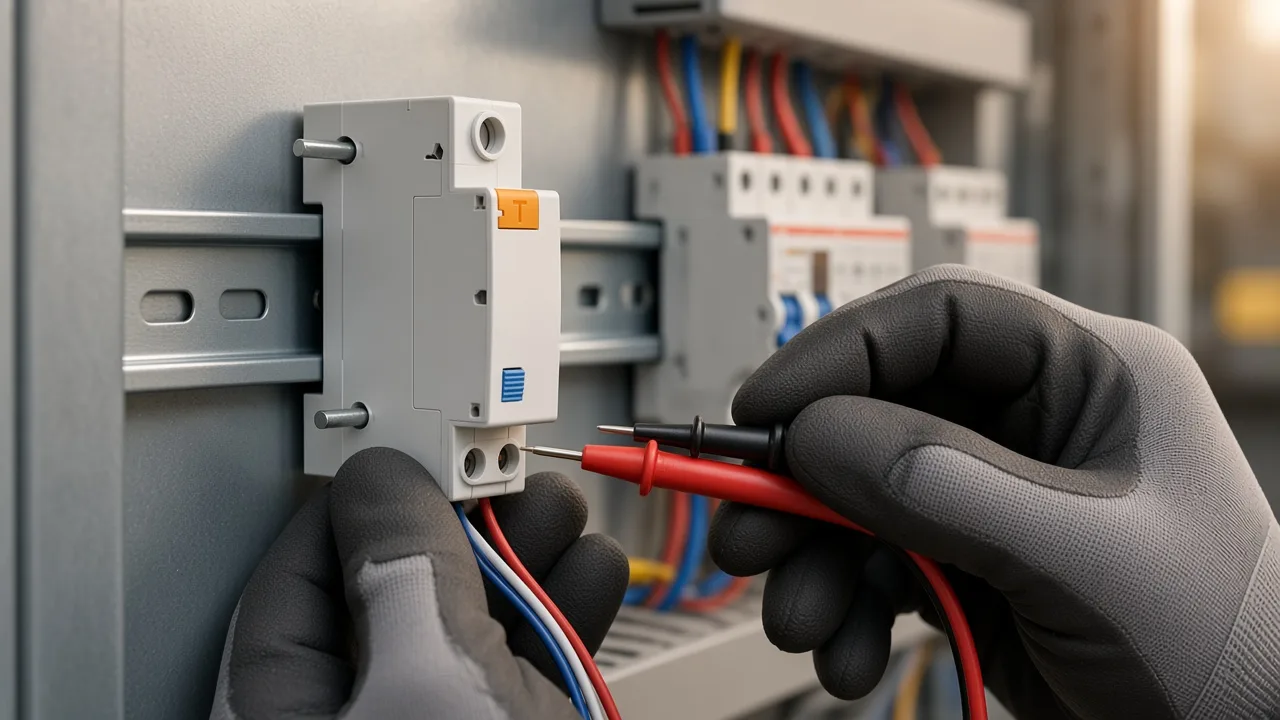
Read the two trips as magnitude limits on the supply the release is watching. If the plant problem is a motor that keeps turning after a fuse opens, these numbers do not by themselves tell you the release will see that open conductor.
The MV+MN name includes phase loss without a printed phase-loss voltage
The title on this Beiyuan BB1 accessory says phase loss. The voltage rows on the page stop at the over value and the under value. There is no separate phase-loss voltage on that table, and there is no sequence-rotation test.
| What the name can suggest | What the MV+MN page actually prints |
|---|---|
| A lost supply leg | No separate phase-loss voltage |
| A rotation or sequence check | No sequence-rotation test |
| Supply too high | Overvoltage trip |
| Supply too low | Undervoltage trip |
The listing rows beside that action text are short, and they are worth reading as a set before anyone adds a threshold the page never gave.
| Listing item | Printed value |
|---|---|
| Rated frequency | 50/60Hz |
| Protection grade | IP20 |
| Rated insulation voltage | 500V |
| Product width | 18mm |
| Ambient temperature | -35 °C to +70 °C |
Rated frequency on the table is 50/60Hz. Rated insulation voltage is 500V.
Product width is 18mm. Ambient temperature is listed from -35 °C to +70 °C.
The product photograph’s face legend reads Un=400V-50Hz, while the specification table lists Un as 380V and frequency as 50/60Hz. The face legend also prints Uvo=460±15V and Uve=300±15V, which lines up with the table trip points even though the table names the lower trip Uoe.
Use the table when you are matching the published listing, and look at the face legend before you assume the module in your hand carries the same Un line. The page does not show a UL listing.
Choose the MV+MN release when the job is the printed over and under trips
Choose the MV+MN three-phase overvoltage/undervoltage+phase loss release when the breaker is a Beiyuan BB1 and the job is the printed hold band plus those two magnitude trips. This release is not a standalone phase-sequence monitor.
The transfer-switch category is the wrong shelf for this accessory. That category is where a conversion-switch job lives, and a rotation change is not what this release prints. If the motor must be kept from running backward after a swap of two lines, use the wiring and test articles above rather than this module.
Match Un, the hold band, and the two trip points to the breaker the accessory has to open. If the face legend and the table disagree on Un, settle that against the unit you will install before the release goes on the rail.
FAQ
What is single phasing?
Single phasing is the condition after one of the three supply legs opens. The motor either sits stalled on a start attempt or keeps turning on the two legs that remain, and both outcomes heat the windings.
Does a thermal overload always catch a lost phase?
No. A light running load can stay under a heater that was set with nameplate current in mind, and a start attempt on a missing leg can damage the winding before that heater finishes its curve.
Why can a voltage check miss phase failure while the motor is running?
The spinning motor can generate back EMF on the open winding, so each voltage reading still looks present. A magnitude check then misses the lost conductor that current and heat would show.
Is a swapped phase order the same fault as a missing phase?
No. A swapped pair leaves all three phases in place and can reverse the motor. A missing phase removes a leg, which is the failure phase failure protection is named for.
Does Article 430 commentary treat single-phasing as an overload rather than a short circuit?
Mike Holt’s commentary lists single-phasing with overload causes and keeps it apart from the breaker that only has to carry starting current. The commentary is not a claim that this accessory satisfies a local code edition.
Which two voltage points does the MV+MN release print?
The page prints an overvoltage trip and an undervoltage trip, and it does not add a third number for a lost phase. Read those two points next to the hold band before treating the word “phase loss” in the title as its own setpoint.
Should a conversion switch be the next device when the job is a rotation change?
Yes. A rotation change belongs with a conversion switch and with a sequence test, not with this breaker accessory. The transfer-switch category on this site is the shelf for that conversion-switch job, and it is the wrong home for the MV+MN release.