 Yueqing Yijin Electronics Co., Ltd.




Types of DC Breakers: DIN MCB, Molded-Case, and Polarity Families
For low-voltage panel work, types of dc breakers usually split into DIN-rail miniature and molded-case families, then split again by polarity notes and by the voltage and current bands printed on each sheet. This page is a family map — not a solar “best breaker” scorecard and not an AC-versus-DC myth checklist. You will walk construction classes first, then polarity, then rating bands, then the live Yijin DC SKUs that sit in those bands.
How Panel Buyers Usually Group Types of DC Breakers
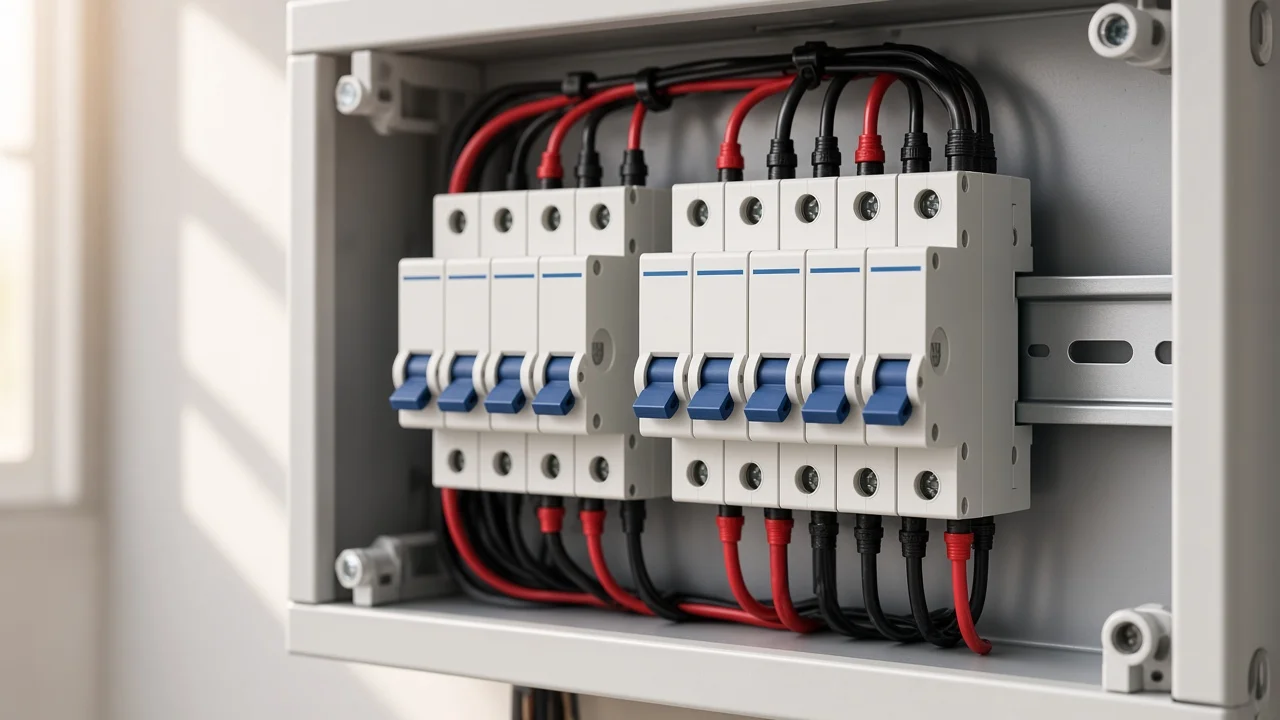
Group low-voltage DC breakers by construction first: DIN-rail miniature devices for compact branch duty, and molded-case frames when continuous current and fault duty climb out of that modular band.
Academic HVDC papers often sort devices into mechanical, solid-state, and hybrid topologies. That taxonomy matters for utility DC grids; it is a poor shopping list for a US panel buyer comparing rail modules.
A second boundary also matters: a DC isolator / disconnector may open a circuit for maintenance, but it is not the same type as a breaker that trips on overload and short-circuit.
DC current does not reverse through a natural zero the way AC does, so DC families lean on stronger arc extinguishing / magnetic blowout — deeper chutes, permanent-magnet blowout on many DIN sheets, and, on many designs, explicit polarity discipline. Treat those construction and polarity differences as type axes before you argue about amp labels.
| Family lens | What you are sorting | Typical buyer cue |
|---|---|---|
| DIN-rail DC MCB | Compact modular miniature breaker | Snaps onto TH35 rail; lower continuous-current band |
| Molded-case DC breaker (MCCB) | Larger molded insulating case | Higher continuous current / feeder-class footprint |
| Polarity class | Direction-sensitive vs bidirectional claim | +/− or LINE/LOAD marks vs explicit non-polarized datasheet language |
| Rating band | Printed Rated DC voltage (Ue) and Rated current (In) (and Breaking capacity figures) | Sheet numbers, not marketing amp habits |
If you still need the AC-versus-DC utilisation decision, use the sibling comparison on DC MCB vs AC MCB. If you need solar selection criteria rather than a types map, use best DC breaker for solar.
DIN-Rail DC Miniature Circuit Breakers
DIN-rail DC miniature circuit breakers — the DIN-rail DC MCB family — are compact modular devices: TH35 rail mounting, narrow pole widths, and continuous-current classes that stay inside the miniature band.
Independent MCB explainers describe the familiar thermal path for overload and magnetic path for short-circuit inside a small housing. For DC duty, the same form factor adds DC-rated voltage language and arc hardware that can clear a continuous DC arc.
The IEC 60898-2 family for miniature breakers suitable for ac and dc operation states rated dc voltage ceilings of 220 V for a single pole and 440 V for two poles. Rated current stays at or below 125 A in that family scope, and rated dc short-circuit capacity stays at or below 10000 A. Treat those figures as standard-family scope language, not as an automatic certificate for every brand page.
On Yijin’s live DIN DC pages, that family shows up as two printed tiers.
YJB1Z-63 scope text covers rated current of 63 A and below with DC rated voltages of 250 V and 440 V, TH35-7.5 rail mounting, permanent-magnet arc language, a short-circuit capacity wording of 10KA, and a wiring note to respect “+” and “−” polarity. The page states compliance with GB10963.2 and IEC60898-2.
YJB1Z-125 scope text covers rated current of 125 A and below with DC rated voltages of 220 V and 440 V, the same rail and polarity attention, 10KA short-circuit capacity wording, and parameter options that list 63, 80, 100, and 125 A. The page states compliance with IEC60947-2 and GB14048.2.
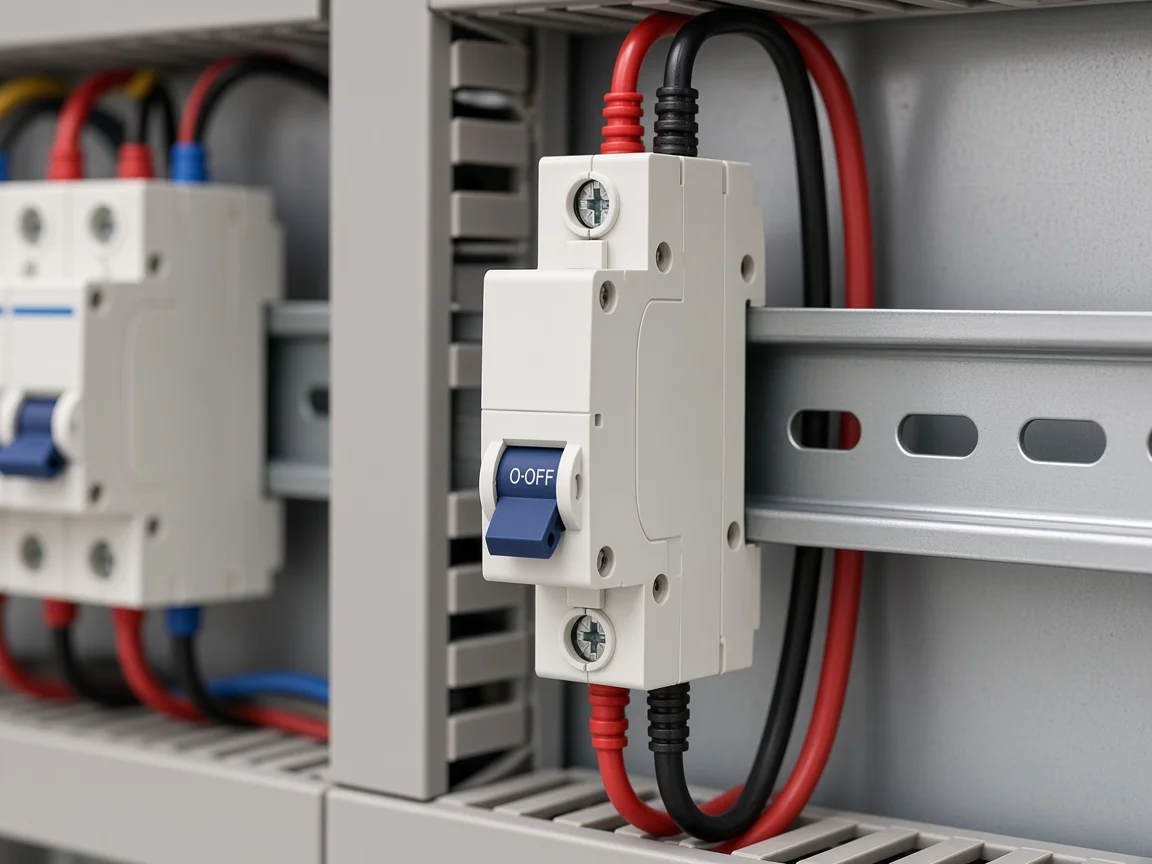
Read the DIN family as “modular DC protection inside miniature current and voltage classes,” not as a universal DC answer for every feeder.
Molded-Case DC Circuit Breakers
Molded-case DC circuit breakers — the DC MCCB / molded-case DC breaker family — use a larger molded insulating case, higher continuous-current frames, and a footprint that belongs on feeder-class DC boards rather than a single slim rail module.
Encyclopedia-level MCCB descriptions place the mechanism inside a molded case used for higher-current low-voltage distribution than miniature breakers. Commercial family pages draw the same contrast — DIN snap-on MCB versus bolted or panel-mounted molded case — without making every amp label interchangeable.
Yijin’s live molded-case DC page is the YJM1Z plastic shell DC circuit breaker.
Scope text covers rated working voltage of DC750 V and below and rated working current up to 800 A, with short-circuit and overload protection called out for circuits and equipment.
The parameter table lists shell frames such as YJM1Z-100 / 225 / 400 / 630 / 800 and prints a breaking-capacity column as 10KA/20KA by frame. A page note states that DC750 V needs to be customized.
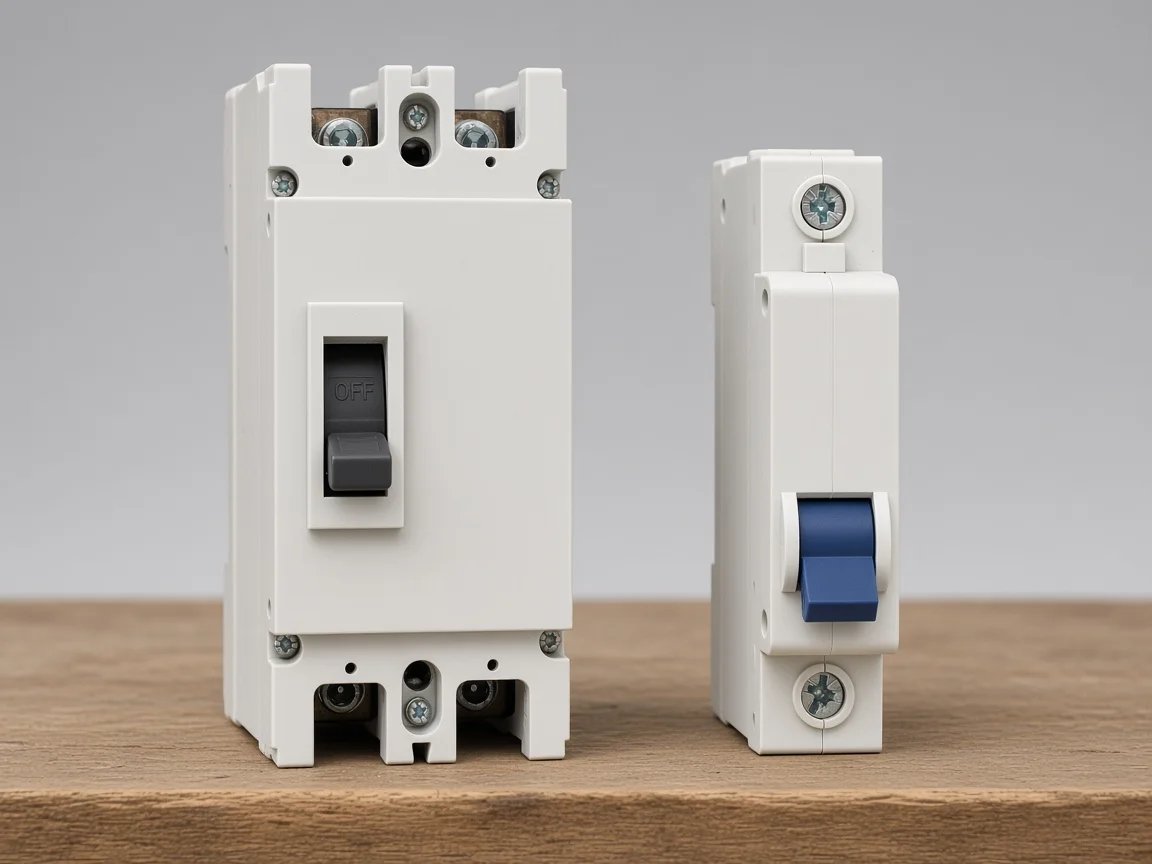
When a board’s continuous current and fault duty leave the DIN miniature band, the molded-case family is the type change — not a cosmetic upgrade on a small string module.
Polarized vs Non-Polarized DC Breakers as a Type Axis
Polarity is a cross-cutting type axis: a polarized DC breaker expects current in the marked direction; a non-polarized DC breaker claims interruption with current in either direction inside its tested rating.
Polarized devices usually carry “+” / “−”, LINE/LOAD, or arrow marks because the arc path is direction-sensitive. Non-polarized (bidirectional) language has to appear on the datasheet or nameplate — missing marks alone do not prove a bidirectional type. Battery paths, hybrid inverters, and other reverse-flow branches are where that distinction stops being academic.
From the field: On DIY Solar Power Forum, a buyer who purchased a DC MCCB with no printed polarity marks still heard from the seller that the unit was polarized — replies pushed line/load direction and datasheet confirmation before trusting a bidirectional battery path. Source: https://www.electriciantalk.com/threads/white-color-for-positive-dc-wiring.144490/
Field wiring threads add another practical cue: installers debating white-on-positive DC habits still come back to reading the marked polarity instead of color folklore. Source: Electrician Talk — white color for positive DC wiring.
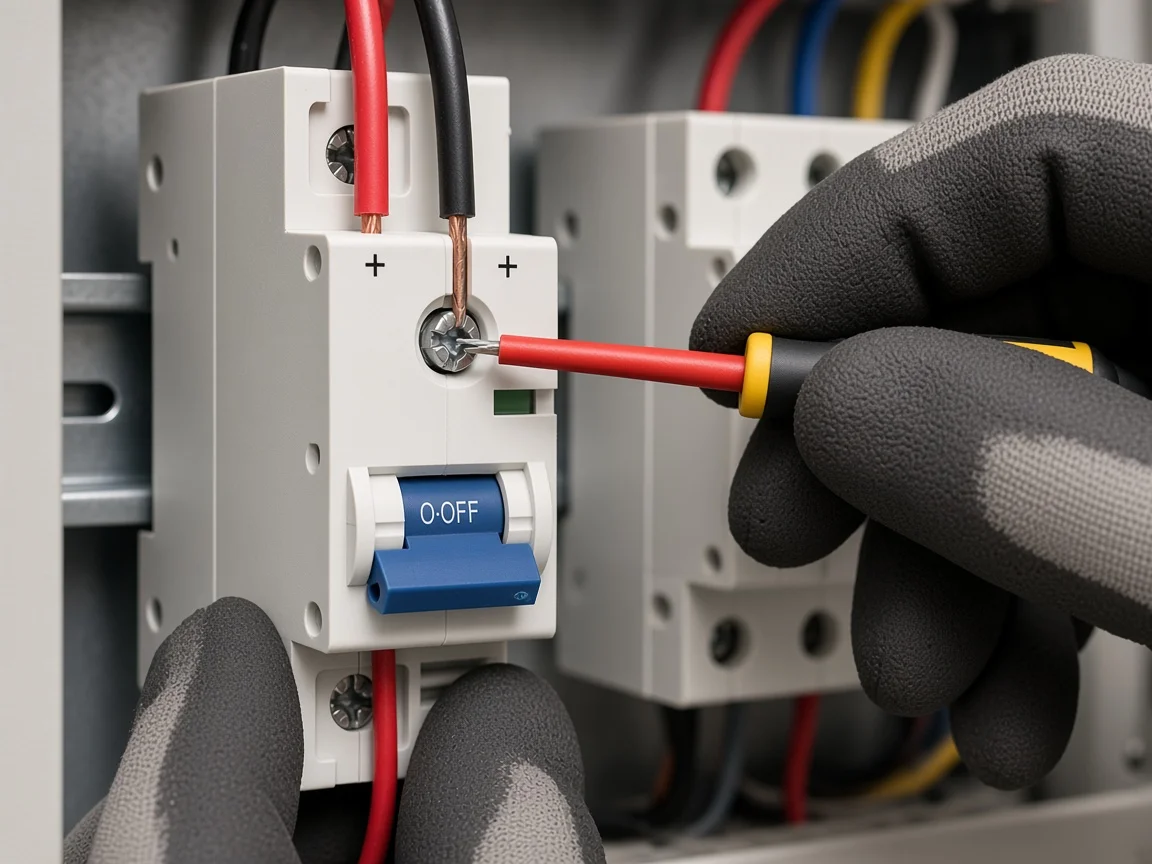
Yijin’s YJB1Z-63 and YJB1Z-125 product pages both tell installers to pay attention to “+” and “−” polarity when wiring. Treat that as polarized-family discipline on those DIN sheets. Do not invent a non-polarized claim for YJM1Z or YJB1Z if the live page does not print one.
Voltage and Current Bands That Separate DC Breaker Families
Printed Rated DC voltage (Ue) and Rated current (In) bands — plus Breaking capacity figures on the sheet — are what separate one family tier from another on a real RFQ.
Amp stickers without a DC voltage class are not a type. Cold-weather string open-circuit rise, paralleled feeders, and customize notes on the page all change which band you are actually buying.
| Live Yijin family | Printed voltage band (page scope) | Printed current band | Construction type |
|---|---|---|---|
| YJB1Z-63 | DC 250 V and 440 V | 63 A and below | DIN-rail DC MCB |
| YJB1Z-125 | DC 220 V and 440 V | 125 A and below (options include 63, 80, 100, 125 A) | DIN-rail DC MCB |
| YJM1Z | DC750 V and below (DC750 V customize note) | Up to 800 A across frames | Molded-case DC |
YJB1Z-63 also notes that 1P DC220V and 2P DC440V need to be customized. YJM1Z prints breaking capacity as 10KA/20KA by frame. Use those numbers as page facts, not as a substitute for project short-circuit studies.
Important: On the published Yijin DC sheets reviewed here, UL 489B / UL Listed marks, NEC 690 compliance language, and outdoor NEMA enclosure ratings are not printed. Keep those as separate US procurement filters when a project needs them. Source: https://yijinele-group.com/product/yjb1z-63-small-dc-circuit-breaker/.
Choose a Yijin DC Breaker Product That Fits the Family Map
Match the family you identified above to the live Yijin DC SKU whose printed band actually covers the circuit — start with the DIN miniature default when the board fits that class.
The circuit breaker category hosts these DC frames alongside other breaker SKUs; for this types map, stay with the DC pages below rather than treating the archive as a generic AC MCB catalog.
| Decision on the types map | Product to open first |
|---|---|
| Compact DIN DC need inside ≤63 A and the 250/440 V class | YJB1Z-63 Small DC Circuit Breaker |
| Same DIN role when printed In options must reach 80–125 A | YJB1Z-125 Small DC Circuit Breaker |
| Current and fault duty leave the DIN band toward hundreds of amps | YJM1Z plastic shell DC circuit breaker |
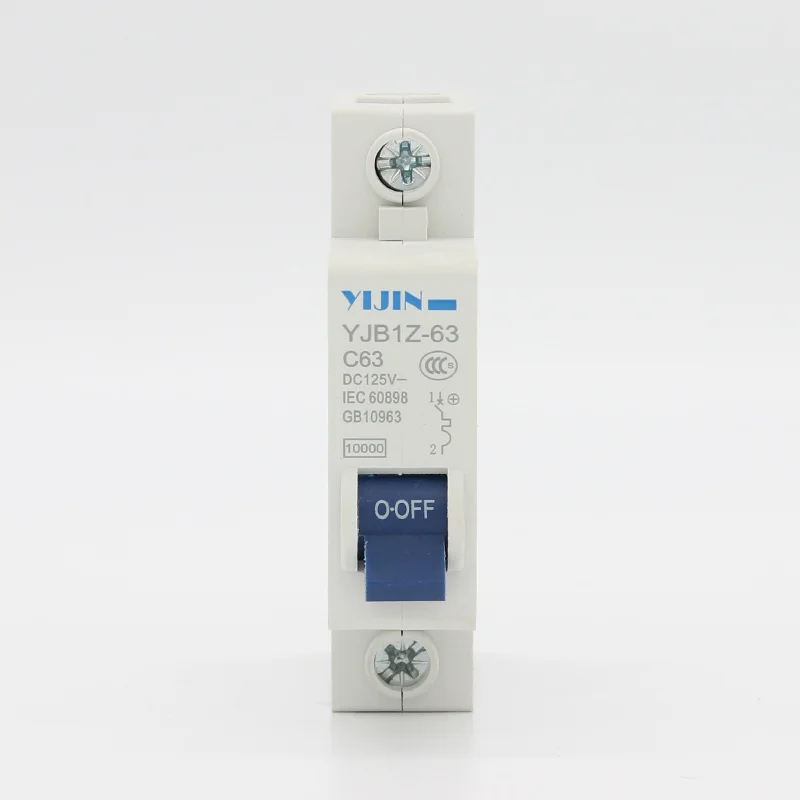
For most buyers with a compact DIN need inside the printed 250/440 V class and ≤63 A, open the YJB1Z-63 small DC circuit breaker first.
Step to YJB1Z-125 only when the printed amp options must climb. Step to YJM1Z when the board is clearly molded-case territory. This article is a family map, not a firsthand product review.
FAQ
What are the main types of DC breakers for panel work?
For low-voltage panels, start with construction families — DIN-rail DC miniature breakers and molded-case DC breakers — then read polarity class and printed voltage/current bands as further type axes. Utility HVDC solid-state or hybrid papers describe a different taxonomy.
How is a DC MCB different from a DC MCCB?
A DC MCB is the compact DIN-rail miniature family. A DC MCCB (molded-case) is the larger case family for higher continuous current and feeder-class duty. Mounting, footprint, and printed current bands change with the family — they are not style variants of the same part.
Are all DC breakers polarized?
No. Many DC breakers are polarized and must follow marked direction.
Non-polarized (bidirectional) types exist when the manufacturer explicitly rates them that way. Confirm on the datasheet; empty terminals are not proof of a non-polarized type.
How do I tell if my DC breaker is polarized?
Look for “+” / “−”, LINE/LOAD, or direction arrows, then confirm in the datasheet.
Forum buyers have been told a unit was polarized even when marks were missing — treat seller chat as a prompt to verify, not as the rating.
Is a DC isolator the same type as a DC breaker?
No. An isolator/disconnector is primarily for safe isolation.
A DC breaker is selected to interrupt overload and short-circuit current inside its printed ratings. Both may appear on a DC board; they are different jobs.
Which Yijin family maps to which type band?
YJB1Z-63 covers DIN DC ≤63 A at DC 250/440 V class language. YJB1Z-125 covers DIN DC ≤125 A at DC 220/440 V with 63/80/100/125 A options. YJM1Z covers molded-case duty up to 800 A at DC750 V and below with frame sizes on the page.
Do Yijin DC breaker pages show UL 489B?
The live YJB1Z-63, YJB1Z-125, and YJM1Z pages reviewed for this article omit UL 489B and UL Listed marks. Keep that requirement on the procurement checklist if the project needs it.
Where do solid-state HVDC breakers fit on this map?
They belong to a utility / research taxonomy (mechanical, solid-state, hybrid DCCBs) that this LV family map intentionally leaves out. Do not use those papers as a substitute for DIN MCB versus molded-case shopping.
References
The following standards and community sources support the family map above.
- IEC 60898-2 Circuit-breakers for ac and dc operation (webstore scope).
- Electrical4U — Miniature Circuit Breaker (MCB).
- Springer — Circuit breakers in HVDC systems: state-of-the-art review (topology boundary).
- iteh Standards catalog — IEC 60898-2 2016 scope restatement.
- Electrician Talk — white color for positive DC wiring.