 Yueqing Yijin Electronics Co., Ltd.




Choose a programmable in-wall timer switch for lights or a DIN-rail weekly timer
A programmable in-wall timer switch for lights stores on and off times in the switch that already controls the lamp. KG316T runs a weekly schedule from a DIN-rail module with IN and OUT screw terminals, so the two purchases solve different mounting jobs. The sections below name the wall device, separate it from the panel timer, compare how many events each class holds, keep neutral and 3-way questions on the wall, then read the printed supply and lamp load.
What shoppers mean by an in-wall programmable light timer
A decorator in-wall timer sits in the same opening as a rocker and turns lights, or a small motor load, on and off at times you store. Leviton describes that job for porch and landscape lighting, interior lights, bathroom fans, and similar loads, and splits the family into countdown, fully programmable, and app-programmed smart timers.
Intermatic’s in-wall catalog draws the same line with different labels: electronic programmable timers, mechanical timers, electronic countdown timers, and spring-wound countdown timers. A countdown timer runs the load for a stretch you pick and then opens. A programmable timer repeats a clock schedule instead of a one-shot countdown.
Sunco’s lighting-timer collection shows the same shelf in product cards. An Enerlites 7-day digital in-wall programmable timer sits next to a 30-minute preset countdown timer and ordinary decorator rockers. The shopping page is a wall-device aisle, not a panel-module aisle.
That aisle matches the live Google results for this query. The popular cards are BN-LINK, Honeywell, Woods, Dewenwils, and Leviton Decora units sold as in-wall light timers. Programming videos on the same results page walk through clock setup, weekday events, and auto mode on those wall devices.
A decorator wall device and a DIN-rail weekly control timer do different jobs
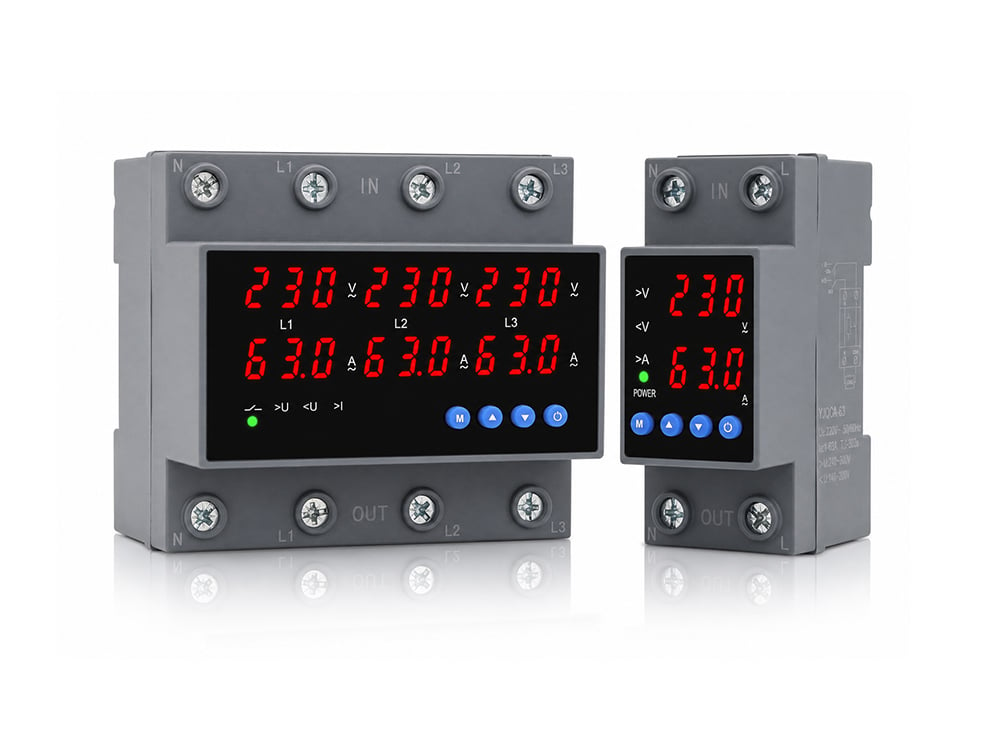
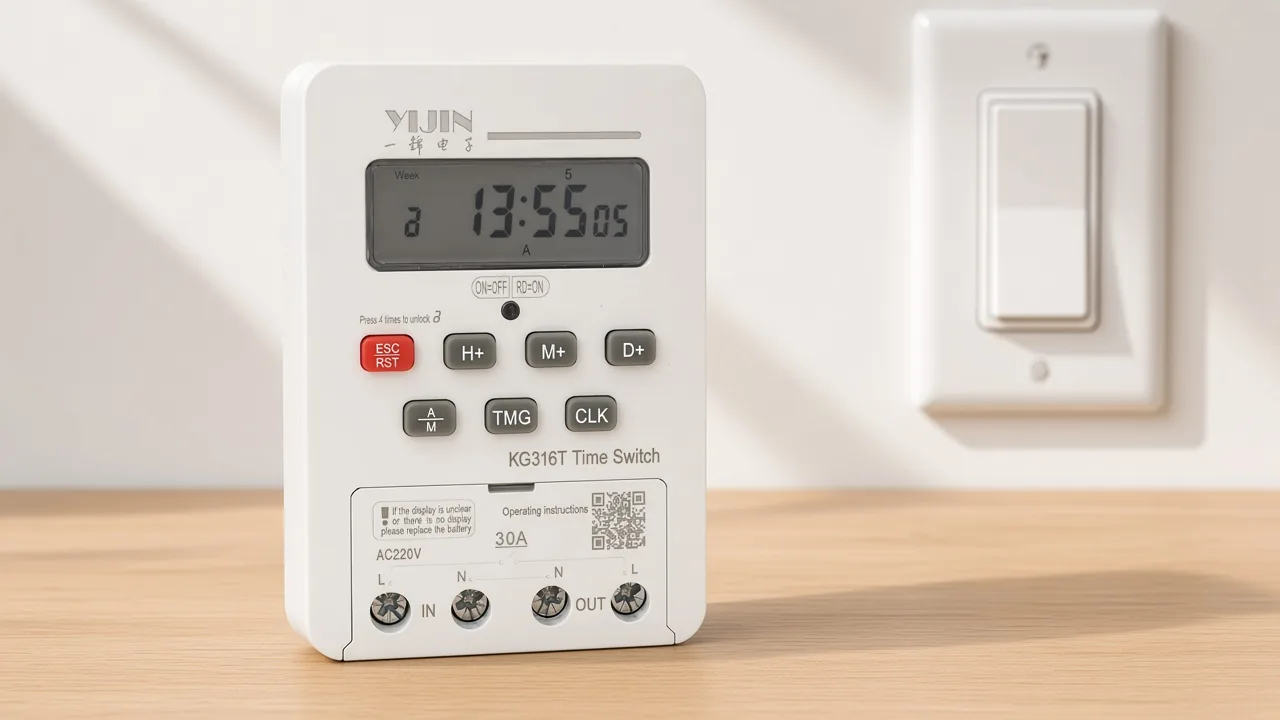
KG316T is a DIN-rail control timer, and it is not an in-wall decorator timer. The live photograph shows a panel module with four screw terminals marked IN and OUT, an LCD, and clock keys, which is a different object from a decorator wall plate.
The product page calls it a time control switch for control circuits. It uses a microprocessor, an LCD, a relay output, and a replaceable battery. Street lamps, neon and advertising signs, broadcast equipment, and household appliances are the examples printed on that page.
From the field: A Garage Journal member timing a room of grow lights said a commercial building timer would do the job and then added that it would not look right mounted on the wall. The reply asked whether the goal was a plug-in timer or a timer on new wiring. That is the same fork this query hides inside one shopping phrase.
A wall-pretty timer and a panel timer can both turn lights on and off. They do not share a faceplate, a box, or a supply class. Buying the panel module because the title says “programmable” will disappoint anyone who needed a rocker in a single-gang opening.
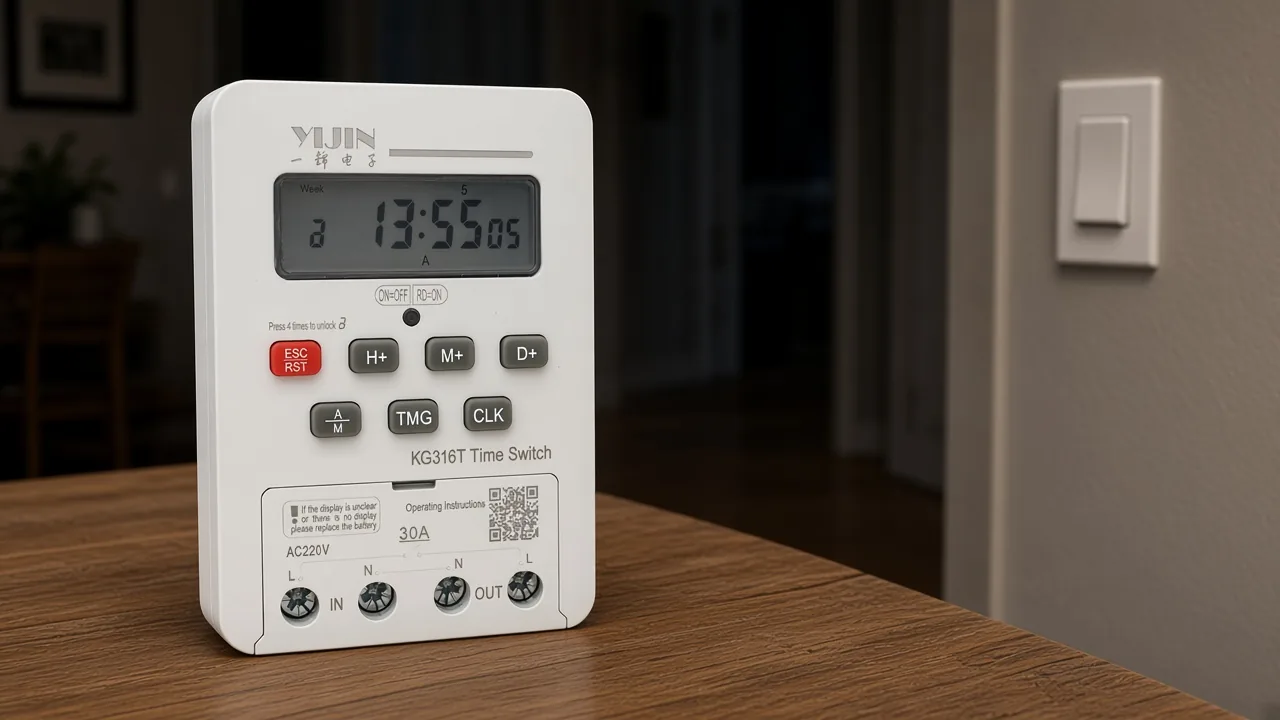
The timer switch category is where this module lives on the Yijin site. Nothing in that category is a Decora-style programmable wall switch.
How many on and off events each class can hold
KG316T stores up to 16 on/off actions per day, with a longest setting of 168 hours and a shortest setting of 1 minute. Those times can repeat every day or on a weekly cycle, including one weekday, every day, or a group of days.
Buyers often call that weekly repeat a 7 day weekly programmable timer switch. The published weekly article already walks through that programming style for this same model, so this page only uses the count to compare classes. A time switch in the ordinary sense is a timer that operates an electric switch, and a cyclical one repeats a preset on and off pattern.
Wall-timer videos in the search results talk about a different count. One BN-LINK caption describes 18 on/off programs on an in-wall unit, plus a daylight-saving adjustment and a battery backup. That caption belongs to the wall product in the video, not to KG316T.
Countdown timers hold a duration, not a week of clock events. Leviton points countdown units at bath fans, towel warmers, hot tubs, and similar “run, then stop” jobs. If the light must come on at dusk on weekdays and stay off all Sunday morning, a countdown key will not store that pattern.
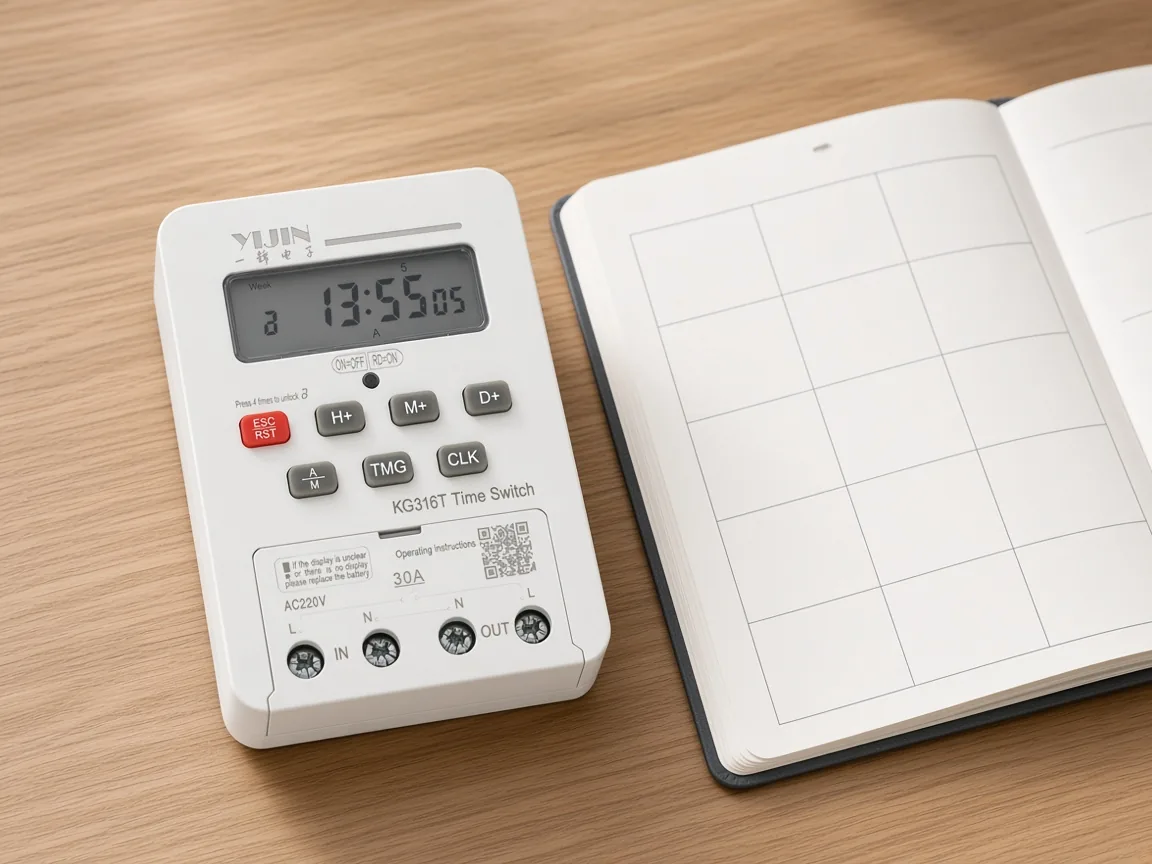
Programming on KG316T follows the keys printed on the module. Timer opens the ON event, the day key picks the weekdays, hour and minute set the time, and the same path sets the OFF event. Clock returns the display to the running clock, and the auto key is what lets the stored events run.
Neutral, single-pole, and three-way limits stay with the wall device
Neutral and traveler questions show up when someone replaces a wall switch. A Garage Journal poster swapping a towel-warmer control for a countdown timer asked whether the neutrals could be joined so the timer switched only the hot.
A 3 way light timer switch is that wall-box problem: two switch locations, travelers between them, and sometimes a neutral the new device expects. Shopping titles in the live results even advertise single-pole and 3-way use on the same in-wall timer. KG316T’s page never mentions travelers or a 3-way kit.
The photograph shows L and N terminals labeled IN and OUT. That is supply and load on a control module, not a line/load/traveler set in a residential switch box. Treat a missing neutral in an old switch box as a wall-timer problem, and read the wall device’s own sheet for it.
OSHA’s electrical overview frames shock, electrocution, fire, and explosion as the hazards electrical standards are written to limit for workers. Swapping a live wall device, or landing a panel timer with the supply still on, sits in that hazard class even when the shopping page makes the swap look like a five-minute DIY.
The KG316T page says the same thing in plainer shop language: do not install or remove the unit while power is connected, and tighten the terminal screws so the contacts do not heat under load. The battery is a No. 7 cell, the size also called AAA, and a dim display is the cue to replace it.
What KG316T prints for control supply and lamp load
The KG316T page prints a control supply of 220 V and 380 V at 50/60 Hz for control circuits of 380 V and below. The live product face also shows AC220V and 30A beside the IN and OUT terminals.
Printed load power is 6 kW resistive, 1.8 kW inductive, 1.2 kW motor, and 0.9 kW lamp. The lamp line is the one to hold next to a lighting schedule. The face amp mark and the kilowatt lines are separate printed items, and this page does not blend them into a single US branch rating.
| Check | Wall programmable timer in the search results | KG316T |
|---|---|---|
| Where it mounts | Decorator opening in a wall box | DIN-rail control timer in a panel |
| What it is meant to run | Lights and small motor loads on a wall schedule | Control circuits such as signs, street lamps, and similar loads |
| Schedule style | Countdown, clock programs, or a smart app, depending on the card | Up to 16 on/off actions, daily or weekly |
| 3-way travelers | Often printed on the wall-timer card | Not printed on the KG316T page |
| Supply the page actually names | Left to each wall-timer card | 220 V and 380 V control supply |
| Printed item | Figure on the KG316T page or face |
|---|---|
| Control supply | 220 V and 380 V at 50/60 Hz |
| Face marks | AC220V and 30A |
| Insulation voltage Ui | AC380V |
| Impulse voltage Uimp | AC1.5kV |
| Enclosure | IP50 |
| Pollution degree | 3 |
| Resistive load | 6 kW |
| Inductive load | 1.8 kW |
| Motor load | 1.2 kW |
| Lamp load | 0.9 kW |
| Daily timekeeping error | within 2 seconds |
| Mechanical life | 1000000 cycles |
| Electrical life | 100000 cycles |
| Altitude | up to 2000 m |
| Ambient temperature | -5 C to +40 C |
| Control voltage window | 85% to 110% of rated |
| Weekly clock correction | up to 28 seconds |
The page also prints a daily timekeeping error, life-cycle counts, an IP50 enclosure, and an operating window for altitude and temperature. Those figures belong with the module in a panel, not with a guess about a US wall-box fill or a listing mark. No UL mark is printed on the page or the face.
When a panel timer fits the light schedule
Use the KG316T time control switch when the light is switched from a control circuit on the printed supply and you want the daily or weekly event list above. A porch-light swap in a US single-gang box remains a decorator in-wall timer, and a 3-way pair remains a wall-timer question.
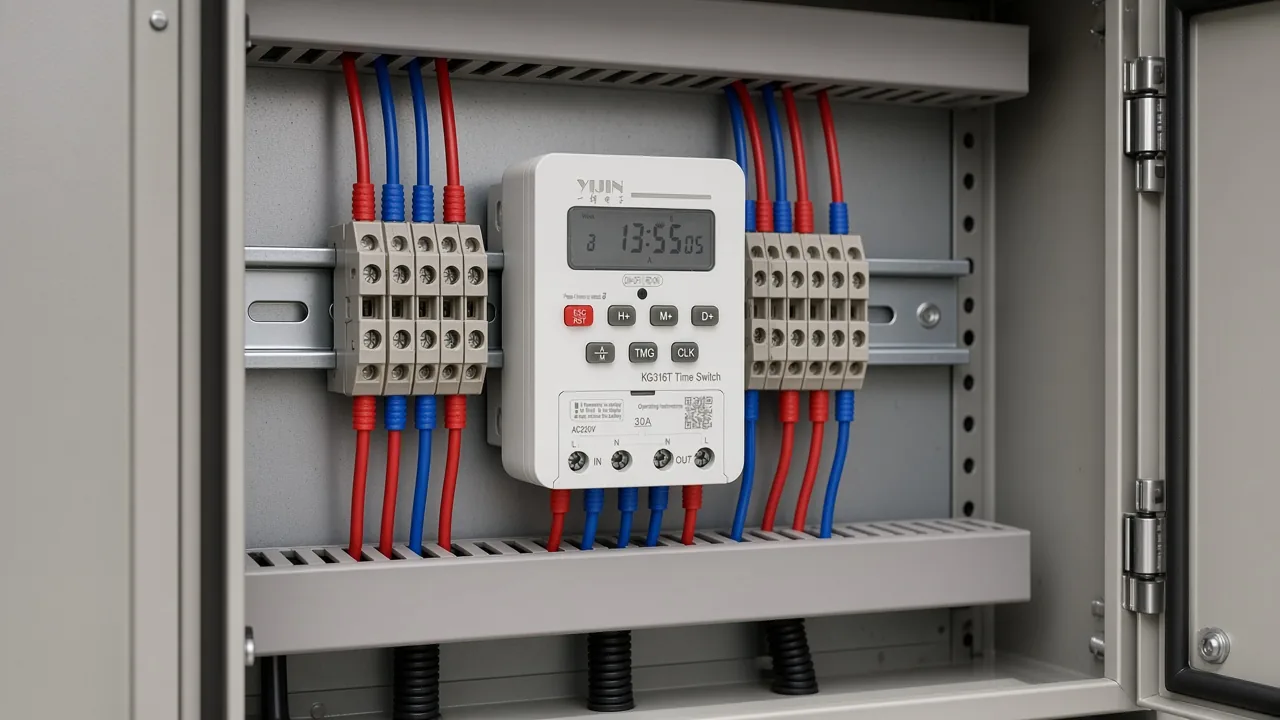
The fit is concrete. A sign or street-light contactor circuit that already runs at the printed control supply can take the module’s relay output and a weekday schedule. A bedroom switch with no neutral, or a pair of 3-way travelers, is still the wall-timer aisle those shopping cards are selling.
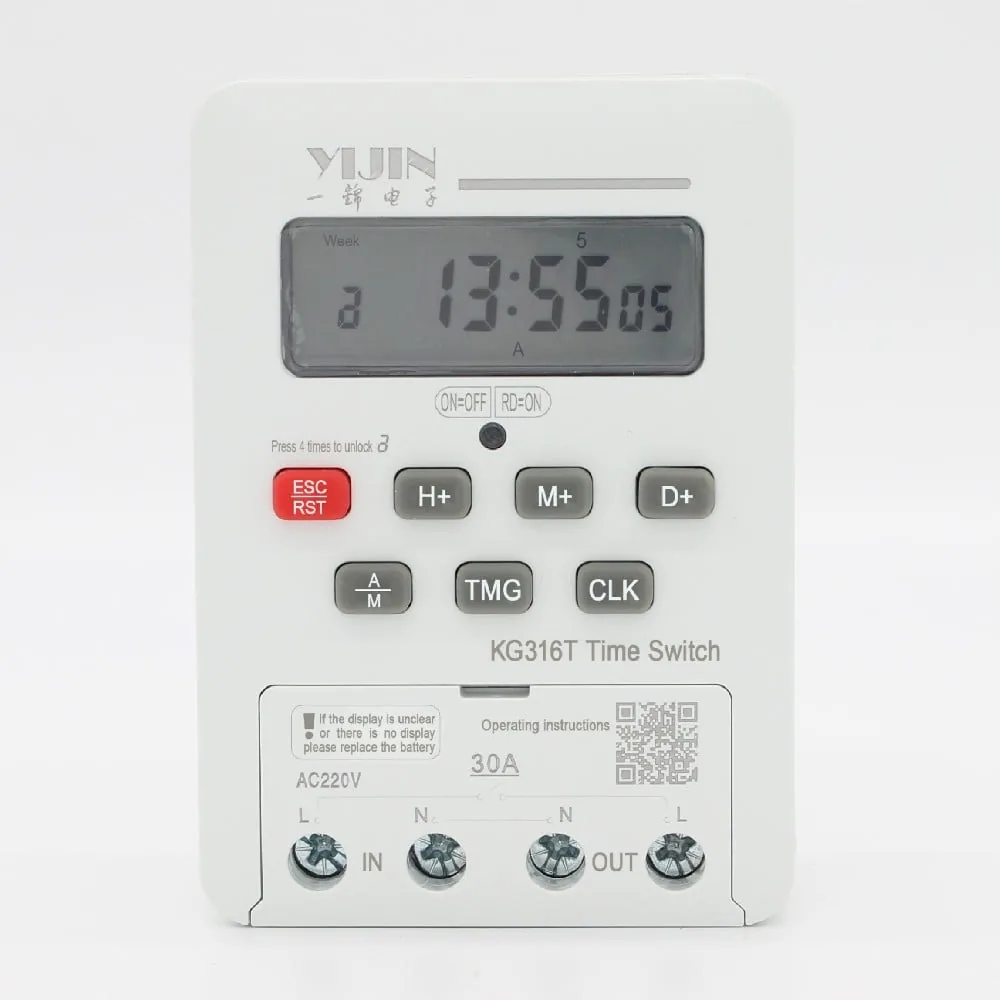
Open the product page and match the control supply, the lamp-load line, and the IN/OUT terminals to the circuit in front of you. The weekly programming article on the 7-day timer stays available when the question is how the weekday keys behave, not whether the module belongs in a wall box.
FAQ
What is the best programmable timer switch for lights?
There is no single best card in the live results. Countdown, 7-day wall programmable, and smart wall timers are different wall jobs, and KG316T is the panel alternative when the circuit is a control supply rather than a decorator box.
Is there a light switch with a built-in timer?
Leviton and Intermatic both sell in-wall timers that combine a switch opening with a clock or a countdown, and that product is a wall device. KG316T does not take that opening.
Can a timer be put on a light switch?
A wall timer is built to replace the switch. A DIN-rail control timer is built to sit on a rail and switch a control circuit through its relay. Pick the one that matches the box you actually have.
What kind of timer can I use to turn my lights on and off?
A countdown timer, a clock-program wall timer, a plug-in timer, or a panel time control switch can each turn lights on and off. The right one depends on whether you are replacing a wall plate or scheduling a control circuit.
Are digital or mechanical timers better?
Digital wall timers and KG316T store clock events and weekday groups. Mechanical in-wall timers and spring-wound countdown timers trade that flexibility for a simpler dial or a twist interval, and the better pick is the schedule you actually need.
What is the best smart switch for a wall?
The live KG316T page does not describe Wi-Fi, an app, or a smart wall plate. If the job is phone control of a wall switch, stay with a smart wall timer from that aisle. If the job is a weekly control-circuit schedule, the panel module is the relevant device.
References
- Wikipedia, “Time switch,” https://en.wikipedia.org/wiki/Time_switch
- Occupational Safety and Health Administration, “Electrical,” https://www.osha.gov/electrical
- Garage Journal, “Timer for whole circuit of outlets in a room,” https://www.garagejournal.com/forum/threads/timer-for-whole-circuit-of-outlets-in-a-room.550347/
- Garage Journal, “Two pole thermostat thread,” https://www.garagejournal.com/forum/threads/why-would-a-120v-device-have-a-two-pole-thermostat.555520/