 Yueqing Yijin Electronics Co., Ltd.



Do Lights Need AFCI Protection for Hardwired Lighting Circuits?
Yes — in US dwelling practice, do lights need afci protection when the lighting circuit feeds covered rooms, because a luminaire is still an outlet. A lights-only homerun does not skip that rule; bathroom, garage, and outdoor lights usually sit outside the dwelling list, and DIN-rail AFDD hardware is a different product class.
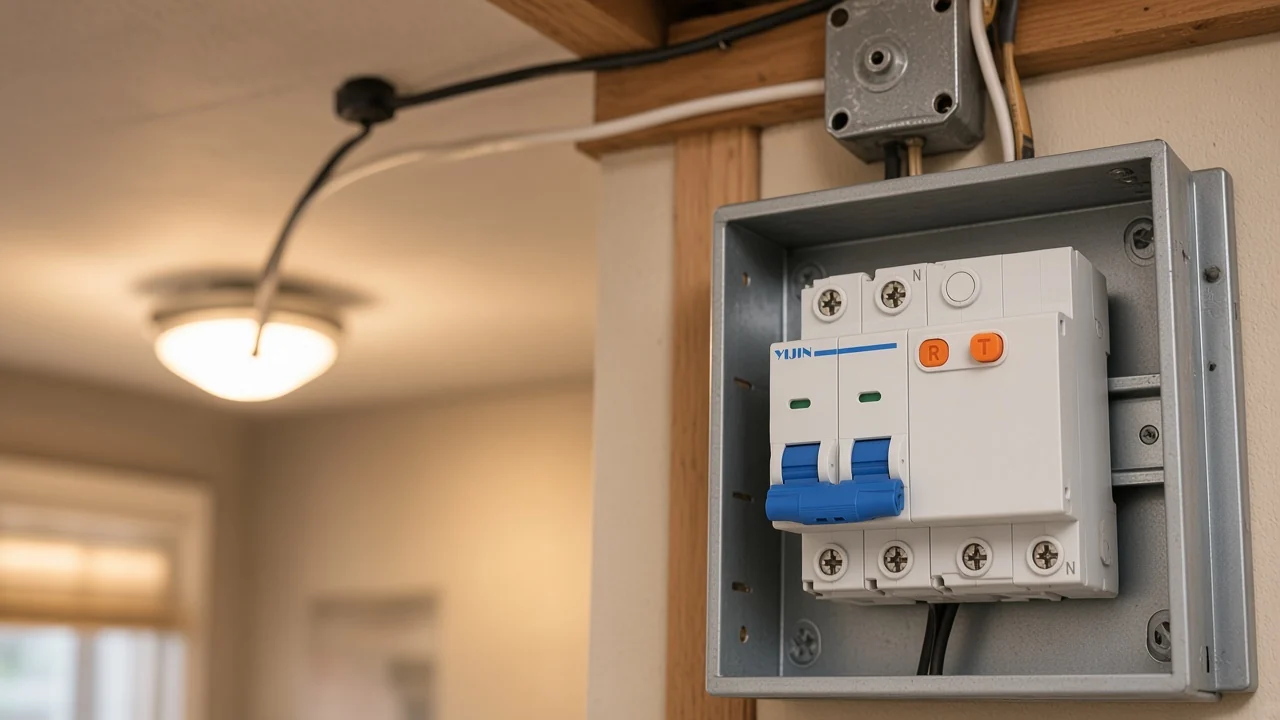
The board scene belongs with this lighting-circuit question.
The Myth: Lighting-Only Circuits Skip AFCI
Hardwired lights are still outlets, so a dedicated lighting circuit does not skip AFCI just because it has no receptacles.
The myth is easy to repeat on a takeoff. Someone sees a 15 A lighting homerun with only ceiling boxes and concludes that arc-fault rules apply to plugs, not lamps.
US code education treats an outlet as the point where current is taken to supply utilization equipment. A lighting fixture sits on that definition.
Wikipedia’s AFCI history makes the same turn. In 2002 the NEC dropped the word “receptacle” and left “outlets,” which pulled bedroom lights and wired-in devices such as ceiling fans into the conversation.
That is why a “lights-only” label is not a safety classification. It is a load mix. Ordinary overcurrent devices still miss many low-current arcs in a lamp cord or a loose luminaire termination, which is the fire job AFCI-class devices were added to cover.
A procurement reader who is quoting a US dwelling unit lighting package should ask which rooms the homerun serves, not whether the prints show receptacles on that circuit.
Which Dwelling Rooms Pull Lighting Circuits Into AFCI
In US dwelling education, circuits that feed lighting in listed living spaces, bedrooms, kitchens, closets, hallways, and laundry sit in the AFCI conversation.
Trade summaries of NEC 210.12 list those rooms as the dwelling map. If a branch supplies lighting outlets or other devices in those spaces, AFCI protection is in the US market-context answer. Later exam texts also mention 10 A alongside 15 A and 20 A, so the ampere list is edition-sensitive.
Dining-room lighting is a clean example. EC&M’s apprentice write-up states that lighting outlets on a 120 V, 15 A or 20 A dining-room branch require AFCI. Laundry lighting on the same voltage and ampere class is treated the same way.
Bedrooms are the oldest public version of the rule. Searchers still ask whether afci breakers are required in bedrooms because that is where the lighting-outlet expansion first became obvious.
Are afci breakers required by code for those lighting outlets? In jurisdictions that adopted the dwelling 210.12 room list, yes for the covered 120 V branches. Local amendments still control the job.
| Lighting location (US dwelling education) | Typical 120 V 15/20 A lighting AFCI answer |
|---|---|
| Kitchen, family room, dining room, living room | In the covered list |
| Bedroom, closet, hallway, laundry | In the covered list |
| Parlor, library, den, sunroom, recreation room, similar areas | In the covered list |
| Bathroom, garage, outdoors | Usually outside the dwelling AFCI list |
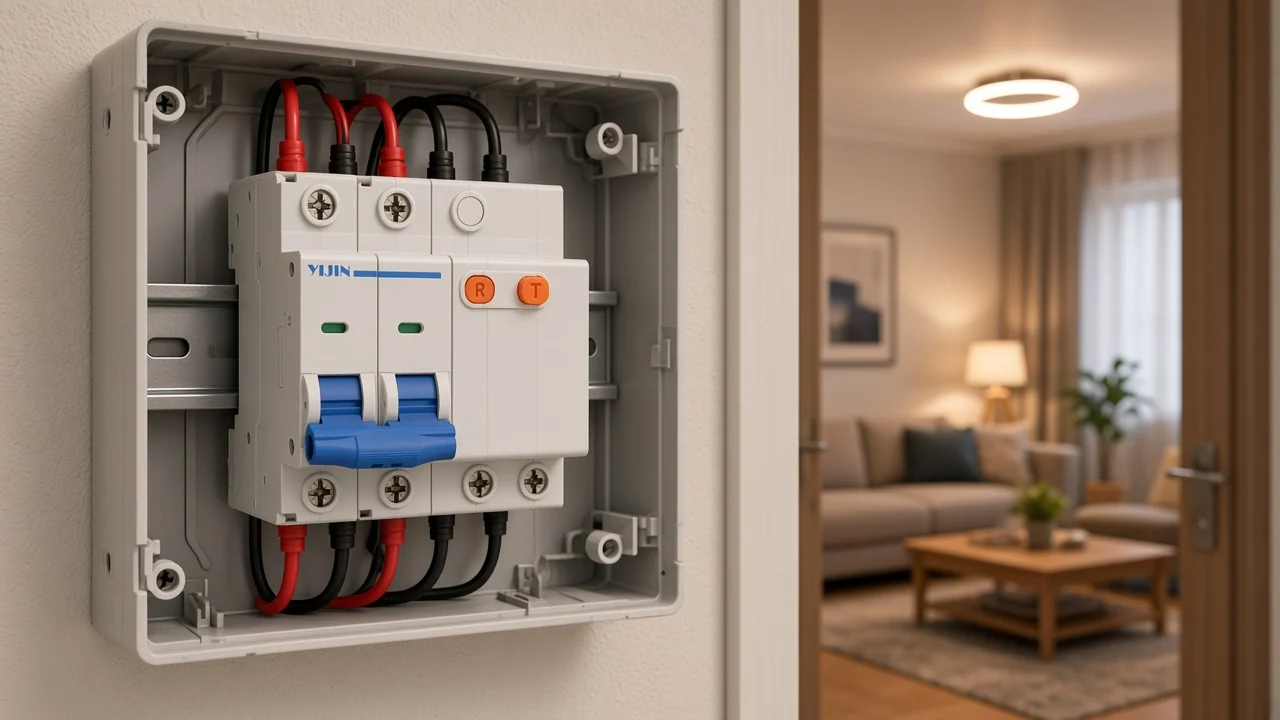
The living-space lighting scene belongs with the dwelling-room map.
Bathroom, Garage, and Outdoor Lights Usually Sit Outside That List
Dwelling AFCI lists generally omit bathroom, garage, and outdoor outlets — unless the circuit or switch also serves a covered room.
Mike Holt’s EC&M location summary is blunt: AFCI protection is not required for outlets located outside or in garages or bathroom areas. That is the usual US dwelling exclusion set contractors cite when they keep garage and exterior lighting on non-AFCI breakers.
It is not a global “wet area” skip. Dormitory AFCI lists include bathrooms, so occupancy type matters. A bathroom lighting circuit that also feeds a bedroom or hallway lighting outlet is no longer a pure exclusion circuit.
Garage lighting that shares a living-room lighting homerun inherits the covered-room answer. The exclusion only holds when the lighting outlets and their control stay in the omitted spaces.
Shock protection is a separate question. Bathroom and garage receptacles often need GFCI even when the lighting branch is outside the dwelling AFCI list. Mixing those two jobs is how people “solve” lighting AFCI with a GFCI device and still miss the fire rule.
Shared Lighting Circuits and Switches in Covered Rooms
AFCI follows the branch that serves listed lighting outlets, not a separate device per room; a switch in a covered room can change the answer.
A common field myth says every room needs its own AFCI because every room has lights. Mike Holt forum replies reject that. Protection is required for the branch serving listed outlets or devices, not a unique breaker per space.
Lighting outlets in those spaces need AFCI whether they sit on a dedicated lighting circuit or share a receptacle circuit. One LED lighting homerun that feeds several living rooms is still one branch circuit serving listed lighting outlets.
Switch location is the second trap. Forum commentary notes that an exterior lighting circuit with a lighting switch in a living room can still need AFCI because of that switch location, even when the luminaire is outdoors.
From the field: On Mike Holt’s forum, a contractor asked whether a shared lighting circuit needed a separate AFCI for every room; replies said lighting outlets in listed spaces require AFCI on the serving branch, and a living-room switch can pull exterior lights into that answer. https://forums.mikeholt.com/threads/afci-room-requirement.2566428/
Keep non-listed lighting separated only when the drawings actually keep loads and switches out of covered rooms. A “garage + front porch” lighting circuit with indoor living-room switches is not that drawing.
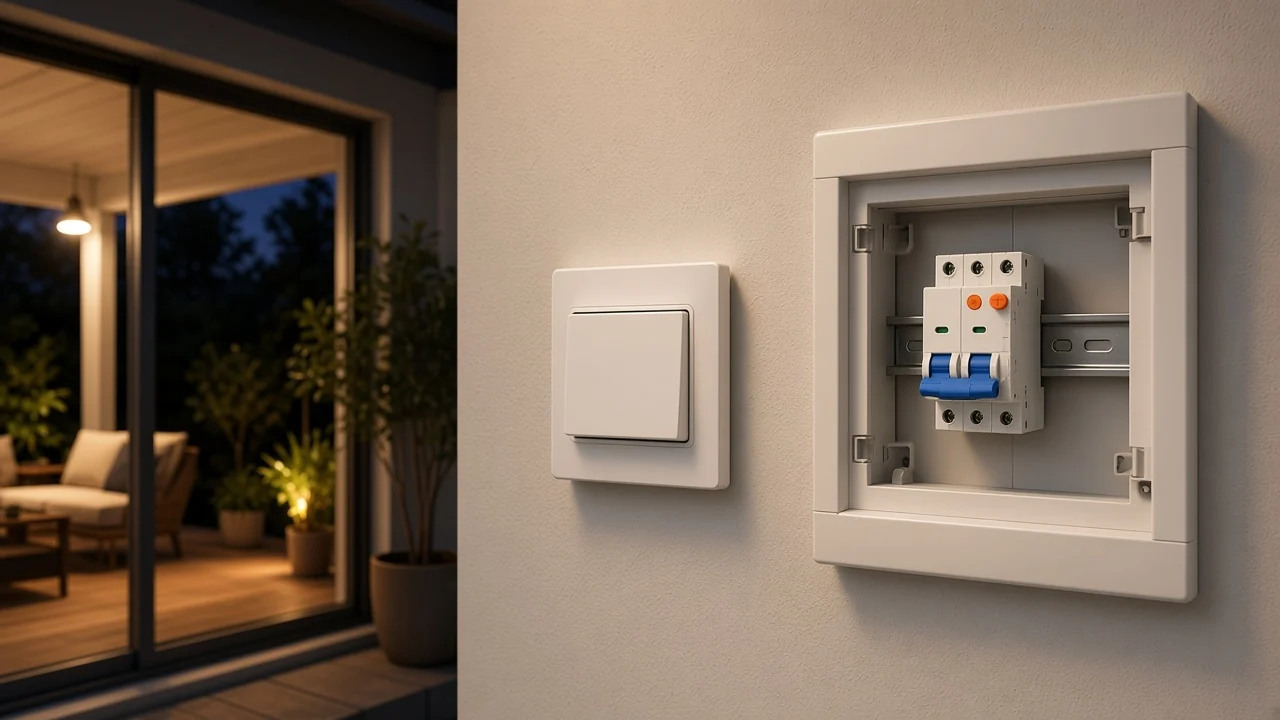
The switch scene belongs with the shared-branch discussion.
New Lighting Work Versus Existing Circuits
Adding lighting in listed areas is treated as adding outlets; short extensions under 6 ft with no new outlets can be excepted in US education.
Existing houses create the loudest version of the myth: “the lights have always been on a regular breaker.” US education does not force a whole-house lighting retrofit on day one. It does treat new or extended lighting in listed rooms as a trigger.
A closet recessed-light addition is the forum case. Installing three cans in an upstairs closet on an old lighting circuit is adding lighting outlets in a listed area. Replies there also state that GFCI protection is not a substitute for AFCI protection.
EC&M’s 210.12 teaching includes a short-extension exception: AFCI is not required for extension wiring less than 6 ft long if no outlets or devices are added other than splicing devices. That is a bounded existing-work note, not a license to add fixtures.
When the lighting circuit cannot receive a listed AFCI breaker, US education points to other listed methods such as an outlet-branch-circuit AFCI at the start of the new work. Those methods still belong to listed US AFCI hardware, not to a random residual-current device.
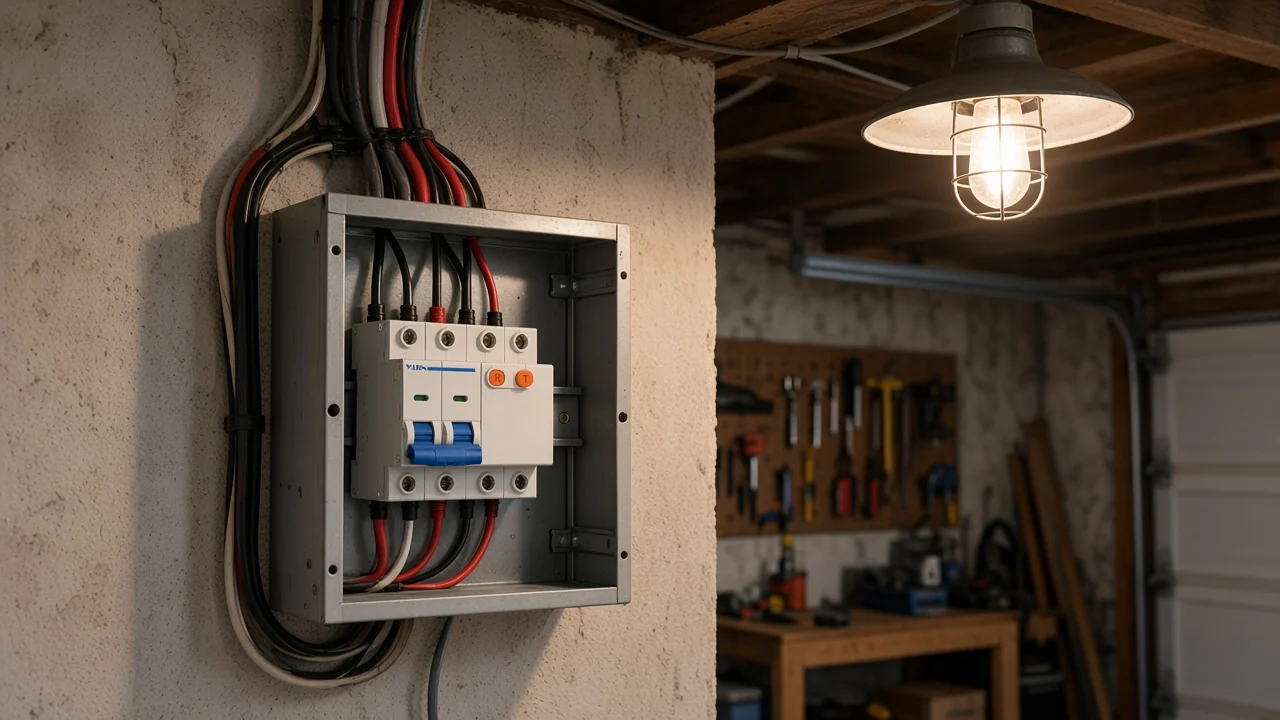
The garage lighting scene belongs with existing-work choices.
US Lighting-AFCI Talk Versus IEC/GB AFDD Hardware
US listed lighting-branch AFCI and IEC/GB DIN-rail AFDD name related fire jobs under different rules; Yijin pages do not print a NEC 210.12 listing.
US lighting-AFCI talk here is market context. Combination-type AFCI is the common listed whole-circuit method in NEC education. EC&M also notes that the 120 V circuit limitation means 230 V equipment is outside that 210.12 stem.
IEC installation language does not copy the US dwelling lighting-room list. The Electrical Installation Guide’s account of IEC 60364-4-42:2024 requires AFDDs on specified socket-outlet circuits and recommends AFDD protection for other final circuits. Lighting-only finals are not the same mandatory US bedroom-lighting story.
Yijin’s cluster lives under Others. The printed breaker language is AFDD-style DIN-rail hardware with GB/T31143 on the YJB1-63/AFD arc fault circuit breaker page, not UL 1699 lighting-branch listing. Sensing and trip language sit in How Do AFCI Breakers Work; board-side install language sits in How to Install AFCI Breakers.
UL 1699 education numbers (branch-type 75 A parallel arcing, combination-type 5 A series arcing) describe listed US AFCI types. They are not Yijin test results.
| Reader job | US lighting-AFCI market context | IEC/GB AFDD-class hardware on this site |
|---|---|---|
| What is being asked | Listed 120 V dwelling lighting outlets in covered rooms | DIN-rail arc-fault detection plus overcurrent on printed 230 V / 50 Hz scopes |
| Typical form | Panel AFCI / listed outlet methods | Standard-rail AFDD-style breaker or a separate detector |
| Lighting-circuit trigger | Lighting outlet in a listed dwelling room | Not a copy of the NEC room list; IEC text emphasizes specified socket-outlet circuits |
| Honest Yijin mapping | Market context only | Quote the live GB/T31143 / GB14287.4 pages |
Product recommendation: YJB1-63/AFD for DIN-rail Lighting Boards
Use the live YJB1-63/AFD page when the specification is DIN-rail AFDD-style hardware — not as a UL listed US lighting AFCI.
Target URL: https://yijinele-group.com/product/yjb1-63-afd-arc-fault-circuit-breaker/
The YJB1-63/AFD arc fault circuit breaker is assembled from a small circuit breaker and an arc fault protection module. The live page gives overload, short-circuit, and series/parallel arc-fault protection for AC 50 Hz, rated voltage 230 V, and rated current up to 63 A.
The parameter table lists model YJB1-63/AFDD, 2P, currents 10/16/20/25/32/40/50/63 A, standard GB/T31143, C/D curves, serial arc 5 and combined arc 75, IP20, and standard rail installation. Those are first-party page facts for buildings and similar lines, not a NEC 210.12 lighting-branch approval.
If the specification also wants leakage monitoring, the YJB1-63/AFD Circuit Breaker with Leakage Arc Fault is a different job on the same hub. If the job is alarm and communication rather than a breaker trip, the YJ-AFD-SMG Fault Arc Detector follows GB14287.4-2014 as an independent detector.
None of those SKUs replace a listed US 120 V lighting-branch AFCI in a loadcenter. Use listed US AFCI methods when the lighting circuit is a US dwelling 210.12 job. Use the YJB1-63/AFD page when the board is DIN-rail AFDD-class hardware matching the printed ratings.
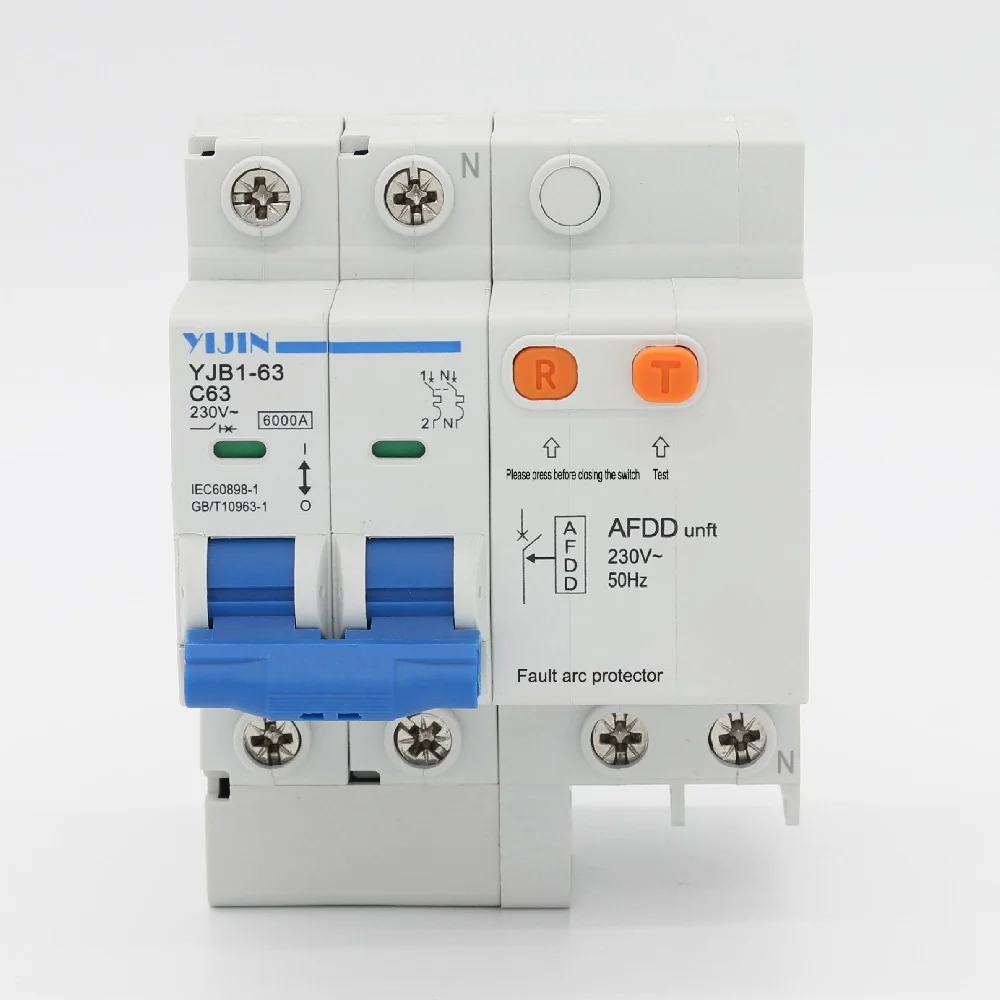
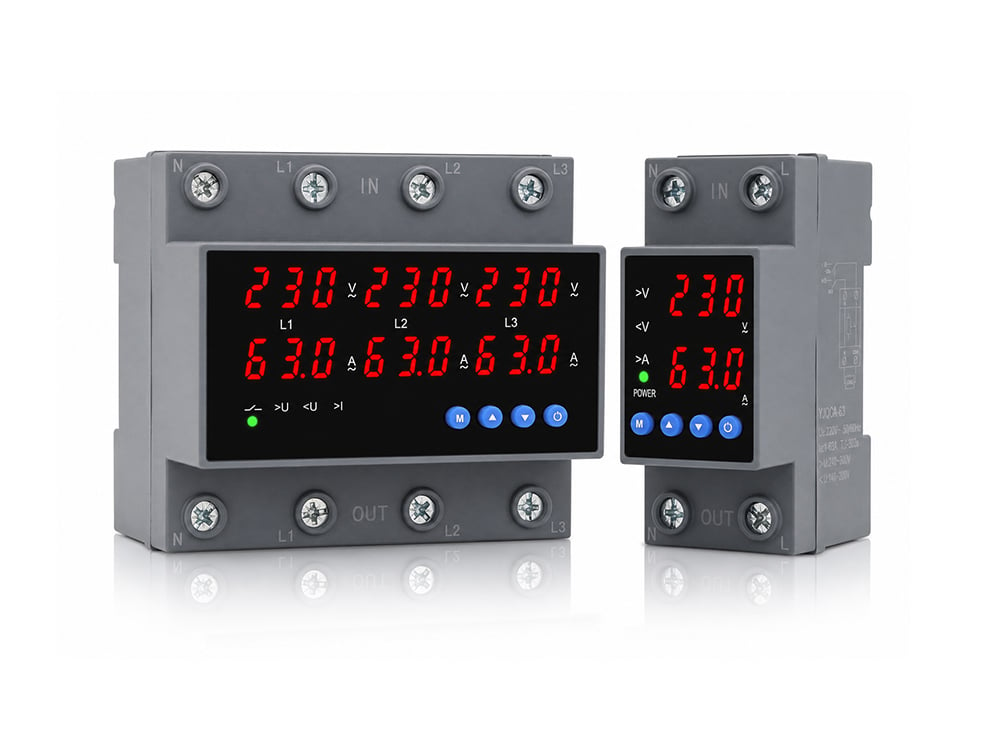
The product photo belongs with the DIN-rail recommendation.
FAQ
Are arc-fault breakers required on lighting circuits?
Often yes in US dwellings when the lighting circuit supplies outlets or devices in covered rooms. A hardwired luminaire is still an outlet.
Do bathroom lights need AFCI protection?
Usually not on the dwelling AFCI room list. Dormitory lists include bathrooms, and a bathroom lighting circuit that also serves a covered room is no longer a pure exclusion.
Do garage or outdoor lights need AFCI?
Dwelling AFCI lists generally omit garage and outdoor outlets. A living-room switch or a shared interior lighting homerun can still pull those lights into the covered-room answer.
Does a dedicated lighting-only circuit skip AFCI?
No. AFCI follows listed lighting outlets on the branch, not the absence of receptacles.
Do existing lighting circuits have to be retrofitted?
US education treats new or extended lighting in listed areas as a trigger. A short extension under 6 ft with no added outlets or devices can be excepted.
Are AFCI breakers required by code for dwelling lighting outlets?
In adopted 210.12 jurisdictions, covered 120 V lighting outlets in listed dwelling rooms are in the AFCI conversation. Ask the authority having jurisdiction which edition applies.
Can a GFCI device replace AFCI on a lighting addition?
No. Forum replies on closet lighting additions state that GFCI protection is not a substitute for AFCI protection.
Is a DIN-rail AFDD a listed US lighting-branch AFCI?
No. IEC/GB AFDD-class DIN-rail devices and listed US lighting-branch AFCI share a fire idea under different rules. Yijin pages print GB/T31143 or GB14287.4 language, not a NEC 210.12 listing.