 Yueqing Yijin Electronics Co., Ltd.


12 Volt DC Surge Protector — Myths, Voltage Class, and Honest Fit
A 12 volt dc surge protector only matches a true 12 V DC network when its continuous operating voltage is built for that class—not when a shopping title simply says “12V.” This article separates consumer and automotive search results from DIN-rail Class II DC SPDs, shows how Uc, In, and Up must follow the DC system voltage, and maps an honest fit to Yijin’s live DC module without inventing a 12 V listing.
What Shoppers Usually Mean by “12 Volt DC Surge Protector”
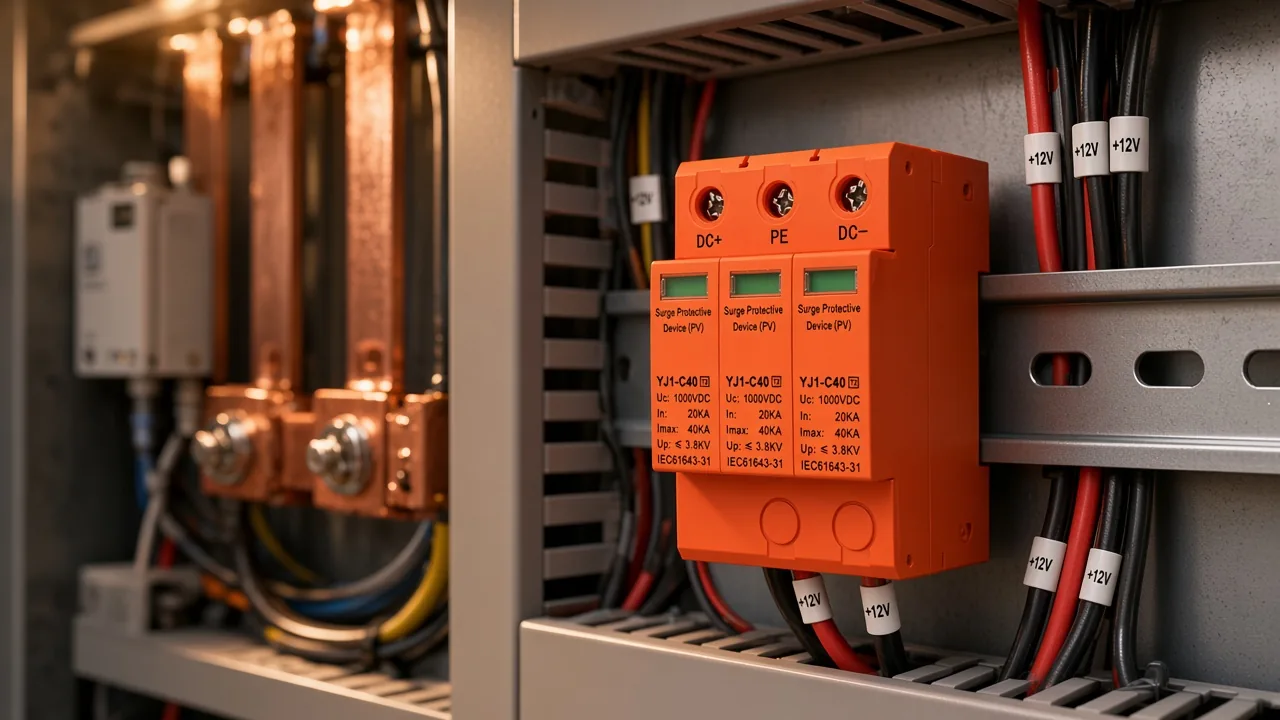
Search results for this phrase usually mix four different product ideas under one label. Buyers see vehicle EMP and battery “defenders,” outdoor camera inline arresters, tiny TVS-style clamps for electronics, and modular DIN-rail DC surge protective devices (SPDs) that are actually voltage-classed to a DC network.
Google’s shopping layer leans hard into consumer and automotive gadgets. A parallel industrial search surfaces true 12 Vdc modular SPDs alongside high-voltage PV DC modules. The shared words “12 volt” and “surge” hide those class differences until you read continuous voltage ratings.
Procurement readers should treat the keyword as a voltage-class question first. Ask which DC bus you are protecting before you compare brand names or kiloamp headlines.
Consumer 12 V Search Results Are Not DIN-Rail Class II DC SPDs
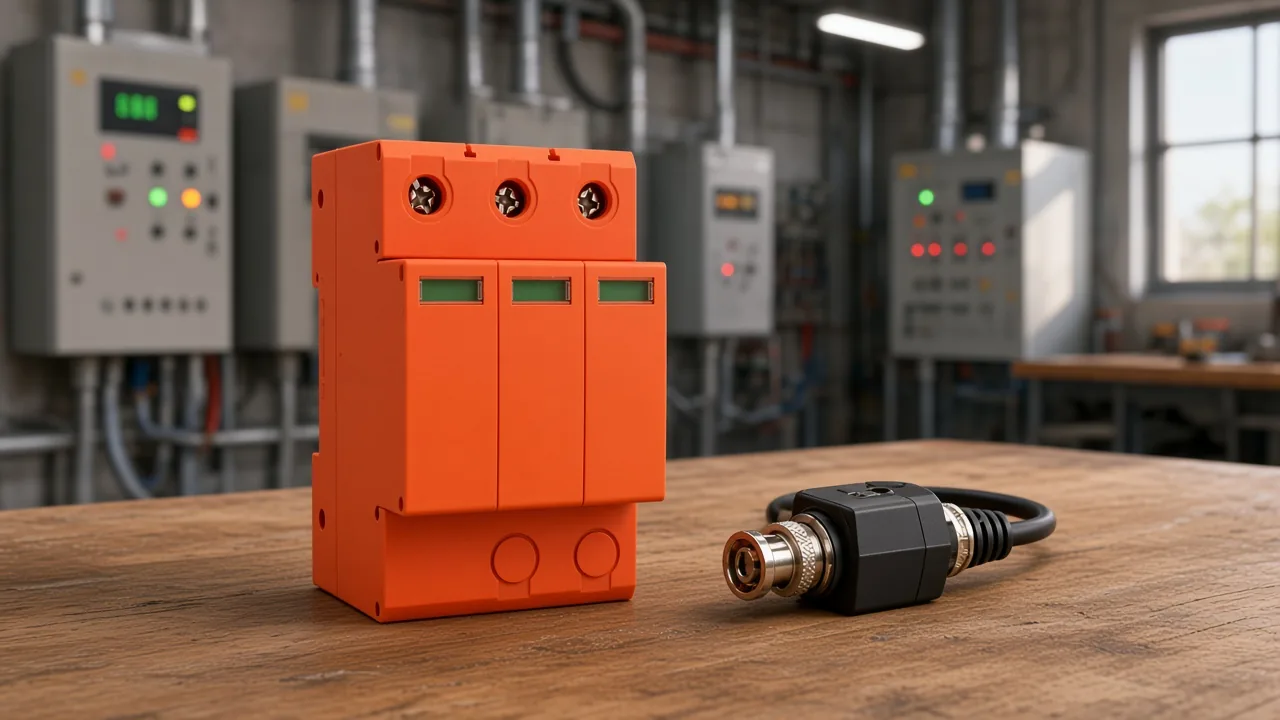
Consumer and automotive listings are usually series or clamp devices aimed at a battery lead, camera power feed, or vehicle accessory circuit. They may help that local job, but they are not the same procurement object as a pluggable DIN-rail Class II DC SPD intended for panel distribution.
True modular 12 Vdc SPDs exist in the industrial market. One widely published Type 2 example for a 12 Vdc network lists Un-dc 12 Vdc, maximum continuous DC voltage Uc 15 Vdc, In 1 kA, Imax 2 kA, and Up around 85 V, with DIN-rail mounting and parallel connection. That is a 12 V-matched module: Uc sits slightly above the network voltage.
A high-voltage DC Class II module solves a different panel job. Its Uc may be measured in hundreds or thousands of volts so it can live on PV strings or high-voltage DC distribution. Putting that module on a 12 V battery rail because the title also says “DC surge” is a category error, not a bargain.
| Buyer object | Typical form | Voltage-class clue | Common shopping home |
|---|---|---|---|
| Vehicle / EMP “12 V protector” | Bolt-on or inline battery device | Marketed for 12 V automotive bus | Consumer marketplaces |
| Camera / CCTV DC arrester | Waterproof inline module | Labeled DC 12/24 V camera feed | Security accessories |
| 12 V-matched DIN SPD (industry example) | Pluggable 35 mm rail module | Uc near 15 Vdc on a 12 Vdc network | Industrial SPD catalogs |
| High-voltage DC Class II SPD | Pluggable 35 mm rail module | Printed DC500–1500 V class ratings | PV / DC power SPD lines |
Match Uc, In, and Up to the DC Voltage Class
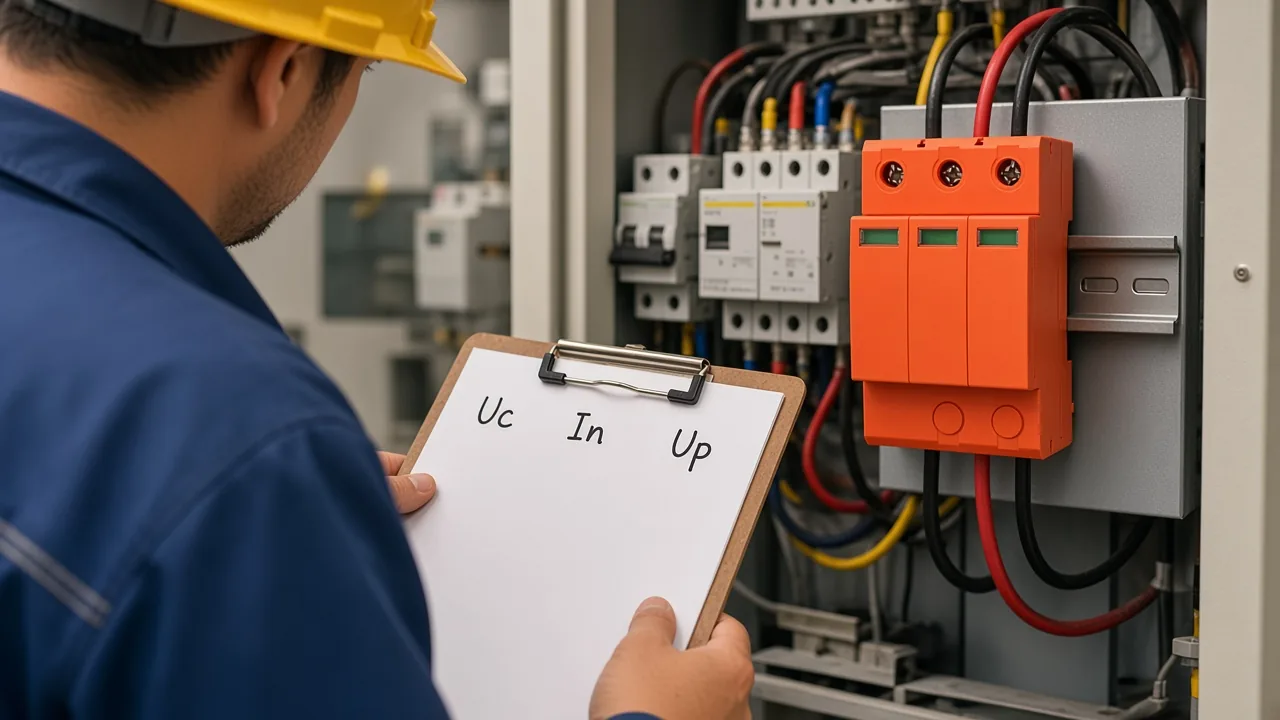
Uc—maximum continuous operating voltage—is the first filter. Professionally, it is the highest continuous voltage the SPD is designed to withstand without entering protective conduction.
In plain terms, it is the “normal voltage ceiling” the module is built for. A 12 V network needs a Uc that belongs with 12 V; a 24 volt dc surge protector search needs the same logic one step up; a PV string needs a Uc in the high-voltage DC class.
In and Imax describe how much surge current the module is rated to discharge under the stated waveform (often 8/20 µs). They matter after voltage class is correct. A large In on the wrong Uc still leaves 12 V electronics exposed for everyday clamps those parts can actually survive.
Up—the voltage protection level—describes residual voltage during the specified surge test. Wikipedia’s surge-protector overview frames the related idea as clamping or let-through voltage: the level at which protective components begin limiting the spike seen by the load. Compare Up to what the protected equipment can tolerate, not to marketing adjectives.
Metal-oxide varistors (MOVs) inside many SPDs are voltage-dependent. Manufacturer practice for 12 Vdc modular units is to match those varistors to the network voltage. That is why a PV-class MOV stack cannot be treated as a universal “DC” answer for every low-voltage bus.
12 V Vehicle, Battery, and Control Circuits vs PV High-Voltage DC
A 12 V vehicle or battery bank lives in a low-voltage DC world. Charging, load dumps, and accessory switching create their own transient patterns. Many sensitive electronics on that bus are protected locally with transient-voltage-suppression (TVS) diodes or similar clamps sized for low voltage.
Control panels that run 12 V relays and solenoids often fail from inductive kickback on the coil circuit. Field discussions on Electrician Talk urge surge suppression or flyback diodes when valves share a 12 V source. That is a control-circuit suppression problem, not a request for a PV-string Class II SPD.
PV high-voltage DC is a different architecture. Photovoltaic systems combine arrays, inverters, and sometimes batteries, and the string-side DC voltage is commonly far above 12 V.
A pv dc surge protection device for those conductors must be rated for that high-voltage DC class. Confusing the battery label “12 V” with the string SPD is how buyers end up with modules that barely begin conducting until the surge is already in the kilovolt range.
Important: Community engineers reviewing small PV-plus-battery builds have warned that suppressors meant for PV string voltages up to about 1000 V may not usefully protect a 12 V battery rail—they can wait until the surge is already enormous before they do meaningful work (AskElectronics thread). Match the suppressor class to the bus you are actually wiring.
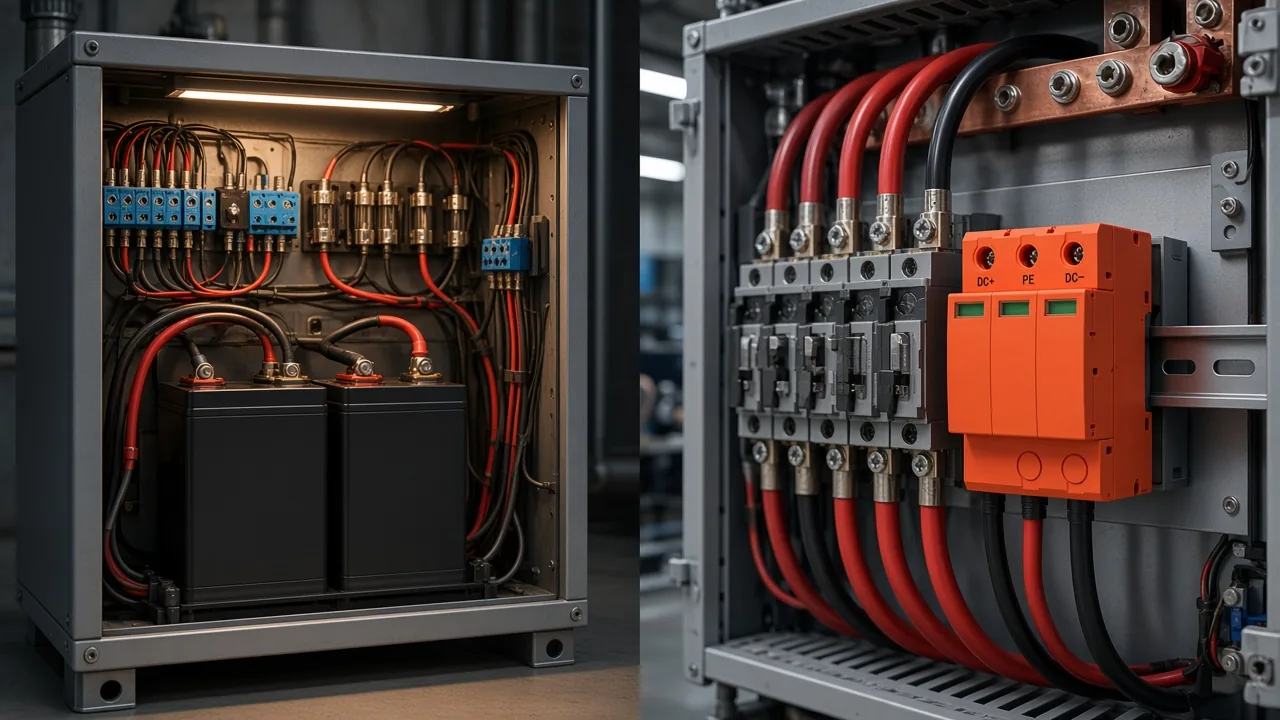
What Yijin’s Live DC SPD Listing Actually Shows
Yijin’s live YJ1-C40 DC Surge Protector is a DIN-rail DC SPD for DC power systems. The product table prints rated operational voltages DC500V, 600V, 800V, 1000V, 1200V, and 1500V, with maximum continuous operating voltage Uc (L-N) DC1500V.
The same table lists nominal discharge current In 20 kA, maximum discharge current Imax 40 kA, voltage protection level Up ≤3.8 kV, response time ≤25 ns, 35 mm rail mounting, and IP20. Page copy places the series in DC distribution and photovoltaic-related DC protection contexts—not in automotive 12 V EMP marketing.
There is no printed 12 V, 15 V, or similar low-voltage Uc on that live table. Do not invent one for RFQs or automotive listing claims. If a buyer’s specification truly requires a 12 V-matched modular SPD, this SKU is the wrong voltage class.
| Parameter (YJ1-C40 DC, live table) | Printed value |
|---|---|
| Rated operational voltage | DC500V / 600V / 800V / 1000V / 1200V / 1500V |
| Uc (L-N) | DC1500V |
| In (8/20 µs) | 20 kA |
| Imax (8/20 µs) | 40 kA |
| Up (L-N) | ≤3.8 kV |
| Response time | ≤25 ns |
| Mounting | 35 mm standard rail |
For contrast, Yijin’s YJ1 Integrated Surge Protector (800V) prints AC ratings (Un 220 V AC; Uc 690/800 V AC; Class II). It is not a 12 V DC answer either. The YJSCB PV surge backup breaker is a backup protector for SPDs, not a 12 V DC surge module.
Choose the Nearest Verified DC SPD Without Inventing a 12 V Listing
Start from the bus voltage you can measure or read on the design drawing. If the continuous DC voltage is truly in the 12 V class—or a neighboring 24 V class for a 24vdc surge protector din rail requirement—select a suppressor whose Uc belongs to that class. Industry 12 V modular examples sit near 15 Vdc Uc; a 24 V search should follow the same matching rule one step higher.
If the bus is high-voltage DC—PV strings, DC distribution panels, or similar—use a high-voltage DC Class II SPD and read the printed range. On Yijin’s live catalog, that path points to YJ1-C40 DC with DC500–1500 V ratings and Uc DC1500 V, filed under the Surge Protection Device category.
Refuse the shortcut of “any DC SPD.” A wrong Uc wastes money and leaves the 12 V electronics unprotected in the voltage window that actually damages them. Keep certification language limited to what each page prints; this site package does not support inventing automotive 12 V SPD listing claims for Yijin.
YJ1-C40 DC When Your Real Need Is High-Voltage DC Surge Protection
After the myth is cleared, many B2B readers discover their real requirement was never a cigarette-lighter gadget—it was a DIN-rail DC SPD for a high-voltage DC bus. For that decision, open the YJ1-C40 DC Surge Protector and compare the printed Uc and discharge ratings to the system design.
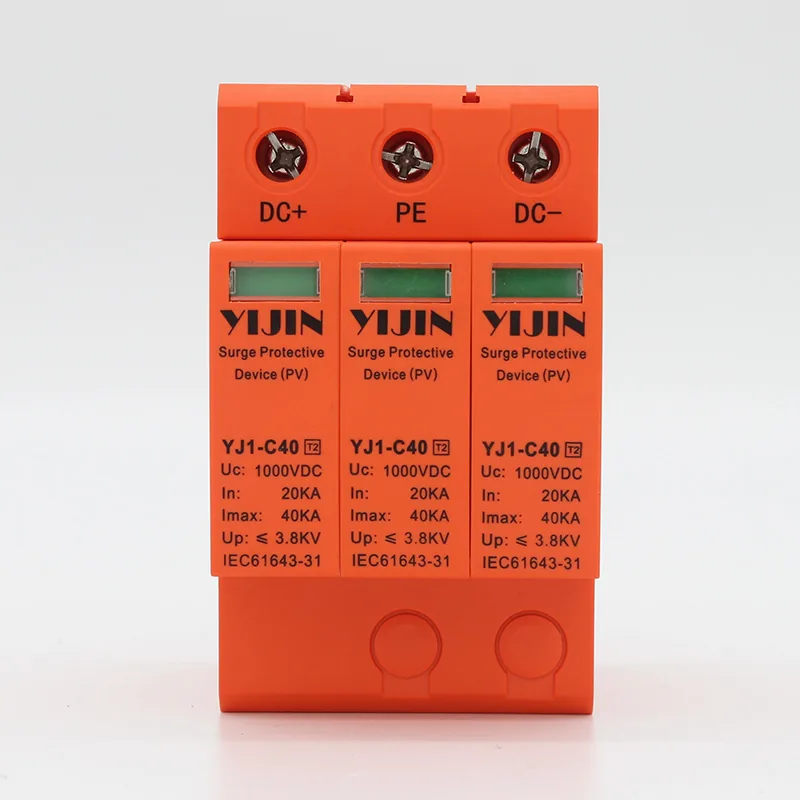
Choose it when the design already sits in the printed DC500–1500 V class and you need a 35 mm rail DC SPD with the published In/Imax/Up figures. Skip it when the RFQ truly demands a 12 V-matched module for vehicle, camera-only, or low-voltage control electronics—Yijin’s reviewed live pages do not list that 12 V SPD SKU.
Browse related modules from the surge protection device category if you also need AC Class II or SPD backup accessories. Keep the next step technical: match voltage class first, then discharge ratings, then mechanical form.
FAQ
What is a 12 volt dc surge protector?
It is a surge protective device or transient suppressor intended for a 12 V DC network, meaning its continuous voltage rating belongs with that bus. The shopping phrase also catches unrelated automotive and camera gadgets, so always read Uc before you buy.
Is a car EMP protector the same as a DIN-rail DC SPD?
No. Vehicle EMP or battery “defenders” target automotive accessory circuits. A DIN-rail Class II DC SPD is a panel module with published Uc/In/Up for a defined DC system class.
Why does Uc matter more than the “12 V” label?
Uc is the continuous voltage ceiling the protector is built for. Labels follow marketing; Uc follows insulation and MOV matching. Wrong Uc is the fastest way to buy the wrong class.
Can I use a PV DC SPD on a 12 V battery bank?
Usually that is a poor fit. PV-class modules are built for high string voltages and may not clamp usefully in the window that damages 12 V electronics. Community builders have raised exactly this mismatch on small battery systems.
Does Yijin sell a 12 V DC SPD module today?
On the live pages reviewed for this article, no 12 V Uc listing appears. The primary DC SPD SKU, YJ1-C40 DC, prints DC500–1500 V ratings with Uc DC1500 V.
Which Yijin product is nearest if my system is high-voltage DC?
Use YJ1-C40 DC when the bus matches its printed high-voltage DC class. Confirm In, Imax, and Up against the design notes.
How do 24 volt dc surge protector searches relate?
They are the neighboring voltage-class question. Apply the same Uc-matching rule: a 24 V network needs a 24 V-class continuous rating, including 24vdc surge protector din rail modules when the form factor is DIN rail.
Do 12 V relay coils need the same device as a PV string SPD?
Often no. Coil circuits commonly need local diode or TVS-style suppression for inductive kickback, while PV strings need high-voltage DC SPDs. Different failure modes, different parts.
References
- Surge protector — Wikipedia — SPD definition, clamping/let-through concepts, and primary components.
- Photovoltaic system — Wikipedia — PV system architecture separating array, inverter, and battery contexts.
- Transient-voltage-suppression diode — Wikipedia — TVS behavior for fast low-voltage electronics spikes.
- Relay or charge controller issue? — Electrician Talk — Field discussion of inductive kickback and surge suppression on shared low-voltage control sources.