 Yueqing Yijin Electronics Co., Ltd.
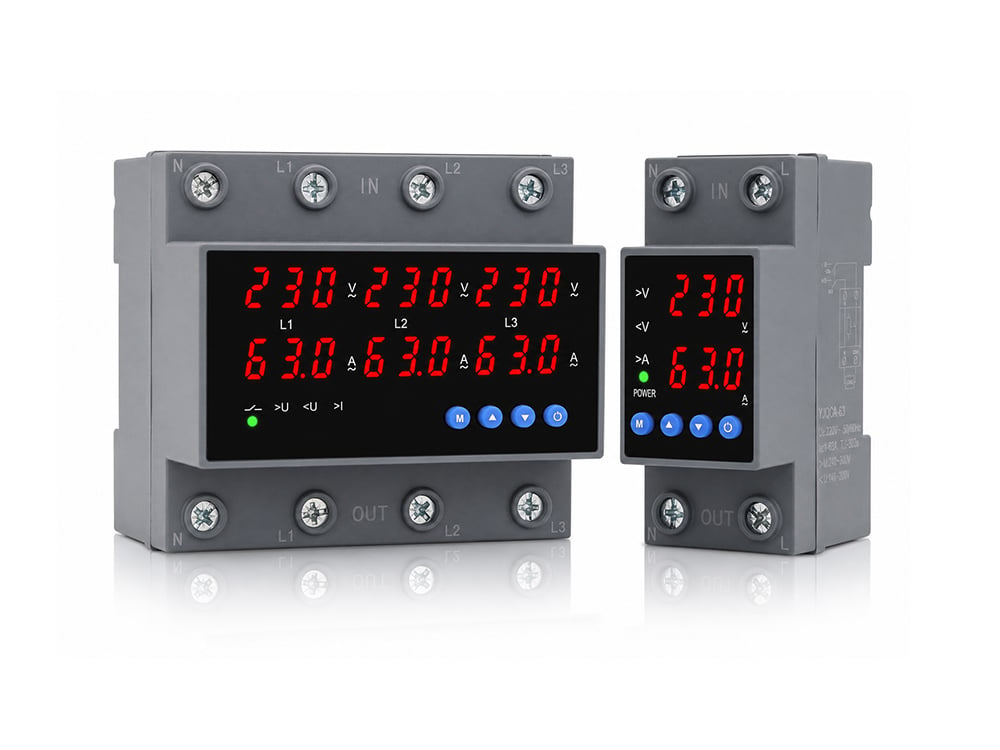



Astronomical Timer for Outdoor Lighting: Buyer Decision Guide
An astronomical timer for outdoor lighting turns a circuit on and off from calculated sunrise and sunset for a set location, instead of watching how dark the yard looks through a photocell.
That difference matters when street lights, facade signs, or parking-lot poles must track the seasons without weekly clock edits. Below you will see how latitude, longitude, and time zone feed the schedule, how the method compares with a Photocell / dusk-to-dawn sensor and a Weekly programmable timer, and when a DIN-rail modular timer with lat-long control is the cleaner panel choice.
What an Astronomical Timer Does for Outdoor Lighting
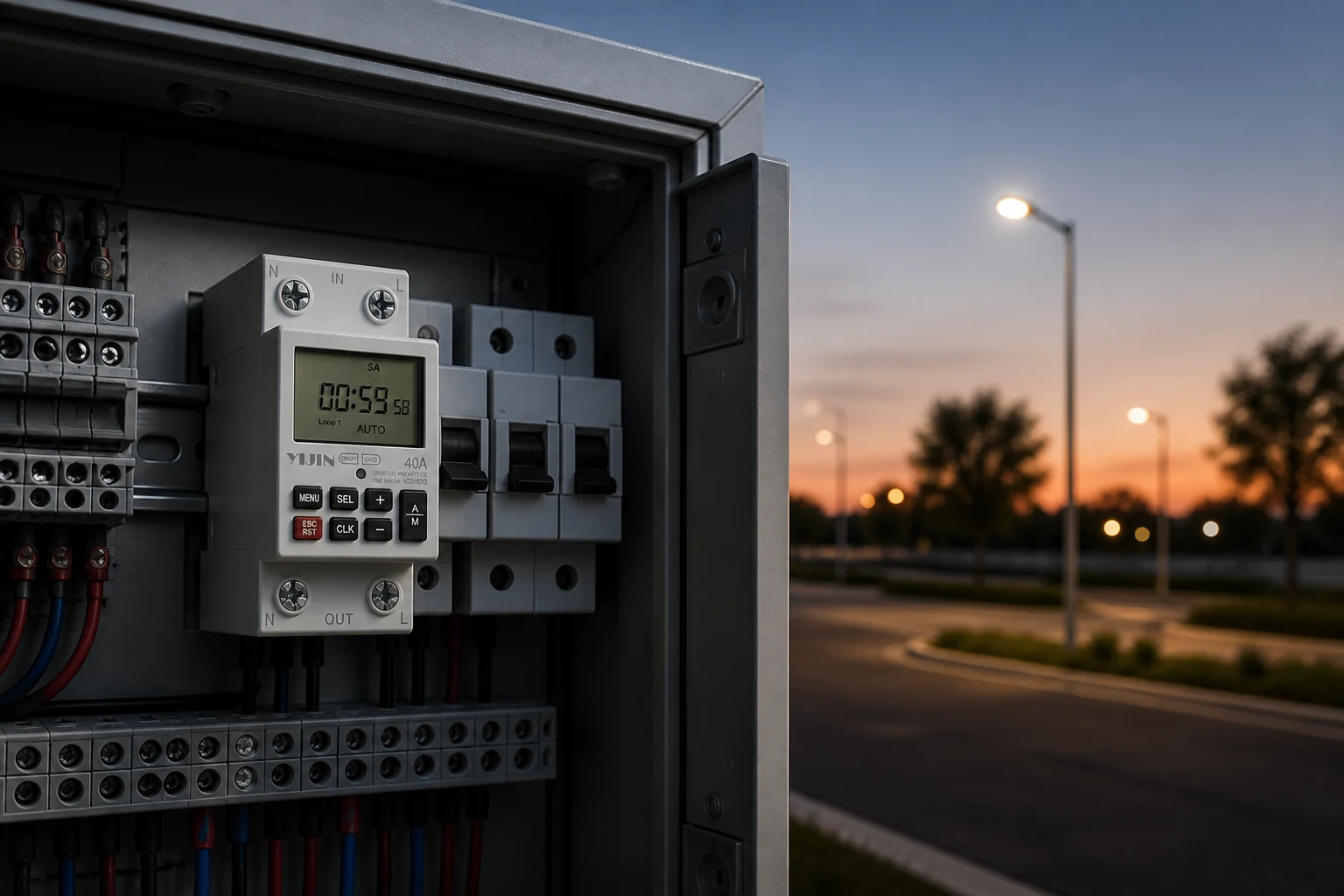
It schedules an Outdoor lighting circuit from solar events for a geographic place, not from a live light reading at the fixture.
In plain terms, the astronomical time switch keeps a calendar clock and applies sunrise/sunset math for the site you enter. Lights can follow dusk and dawn through winter and summer without someone rewriting ON times every few weeks.
Common loads on product literature include street lights, neon, and advertising sign lights. The same idea also shows up on landscape transformers, though those often use plug-in sockets rather than panel modules.
Contractors who left mechanical clocks on seasonal circuits know the service call pattern: spring and fall force another truck roll just to fix “wrong dusk.” Calculated schedules remove that chore when location data is right.
For a buyer comparing control methods, the Astronomical timer is the option that keeps dusk aligned as the calendar moves. It is still a switching device, so load ratings and wiring rules stay part of the panel design.
Security and wayfinding loads often need that seasonal alignment more than a decorative plug-in landscape socket does. When the circuit feeds poles or building-mounted luminaires from a panel, lat-long control belongs in the same conversation as contactors and breakers.
How Latitude, Longitude, and Time Zone Drive the Schedule
The device needs Latitude and longitude plus a correct Time zone so solar events map onto local civil time.
Latitude and longitude locate the site on Earth. Time zone tells the microprocessor whether “sunset” should land near 5:30 or 8:30 on the display your crew reads.
Solar calculators used for research and recreation note that theoretical sunrise/sunset can land within about a minute for mid-latitudes, while real dusk still shifts with atmosphere. Treat the timer as a consistent seasonal brain, not a photocell substitute for every weather oddity.
Many controllers also allow an Offset / custom off schedule—for example, on after sunset, off at midnight on weeknights. That pattern saves energy when all-night burn is unnecessary.
If two sites sit in the same civil time zone but far apart north–south, their dusk still differs. That is why latitude is not optional trivia on a lat-long model.
Crews sometimes copy coordinates from a nearby city list and then wonder why the lights lag the true horizon behind a ridge. Local offsets exist for that kind of site geometry; start with accurate coordinates before you blame the relay.
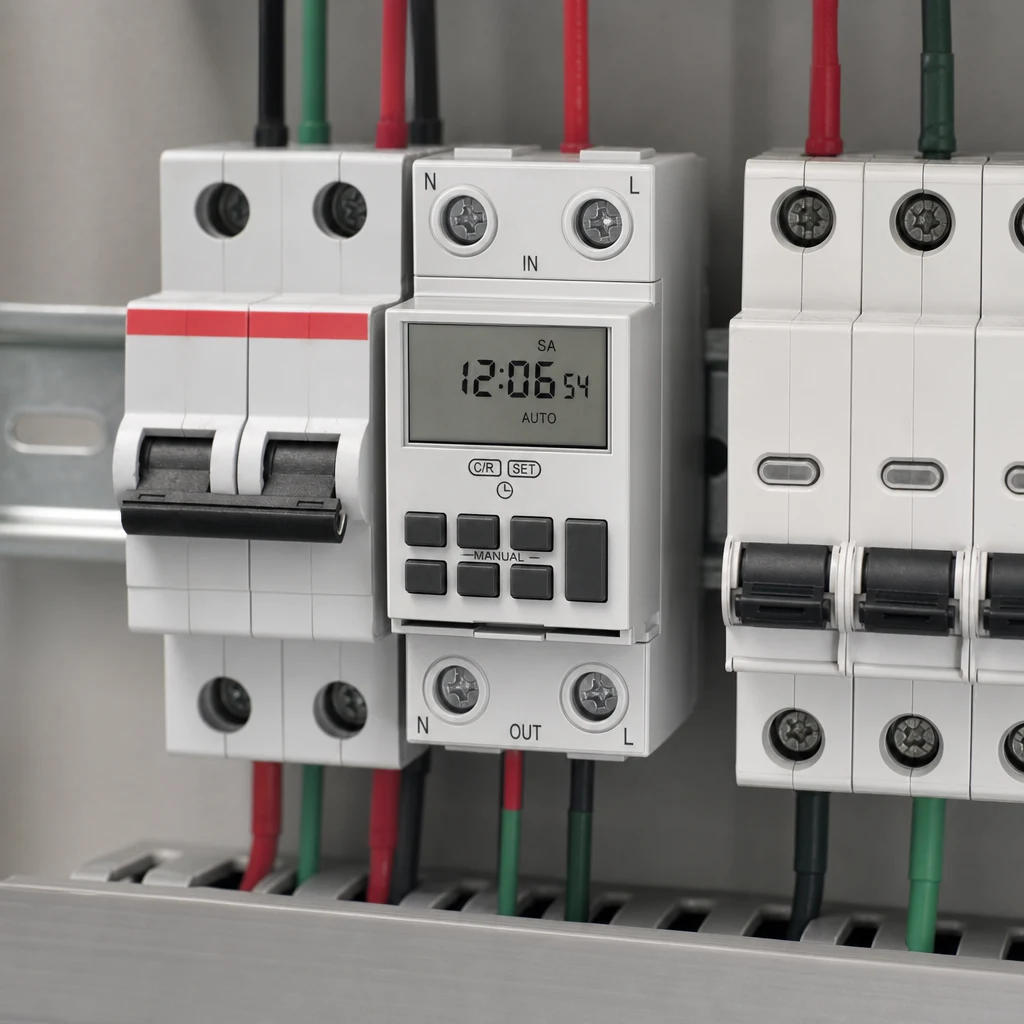
Astronomical Timer vs Photocell vs Weekly Clock
Choose calculation when you want seasonal dusk tracking without a sensor eye; choose sensing when real-time darkness matters; choose weekly clocks when the job is a fixed civil-time routine. The photocell vs astronomical timer choice is really a trade between reaction and seasonal stability.
| Method | How it decides | Strength | Weak spot | Typical fit |
|---|---|---|---|---|
| Astronomical timer | Sunrise/sunset from location and date | Stable with dirt, glare, awkward mounts | Misses sudden daytime darkening | Panel outdoor lights, signs, street circuits |
| Photocell / dusk-to-dawn | Reacts to ambient light | Tracks real darkness, including storms | False triggers from stray light or debris | Fixtures with a clear sky view |
| Weekly programmable timer | Clock times by weekday | Precise civil-time programs | Needs edits if used as pseudo dusk control | Fixed production or building schedules |
A Photocell / dusk-to-dawn sensor is the classic “electric eye.” It shines when the neighborhood feels dark, which helps in a mid-afternoon storm. The same eye can also blink off when headlights, facade lamps, or its own fixture light bounce into the lens.
Important: Astronomical control does not “see” a thunderstorm that turns afternoon into night. Photocells can react to that darkness, but they can also chatter when stray light hits the sensor. Pick the failure mode your site can live with. — source: comparison section / NOAA solar-event vs sensed darkness distinction
A Weekly programmable timer still earns its place for fixed shifts. It is not an automatic dusk engine unless someone keeps rewriting the times as daylight changes.
Hybrid designs show up in engineer write-ups: astronomical schedule as the daily brain, photocell as a weather override. That stack costs more hardware and commissioning time, so use it when both failure modes matter on the same property.
For most panelized outdoor lighting upgrades, picking one primary method and commissioning it cleanly beats stacking gadgets “just in case.”
When Outdoor Lighting Projects Favor Astronomical Control
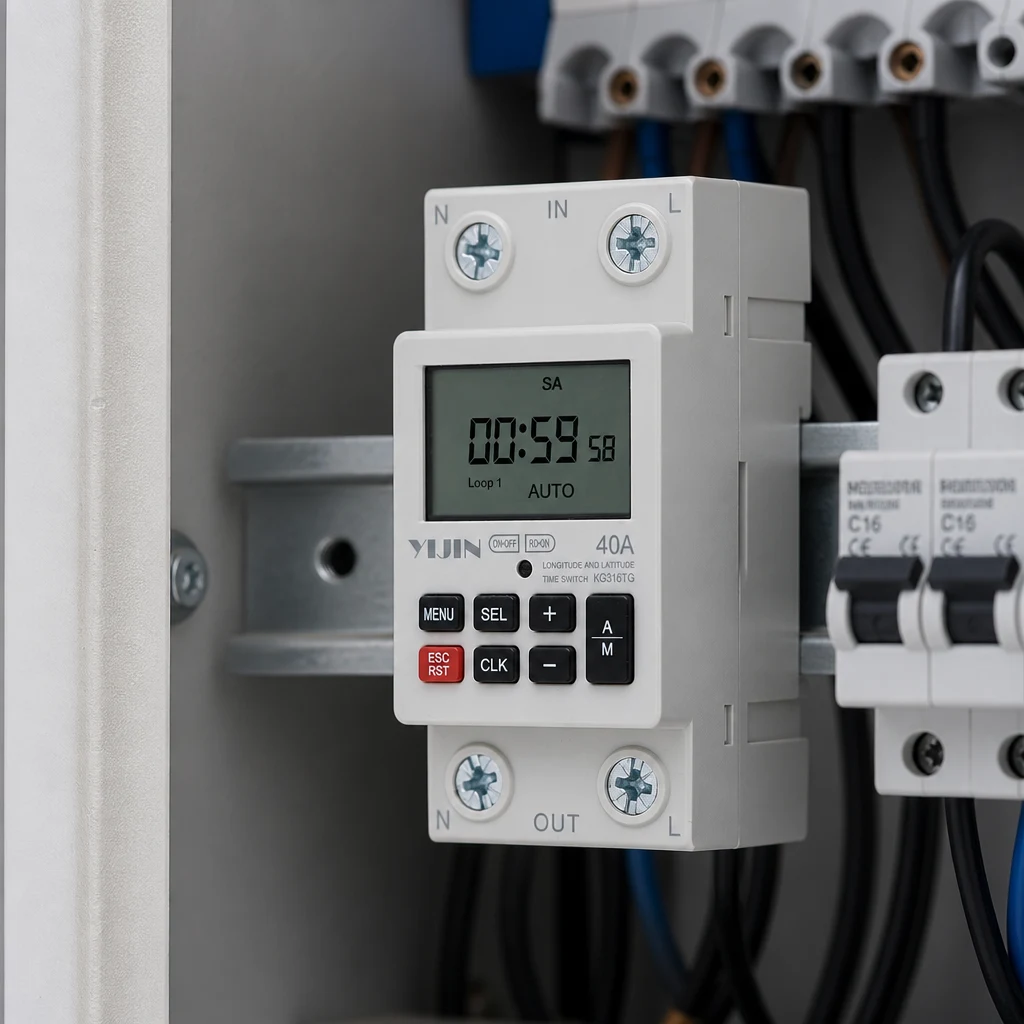
Panelized street, sign, and facade circuits favor astronomical control when photocell placement is awkward or unreliable.
Think of a DIN rail inside a dry enclosure while the luminaires sit on poles or building edges. The schedule still tracks dusk, yet the controller never needs a sky-facing eye on the roof.
Another common ask is dusk-relative lighting with a hard stop: on after sunset, off at midnight Monday through Friday, later cutoff on weekends. Calculated dusk plus an Offset / custom off schedule covers that without babysitting a photocell.
DIY and trade threads often chase dusk-to-dawn behavior on multi-way exterior circuits. Answers that point to indoor astronomical timers emphasize latitude/longitude dawn–dusk math and a manual override without outdoor sensor placement.
Plug-in Wi-Fi sockets for low-voltage landscape transformers solve a different packaging problem. When the load is a line-voltage outdoor lighting circuit on a panel, a DIN-rail modular timer is usually the form factor buyers should shortlist first.
Advertising signs that must wake with dusk and sleep on a curfew are another strong fit. The astronomical event sets the start; a fixed OFF row sets the quiet hours.
Municipal-style street lighting and private roadway poles share the same logic when the controller lives in a cabinet. Keep the sensor debate for fixtures that truly need a local eye.
Setup Mistakes That Throw Off Dusk-to-Dawn Timing
Wrong zone settings, disabled lat-long mode, and leftover program rows are the usual commissioning killers.
Set calendar, clock, Latitude and longitude, and Time zone before you trust Auto mode. On latitude-longitude models, the earth icon typically means lat-long control is active; without it, the unit may run only the fixed times you typed.
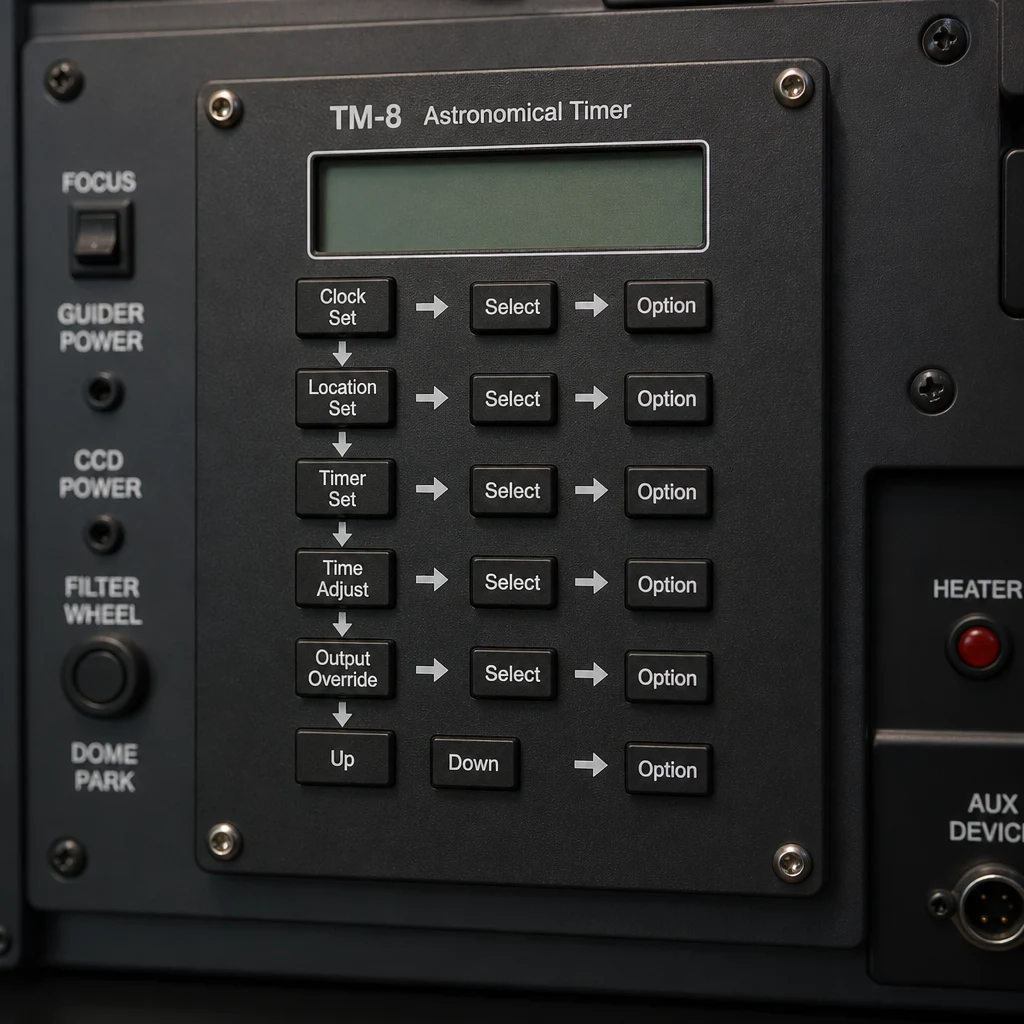
Tip: Cancel unused ON/OFF rows so the display shows
--:--. Leaving phantom times such as00:00can make the switch fire when the site should stay quiet. — source: KG316TG lat-long product precautions
If lights switch at odd hours after a power cycle, re-check time zone first. Solar math that is “right” for another zone looks like a bad product when the civil clock is simply wrong.
Write the final coordinates and zone on the panel schedule sheet. The next technician should not guess which city preset someone meant during a rush install.
Manual/Auto/Off modes exist so commissioning can force a light on without rewriting the solar program. Return the unit to Auto after the walk-through so seasonal control resumes.
When to Choose a Latitude-Longitude Modular Timer for Outdoor Circuits
Use the KG316TG latitude-longitude model when you need enableable lat-long control on DIN rail—not a weekly-only clock and not a Countdown release.
The KG316TG latitude and longitude time control switch is listed for street lights, neon lights, and advertising sign lights, with a user setting that enables or disables latitude-and-longitude control so switch times follow geography and seasonal sunshine hours.
Published ratings for this latitude longitude time control switch list AC 187–240 V 50/60 Hz supply, resistive switch capacity options of 40 A and 63 A, timing error under ±2 seconds per day, longitude from 0° E to 180° E and 0° W to −180°, latitude from 0° to 80° N, and East 1–12 / West −1–12 time zones when lat-long is enabled.
| Parameter (as published) | KG316TG lat-long listing |
|---|---|
| Supply | AC 187–240 V 50/60 Hz |
| Switch capacity | 40 A (resistive); 63 A (resistive) |
| Timing error | under ±2 seconds/day |
| Longitude range | 0° E–180° E / 0° W–−180° |
| Latitude range | 0°–80° N |
| Time zone | East 1–12 / West −1–12 (required when lat-long is enabled) |
| Mounting | DIN-rail modular |
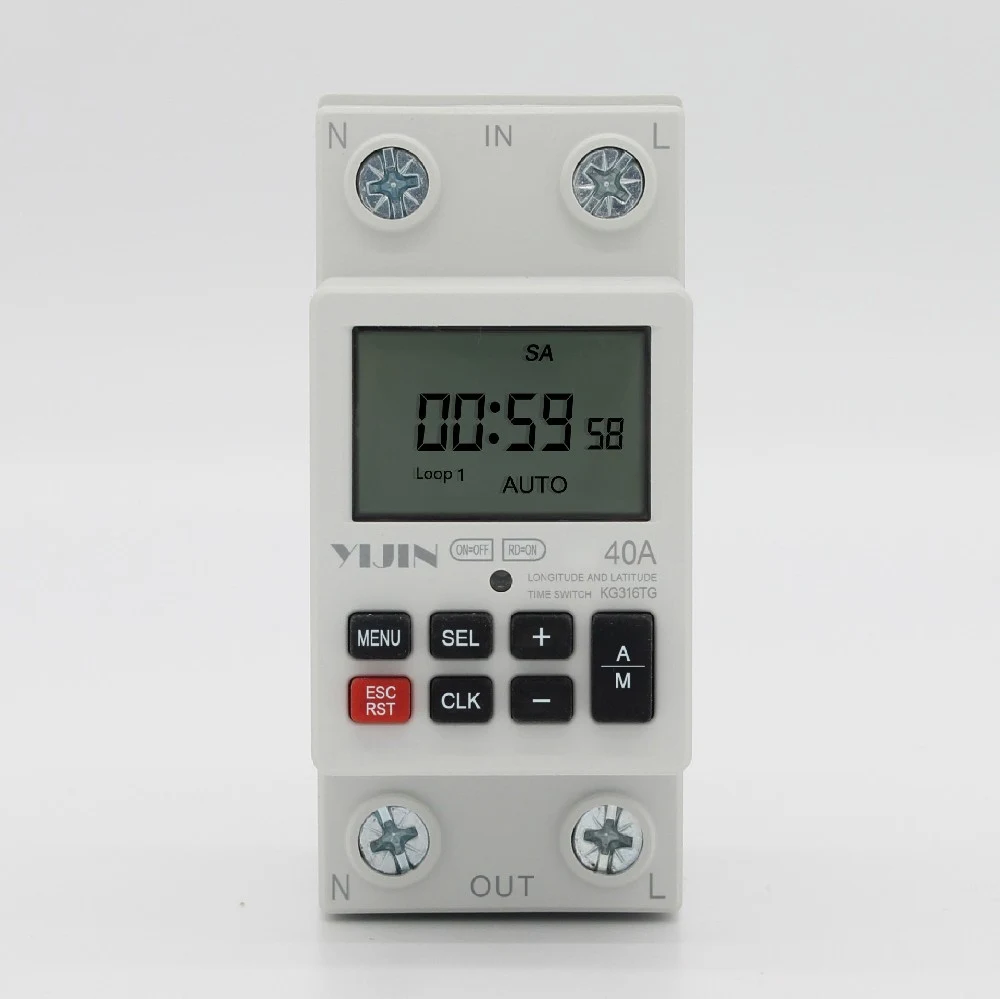
Browse the full timer switch family when you need siblings for comparison.
The KG316T time control switch is a Weekly programmable timer path (up to 16 on/off actions per day) for civil-time programs, covered in more depth in the 7-day weekly programmable timer switch article.
A Countdown release such as YJDST-I times power-off after closing; it is not astronomical dusk control.
Match published voltage and current to the panel design, enable lat-long only after zone and coordinates are set, and keep unused programs cancelled. That is the practical next step—not a separate quote form ritual.
If your project only needs weekday clock times with no solar tracking, stay on the weekly path and read the linked weekly-timer article instead of forcing lat-long mode. If you only need a timed trip after energizing a breaker, look at countdown hardware rather than renaming it “astronomical.”
FAQ
What is an astronomical timer for outdoor lighting?
It is a time-control device that switches outdoor lighting from calculated sunrise and sunset for a geographic location, rather than from a photocell reading of ambient light.
How does an astronomical timer calculate dusk and dawn?
After you set location and clock data, the microprocessor applies solar-position math for that date. Observed dusk can still differ slightly from calculated values when the atmosphere changes.
Astronomical timer vs photocell — which should I use?
Use astronomical control for stable seasonal schedules and awkward sensor mounting. Use a photocell when you need real-time reaction to actual darkness and you can aim the eye away from stray light.
Do I still need a photocell if I use an astronomical timer?
Usually no for basic dusk tracking. Some sites still add a photocell as a weather override; that hybrid is a design choice, not a default requirement for every panel.
What settings matter most: latitude, longitude, and time zone?
Those three, plus a correct calendar/clock, decide whether calculated solar events land on the civil times your crew expects. Enable lat-long mode only after they are set.
Can a weekly programmable timer replace dusk-to-dawn control?
Only if someone keeps editing the clock times as daylight changes. A Weekly programmable timer repeats civil-time programs; it does not recalculate sunset by itself.
Is a countdown timer the same as an astronomical timer?
No. A Countdown release measures elapsed time after a switch closes. It does not track sunrise and sunset.
Which Yijin model supports latitude-longitude outdoor lighting control?
The KG316TG latitude-longitude model on the timer-switch category enables latitude-and-longitude control for listed outdoor and sign loads. Confirm the live product page against your panel ratings before specifying.
References
- NOAA Global Monitoring Laboratory — Solar Calculation Details
- Lexington Outdoor Lighting — Understanding How Astronomical Landscape Lighting Timers Work
- Electrician Talk — Timer instead of photocell