 Yueqing Yijin Electronics Co., Ltd.


WiFi Breaker vs Smart Switch vs Automatic Reclosing — Buyer Class Map
Buyers typing wifi breaker smart switch automatic are usually not hunting one model number—they are mixing three device classes that marketing language keeps stacking together. Pick the class by the job: load or wall switching, circuit-level protection with remote open/close, or automatic restoration after voltage or current events. Then match a live Yijin DIN-rail SKU without assuming UL, Matter, or Alexa listings that public pages do not state.
This guide maps the three classes, separates remote control from protection duty, runs a short fit checklist, and points to live Yijin products on the isolating switch hub.
WiFi Breaker, Smart Switch, and Automatic: Three Buyer Classes
The phrase covers three jobs—circuit protection with remote, load or wall switching, and automatic restoration after configured events—not one interchangeable gadget.
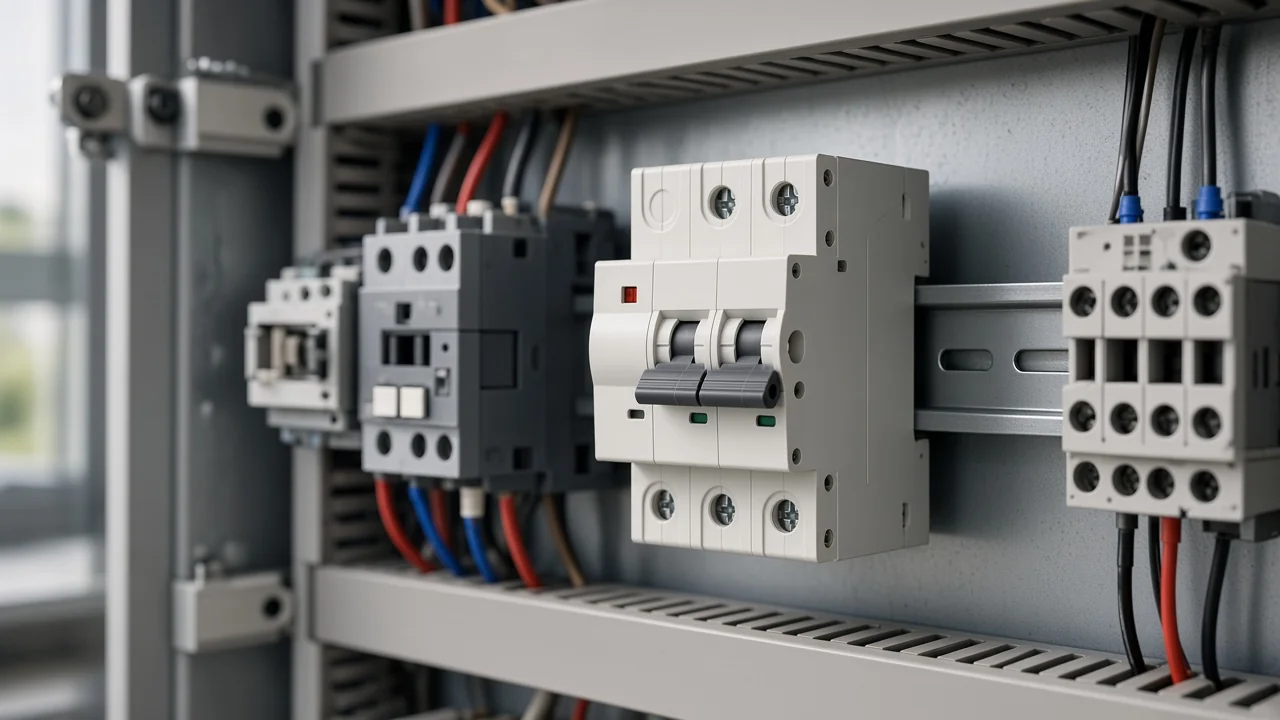
A WiFi circuit breaker (smart WiFi breaker language in catalogs) sits at circuit level. Its professional job still starts with overcurrent interruption: a circuit breaker exists to interrupt excess current and remain resettable, unlike a one-shot fuse. WiFi adds remote open/close, status, or scheduling on top of that protective framing.
A smart switch (wall/load) is a home-automation or facility-control endpoint. It turns lighting, pumps, or equipment on and off by app, timer, or scene. It is not the same product class as a panel protective breaker, even when the housing looks like a DIN module.
Automatic reclosing protector language (and auto-reset over/under-voltage protectors) points at restoration after configured voltage or related events. That is different from a lighting schedule and different from a utility pole utility recloser. Utility autoreclosers are medium-voltage distribution assets; they are not DIN-rail board modules.
| Buyer class | Primary job | Typical place | What “automatic” often means |
|---|---|---|---|
| WiFi circuit breaker | Circuit protection framing + remote open/close | Distribution board / DIN rail | Remote/timed switching; some SKUs add reclosing language |
| Smart switch (wall/load) | Control a load or lighting circuit | Wall box or downstream of a breaker | Schedules, scenes, app toggles |
| Automatic reclosing / auto-reset protector | Restore after OV/UV or related events | DIN rail on the protected circuit | Cut-off then recovery / reclose after conditions clear |
Remote Open/Close Is Not the Same as Protection Duty
App control moves a switch; a protective trip interrupts a fault—and many systems still expect a local check before restore.
Remote open/close is a commanded state change: phone, app, or schedule opens or closes the path. Protective trip / reset is the device reacting to overload, short circuit, overvoltage, undervoltage, or leakage according to its design, then restoring only under its published rules. Those two duties can live in one housing, but they are not synonyms.
Independent teardowns of DIN products marketed as Wi-Fi “circuit breakers” sometimes show smart-switch behavior: wiring diagrams place the unit downstream of a real MCB or RCBO. Ask a blunt question before you buy: does this device itself provide protective interruption, or only remote switching?
Important: If the datasheet and wiring diagram treat the WiFi unit as a controlled switch behind an upstream breaker, shop it as a smart switch class—even if the listing title says “breaker.” — independent DIN teardown education: https://goughlui.com/2026/06/09/review-teardown-at-mibo-electric-wi-fi-tuya-din-rail-smart-switch-circuit-breaker-at-sy1-tsw/
US community threads on listed smart panels often report the same field habit: remote OFF is available, but a protective trip still wants a person at the board. Confirm trip-reset behavior for the exact SKU you specify. Do not assume every WiFi device can safely remote-reset after a fault.
When a Wall or Load Smart Switch Is the Right Class
Choose a smart switch when you only need scheduled or remote control of a load already protected upstream.
Examples that usually fit the smart switch (wall/load) class:
- Corridor or landscape lighting with a stable upstream breaker
- A pump or heater that needs overnight off schedules
- Multi-user remote control of a dedicated branch that already has overcurrent protection
In retrofit conversations, electricians often refuse a “WiFi breaker” drop-in for an older US load center because listing and bus geometry do not match. A common field pattern is a properly protected feeder into a nearby enclosure, then a high-power smart switch for the remote duty. That is a control decision, not a claim that any DIN WiFi module is listed for every panel.
When You Need a WiFi Breaker Class
Choose a WiFi breaker class when you need circuit-level remote open close circuit breaker capability together with overload and short-circuit protection language.
Procurement cues that point here:
- The RFQ asks for a breaker-class device, not a lighting switch
- The board layout is DIN-rail modular rather than a proprietary US plug-on smart load center
- Operators need phone open/close and live open/close status on the protected circuit
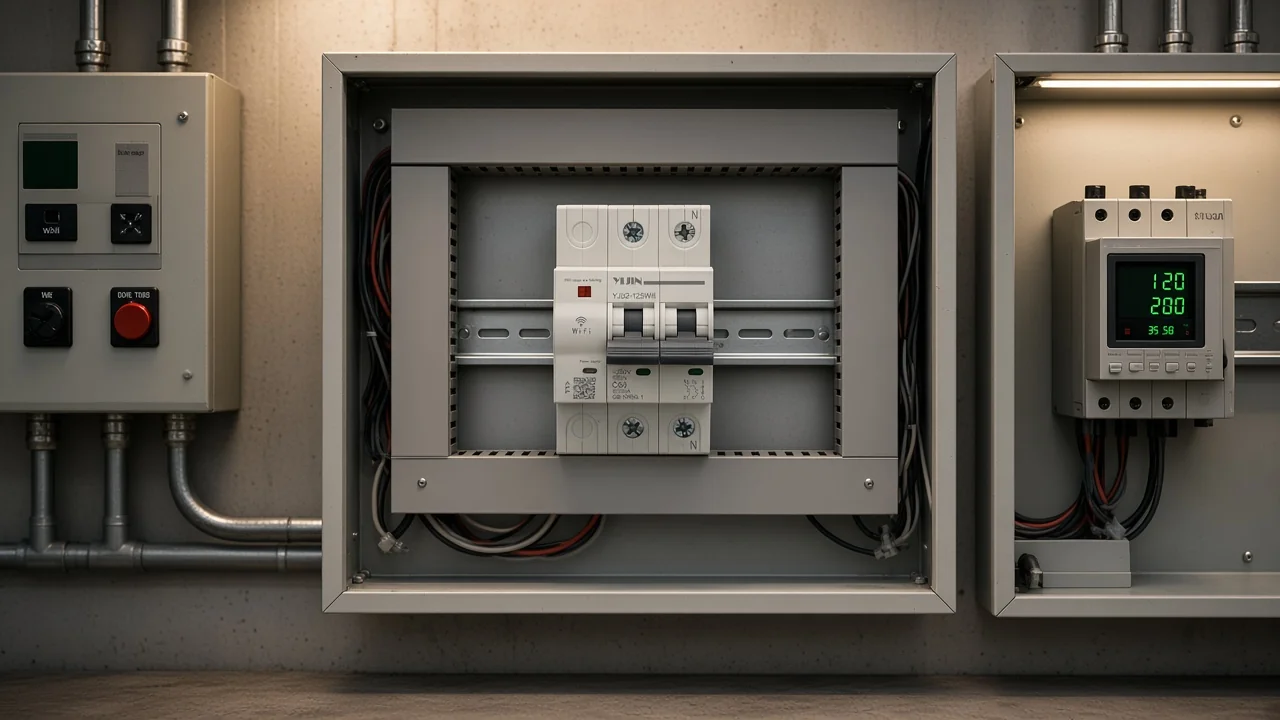
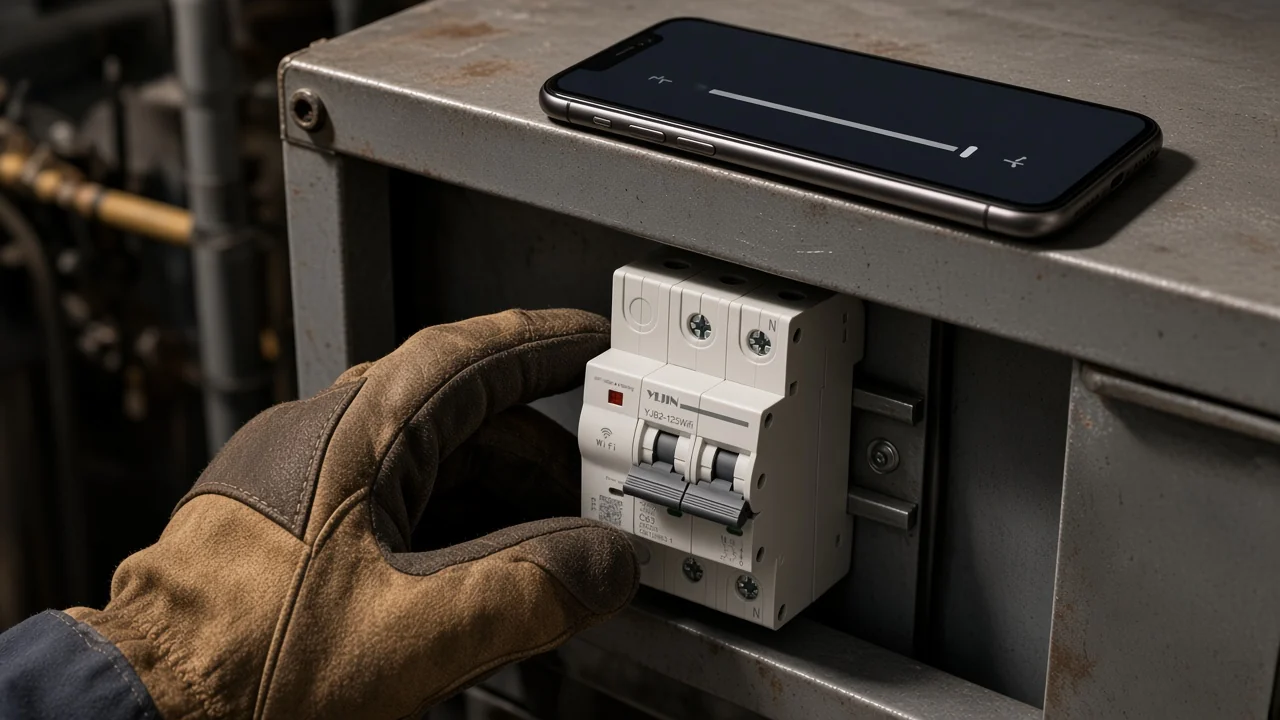
On Yijin’s live pages, the YJB2-125Wifi / 1P+N and YJB2-125Wifi / 3P+N products are presented as WiFi intelligent reclosing circuit breakers. Published body text frames AC 50 Hz service, rated working voltage 400 V, rated working current 100 A and below, overload and short-circuit protection, phone remote open/close with status, and modular rail installation. Treat those as page facts for class matching—not as a UL Listed US panel substitute.
When Automatic Reclosing or Auto-Reset Protection Fits
Choose automatic reclosing or auto-reset when the job is restoring after over/under-voltage protection events—not when you only want a lighting schedule.
“Automatic” in this search cluster usually means one of two things:
- Auto-reset / reclosing protector duty — the device cuts on abnormal voltage or current conditions, then recovers or recloses after configured delays and thresholds.
- Scheduled on/off — timers and loops that look “automatic” in an app but are not fault restoration.
Keep the medium-voltage boundary clear. A utility recloser on an overhead feeder is a different asset class from a DIN-rail WiFi smart reclosing protector in a building board.
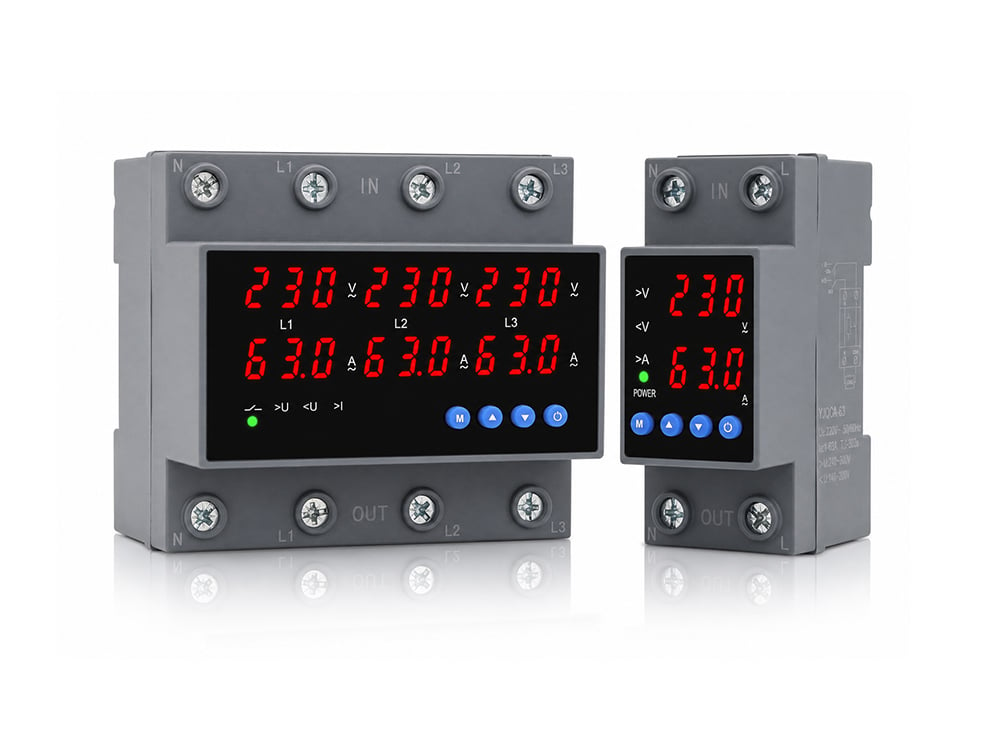
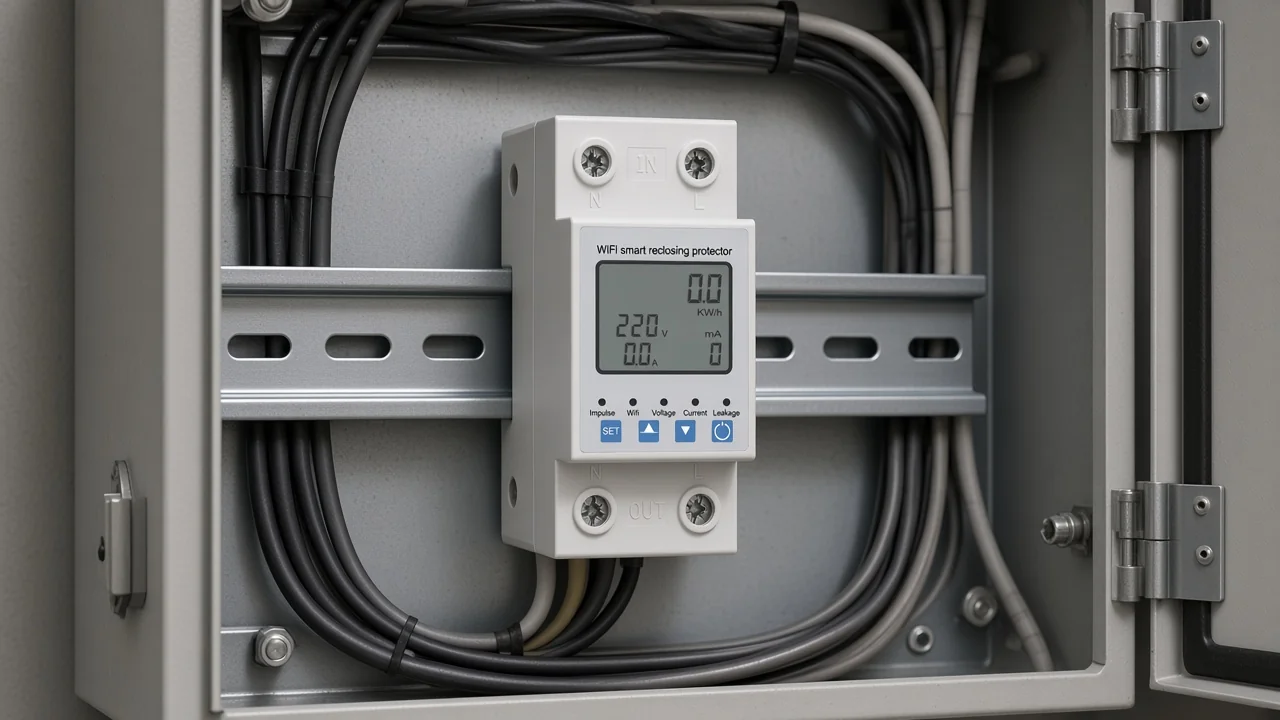
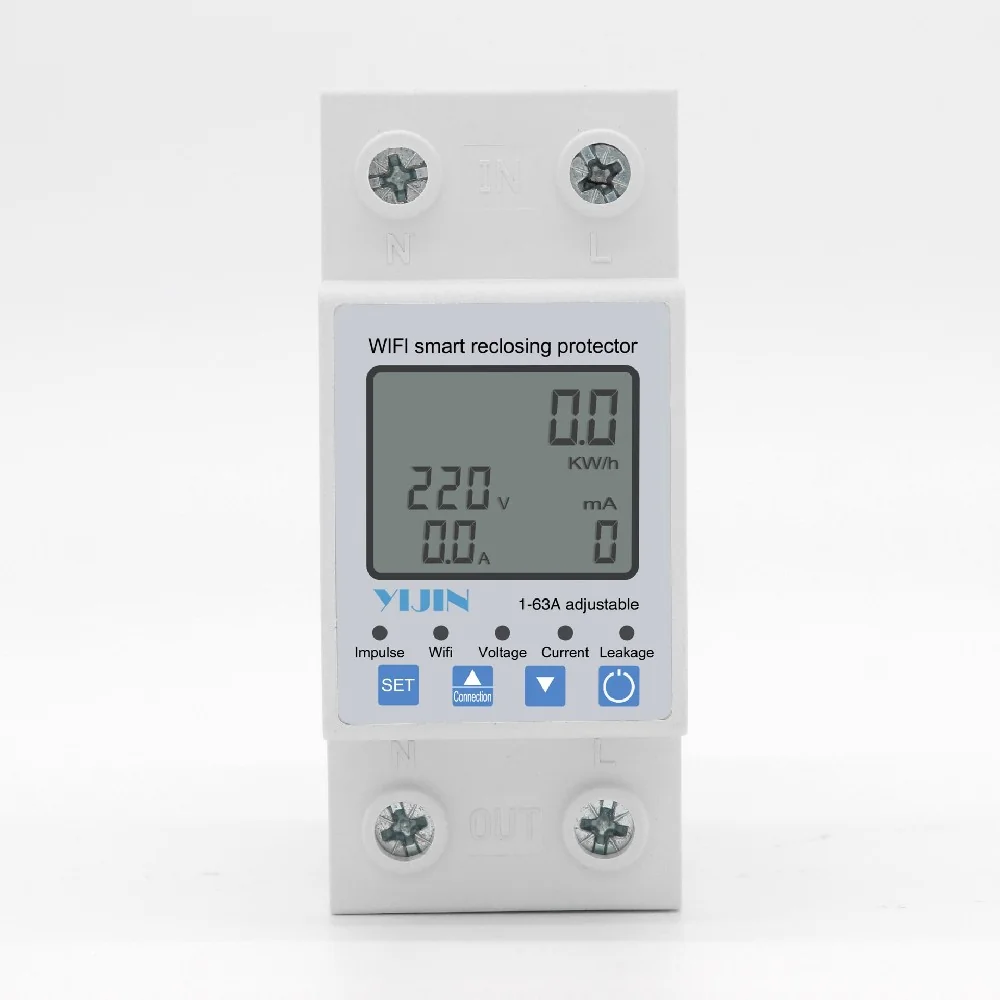
Yijin’s WIFl smart reclosing protector page describes a 1P+N, AC 220 V, 1–63 A adjustable WiFi smart reclosing protector. It lists adjustable overvoltage and undervoltage cut-off, adjustable overcurrent, optional leakage range (default OFF), power-on reset delay, and on-site manual plus mobile remote control on a standard rail.
The YJQG-63 WiFi automatic reset overvoltage and undervoltage delay protector title and intro frame a 110–240 V, 63 A timed on/off delay overvoltage and undervoltage control device.
The YJA2-WiFi Intelligent Circuit Breaker page body frames a 40 A, 110–240 V WiFi over/undervoltage timed control device even though the title uses circuit-breaker wording—read the body before you assign breaker-class duty. The same page table publishes overvoltage and undervoltage cut-off ranges with a self-recovery delay of 30 s±10 s.
Fit Checklist: Form Factor, Frequency, and Listing Reality
Confirm DIN versus panel form factor, published frequency and voltage, and that public pages do not claim UL, Matter, or Alexa for Yijin.
Use this short gate before you freeze a SKU:
- Job class — smart switch, WiFi breaker, or automatic reclosing / auto-reset protector?
- Form factor — DIN rail module versus proprietary US load-center breaker geometry.
- Published electrical envelope — voltage, poles, current range, and frequency as printed on the live page (YJB2 pages state AC 50 Hz in the product body).
- Reset expectation — remote open/close for operations versus local verification after a protective trip.
- Listing honesty — reviewed Yijin public pages for these SKUs do not state UL / Matter / Alexa certification (including UL Listed US panel breaker claims). Do not invent them in a bid package.
- Hub browsing — related switching and protection devices also appear under the Isolating switch hub, which mixes isolators, knife switches, WiFi breakers, and reclosing devices.
Live Yijin SKU Map and Recommendation
Match YJB2 for WiFi reclosing circuit-breaker duty, WIFL for adjustable reclosing protector duty, and YJA2 or YJQG-63 for timed or auto-reset over/under-voltage control—then browse the isolating-switch hub.
| Live SKU | Buyer class fit | Key page facts to quote | Why not / caution |
|---|---|---|---|
| YJB2-125Wifi 1P+N / 3P+N | WiFi circuit breaker / reclosing circuit breaker | Overload & short-circuit protection; phone remote open/close; AC 50 Hz; 400 V; 100 A and below; rail | Not evidenced as UL US load-center drop-in; page frequency is 50 Hz |
| WIFL smart reclosing protector | Automatic reclosing protector | 1P+N; AC 220 V; 1–63 A; adjustable OV/UV/overcurrent; manual + mobile remote; rail | Choose YJB2 instead if you need breaker-class short-circuit language first |
| YJA2-WiFi | Timed OV/UV control (breaker title) | 110–240 V control framing; 40 A; OV/UV ranges and 30 s±10 s self-recovery delay on page table | Title says circuit breaker; body emphasizes OV/UV timed control—assign class from the body |
| YJQG-63 | WiFi automatic-reset OV/UV delay protector | Intro: 110–240 V; 63 A; automatic-reset OV/UV delay framing | Prefer title/intro facts; do not copy a mislabeled parameter block from another model |
Recommendation: For buyers who landed here because of the “automatic” half of the keyword and want adjustable OV/UV plus remote control on a DIN rail, start with the WiFi smart reclosing protector (1–63A adjustable). If the written duty is a WiFi intelligent reclosing circuit breaker with overload and short-circuit protection plus remote open/close, start with YJB2-125Wifi in the matching pole configuration instead. Browse siblings from the isolating switch category when the project also needs isolation hardware.
FAQ
What is the difference between a WiFi breaker and a smart switch?
A WiFi breaker is shopped for circuit-level protection framing plus remote open/close. A smart switch (wall/load) is shopped to control a lighting or equipment load that already has upstream protection. Marketing titles blur the line; wiring diagrams and protective ratings reveal it.
What does “automatic” mean—auto reclose or just scheduled on/off?
In this cluster, “automatic” often means auto-reset or reclosing after over/under-voltage or related events. Schedules and timer loops are also “automatic” in app language, but they are a different job. Match the datasheet behavior, not the adjective.
Will a WiFi breaker still protect if Wi-Fi drops?
Protective interruption, when the device truly provides it, is a local electrical function and should not depend on the cloud. Remote open/close and monitoring can drop when the network drops. Confirm the SKU’s offline behavior in the manufacturer documentation.
Can I remotely reset a breaker after it trips on a fault?
Many listed smart-panel ecosystems allow remote OFF more readily than remote restore after a protective trip. Field users often still walk to the board. Confirm the exact reset rules for your device; do not assume phone reset after every fault.
Are Yijin WiFi devices UL Listed for US load centers or Matter/Alexa certified?
Reviewed public pages for the SKUs in this article do not state UL Listed US panel breaker, Matter, or Alexa certification. Do not put those claims in a bid from the word “WiFi” alone.
Which Yijin SKU fits remote circuit open/close with overload/short-circuit language?
Start with YJB2-125Wifi 1P+N or 3P+N on the live product pages: WiFi intelligent reclosing circuit breaker framing with overload and short-circuit protection and phone remote open/close.
Which Yijin SKU fits adjustable OV/UV reclosing with remote control?
Start with the WIFL WiFi smart reclosing protector: 1–63 A adjustable, adjustable OV/UV and overcurrent, manual plus mobile remote, DIN rail.
Is a utility automatic recloser the same as a DIN-rail reclosing protector?
No. Utility reclosers are medium-voltage distribution assets. DIN-rail WiFi reclosing protectors are low-voltage board devices.