 Yueqing Yijin Electronics Co., Ltd.

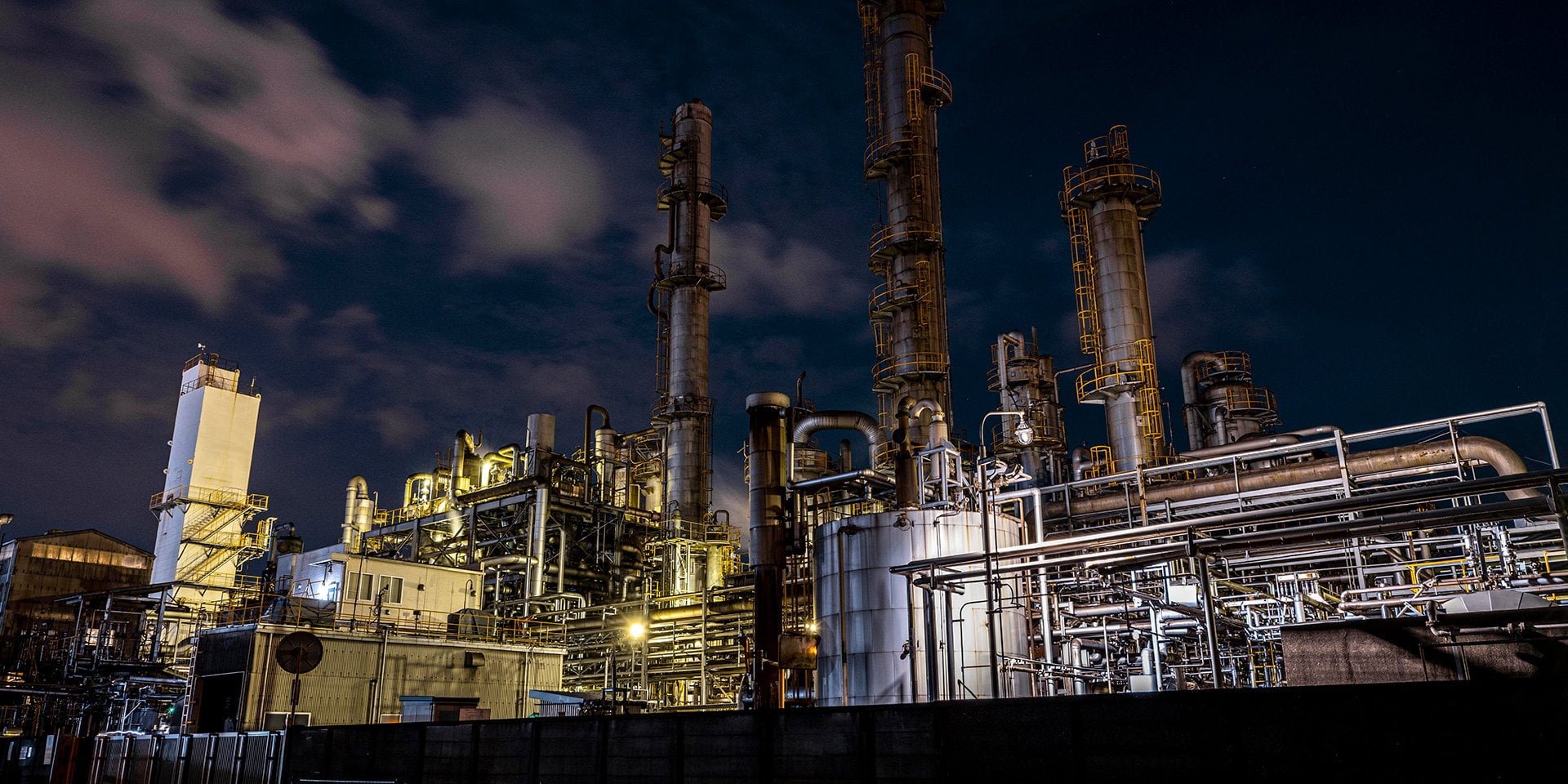

The title is not the panel
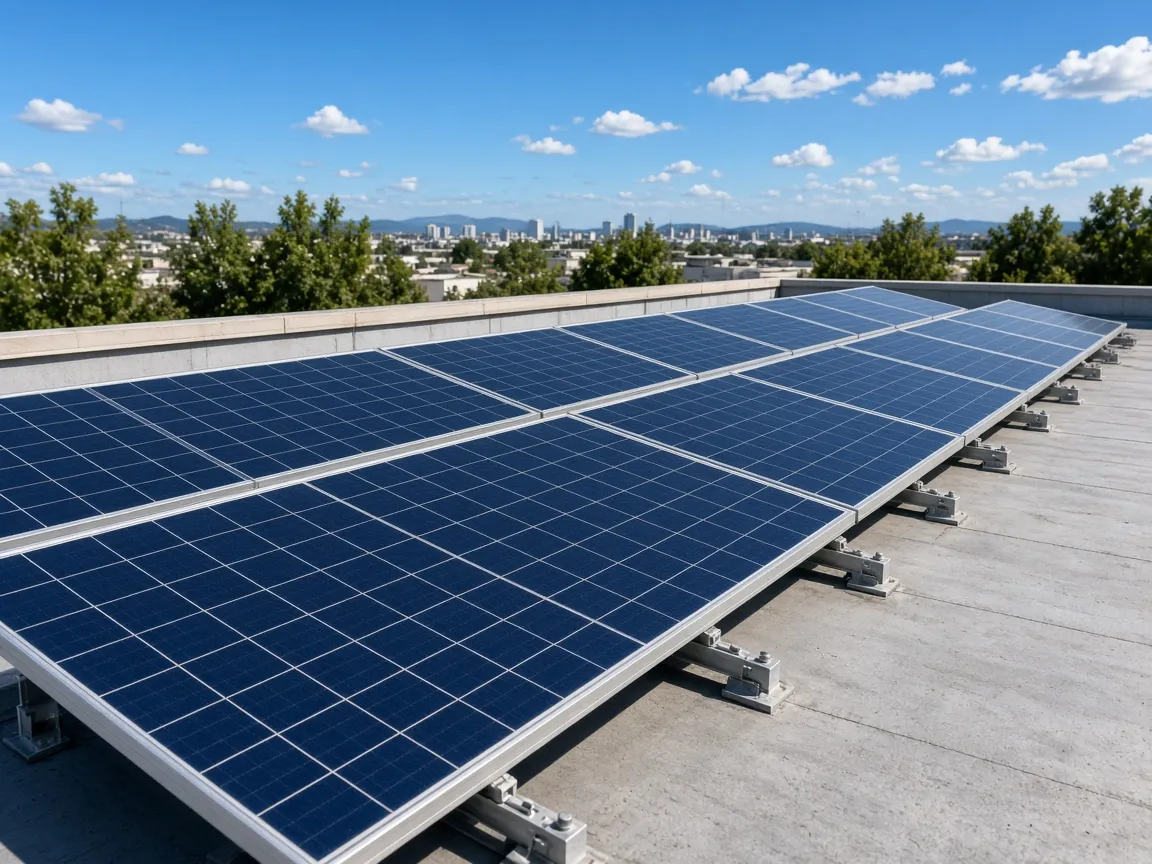
A surge protection device for solar panel is a search for the array. The photovoltaic system is larger than the panel, and the titled product page is a rail module with an AC table.
The panel is only the start
A photovoltaic system, also called a PV system or solar power system, is an electric power system designed to supply usable solar power by means of photovoltaics. It consists of an arrangement of several components, including solar panels to absorb and convert sunlight into electricity, a solar inverter to convert the output from direct to alternating current, as well as mounting, cabling, and other electrical accessories to set up a working system.
The panel makes the direct current. The inverter makes the alternating current the building uses.
A protector has to be named for one of those places. “For the solar panel” is the array side. A cabinet on the AC side is a different address.
The title says photovoltaic
The page a buyer opens is titled for photovoltaic applications. The photovoltaic rail module in that title is the YJ1-C40. The body under the title speaks AC, a rail, and building rooms.
A surge protector is an appliance or device intended to protect electrical devices in alternating current circuits from voltage spikes with very short duration. That sentence matches the body better than it matches a DC clamp on the back of a panel. Read the body before you treat the title as the location.
The class ii table is the part a second person can check. The page calls the experiment Class II. A class word without the table is only a label.
The table is a family of currents
Use the parameter table, not the feature bullets. The bullets and the table do not tell the same waveform story, and the bullets also disagree with each other about a single maximum. The table is a family.
The photovoltaic page prints a rated voltage Un of 220 V AC at 50 Hz. Maximum continuous operating voltage on that page is 420 V AC at 50 Hz from L to N, and 255 V AC at 50 Hz from N to PE.
The table lists nominal discharge currents of 10 kA, 20 kA, 30 kA, and 40 kA at 8/20. The table lists maximum discharge currents of 20 kA, 40 kA, 60 kA, and 80 kA at 8/20.
The table prints a voltage protection level of 1.8 kV.
| Table row | How to read it |
|---|---|
| Rated voltage | The AC system the table names |
| Continuous voltage | L-N and N-PE are separate cells |
| Discharge current | A list of ratings, not one bullet |
| Protection level | Kept with the same table |
A short blurb elsewhere on the page names a lower system voltage than this introduction. This draft stays with the introduction and the table. If two lines disagree, do not average them.
Green and red are the window
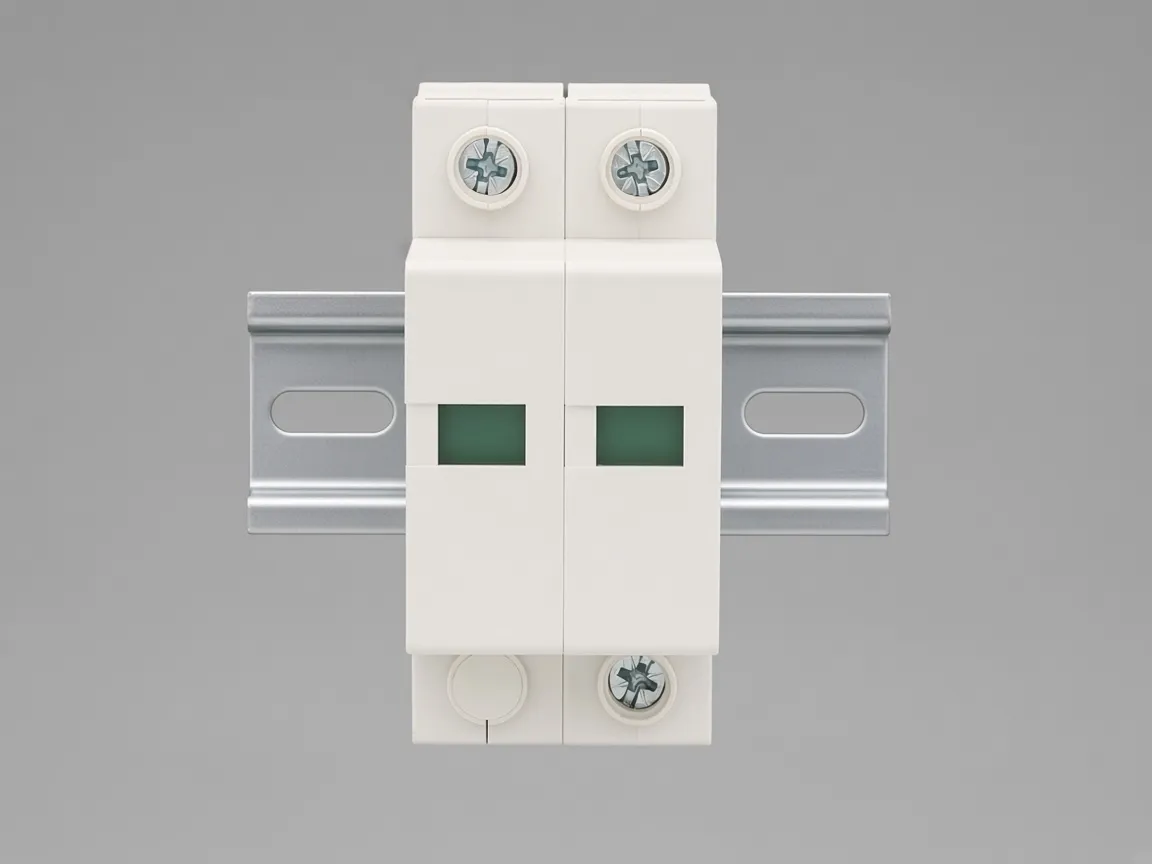
The page says the window is green in normal service and red when the module has failed. The failure release is described as opening the module from the supply after overcurrent, overheating, or breakdown.
That window is a status light for this module. It is not a meter on the solar panel.
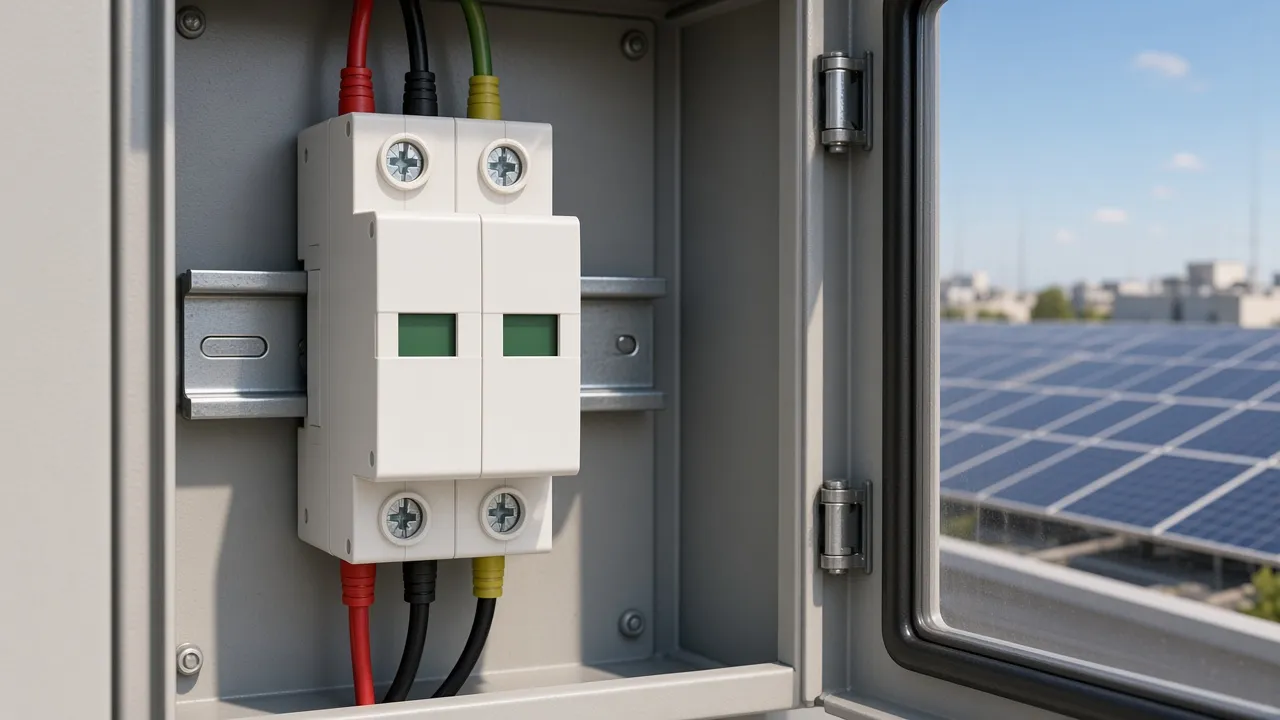
If the window is red, the page is describing a module that has taken itself off the supply. Replacing the unit is a maintenance step the page allows without changing the base. It still does not move the module from the cabinet to the roof.
The rail is only the mount
A DIN rail is a metal rail of a standard type widely used for mounting circuit breakers and industrial control equipment inside equipment racks. The page names a 35 mm standard guide rail.
The rail holds the body. It does not collect sunlight, and it does not convert direct current.
The installation notes on the page talk about floor distribution boxes, equipment rooms, and similar indoor boards. A roof array is not in that list. Put the module where the page puts it, or say plainly that you are using it somewhere else and why.
A plug strip is another place
The strip in the talk page lives at a receptacle. This module lives on a rail. The panel lives on the roof.
Start with the address before you compare currents.
From the field: Jrincayc wrote, on the surge-protector talk page, that the note was for a 3 prong US protector and asked what the three pairings mean. The talk comment says it is for a 3 prong US 120 V surge protector.
That object plugs into a receptacle. The YJ1-C40 body clips to a rail.
A person can hold both and still be talking about two addresses. The panel is a third address. Three addresses, three pages.
| Place | What you can touch | What this page is |
|---|---|---|
| The array | The panels and their cables | Not the body text |
| A wall receptacle | A cord and prongs | The talk-page example |
| A cabinet rail | The module and its window | The titled page |
A contactor does not clamp a spike
A contactor closes and opens a load when its coil is energized. A surge protector limits a short spike.
A circuit breaker interrupts too much current and can be reset. Three jobs can share a cabinet and still refuse to replace one another.
If the complaint is a buzz from a contactor, that complaint belongs on a contactor page. If the complaint is a spike at the array, this title is the page you opened, and the body still has to match an AC cabinet before you order it.
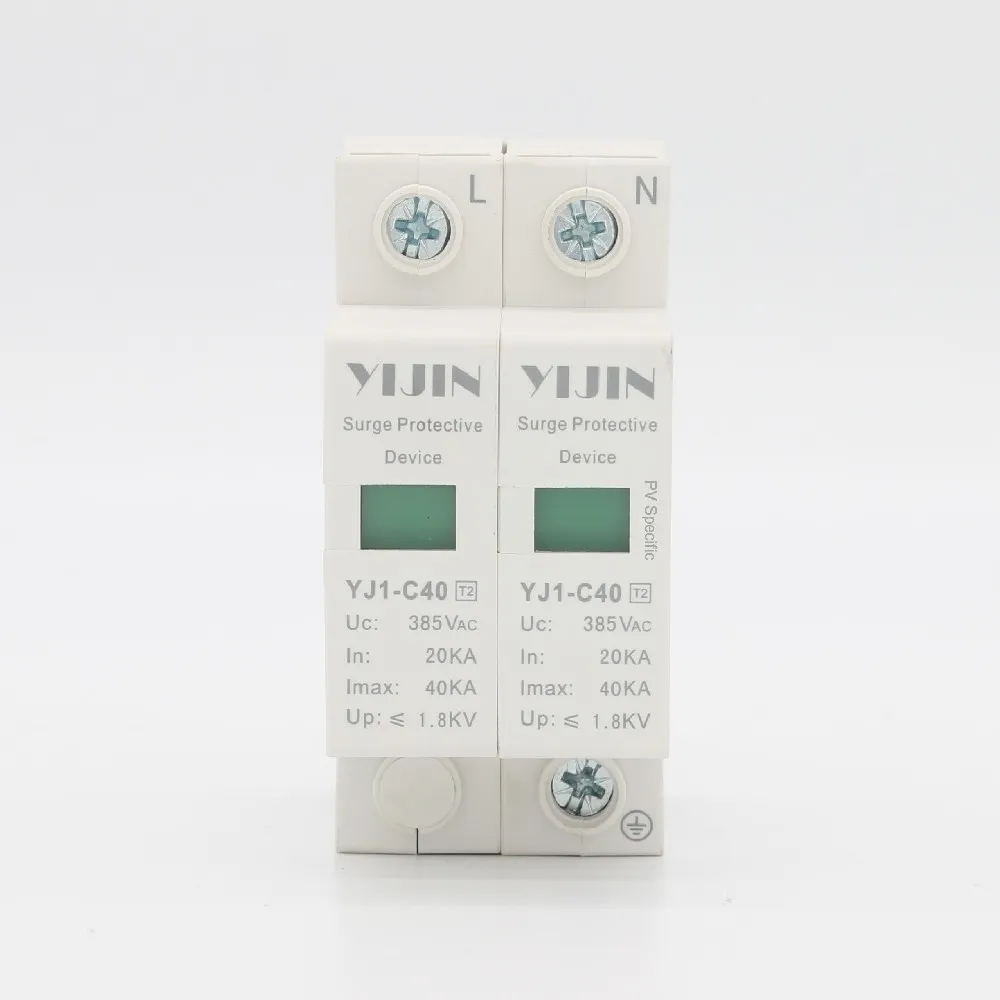
The YJ1-C40 photovoltaic surge protector is the titled page. The surge hub collects the other surge articles when the question is a service entrance or a plug-in strip.
Write the order as a place plus a table. Place: cabinet rail, not the back of the panel, unless you have a different page that says so.
Table: the AC voltage and the discharge list you can point to. A title alone is how the wrong body arrives.
Say whether the circuit after the inverter is the one you mean. The panels are upstream of that inverter. This table is written in AC volts.
Matching an AC cabinet to an AC table is coherent. Matching the same table to the DC side of the panels is a different design, and this page does not walk that design.
If the window color is the thing you were sent to check, look at the module in the cabinet. Green and red are printed for that window. They are not printed as colors of a connector on the roof.
Read the note aloud. You want photovoltaic rail module, then the class ii table, then the room where the rail lives. If the note only says “solar panel,” ask which side of the inverter you mean before the box is picked.
A second person should be able to find the rail without climbing to the array. Name the room, the board, and the window color you expect. If that person is sent to the roof with only the title, the order skipped the body.
The family of currents means you still choose a column. Do not add the nominal list into one larger number. Point at the cell the designer already selected, or say the cell is not chosen yet.
Frequently asked questions
These answers stay with the pages opened for this draft.
What else is in a photovoltaic system besides the panels?
A photovoltaic system, also called a PV system or solar power system, is an electric power system designed to supply usable solar power by means of photovoltaics. The same description includes an inverter that turns direct current into alternating current.
What does the surge protector limit?
A surge protector is an appliance or device intended to protect electrical devices in alternating current circuits from voltage spikes with very short duration. That is the job named for the body of this page.
Which voltages does the photovoltaic page print?
The photovoltaic page prints a rated voltage Un of 220 V AC at 50 Hz. Maximum continuous operating voltage on that page is 420 V AC at 50 Hz from L to N, and 255 V AC at 50 Hz from N to PE.
Which discharge currents does that table list?
The table lists nominal discharge currents of 10 kA, 20 kA, 30 kA, and 40 kA at 8/20. The table lists maximum discharge currents of 20 kA, 40 kA, 60 kA, and 80 kA at 8/20. The table prints a voltage protection level of 1.8 kV.
What do green and red mean on that page?
Green is normal. Red is a fault. The page ties that color change to the failure release.
Why is a plug-in strip a different object?
The talk comment says it is for a 3 prong US 120 V surge protector. This module clips to a rail and prints an AC table.