
 Yueqing Yijin Electronics Co., Ltd.


Surge Protection Device
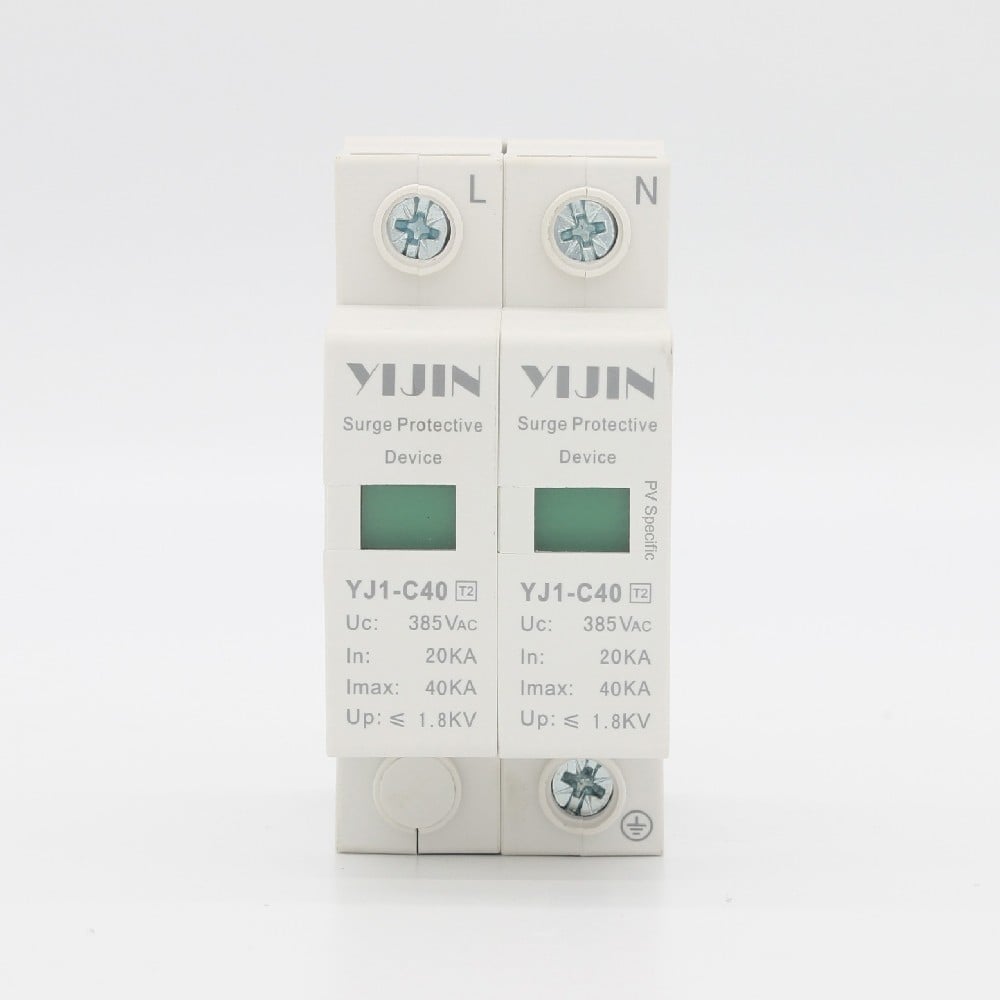
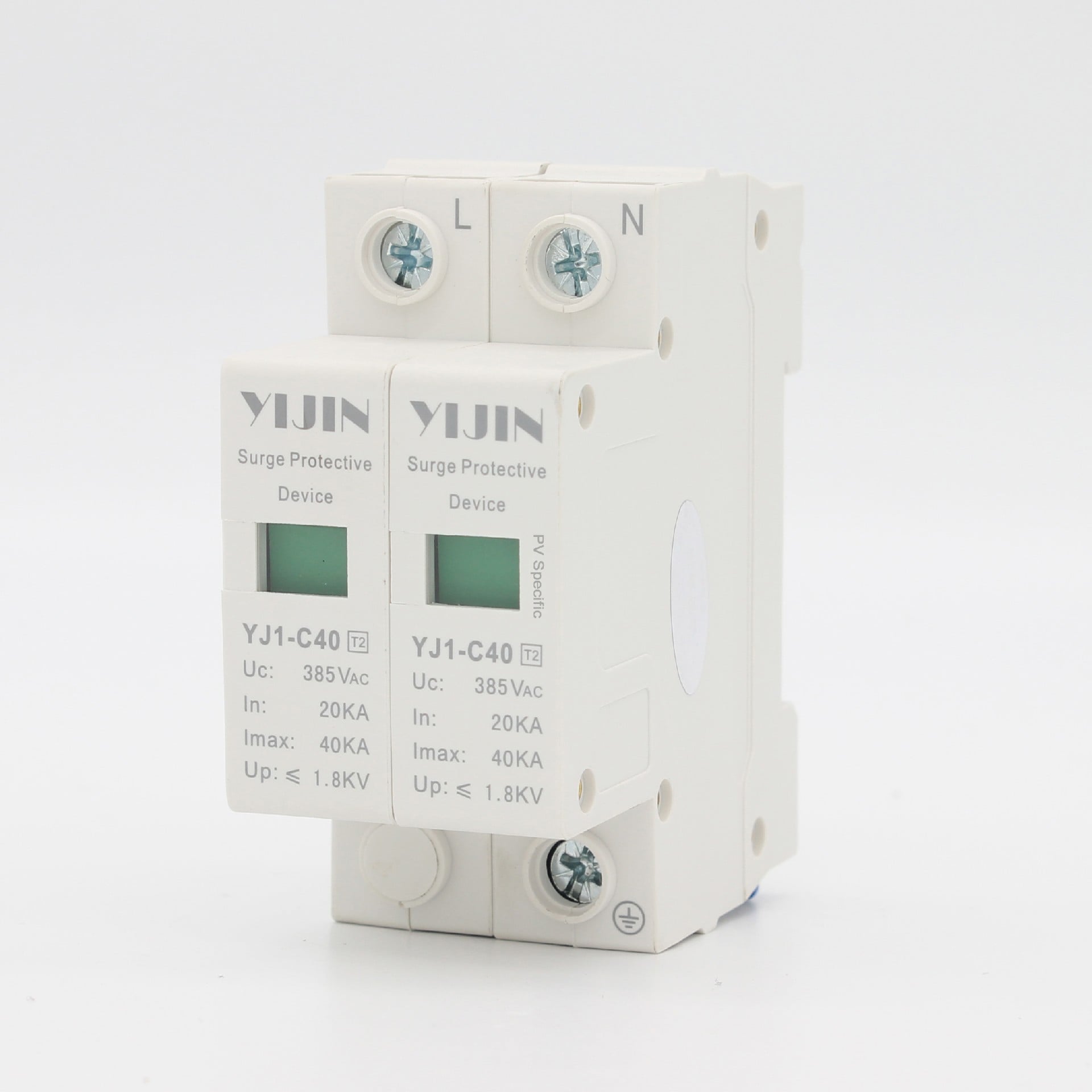
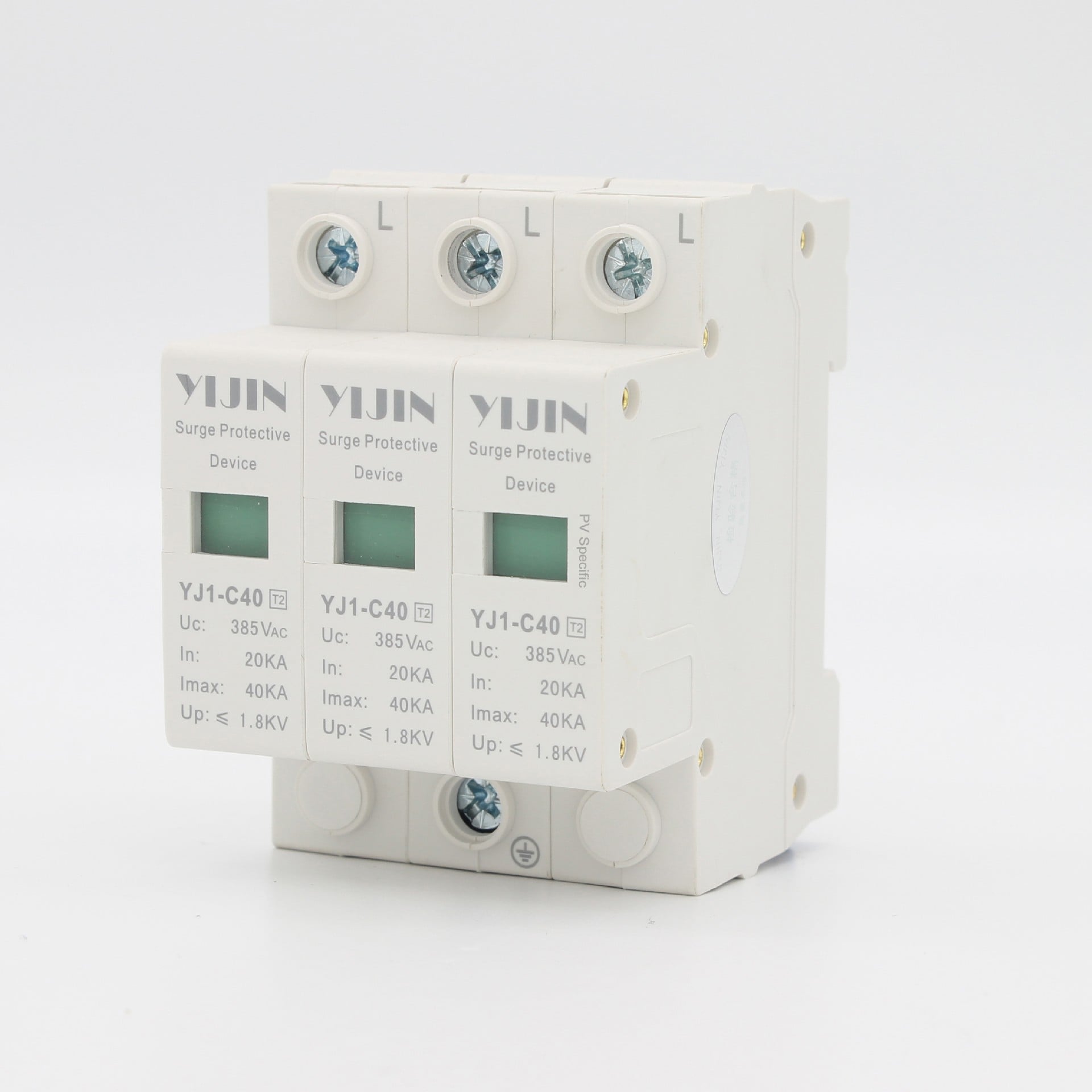
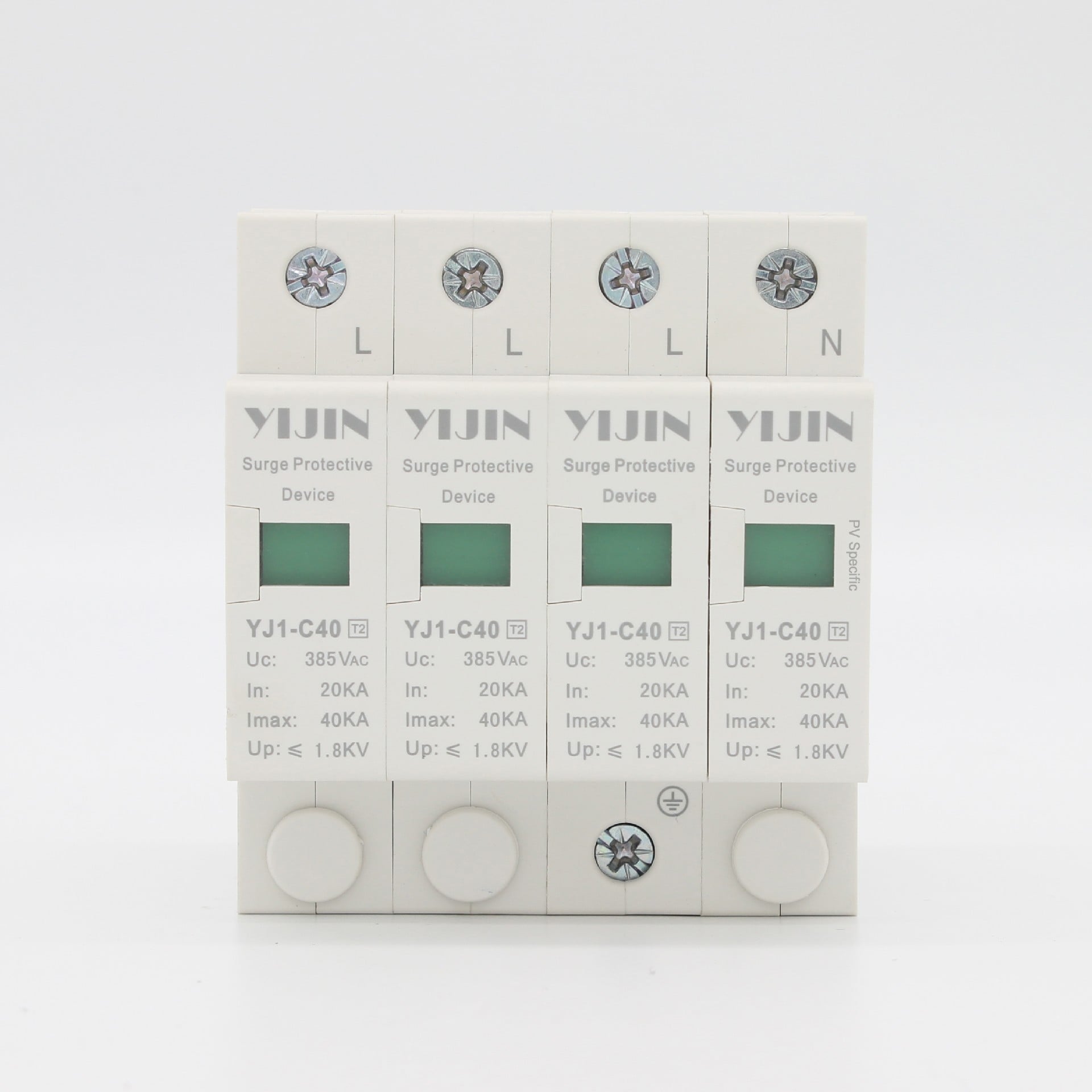
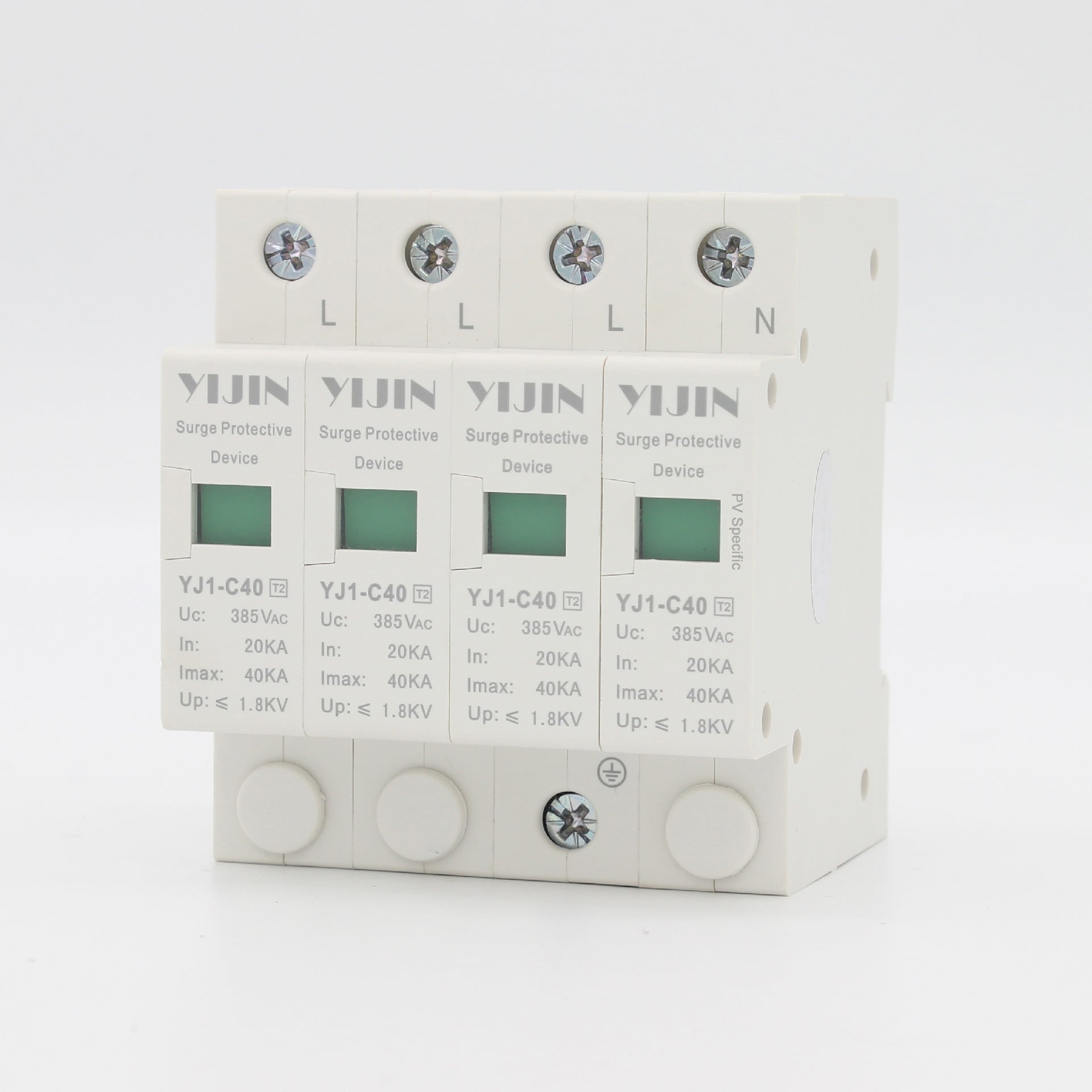
YJ1-C40 Integrated Surge Protector for Photovoltaic Applications
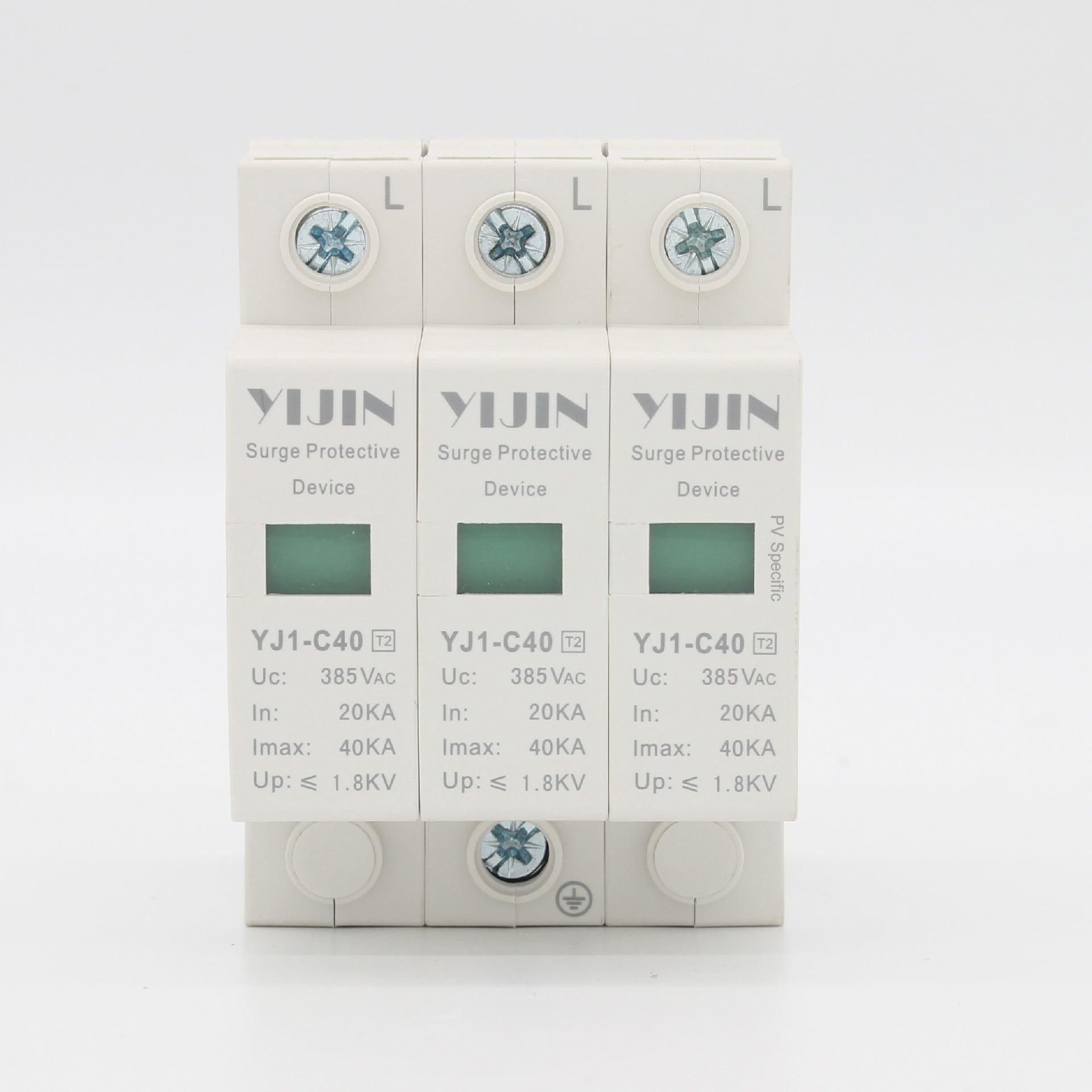
Product IntroductionThis series of surge protectors is suitable for TT, IT, TN-S, N-C-S and other power supply systems with AC 50Hz, 380V and below, and can be used as equipotential connections at the interface of LPZ1, LP22 and LP23 zones. Its design basis complies with IEC61643-1, GB18802.1, The shell is designed to be installed on…
Product Introduction
This series of surge protectors is suitable for TT, IT, TN-S, N-C-S and other power supply systems with AC 50Hz, 420V and below, and can be used as equipotential connections at the interface of LPZ1, LP22 and LP23 zones. Its design basis complies with IEC61643-1, GB18802.1, The shell is designed to be installed on a 35mm electrical rail, and the product has a built-in failure release device. When the surge protector fails due to overcurrent, overheating, or breakdown, the failure release device can automatically disconnect it from the power grid, and the visual alarm indicator window changes from green (normal) to red (fault).
Product Features
1. The protector unit can be replaced without changing the base;
2. Can withstand up to 40kA (8/21us) lightning current surge;
3. Action response time less than 25 nanoseconds;
4. The color of the visual window indicates the working status of the protection, green (normal) and red (fault).
5. High energy surge protection
6. Remote signaling alarm interface
7. Failure detection indication
8. Standard modular installation
9. Reaction speed: nanosecond level
10. Built in instantaneous overcurrent circuit breaker device
11. The maximum discharge current of a single module is 80kA (8/21uS)
12. Built in overheat circuit breaker device
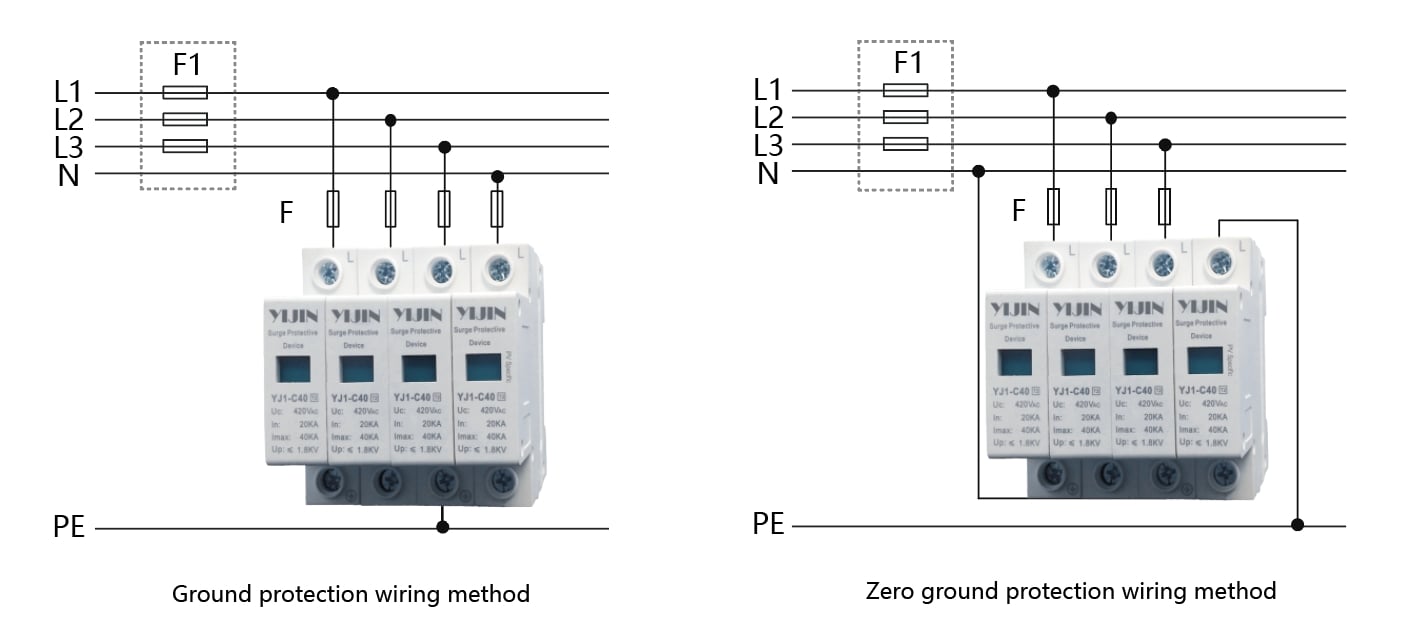
Installation wiring diagram
Normal working conditions
1. The ambient air temperature ranges from -40 ℃ to+70 ℃, with an average value not exceeding+35 ℃ within 24 hours.
2. The altitude shall not exceed 2000m.
3. The relative humidity of the air at the installation site under atmospheric conditions shall not exceed 50% at a maximum temperature of+40 ℃; Higher relative humidity is allowed at lower temperatures, with the average lowest temperature of the wettest month not exceeding+25 ℃ and the average maximum relative humidity of that month not exceeding 90%. And considering that temperature changes occur during
Condensation on the surface of the product.
4Pollution level: Level 2.
5. Installation category: Category II
6Installation method: Adopting international standard guide rails.
Main parameters and technical performance
| Model YJ1-40 | |
| specifications | 1P/2P/3P/4P |
| SPD category | Pressure limiting type |
| Experimental category | Class II experiment |
| Rated voltage Un | 220V AC 50Hz |
| Maximum continuous operating voltage Uc (L-N) | 420V AC 50Hz |
| Maximum continuous operating voltage Uc (N-PE) | 255V AC 50Hz |
| Nominal discharge current Ln (L-N) (8/20 μ s) | 10kA 20kA 30kA 40kA |
| Maximum discharge current 1max (L-N) (8/20 μ s) | 20kA 40kA 60kA 80kA |
| Voltage protection level Up (L-N) (8/20 μ s) | 1.8kV |
| Voltage protection level Up (N-PE) (8/20 μ s) | 1.8kV |
| Recommended series receiving current protection device | 32A/10kA |
| Response time tA (L-N) | ≤25ns |
| Failure indication | Green: Normal Red: Failure |
| Installation of wire cross-sectional area | 4-25mm² |
| Installation method | 35mm standard guide rail |
| work environment | -40——70℃ |
| Housing material | Plastic meets UL94 V-0 standards |
| protection grade | IP20 |
| Remote signaling alarm | Normally open and normally closed contact terminals (optional) |
| Remote signaling interface wiring capability | Maximum 1.5mm ² |
Application and installation location
The YJ1 series module is used for equipotential connection during lightning strikes and is installed at the junction of LPZ0B, LPZ1, and LPZ2 zones. It is usually installed in floor distribution boxes, computer centers, telecommunications rooms, elevator control rooms, frequency conversion equipment control rooms, hospital operating rooms, monitoring rooms, and distribution boxes in places where electronic medical equipment is installed. SPD should be installed in residential distribution boxes for dispersed small villas.
Product design and ordering instructions: Users should clearly indicate the product model and quantity when designing and ordering products.
Product dimension diagram
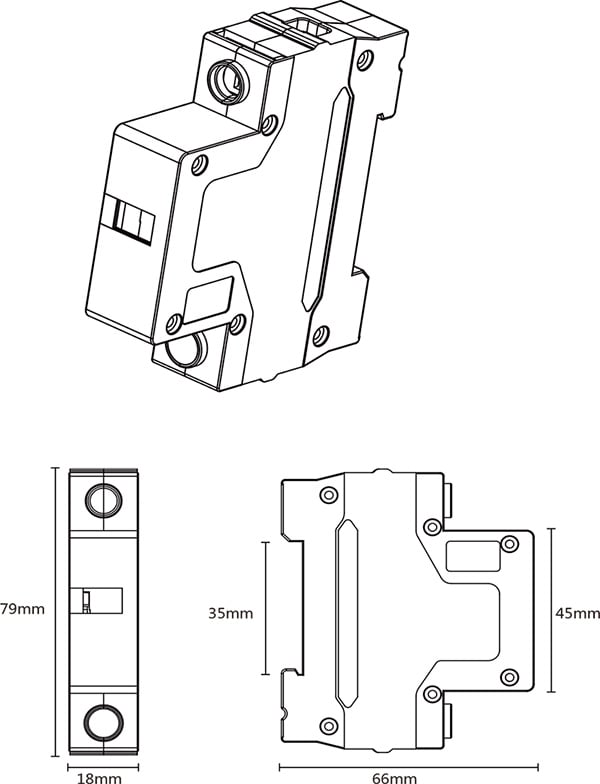
When placing an order, it is necessary to specify the product model and quantity, for example: YJ1-C40 40A 20 units; If there are special requirements, they should be noted separately.
For electrical maintenance and installation, it is necessary to ensure that the operator holds the qualification for electrical work and takes necessary power-off and insulation protection measures.


