 Yueqing Yijin Electronics Co., Ltd.




Can I Use a DC Breaker for AC? Myth, Limits, and Labels
can i use dc breaker for ac usually gets a blunt buyer answer: no—unless that exact device is dual-rated for AC on its label or datasheet. A DC-only DC circuit breaker may still “hold” an AC load for a while, but holding current is not the same as clearing a fault safely. Below: the buyer answer, the AC vs DC breaker arc reasons, then an honest map of Yijin’s live DC frames versus AC-described contrast frames.
The short buyer answer: usually no
Usually no—keep a DC-only breaker off an AC circuit unless the manufacturer printed AC voltage (and interrupting) limits for that device.
Buyers ask because DIN-rail bodies look similar, spare stock is expensive to waste, and “amps are amps” sounds reasonable. Appearance and ampere number are not the utilisation category.
Electrical practice treats AC service and DC service as different jobs. The device has to be designed and documented for the kind of current it must interrupt.
If the side label or datasheet lists both AC and DC limits, that is the dual-rated breaker exception. If you only see DC voltages on a DC breaker—and no AC rating—skip AC power duty for that unit. Prefer a device printed for the utilisation category of the circuit over slogans that ignore the nameplate.
For a broader compatibility walk-through of DC MCBs and AC circuits, see DC MCB AC circuit compatibility. The focus here stays on the buyer myth: can you force a DC breaker onto AC?
Why “it will hold” is not “it will clear safely”
Carrying normal load—or even running warm without an immediate trip—does not prove the breaker can extinguish a fault arc on the wrong utilisation.
In field threads, people report AC-rated breakers used on DC that heat badly and trip late, even when the hardware still “works” day to day. Everyday load current is the easy case.
The hard case is interruption: opening contacts under fault energy while an arc tries to keep the plasma path alive.
| What you observe | What it fails to prove | Better question |
|---|---|---|
| Breaker stays closed on normal load | Safe fault clearing | Is the utilisation category printed for this circuit? |
| Device feels warm but no trip yet | Contacts will survive an arc event | Does the datasheet list interrupting limits for AC (or DC) as needed? |
| DIN rail and amp rating “match” | Interchangeability | Are AC and DC limits both documented on this model? |
Important: If a mismatched breaker still holds load, treat that as temporary coincidence—never treat it as a pass. Safe protection means the device can clear the fault without leaving a sustained arc or welded contacts. — EEVblog field reports on wrong utilisation heating and late trips
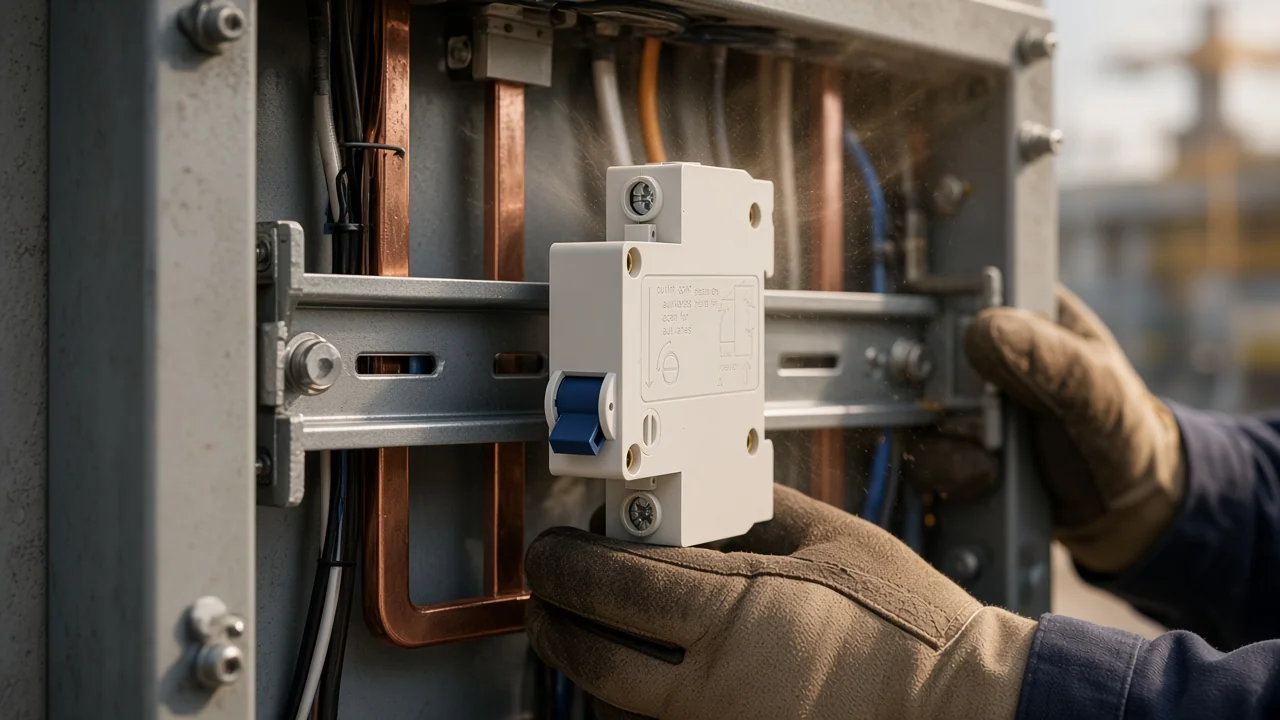
Arc extinction, magnetic blowout, and polarity marks
AC benefits from current zero-crossings; DC needs engineered arc handling—and many DC MCBs also force +/− polarity.
AC vs DC breaker designs diverge here. Alternating current reverses direction periodically (commonly about 50 or 60 times per second).
Each half cycle the current passes through zero, which helps an arc extinguish during switching. Direct current flows one way and offers no natural pause, so DC-capable constructions lean harder on arc chutes, contact geometry, and magnetic methods that stretch and cool the arc.
Magnetic blowout / permanent magnet hardware is one of those methods. Low-voltage breakers commonly use air plus stacked plates (arc chutes).
Magnetic blowout coils or permanent magnets can deflect the arc into those plates so it splits and cools. A “strong permanent magnet arc extinguishing system” on a DC miniature breaker page is therefore a DC-oriented design signal—not permission to park the same device on an AC panel.
Polarity marks are another tell. On Yijin’s YJB1Z DC miniature pages, wiring guidance requires attention to “+” and “−” polarity.
That directional discipline makes sense on DC distribution. It also reminds buyers the product is scoped as a DC circuit breaker rather than a generic AC panel MCB.
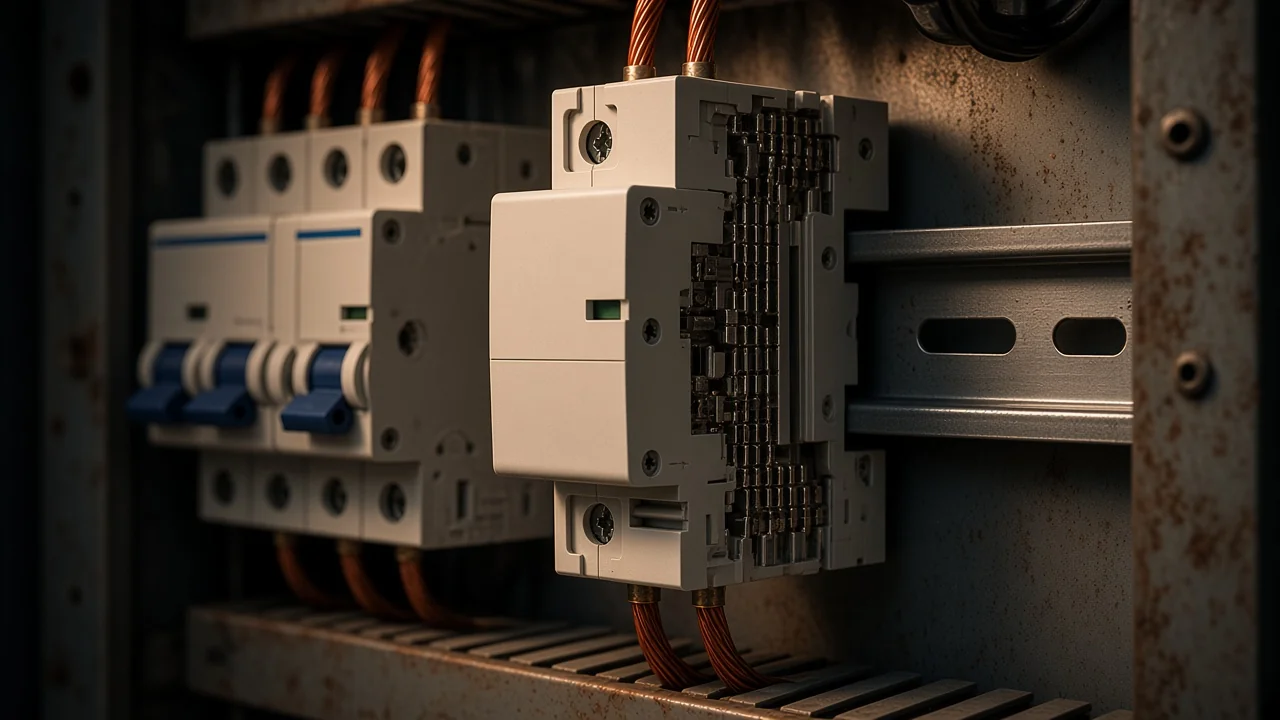
Utilisation category and the dual-rated exception
The exception is documentation: the label or datasheet must list specific AC and DC limits for that device.
“Dual-rated” is neither a vibe nor a DIN-rail shape. It means the manufacturer printed both AC and DC voltage (and related interrupting) information for the same catalog device.
Community replies put it bluntly: if the DC rating is missing, it is missing for a reason—and the same discipline applies when the missing rating is AC on a DC-marked body.
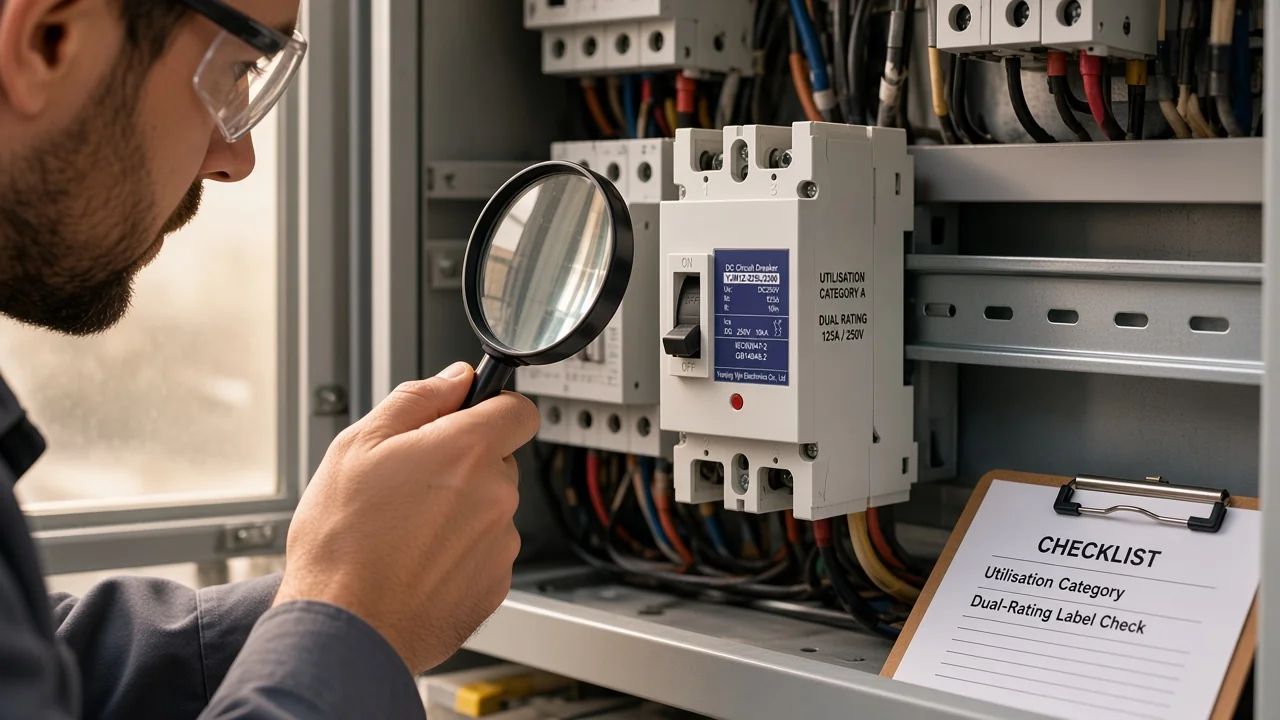
Practical label check:
- Find the nameplate or side marking on the exact pole configuration you will install.
- Confirm printed AC voltage and DC voltage limits when you need both services—or confirm the single utilisation that matches your circuit.
- Prefer manufacturer documentation over forum guesses when the marking is ambiguous.
- If the DC breaker shows only DC voltages, leave AC ratings off procurement paperwork until the maker publishes them.
Codes and inspections care about devices matching their certified application. Parts used outside documented specifications can fail inspection or behave unpredictably even when the panel seems fine at first.
The reverse myth still teaches the same rule
The reverse mix-up—using an AC breaker on a DC circuit—fails for the same reason: match the utilisation category printed for the circuit.
People ask both directions in search and forums. AC breakers lean on zero-crossing behavior that DC never provides.
Sustained DC arcs can pit contacts, delay opening, or leave plasma bridging the gap. The corrective matches the DC-on-AC myth: choose a device printed for the service you actually have.
A full AC-on-DC failure matrix belongs with the sibling compatibility piece. Keep the takeaway short here: reverse or forward, the label decides. Solar string sizing belongs in a dedicated selection article.
Honest Yijin product map: DC frames vs AC contrast
Use Yijin DC frames for DC distribution jobs as printed. Use AC-described frames for AC lines instead of inventing cross-ratings.
Live circuit breaker category inventory mixes DC protection frames and AC/WiFi intelligent frames. That mix helps buyers pick the right utilisation—without treating every SKU as interchangeable.
Primary recommendation for DC distribution: YJB1Z-63 Small DC Circuit Breaker.
The product page scopes it for rated current 63 A and below with DC rated voltages of 250 V and 440 V. It covers overload and short-circuit protection in DC distribution systems, a permanent-magnet arc extinguishing system, a 10 kA short-circuit capacity claim, and mandatory “+”/“−” polarity when wiring.
Page text cites GB10963.2 and IEC60898-2. The same page text stops at DC voltages—no AC dual rating appears there.
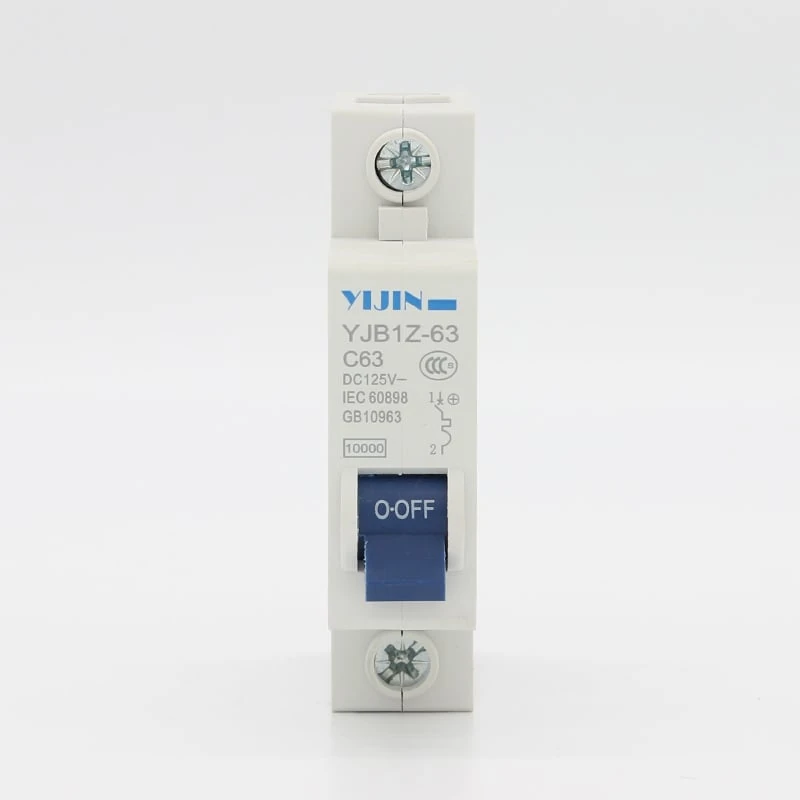
See the Path① product photo above.
| Frame | Page-stated service | Snapshot parameters (page) | Buyer note |
|---|---|---|---|
| YJB1Z-63 | DC miniature | ≤63 A; DC 250 V / 440 V; 10 kA; polarity required | Primary DC MCB pick for this myth map |
| YJB1Z-125 | DC miniature | ≤125 A; DC 220 V / 440 V; 10 kA; polarity required | Higher current DC MCB class |
| YJM1Z | DC molded case | DC750 V and below; up to 800 A | Higher-current DC MCCB family |
| YJB2-125 / 1P+N | AC-described reclosing / cost-control frame | AC 50 Hz; 230 V / 400 V class; up to 80 A | Contrast only—skip invented DC ratings |
The YJB1Z-125 Small DC Circuit Breaker page states rated current of 125 A and below with DC rated voltage of 220 V and 440 V, plus a 10 kA short-circuit capacity claim.
The YJM1Z plastic shell DC circuit breaker page states rated working voltage of DC750 V and below and rated working current up to 800 A.
The YJB2-125 / 1P+N page text mainly covers AC 50 Hz lines with rated working voltage 230V400V and rated current up to 80 A.
Why skip forcing YJB1Z onto an AC panel job: the public DC pages for these SKUs state DC voltages, not AC dual ratings. If your circuit is AC, specify an AC-described frame—or any maker’s dual-rated device that actually prints both limits. The site fact package also lacks verified UL Listed or NEC compliance evidence for these breakers, so leave those claims out of RFQs unless you hold separate certificates.
FAQ
Can I use a DC breaker for AC if it fits the DIN rail?
No. Rail fit and ampere marking are not the utilisation category. Use a device printed for AC service—or a dual-rated device that lists AC limits—when the circuit is AC.
What does dual-rated mean on a breaker label?
It means the manufacturer documented specific AC and DC voltage (and related interrupting) limits for that model. If only one utilisation appears, treat missing ratings as intentional.
Why do people say AC breakers “need” zero-crossing?
Alternating current passes through zero each half cycle, which helps extinguish arcs during interruption. Direct current offers no pause, so DC-capable designs rely more on engineered arc handling.
If my DC breaker carries an AC load without tripping, is it fine?
No. Holding load is not proof of safe fault clearing. Warm operation or late trips are warning signs rather than approval.
Can I use an AC breaker on a DC circuit instead?
Generally no unless that AC breaker is also documented for DC at your voltage. The reverse myth fails for the same utilisation reason; see the sibling DC MCB AC circuit compatibility article for a wider compatibility framing.
Do Yijin YJB1Z models list AC dual ratings on the product pages?
The YJB1Z-63 and YJB1Z-125 pages describe DC voltages and DC distribution use. They stop short of printing AC dual ratings in that product text.
Why do YJB1Z pages mention +/− polarity?
Those DC miniature pages require attention to “+” and “−” when wiring. Polarity marks signal directional DC design and reinforce that the SKU stays outside generic AC drop-in assumptions.
Is a twenty-amp DC breaker the same as a twenty-amp AC breaker?
No. The ampere number alone does not make utilisation categories interchangeable. Confirm printed AC or DC limits for the circuit you actually have.