 Yueqing Yijin Electronics Co., Ltd.



Arc Fault Circuit Breaker Problems – Myths, Trips, and Real Causes
Most reports of arc fault circuit breaker problems are not proof the breaker is defective. They usually point to wiring mistakes, shared neutrals, noisy loads, or genuine arcs the device is built to catch. This article separates those myths from real causes, clarifies AFCI versus GFCI and AFDD language – including arc fault circuit interrupter problems and AFCI nuisance tripping complaints – and shows when a DIN-rail AFDD-family product fits without pretending it is a UL-listed US panel AFCI.
The myth: “problems” do not automatically mean a defective breaker
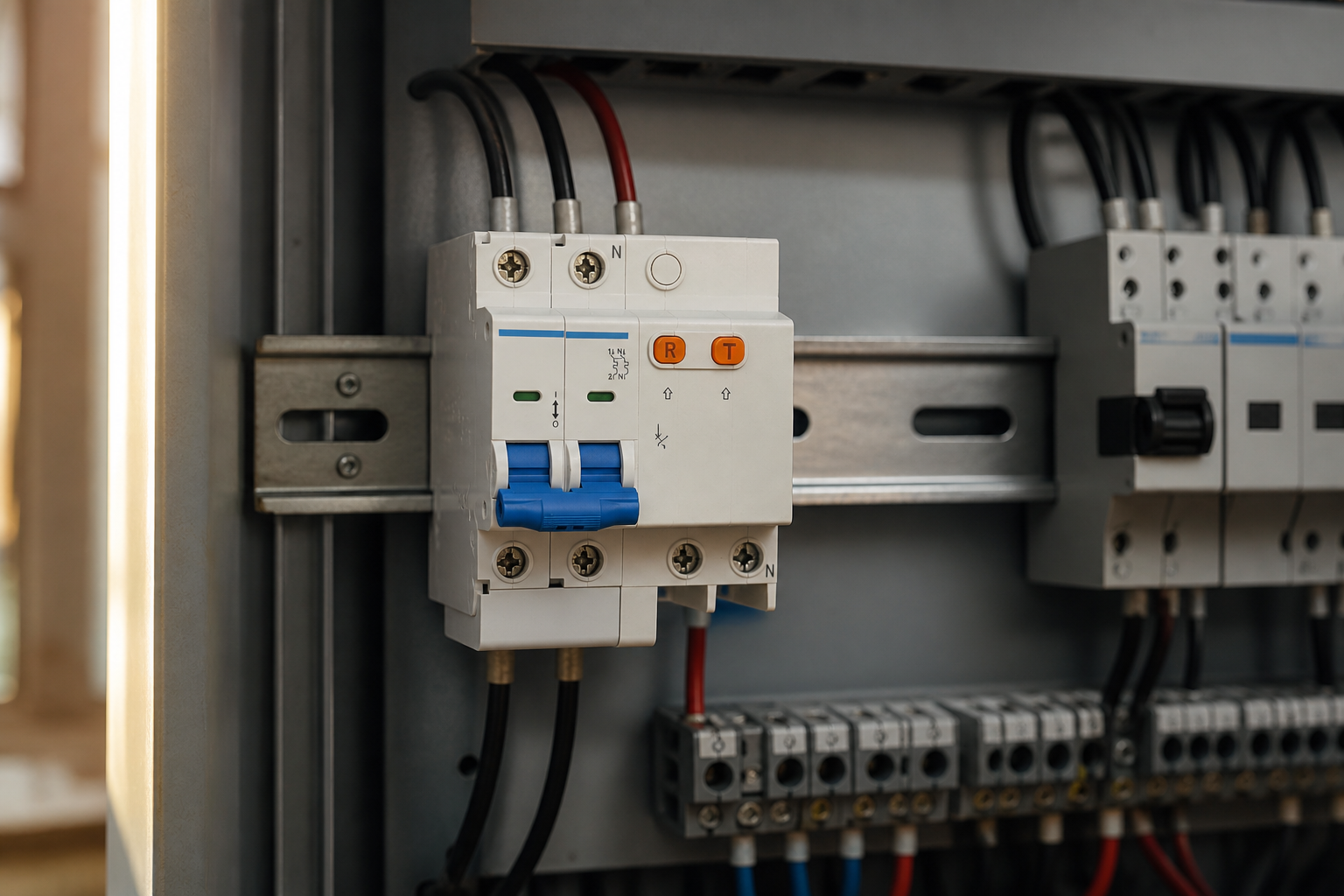
Treat recurring trips as a signal to investigate wiring and loads before condemning the device.
Search results often frame AFCI behavior as chronic “problems,” as if sensitivity itself were a defect. Arc-fault protection watches for signatures that ordinary thermal-magnetic breakers miss. When the device opens, it is reporting a condition on the circuit.
That condition may be a true arc hazard, a wiring error, or a load whose electrical noise overlaps arc-like patterns. Calling every event a bad breaker skips the question that matters: what changed on that circuit?
A new appliance, a borrowed neutral in a multi-gang box, a loosened receptacle screw, or damaged insulation can all produce trips that feel random. Electricians who track those patterns often find installation or load conditions before they find a failed AFCI mechanism.
That does not mean breakers never fail. It means replacement is a last check after the circuit story is examined, not the opening move.
| Common label | What it often really means | Better first question |
|---|---|---|
| “Nuisance trip” / “too sensitive” | Root cause unclear to the user | Did a specific load, room, or time pattern repeat? |
| “Defective AFCI” | Device blamed first | Have neutrals, grounds, and terminations been isolated? |
| “Bad appliance” | One load trips one circuit | Does that load hold on a different, correctly wired circuit? |
| “Code problem” | Frustration with AFCI requirements | Is the trip hiding a wiring fault the older breaker never saw? |
What arc-fault breakers actually watch for
They look for dangerous arc signatures – including series and parallel arcs – while normal switching sparks still exist.
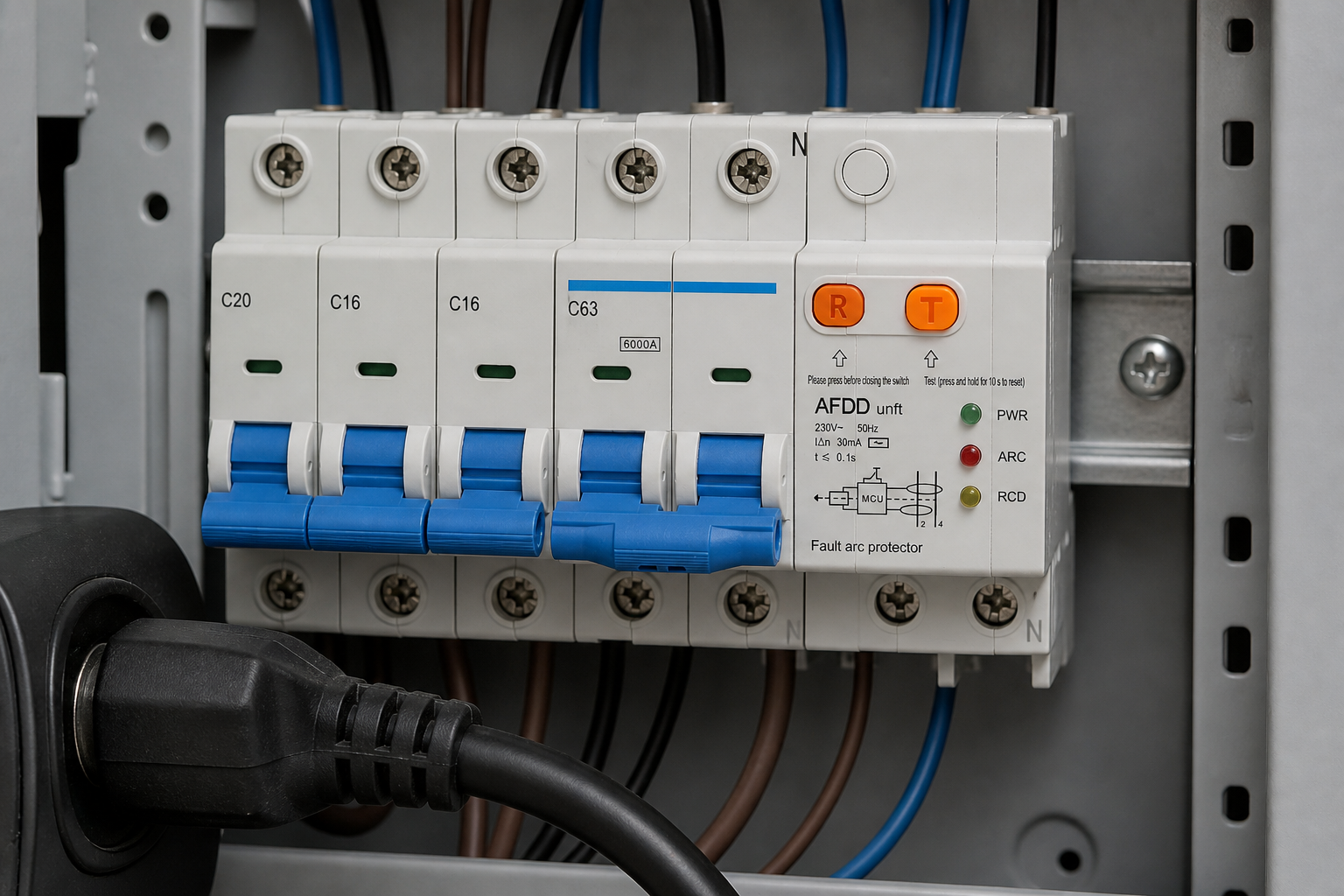
A conventional breaker mainly reacts to overloads and short circuits. Arc-fault devices add waveform watching. They try to separate harmless arcs (a switch opening, a brushed motor) from arcs that signal damaged conductors, loose connections, or insulation failure.
A series arc sits in the current path and can stay below a normal trip threshold. A parallel arc jumps between conductors or to ground and may still run below classic short-circuit levels while dumping heat into wood, dust, or insulation.
The same sensitivity that catches a nicked conductor behind drywall can also react when a load produces a similar high-frequency signature. Understanding that trade-off keeps the conversation on causes instead of slogans about “junk breakers.”
Fire-safety education groups also frame arcing faults as a major electrical fire risk. The practical takeaway for buyers and panel builders is simpler: arc-fault protection exists because amperage alone is a blunt instrument.
Wiring myths: shared neutrals, ground-neutral contact, and loose connections
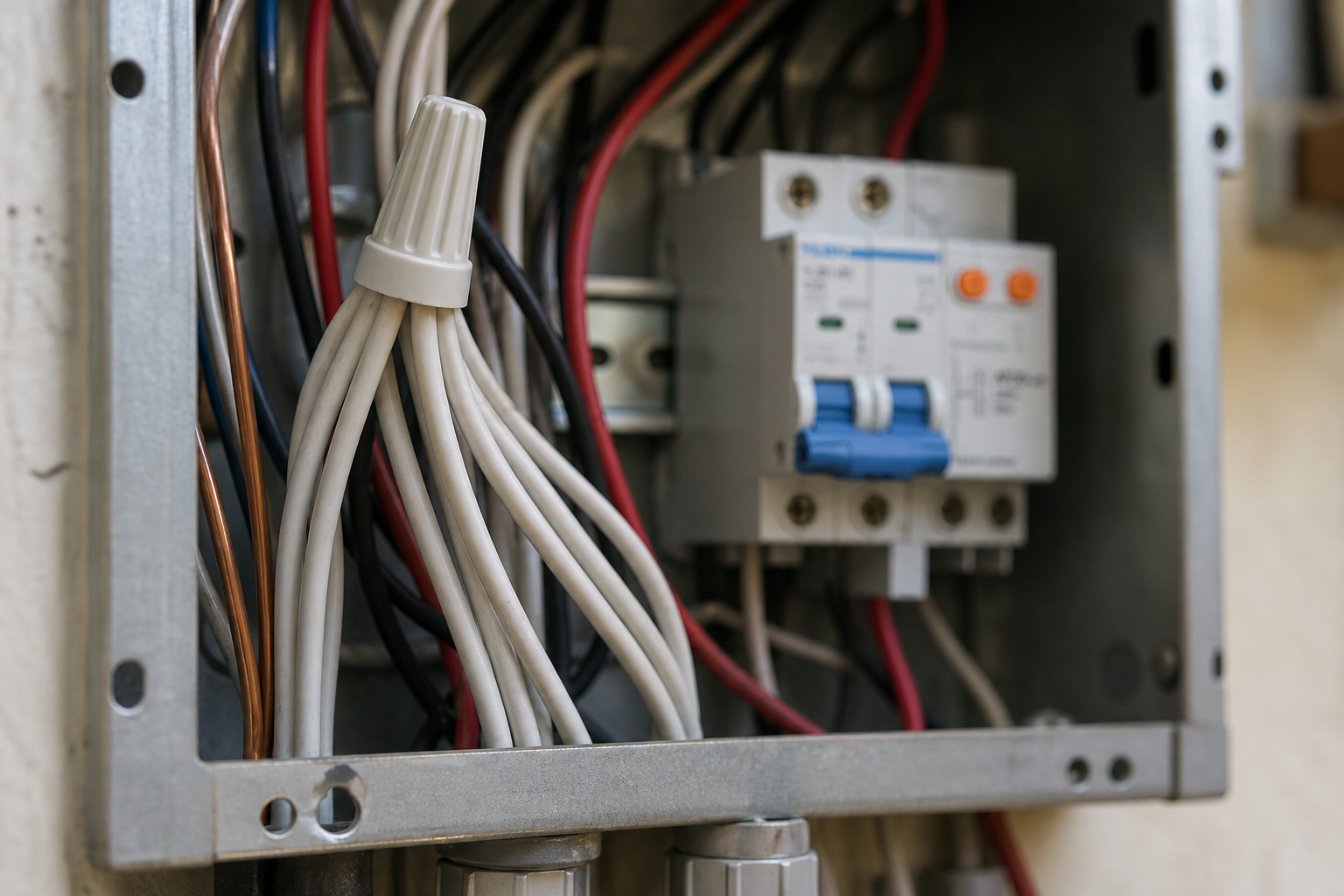
Shared or crossed neutrals and loose terminations often look like “breaker problems” under load.
Field threads return to the same wiring story. A bedroom AFCI trips only when a treadmill or similar load runs. The same machine holds on another bedroom circuit.
Installers who dig into the boxes often find neutrals from separate branch circuits tied together, or a neutral touching ground somewhere downstream. Many AFCI designs include ground-fault sensing. When return current leaves on the wrong conductor, the device sees an imbalance and opens.
Multi-gang switch boxes and three-way lighting runs are frequent hiding places for borrowed neutrals. Loose screws, degraded push-in connections, and pinched conductors create intermittent arcs that the device is supposed to catch.
Labeling those events as “nuisance” invents a myth that the hardware is the villain when the circuit is telling the truth.
From the field: On Electrician Talk, a treadmill that “only trips one bedroom AFCI” was traced by replies to a shared or crossed neutral and the AFCI’s ground-fault sensing – not a defective exercise machine. The load simply made an existing wiring mistake visible.
Load-noise myths versus true arcing appliances
Some loads create signatures that resemble arcs; that still is not a reason to ignore damaged cords or fixtures.
Vacuums, some entertainment electronics, fluorescent ballasts, and motor-driven gear appear repeatedly in contractor write-ups as trip triggers. Encyclopedia summaries also note false-positive sensitivity to certain motors, printers, and radio-frequency energy.
Those cases feed the myth that modern loads “prove” AFCIs are defective. Separate three situations instead:
- A healthy load with a noisy signature that an older detection profile misreads.
- A failing cord, plug, or fixture that is actually arcing.
- A wiring fault that only shows under higher current.
Unplugging loads one at a time and moving a suspect appliance to a known-good circuit answer more “problems” than swapping breakers on day one. If a load holds elsewhere and the original circuit still trips with nothing connected, look at the permanent wiring.
AFCI is not the same problem as GFCI
Arc-fault and ground-fault protection solve different risks even when dual-function devices exist.
AFCI targets fire risk from arcing. GFCI targets shock risk from current leaving the intended path through a person or unintended ground.
Dual-function AFCI/GFCI products combine both, which is useful – and also a source of mixed language on job sites. Calling every AFCI trip a “GFCI problem” muddies the next test step.
Shared-neutral and ground-neutral faults can engage ground-fault sensing inside an AFCI. That still is not the same as saying the device’s only job is shock protection.
For procurement readers comparing datasheets, keep the hazard labels straight. Specifying residual-current protection does not automatically satisfy an arc-fault requirement, and the reverse is also true unless the listed device is dual-function.
AFCI vs AFDD language – and why listing still matters
US AFCI branch language and IEC/GB AFDD DIN-rail language describe related ideas, not identical listings.
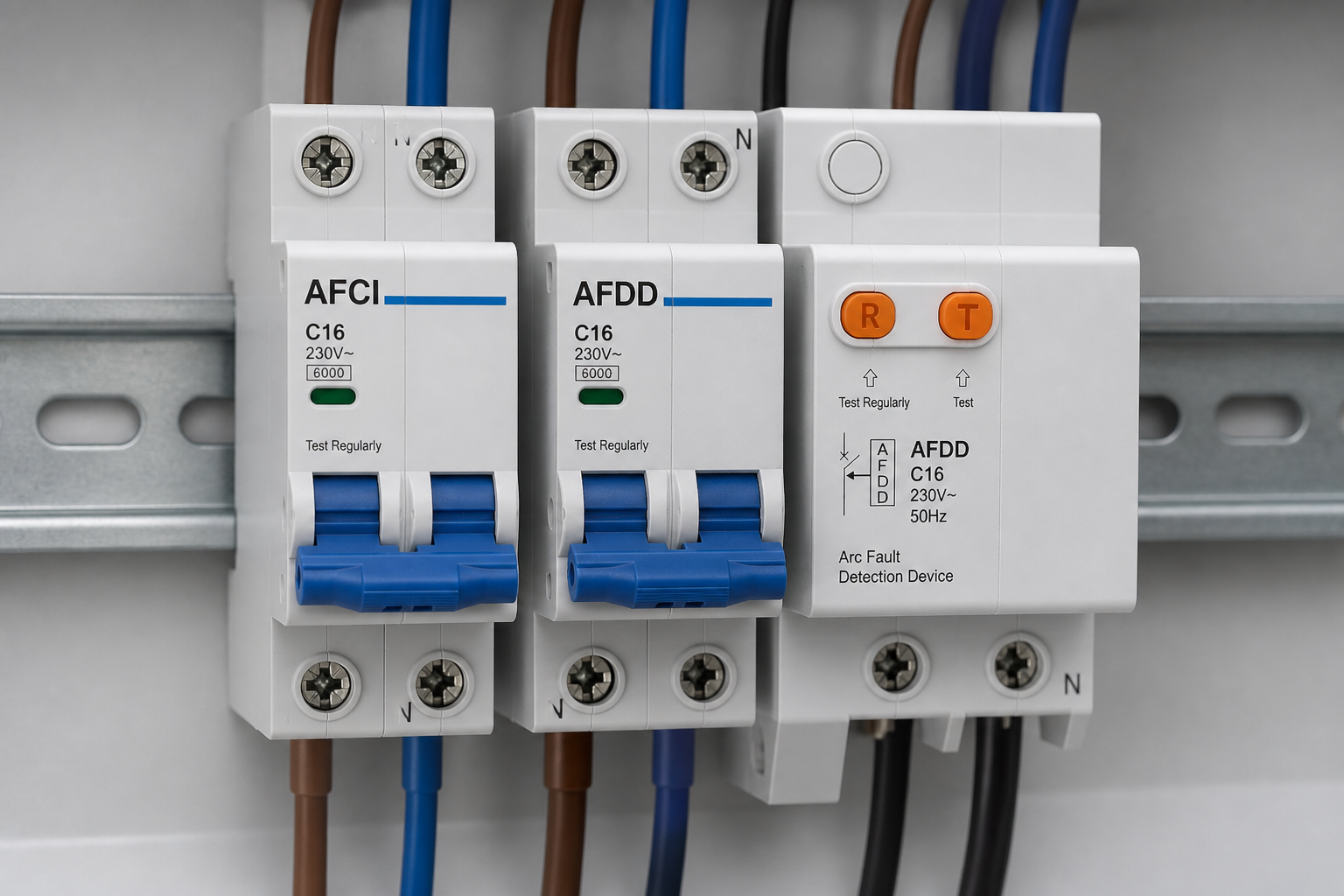
North American practice centers on listed AFCI devices and adopted electrical-code rules for many dwelling circuits. IEC-market writing uses AFDD for arc-fault detection devices aimed at final circuits.
Independent technical explainers treat the concepts as related – similar fire-prevention intent – without making the listings interchangeable.
That honesty matters for this site’s product line. Yijin’s live pages describe AFDD-style DIN-rail breakers and a separate fault-arc detector. They state Chinese national standard references on those pages.
They do not document UL 1699 listing or NEC AFCI suitability for US branch-circuit panels.
Fixing a listed AFCI complaint on a US dwelling panel is a different hardware path from specifying a 230 V DIN-rail AFDD module for an export or IEC-style board.
| Label readers see | Typical region / ecosystem | What it does not automatically prove |
|---|---|---|
| AFCI / combination AFCI | North American branch-circuit practice (UL 1699 / adopted code) | That an IEC/GB DIN-rail AFDD is listed for the same panel |
| AFDD | IEC-market final-circuit protection naming | That the device is a UL-listed US panel AFCI |
| Fault arc detector | Detector/alarm architectures (project-specific standards) | That it is a drop-in branch breaker substitute |
Read the trip pattern before you replace the breaker
Instant versus delayed trips and appliance-specific patterns tell you whether to chase wiring, a load, or the device last.
Use pattern questions as a myth filter, not as a full code troubleshooting manual:
- Does the trip happen the moment a specific appliance starts?
- Does it happen with no intentional load after a reset?
- Does it wait minutes or hours under ordinary use?
- Does the same load hold on another correctly wired circuit?
- Did the behavior start after a remodel, multi-gang switch work, or panel upgrade?
Instant trips with a single load push you toward that load’s cord or a wiring interaction under current. Trips with everything unplugged push you toward permanent wiring or the breaker itself.
Delayed trips can involve heating connections or intermittent contact. Only after those questions stop yielding answers does breaker replacement become a clean experiment – and even then, a licensed electrician should confirm the circuit remains safe.
When a Yijin AFDD-family product fits the job
YJB1-63/AFD pages describe DIN-rail AFDD-style protection within the published AC scopes – not a UL-listed US panel AFCI substitute.
Published first-party parameters include AC 50 Hz operation at rated voltage 230 V with rated currents from 10 A through 63 A.
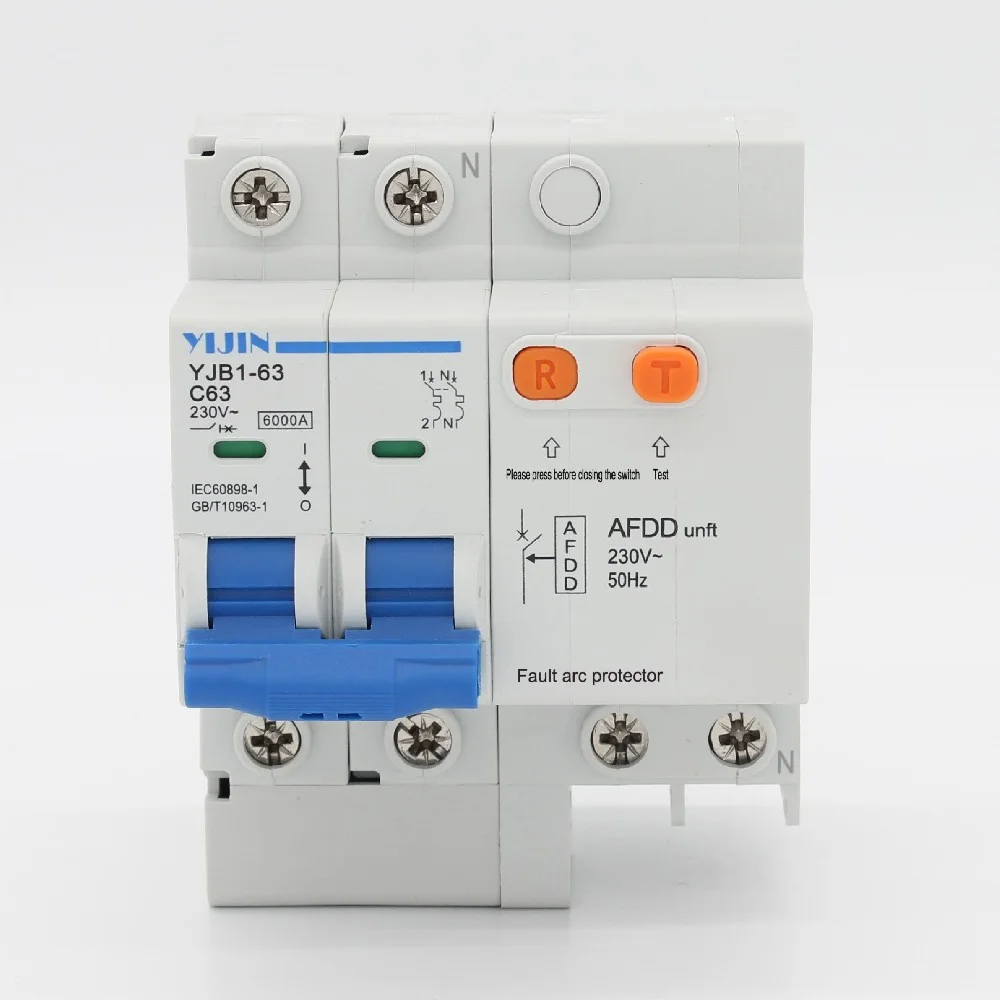
After the myths are cleared, buyers still need hardware that matches the board they are building. For DIN-rail projects that want combined overcurrent and arc-fault functions in an AFDD-style module, Yijin’s YJB1-63/AFD arc fault circuit breaker is the primary first-party fit under the Others hub.
The product page describes an AFDD assembled from a small circuit breaker and an arc-fault protection module, with overload, short-circuit, and arc-fault protection for series and parallel arcs.
Published parameters include AC 50 Hz, rated voltage 230 V, rated currents from 10 A through 63 A, 2-pole configuration, standard rail mounting, and standard reference GB/T31143 on the parameter table.
The sibling YJB1-63/AFD Circuit Breaker with Leakage Arc Fault adds leakage monitoring and a leakage test window on the same family framing.
The YJ-AFD-SMG Fault Arc Detector is a different architecture: an independent fault-arc fire detector citing GB14287.4-2014, with alarm, mute/test/reset, and communication features rather than a US panel AFCI form factor.
Use these SKUs when the project needs DIN-rail AFDD-style or detector hardware within the published scopes. Do not treat them as documented UL-listed NEC AFCI breakers for US dwelling panels.
Listing, panel compatibility, and local code acceptance still belong to the project’s electrical design – not to a myth article’s product paragraph.
FAQ
Does a tripping arc-fault breaker mean it is defective?
Not by itself. Trips often reveal wiring faults, shared neutrals, loose connections, or load signatures. Treat “defective” as a conclusion after those causes are checked.
What usually causes AFCI nuisance trips?
Common clusters include shared or crossed neutrals, neutral-ground contact, loose terminations, damaged insulation, and some motor or electronic loads whose noise overlaps arc-like signatures.
Is a shared neutral a breaker problem?
It is usually a wiring problem that the breaker reveals. Single-pole AFCI circuits that share or cross neutrals with another branch frequently trip under load because return current no longer matches the hot path the device expects.
Are AFCI and GFCI the same device?
No. AFCI focuses on arc/fire signatures; GFCI focuses on ground-fault/shock protection. Dual-function products exist, but the hazards remain different.
Is AFDD the same as AFCI?
They are related concepts with different naming and listing ecosystems. AFCI is the North American UL/NEC-centered term; AFDD is the IEC-market term. Similar intent does not make listings interchangeable.
Can Yijin’s AFDD replace a UL-listed AFCI in a US panel?
Not on the strength of the public product pages reviewed for this article. Those pages document AFDD-style DIN-rail scopes and Chinese standard references, not UL 1699 / NEC AFCI listing.
When should you consider replacing the breaker?
After trip patterns, loads, and wiring checks stop explaining the behavior – and after a qualified electrician confirms the circuit is safe. Replacement is a last experiment, not the first myth answer.
What does the YJB1-63/AFD product page actually cover?
It describes an AFDD-style DIN-rail breaker with overload, short-circuit, and arc-fault protection at AC 50 Hz, 230 V, and currents up to 63 A, with GB/T31143 listed on the parameter table. It does not claim UL-listed US panel AFCI status.
References
- Arc-fault circuit interrupter – Wikipedia
- Arc-fault detection device – Wikipedia
- Arc Fault Circuit Interrupters (AFCIs) – Electrical Safety Foundation International
- Arc Fault Protection in Electrical Systems – Industrial Control Academy
- AFCI Tripping, Ideas? – Electrician Talk
Humanizer audit: PASS
Second self-pass: No invented facts, numbers, or firsthand testing claims were added. Source-first and meta-process phrasing removed.
Draft Agent ID: YJ-DRF-AGT-20260907-02