 Yueqing Yijin Electronics Co., Ltd.




AC Contactor 1 Pole vs 2 Pole: What Each One Switches
In the ac contactor 1 pole vs 2 pole decision, a pole is one current-carrying conductor that the coil opens and closes. One pole breaks one conductor and leaves the other still landed on the load; two poles break both and leave the load floating. Which one is right comes from the circuit in front of you and from anything that has to stay powered while the coil is off.
What a Pole Switches, and What the Coil Does Instead
A pole is a switched conductor rather than a unit of capacity. Counting poles tells you how many wires go dead when the coil releases, and that is the whole of what it tells you.
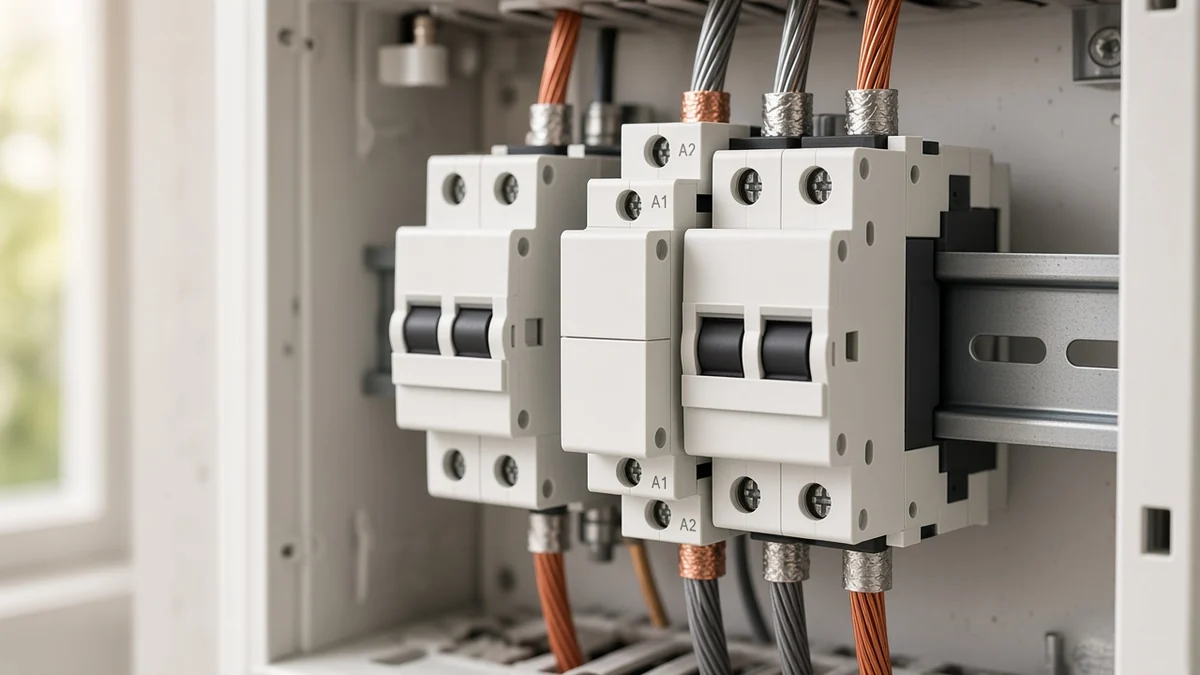
The electromagnet that moves the contacts sits on a coil circuit of its own. On the Yijin modular bodies it lands on the two small terminals marked A1 and A2, and those markings read the same on the one-pole frame as they do on the two-pole frame.
Contactors in this class also rest in the open state. Yijin supplies the modular frames normally open and builds normally closed versions to order, which matches the general rule that these devices carry normally open main contacts and rely on the coil to hold them shut.
So a second pole changes the power side only. It buys you another switched conductor, not a second coil, a different control voltage, or a stronger magnet.
One Open Pole Still Leaves the Load Sitting on a Live Conductor
Let the coil go on a single-pole contactor and the load stops working, but one side of it is still connected to the supply. The circuit is broken; the terminals on the unswitched conductor are not.
On many of the parts handed over a supply-house counter, the second position is not even a contact. It is a solid bar running straight from line to load, which is why the part gets sold as a one-plus-shunt, or written on the box as 1 + pole.
A technician on r/HVAC put it in trade language after the counter gave him one instead of the two-pole he asked for: “The 2 pole breaks both poles between line and load sides of the contactor and the 1+ breaks only one pole, with the other being a shunt (a straight bar from line to load).” Another reply in the same thread added the part that catches people out, that crankcase-heater wiring can change when you move between the two styles.
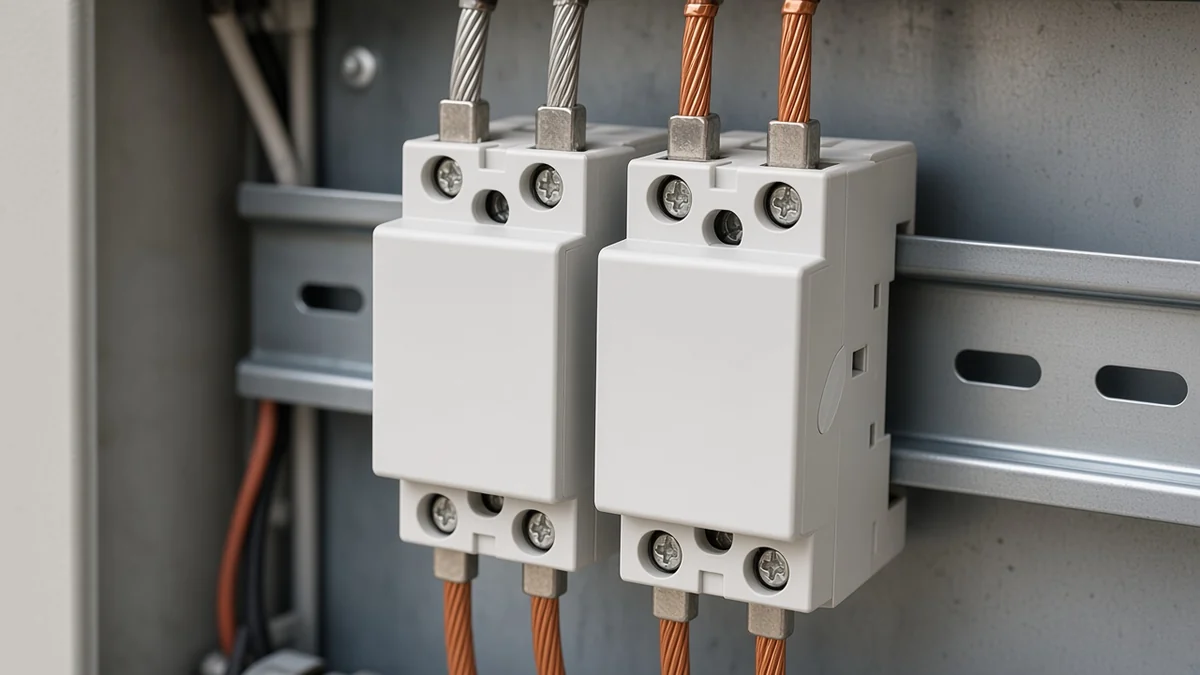
Important: Work on the load side of a single-pole contactor as if it is live, because it is. Technicians in the comment thread under HVAC School’s article on single-pole contactors describe colleagues who see a dropped-out contactor and assume everything past it is dead, while the compressor run leg is still fed through the unswitched side.
Grounded Neutral or Two Hot Legs: Which Conductors You Must Break
Pole count follows the conductors your circuit actually has. A grounded single-phase branch gives you one hot and one neutral, so one switched pole covers the conductor that matters; a load fed between two hot legs has two ungrounded conductors, and one pole leaves one of them landed.
United States practice then splits over what to do about it. Licensed electricians in a Mike Holt thread point at NEC 430.84, which lets a controller open a single conductor where a separate disconnecting means is present, and then argue about whether that makes it a sensible thing to specify.
One moderator in that thread drew the line between the two questions: “You have to remember that the Code is not a design guide, it is a collection of MINIMUM standards that must be met.” Another poster noted that the instructions supplied with some IEC contactors call for breaking all power conductors, neutrals included.
Switching the grounded conductor is a separate question, and on a modular contactor it is usually the wrong instinct. Leave the neutral solid unless the equipment instructions or your inspector tell you otherwise.
None of this turns the contactor into a disconnect. It is not built to interrupt short-circuit current and it has no lockable open position, so choosing a pole count never stands in for the disconnecting means and the overcurrent device ahead of it.
Lighting Circuit, Water Heater, Heat Pump: Three Different Answers
Put the same question to four ordinary loads and the answer changes three times. In a 1 pole vs 2 pole contactor choice the variable is never the equipment badge; it is which conductors are ungrounded and whether anything downstream needs power during the off state.
| Load | Conductors present | Pole count that fits | Why |
|---|---|---|---|
| Lighting branch driven from a time switch | One hot plus a grounded neutral | One pole | Only the hot conductor needs to open, and the neutral stays solid through the board |
| Storage water heater on a two-wire load | Two ungrounded conductors | Two poles | A single pole leaves the element bank sitting at line potential through the second leg |
| Condenser or heat pump with off-cycle heating | Two ungrounded conductors, one of them feeding the off-cycle circuit | Match the original style, or rewire deliberately | Opening both legs kills the circuit that keeps the crankcase warm between runs |
| Pump or fan motor on a two-wire load | Two ungrounded conductors | Two poles | Windings should not sit energised between starts, and both legs are ungrounded anyway |
The rule underneath the table is short enough to carry around. Open every conductor that is ungrounded, and look twice before you open a conductor that something else quietly depends on.
Module Width and Terminations: What a Second Pole Really Costs
Board space is the cost nobody argues about online and the first one a panel schedule runs into. It is also where the pole-count question gets its most useful surprise.
Devices on a 35 mm top-hat rail are counted in DIN rail modules, and one module is 18 mm wide, which is why an enclosure advertised as twenty modules is quoting millimetres in disguise. The rail that the Yijin pages call TH35-7.5 is the IEC/EN 60715 35 x 7.5 profile, the same rail sold in the United States as TS35.
Here the second pole often costs nothing at all. In the Yijin range photographs the one-pole and two-pole bodies fill the same narrow frame, while the four-pole bodies are plainly wider, so the assumption that every extra pole eats another module does not survive contact with the product shots.
The pages stop short of settling it, though. Each product page carries an Outline dimension diagram heading with no drawing beneath it, and no module count or millimetre figure appears anywhere on the five pages, so the real width has to come from a drawing you request.
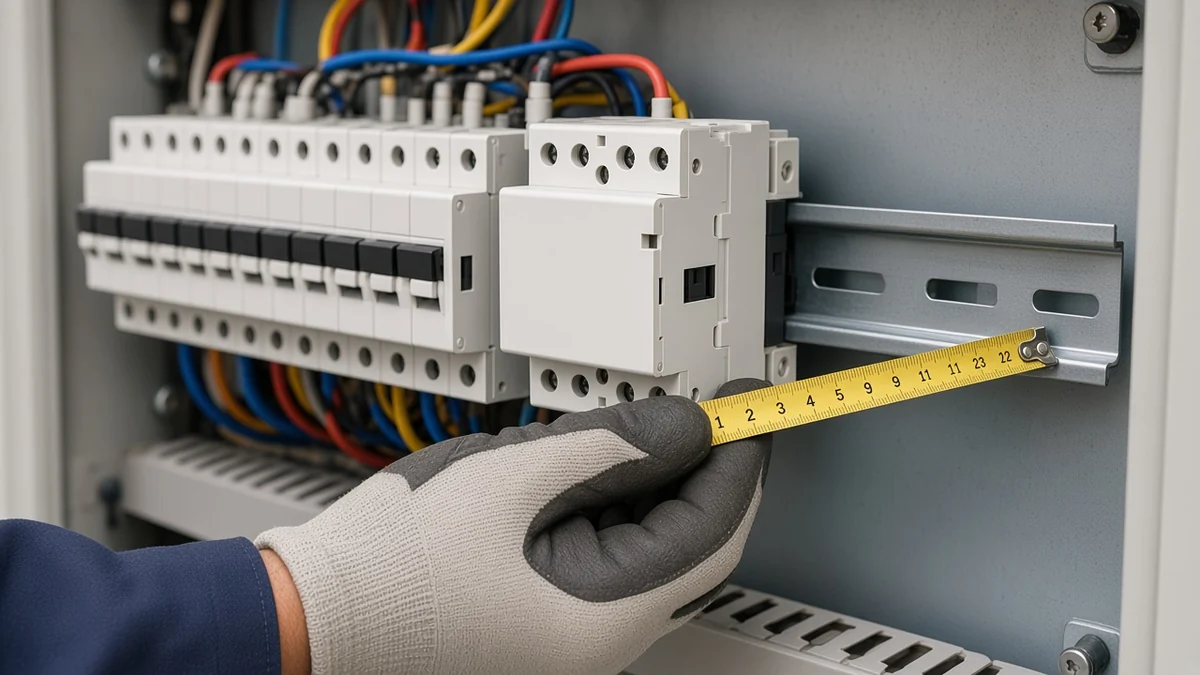
Terminations are the other cost, and that one is certain. A second pole means two more screws to torque, two more conductors to dress into the trunking, and two more joints somebody has to check on a service visit.
The HVAC Trap: Swapping a Shunted Single Pole for a True Two Pole
There is one case where fitting the better-looking part does real damage, and it lives on air-conditioning equipment.
Some units produce off-cycle crankcase heat without a dedicated heater element. Current back-feeds through the compressor common and run winding to the permanently live side of the contactor, and that path only exists while the contacts are open.
Replace that contactor wire for wire with a two-pole unit and the heat simply stops. HVAC School is explicit that the compressor run wire has to move to the line side of the new contactor instead, and HVAC trade coverage has warned for years that losing off-cycle heat ends in refrigerant migration and compressor slugging.
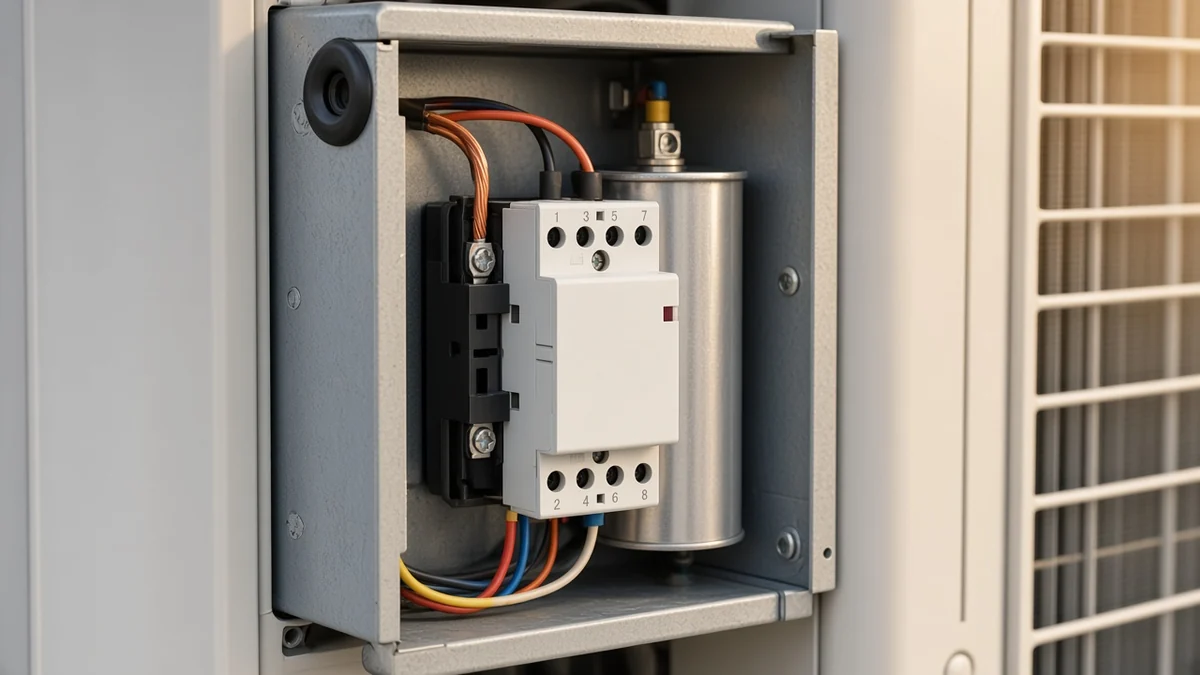
Before you put a two-pole unit on HVAC equipment
- Find out what was fed from the shunted leg: a crankcase heater, a base-pan heater, or the compressor run winding itself.
- If something was, land that conductor on the line side of the new contactor so it keeps power while the coil is off.
- If the original circuit cannot be confirmed from the diagram, fit the same style that came out.
If the existing part is failing rather than mismatched, confirm that first. The symptoms of a bad AC contactor are their own diagnosis, and changing pole count will not repair a burnt coil.
Reading the Yijin Range: Which Pole Counts Exist at Which Amps
The pole count you want has to exist at the current you need, and on this catalogue that is a live constraint rather than a formality. The contactor category holds five modular AC contactors: one pole appears on the YJC1-63 frame only, while the YJC-1-25 frame starts at two poles.
| Product | Switched poles | Current and voltage marking read from the page | What the page leaves out |
|---|---|---|---|
| YJC1-63 1P | One, plus the A1/A2 coil terminals | Nameplate reads Ie 63 A, Ue 230 V, Ui 500 V, AC-7a 13 kW, coil marked 220V/230V | Module width, dimension drawing, coil options, any data specific to one pole |
| YJC-1-25 2P | Two | Nameplate reads Ie (AC-7a) 25 A, Ue 230 V, AC-7a 5.4 kW, AC-7b 1.5 kW, coil marked 220V/230V | The same omissions, and the body text still says 63 A |
| YJC1-63 2P | Two | Range photograph marks Ie 63 A at 250 V | The same omissions |
| YJC-1-25 4P | Four | Range photograph marks Ie 25 A at 250 V | The same omissions |
| YJC1-63 4P | Four | Nameplate reads Ie 63 A, 400 V, coil marked 220/240V | The same omissions |
One thing to know before you quote a figure off any of these pages: all five carry word-for-word identical body text, and that text states a rated working current of 63 A even on the 25 A models. The nameplate photograph and the drawing you ask for are the tie-breakers, and the paragraph is not.
Yijin declares the range to GB17885 and IEC 61095, and its published performance tables are organised by utilization category: AC-1, AC-7a and AC-7b. IEC 61095 covers household and similar contactors on circuits up to 440 V AC between phases, with 63 A as the ceiling for AC-7a and 32 A for AC-7b, which is why a current column moves as soon as the load character changes. Naming a standard tells you which rules the design was aimed at; it is no substitute for a certificate, and no UL, ETL or CSA listing mark appears anywhere on the five pages.
One scope note for North American readers. The 40 A two-pole part most technicians keep in the van is a definite purpose contactor, a separate product class from these DIN-rail modular frames, so ratings and terminal arrangements do not transfer between the two families.
Choose a Two-Pole Frame When Both Legs Have to Go Dead
When the load sits between two ungrounded conductors and nothing downstream needs power in the off state, ask for a two-pole frame and stop there.
The YJC-1-25 2P modular AC contactor is the smallest two-pole frame in the live range. Its nameplate states both the AC-7a and the AC-7b duty for that frame, which is the pairing that tells you whether a resistive bank or a motor load is inside its scope. For heavier circuits the YJC1-63 2P is the same two-pole arrangement on the larger frame.
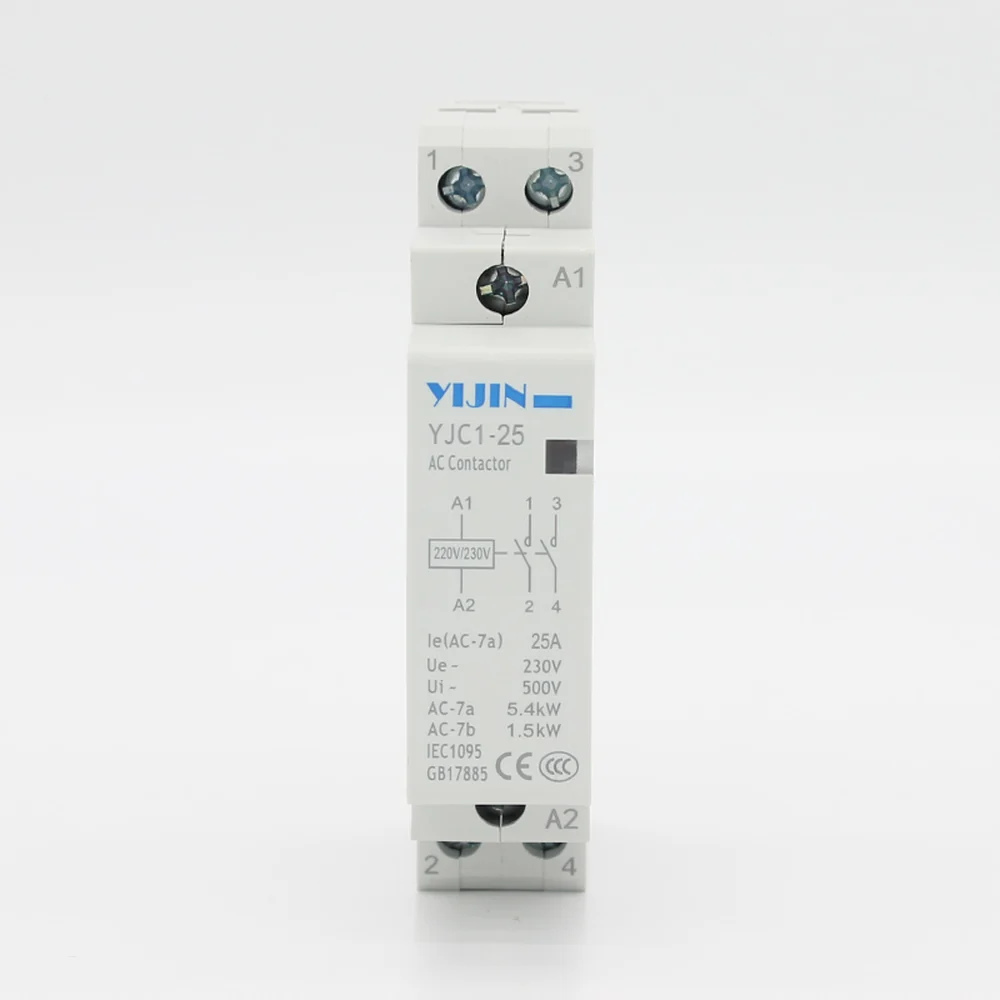
Two things are worth asking for in writing, because neither is printed: the outline drawing that the dimension heading promises, and the coil voltage you need, since the pages list no coil options beyond the marking on the nameplate.
Stay on a one-pole frame where the neutral is grounded and only the hot conductor has to open, and stay with the original style on equipment whose off-cycle circuit runs through the unswitched leg. Neither frame is a disconnecting means, and neither replaces the breaker.
FAQ
Can I replace a 1 pole contactor with a 2 pole contactor?
Usually yes, if the coil voltage and the current rating match and you check what was connected to the second position first. Anything that was fed through the shunted leg has to be moved to the line side, or it loses power whenever the coil drops out.
Is a 1+shunt contactor the same as a single-pole contactor?
Electrically it behaves as a single pole contactor: one pole switches and the other position is a solid bar from line to load. The 1+ marking is the honest version of the name, because it tells you the second terminal pair exists but never opens.
Does the NEC require a contactor to open both hot legs?
Electricians discussing this cite NEC 430.84, which permits a controller to open a single conductor where a separate disconnecting means is provided. Several of them still specify two poles as a design choice, so confirm the requirement with your inspector rather than reading a general rule off a web page.
Do I need a 2 pole contactor for a 120-volt lighting circuit?
No. A 120-volt branch has one ungrounded conductor and a grounded neutral, so a single switched pole opens everything that needs opening and the neutral stays solid.
Should a modular contactor ever switch the neutral?
Only when the equipment instructions or the local authority call for it. Some IEC contactor instructions do ask for all power conductors to be broken, which is where the question comes from, but leaving the grounded conductor solid is the normal arrangement.
How many DIN modules does a 2 pole modular contactor take?
That depends on the family, and the Yijin pages do not publish a figure. In the range photographs the one-pole and two-pole bodies take the same narrow frame, but the outline drawing is the only thing that settles it for a panel schedule.
Does a 2 pole contactor need a different coil voltage than a 1 pole?
No. The coil is on its own circuit at terminals A1 and A2 and is specified separately from the poles; the coil marking on the Yijin one-pole and two-pole nameplates is the same.
Is a contactor a substitute for a disconnect switch?
No. A contactor is not rated to interrupt short-circuit current and has no lockable open position, so the disconnecting means and the overcurrent device stay as separate devices.
References
- Electromechanical contactors for household and similar purposes, IEC publication record — scope, voltage ceiling and the current limits attached to the AC-7 utilization categories.
- Contactor, Wikipedia — device-class behaviour, the normally open default, and the boundary against short-circuit interruption.
- DIN rail, Wikipedia — top-hat rail designations and how module width is counted.
- Crankcase Heaters and Single-Pole Contactors, HVAC School — the off-cycle heating path and the rewiring a two-pole swap requires.
- Two-pole contactors on a single-phase motor load, Mike Holt’s Forum — licensed electricians on NEC 430.84 and on the gap between code minimums and design practice.
- 1+shunt contactor, r/HVAC — technicians describing the shunt bar and the substitution question in their own words.