 Yueqing Yijin Electronics Co., Ltd.




Match a 480v 3 Phase Timer Switch to Load and Coil Ratings
A 480v 3 phase timer switch search usually points to either a heavy-duty timer built for 480 V service or a lower-voltage timer that only drives a contactor coil while the contactor carries the three-phase load. Mixing those jobs is how buyers order the wrong device. The sections below separate load volts from printed coil or control volts, show when a contactor belongs in the path, and check what the live Yijin KG316T actually prints before any recommendation.

What a 480v 3 phase timer switch search usually means
It usually means one of two architectures: a direct-rated timer in the 480 V class, or a lower-voltage time switch that only closes a control circuit into a three-pole contactor.
A time switch is simply a timer that operates an electric switch on a schedule, often a day or a week. That definition does not force every time switch to carry three-phase load current at plant voltage.
In US industrial work, the second architecture is common because the contactor’s power poles can be chosen for the motor or heater while the timer stays on a friendlier control supply. The first architecture still exists in NEMA-box mechanical timers and specialty countdown units sold under 480 V three-phase titles.
Load voltage versus the timer’s printed coil or control voltage
Match the timer’s supply and the contactor coil to each other; treat the 480 V three-phase load as a separate rating on the power poles.
Timer control / coil voltage is the supply the timer’s own electronics expect, or the electromagnet rating that pulls contactor power contacts closed. Contactor coil voltage and the timer control circuit must agree with each other and with the control source you actually have.
Load voltage is what appears on the motor, heater, or lighting feeders. A starter can sit on a 480 V three-phase load and still use a much lower coil, which is why a timer does not automatically need a 480 V nameplate just because the load does.
| Question | Look at | Typical mistake |
|---|---|---|
| What voltage does the equipment run on? | Load / line nameplate | Buying a timer only because the search said 480 |
| What voltage feeds the timer itself? | Timer control-supply print | Feeding a 220 V / 380 V control timer from 480 V |
| What voltage pulls the contactor in? | Contactor coil marking | Assuming coil volts equal load volts |
| What do the power poles interrupt? | Contactor or timer pole rating | Putting three-phase load through undersized contacts |
From the field: On a Mike Holt forum thread about a 120 V time clock and a higher-voltage lighting contactor, replies stressed that the contactor’s load rating is not the issue—the coil voltage must match the control voltage you feed.
When a contactor carries the 480 V three-phase load
Use a contactor when the timer’s contacts or supply are not printed for the three-phase load you need to switch.
The contactor coil becomes the load of the timer’s control output. The three power poles then open and close the 480 V circuit to the motor or other equipment. That keeps high current and high voltage off a small digital time switch that was never printed for that duty.
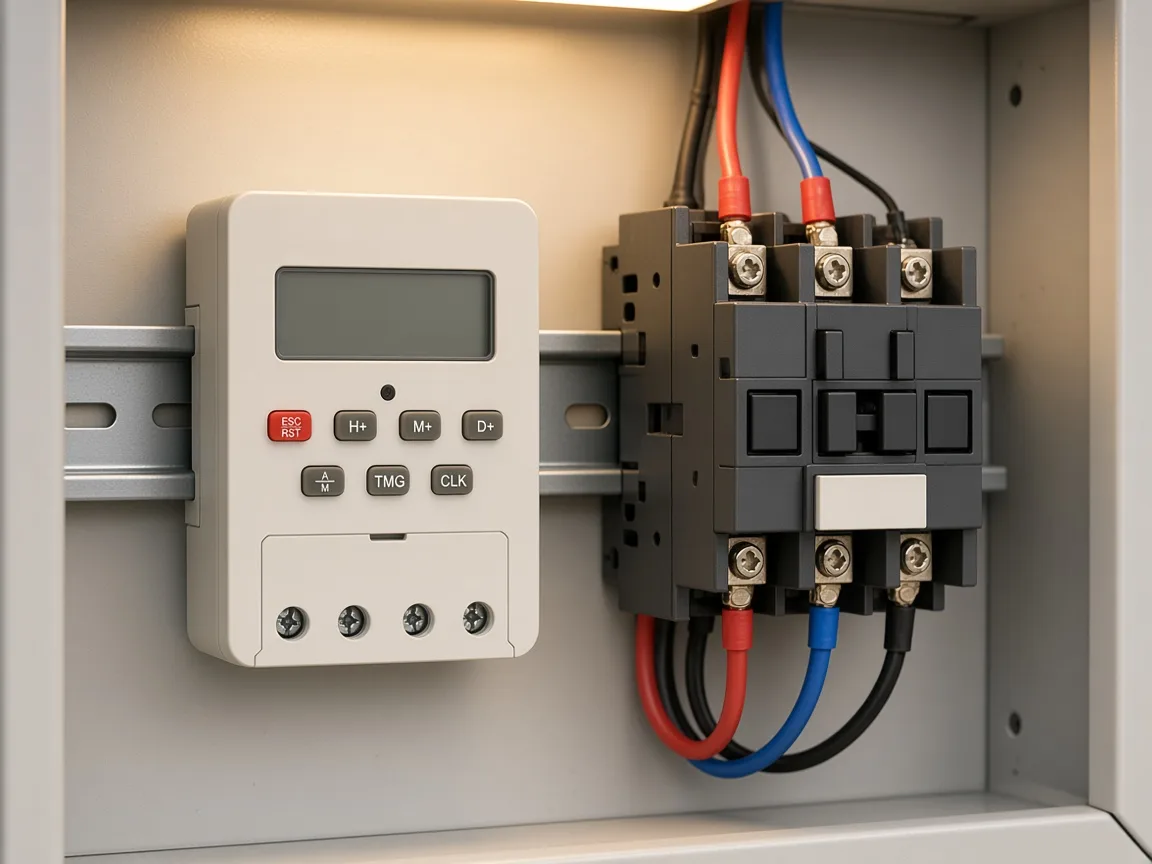
Picture a 480 V three-phase pump starter that already has a 120 V coil. The timed device only needs to interrupt that 120 V control circuit on schedule. The starter’s power poles still handle the pump.
If no contactor exists and the timer itself does not print a 480 V three-phase load rating, adding a correctly rated three-pole contactor is the selection path—not hoping a control-circuit timer will behave like a power switch.
How mechanical 480 V box timers differ from DIN control timers
A mechanical NEMA time switch can print 480 V on poles or clock motors; a DIN-rail three phase timer used as a control device follows its own supply print and is a different product class.
Installer education pages for three-phase mechanical timers show multi-pole boxes that can schedule three-phase loads, and they also show clock motors that may be 120 V even when poles handle a wide voltage band. Some Intermatic-style units even change clock motors when the job moves to 480 V.
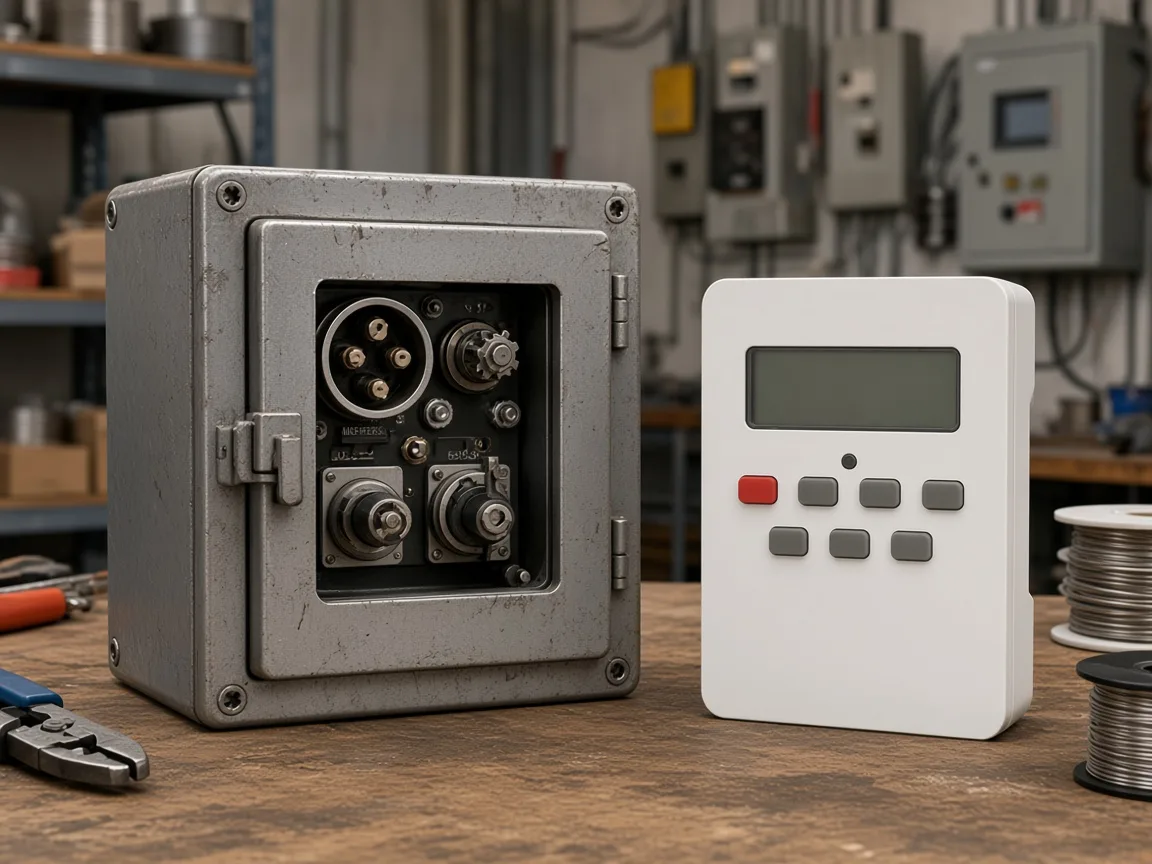
DIN-rail weekly digital timers sold for control circuits are judged by the control-supply and insulation voltages they print, not by a shopping title that happens to include “480.” A buyer comparing a Tork or Intermatic 480 V mechanical SKU to a DIN module is comparing classes, not synonyms.
Specialty explosion-proof countdown timers that state three-phase 480 V operation are yet another class aimed at hazardous locations. They answer a different specification than a panel-mounted weekly control timer.
What the Yijin KG316T timer actually prints
KG316T prints a rated control supply of 220 V or 380 V for control circuits at 380 V and below—it is not printed as a 480 V three-phase load switch.
The live product description places the device in AC 50/60 Hz control circuits at 380 V and below. Technical parameters list rated insulation voltage AC380V, impulse withstand AC1.5kV, and rated control power supply voltage AC50/60Hz at 220V and 380V.
| Printed item | Value on the live KG316T page |
|---|---|
| Rated insulation voltage Ui | AC380V |
| Rated impulse withstand Uimp | AC1.5kV |
| Rated control supply US | AC50/60Hz: 220V, 380V |
| Supply tolerance window | 85%–110% of rated |
| Example resistive load power | 6KW |
| Example inductive / motor / lamp | 1.8KW / 1.2KW / 0.9KW |
| Programs | Up to 16 on/off actions per day |
| Time span | 1 minute to 168 hours |
Those numbers describe a programmable control-circuit time switch with daily or weekly repeat. They do not create a 480 V three-phase load rating that the page never prints.
Sibling SKUs on the timer hub stay in other bands: the WiFi KG316T variant prints 110V–240V control supply, modular G36mm versions print AC220V control supply, and the YJDST countdown releases print AC110V–AC240V for breaker-release duty. None of those pages print a 480 V three-phase load switch claim either.
Selection checks before you buy a 480 V three-phase timer path
Confirm load volts, control volts, pole count or contactor need, and that marketing titles match the body rating before you buy.
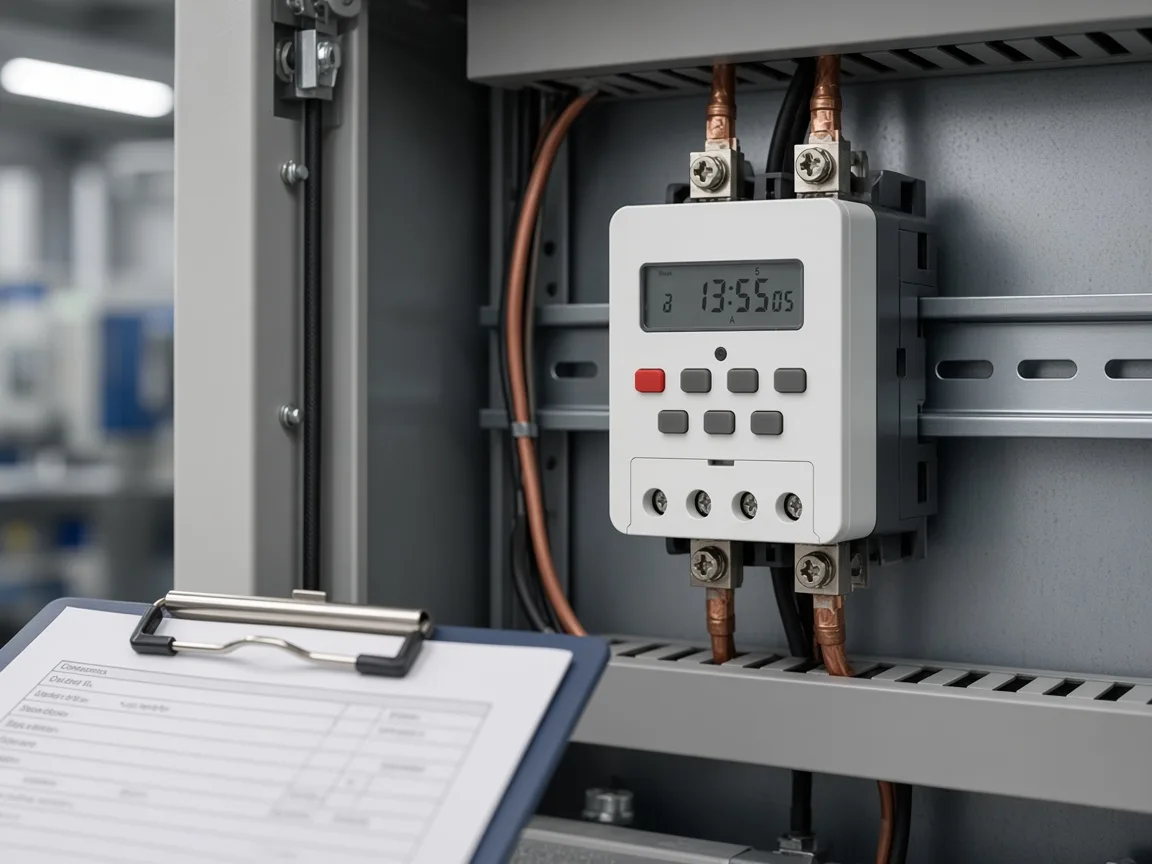
Walk the circuit in this order:
- Read the load nameplate for three-phase voltage and current or horsepower.
- Read the contactor coil marking if a starter already exists.
- Read the timer’s control-supply and pole ratings in the body text, not only the shopping title.
- Decide whether the timer must switch load poles or only a coil.
- Keep enclosure and environment class in view for outdoor or dusty sites.
Important: Distributor pages can put “480V” in a title while a body line states another three-phase voltage. Trust the rating block and the device marking, not the search snippet.
OSHA’s general electrical equipment rule still frames the buying habit: equipment should be suitable for the installation and classified by voltage, current capacity, and specific use, with voltage markings when needed. That is a suitability habit, not a substitute for the project’s adopted code book.
KG316T recommendation for printed control voltages
Recommend the KG316T time control switch when the timed job is a control circuit at the printed 220 V or 380 V supply—often into a contactor coil that shares that control voltage.
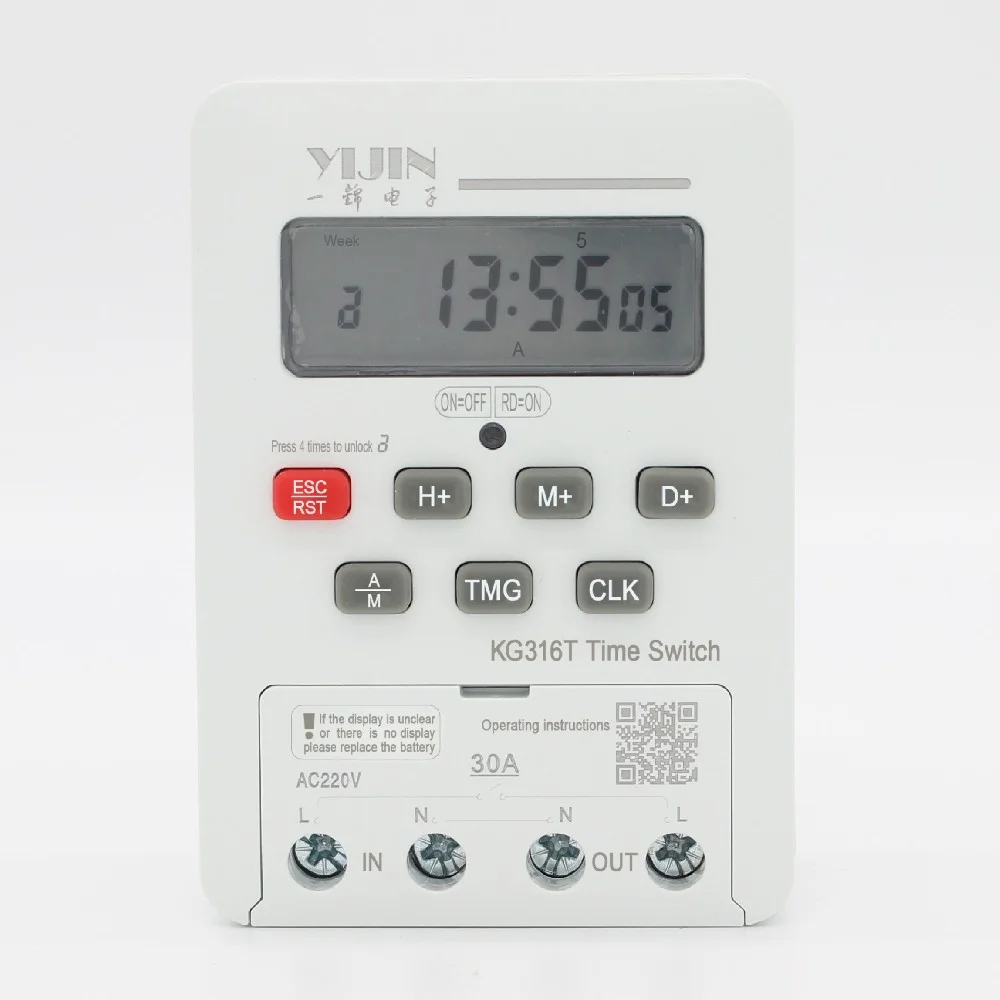
Choose KG316T when you need up to sixteen on/off actions per day, one-minute to 168-hour settings, and a weekly or daily repeat on a control circuit inside the printed band. Pair it with a three-pole contactor when the load itself is 480 V three-phase and the coil matches the timer’s control supply.
Skip KG316T when the specification demands a timer that itself prints 480 V three-phase load switching, a listed mechanical NEMA 480 V box timer, or a hazardous-location countdown unit. Yijin does not publish a verified UL Listed claim for this SKU on the live page reviewed for this article.
Browse the timer switch hub if you need WiFi, modular width, or countdown-release siblings instead of a weekly control timer. Open the KG316T product page for the wiring diagram and the full parameter list before you release an order.
FAQ
Can a timer that prints only 220 V or 380 V control supply switch a 480 V three-phase load by itself?
No. Without a printed 480 V three-phase load rating, that timer belongs on a matching control circuit, typically into a contactor coil, while the contactor poles handle the load.
What has to match first—the load volts or the coil volts?
The timer supply and the contactor coil must match each other and the control source. Load volts are chosen on the power poles separately.
When should I add a contactor instead of hunting for a bigger timer?
Add a contactor when the timer’s contacts or supply are not printed for the three-phase load current and voltage you need to interrupt.
Is the Yijin KG316T a 480 V three-phase timer switch?
Not on the live product page. It prints 220 V / 380 V control supply for circuits at 380 V and below, so treat it as a control-circuit time switch, not a 480 V load switch.
Why do some product titles say 480 V while the body shows another voltage?
Marketplace or distributor copy can drift. Read the specification block and the physical marking; one Safsale-style listing showed a 480 V title with a body line naming a different three-phase voltage.
Does a 480 V starter with a 120 V coil mean my timer must also be 480 V?
No. Separate or transformer-derived control at 120 V is common. The timer then follows the coil voltage, not the load voltage.
How many programs does KG316T allow in a day?
The live page states up to 16 on/off actions per day, with a minimum setting of 1 minute and a maximum setting of 168 hours.
Where should I go next on Yijin’s site?
Start at the KG316T product page for printed parameters, or the timer switch category to compare other control timers.
References
- Contactor — Wikipedia — coil versus power-contact roles.
- Time switch — Wikipedia — schedule-operated electric switch definition.
- OSHA general electrical equipment rule (1910.303) — suitability and voltage classification language for electrical equipment.
- How to install a three-phase timer — Waterheatertimer.org — mechanical three-phase timer and clock-motor notes.
- Time clock controlling a lighting contactor — Mike Holt Forum — coil voltage must match control voltage.
- Starter coil wiring discussion — Mike Holt Forum — lower coil voltage on higher-voltage starters.