 Yueqing Yijin Electronics Co., Ltd.




No neutral is not this rail
3 way timer switch no neutral searches are about a decorator wall box on a three-way lighting circuit, not about a panel time clock.
Wall form factor with traveler wires sits on one side; a DIN-rail module with Printed L/N supply sits on the other.
The sequence below diagnoses the box, picks a wall-timer class, then shows when a rail clock is the wrong body.
Term anchors from the research map: No neutral / switch loop, Neutral conductor (grounded), No-neutral wall timer class, Neutral-required 3-way programmable, Mechanical / countdown no-neutral, Smart switch / Pico remote (adjacent only), and Ground wire (equipment grounding).
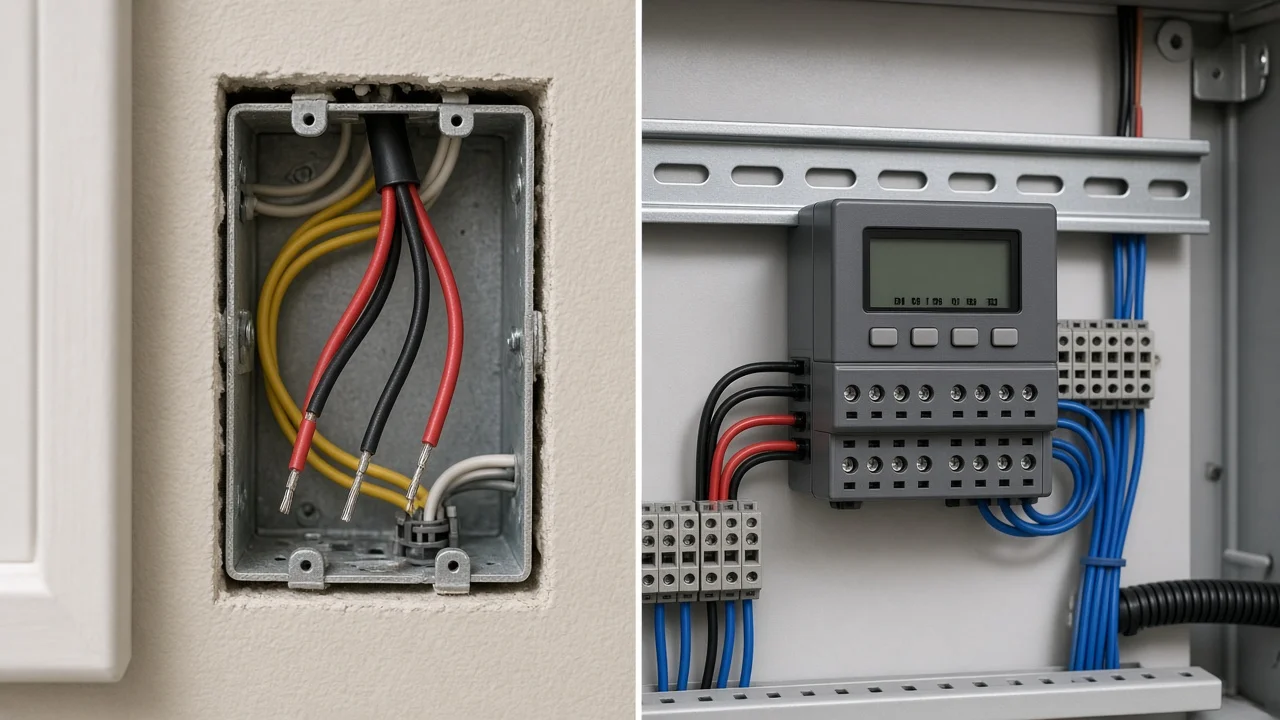
The cover image keeps both jobs in view so the order stays honest.
When a 3-Way Timer Can Run Without a Neutral
Yes, but only when the SKU explicitly lists no-neutral operation and supports three-way control.
A three-way timer switch keeps two-location control while adding a schedule.
Powered electronics still need a return path for their own circuit.
That return may be a neutral bundle, a listed no-neutral design, or a battery-backed device — not a bare two-wire switch loop by itself.
At least one competitor specification sheet states that its astronomic wall timer does not require a neutral and can work as a 3-way switch.
A DIY Stack Exchange accepted answer describes buying an Intermatic ST01 for three-way control because it does not require a neutral wire.
Many other programmable three-way timers still expect a neutral in the box.
Read the carton and instruction sheet before you assume the SERP thumbnail applies to your wiring.
| Wall-timer bucket | Typical wiring claim | Three-way note |
|---|---|---|
| No-neutral 3-way astronomic class (SS703Z example) | No neutral required; 120/277 VAC input | Spec sheet lists 3-way use |
| Neutral-required programmable 3-way | Neutral required on label | Common on big-box “3-way timer” listings |
| No-neutral countdown | No neutral; often single-location | Multi-location may need a matching remote |
| Mechanical / spring-wound | No standby power | Loses weekly astronomic programs |
The SS703Z specification sheet lists an input of 120/277 VAC at 50/60 Hz and up to 10 ON/OFF pairs per day with astronomic latitude from 10° to 60°.
Those figures describe a wall-plate class, not every timer in the shopping carousel.
How to Tell Neutral, Travelers, and Switch Loops Apart
Traveler conductors are the extra hot wires that move between three-way switches; they are not neutrals.
A switch loop may bring only a hot and a switched-hot to the box, with no white neutral bundle.
Legacy US homes often used that pattern at switch locations.
Before you buy a programmable timer switch no neutral or no neutral wire timer switch listing, open the box and identify what is actually present.
The ungrounded conductors between switches carry switching function on the phase conductors only.
A white wire in the box may still be a switched-hot if it is taped or marked, not a neutral.
From the field: On DIY Stack Exchange, Michael wrote that he bought an Intermatic ST01 for three-way control because it does not require a neutral wire, a wire he did not have. Source: How can I install a timer with three-way switches?
If you only see two insulated conductors plus ground, treat the location as a switch loop until proven otherwise.
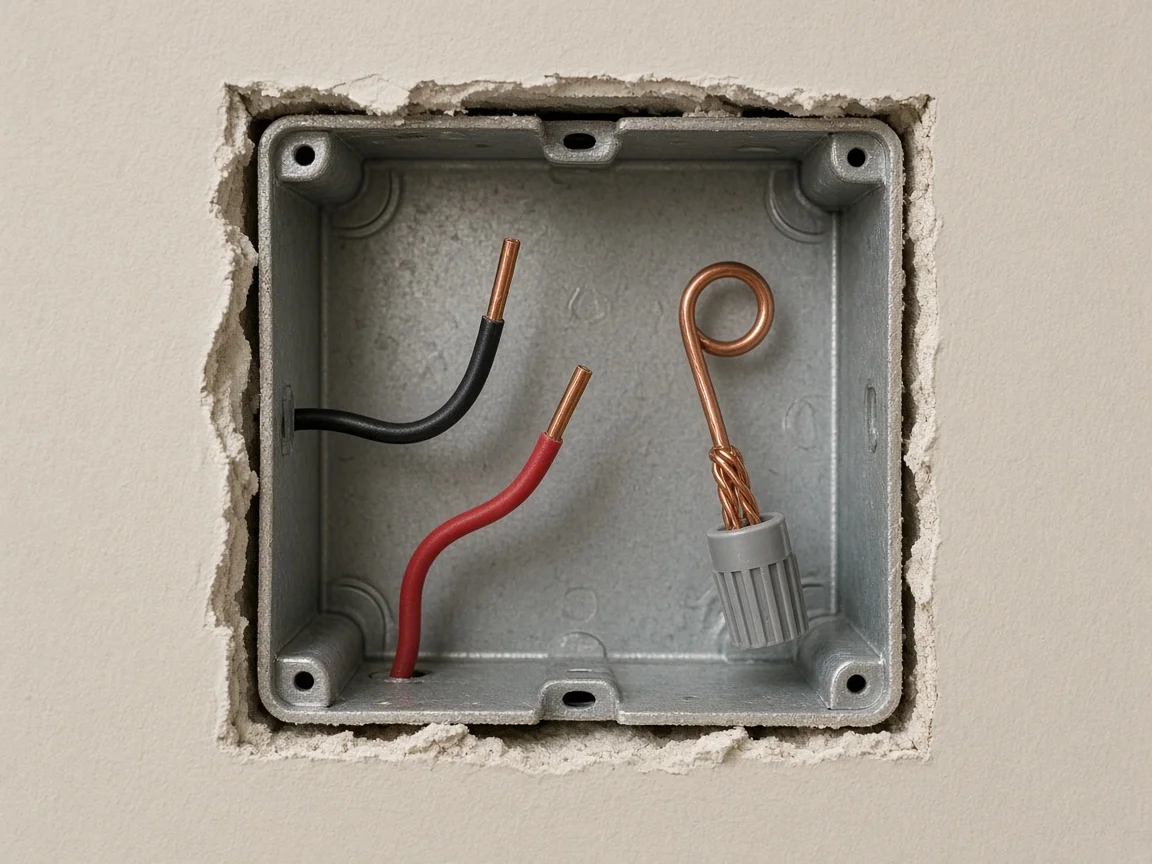
The photo shows the constraint the query names: a box that may never see a neutral conductor.
Wall-Timer Classes: No-Neutral 3-Way vs Neutral-Required vs Countdown
Wall timer switch no neutral shopping mixes three different product stories.
True no-neutral three-way wall timers appear in competitor literature and community install posts when the sheet says so.
Neutral-required programmable three-way timers still sit beside “3-way timer” keywords on many listings.
Countdown and mechanical fallbacks often skip weekly astronomic tables while still advertising no-neutral marketing lines.
Forum threads split Intermatic families: one model needs a neutral available, while an ST01C-class device replaces one three-way switch location.
A no-neutral countdown wall timer may still fail on a three-way circuit unless the manufacturer sells a matching remote.
Mechanical timers can run without standby power, but they trade away digital weekly programs.
When the label says neutral required, do not hope the traveler wires will substitute.
| If your box has… | Start with this bucket |
|---|---|
| Switch loop, need weekly 3-way | No-neutral 3-way wall class with printed claim |
| Neutral bundle present | Neutral-required programmable 3-way is fair game |
| No neutral, only minutes of delay | Countdown or mechanical class |
| Panel L/N and a contactor | DIN-rail time control switch path (later section) |
Compare carton language side by side.
If two SKUs look identical in photos but one demands a neutral, the neutral-required row is not your no-neutral job.
3-Way Wiring Patterns That Break Timer Assumptions
Three-way wiring patterns often replace only one switch, leaving a dumb three-way partner at the second location.
Google’s AI overview for this query notes that many installs replace one switch and leave the other mechanical.
That pattern works only when the timer instructions match your existing traveler routing.
Some multi-location countdown timers need a companion remote sold separately instead of dumb travelers at the second switch.
Mike Holt forum readers describe companion wiring that replaces simple traveler behavior between locations.
Power-at-the-light topologies can leave no neutral at the switches even when the fixture has a neutral — a common source of cart confusion.
Read the instruction diagram for your exact SKU before you cut travelers.
If the second location must stay a standard three-way switch, confirm the timer supports that mode on paper.
From the field: On Reddit r/electricians, coogie warned that marketing text mixes neutral and ground — “Don’t ever use a ground wire as a neutral.” Source: No neutral wire for digital timer light switch
Equipment grounding conductors are for fault paths, not timer standby power.
NEC Neutral Expectations (Educational, Not SKU Certification)
Educational code articles explain why neutrals appear at switch locations, without certifying any SKU in this draft.
Switches controlling line-to-neutral lighting loads generally need a neutral at listed switch locations, with visibility rules for multi-location controls.
Where three-way or four-way switches are visible, often only one switch location in the group must have a neutral present.
Replacement electronic switches that need line-to-neutral for standby power must have a neutral extended, subject to stated exceptions.
One educational summary notes a cap related to no-neutral electronic controls on a branch circuit under the replacement-switch rules.
These pages do not claim UL Listing or NEC compliance for Yijin products.
Use the educational material to ask better questions of your electrician or AHJ, not to short-cut label reading.
Travelers remain phase conductors for switching; they do not satisfy a neutral requirement for powered timers.
When a DIN-Rail KG316T Fits — and When It Does Not
A DIN-rail time control switch belongs in a panel or control enclosure with printed line and neutral terminals — not in a no-neutral traveler box.
The live KG316T product page describes a weekly time-control switch mounted on a guide rail with IN/OUT line and neutral diagrams.
That page prints a rated control power supply of AC 50/60 Hz at 220 V and 380 V.
It allows up to 16 on and off actions per day, a minimum setting of 1 minute, and a maximum setting of 168 hours.
Printed load lines include a lamp load of 0.9 kW alongside higher resistive and motor figures on the same parameter table.
Operating conditions on the page list IP50, pollution degree 3, and an insulation rating Ui of AC380V.
The live sheet omits traveler terminals and never claims the module replaces a no-neutral three-way wall plate.
If your purchase trigger is strictly a 3 way timer switch no neutral wall box, stop at the wall-timer table above.
If your job is scheduling a contactor or lighting branch from a cabinet where 220 V or 380 V control supply matches the nameplate, the rail clock conversation can start.
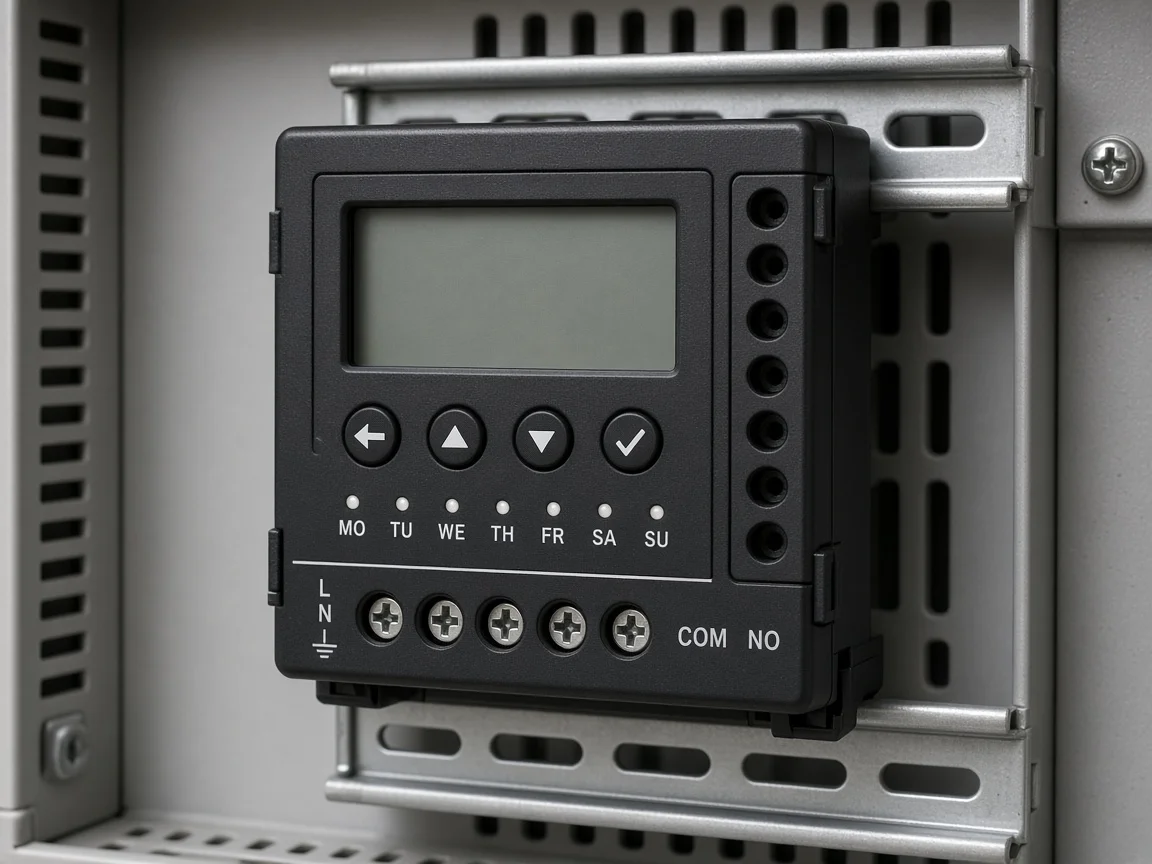
The module face belongs in the enclosure named on the wiring diagram, not in a drywall gang box.
| Decision | Wall no-neutral 3-way timer | KG316T rail clock |
|---|---|---|
| Mounting | Decorator wall plate | Guide rail in enclosure |
| Control power | From box conductors per SKU | Printed L/N at module |
| Three-way travelers | Required on wall class | Not applicable |
| Weekly astronomic wall programs | Wall SKU dependent | Up to 16 daily events on page |
Cross-read the general three-way timer article on this site for traveler vocabulary, then return here for the neutral gate.
Topic-specific KG316T fit: printed-supply panel scheduling
The KG316T time control switch fits when the buyer already schedules loads from a panel with matching printed supply and load lines.
The product page shows direct load and contactor wiring diagrams with line and neutral IN/OUT terminals only.
Use it for weekly or daily programs within the printed one-minute to 168-hour window and the sixteen daily on/off actions.
Do not specify it to replace a decorator three-way location that lacks neutral and relies on travelers.
The timer switch hub collects sibling articles for countdown, cyclic, and general three-way wall timers when those are the real jobs.
The three-way light timer switch article covers traveler compatibility without making neutral absence the gate.
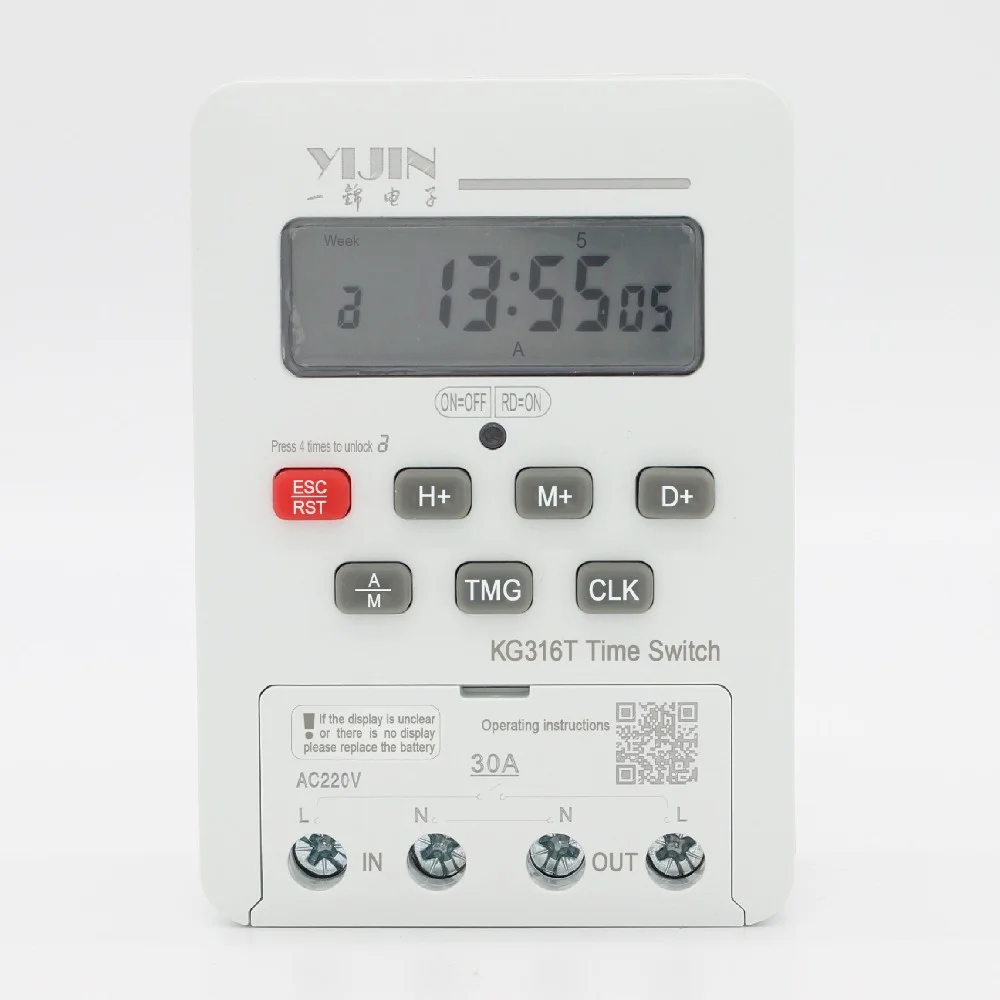
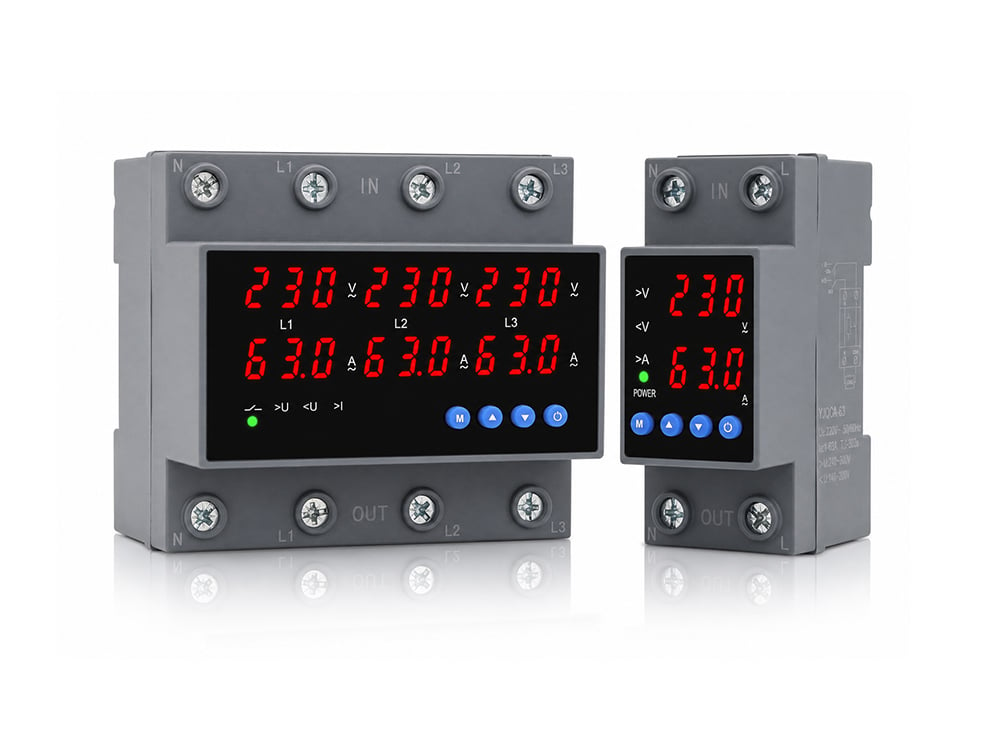
The product photo is the rail module referenced on the live page.
Before checkout, name who owns the wall box versus who owns the panel schedule.
If the answer is only the wall box, keep shopping wall-timer classes from the comparison table.
If the answer is a dry panel with printed 220 V or 380 V control supply, open the KG316T page and match load type to the printed kW lines.
Say aloud whether travelers exist in the box.
A procurement note that only repeats “3-way timer” without neutral status will send the wrong SKU.
Keep smart-switch Pico remote workarounds out of this order unless the project already moved to that platform.
Frequently asked questions
These answers stay with the sources opened for this package.
Can you get a 3-way timer switch without a neutral wire?
Yes, in product classes that print no-neutral operation and three-way support, such as the SS703Z specification language and the ST01 install story on DIY Stack Exchange.
Many carousel SKUs still require a neutral, so the label beats the keyword.
How do I know if my 3-way box has a neutral?
Look for a white neutral bundle not switched on the load side; switch loops may show only hot and switched-hot with ground.
Multi-location circuits sometimes leave neutrals at only one visible switch location per educational NEC summaries.
What is the difference between a no-neutral wall timer and a panel time-control switch?
A no-neutral wall timer mounts in the gang box and follows traveler wiring on the SKU sheet.
A panel time-control switch such as KG316T mounts on a DIN rail and takes printed line and neutral at the module.
Do programmable 3-way timers always work without a neutral?
No. Forum threads and retail listings split neutral-required programmable three-way timers from no-neutral classes.
Read “neutral required” on the carton as a hard stop for no-neutral boxes.
Is KG316T a substitute for a no-neutral 3-way wall timer?
No. The live page shows line and neutral control terminals and guide-rail mounting, with no traveler terminals and no no-neutral wall claim.
Can I use the ground wire instead of a neutral?
No. Community electricians treat that as unsafe; ground is not a neutral substitute for timer standby power.
Does a 3-way countdown timer need a companion switch?
Often yes for multi-location electronic countdown timers; forum posts note remotes sold separately instead of dumb three-way partners.