 Yueqing Yijin Electronics Co., Ltd.




The 220 V number is the control supply
A 220 volt electric timer switch on this site is the KG316T control supply, not a wall plate. A time switch operates an electric switch controlled by a timer. The voltage label has to be read from the model page before the timer is treated as a home light switch.
The control supply is the line that matters
The control-supply line feeds the clock and the switching stage. The 220 V control supply is what the nameplate should match.
Rated control supply on that page is AC 50/60 Hz at 220 V and 380 V.
The same page also describes the control circuits that sit with that supply. That circuit note is not a promise that every load in a building is 220 volt. The KG316T time control switch page is the sheet that carries both lines.
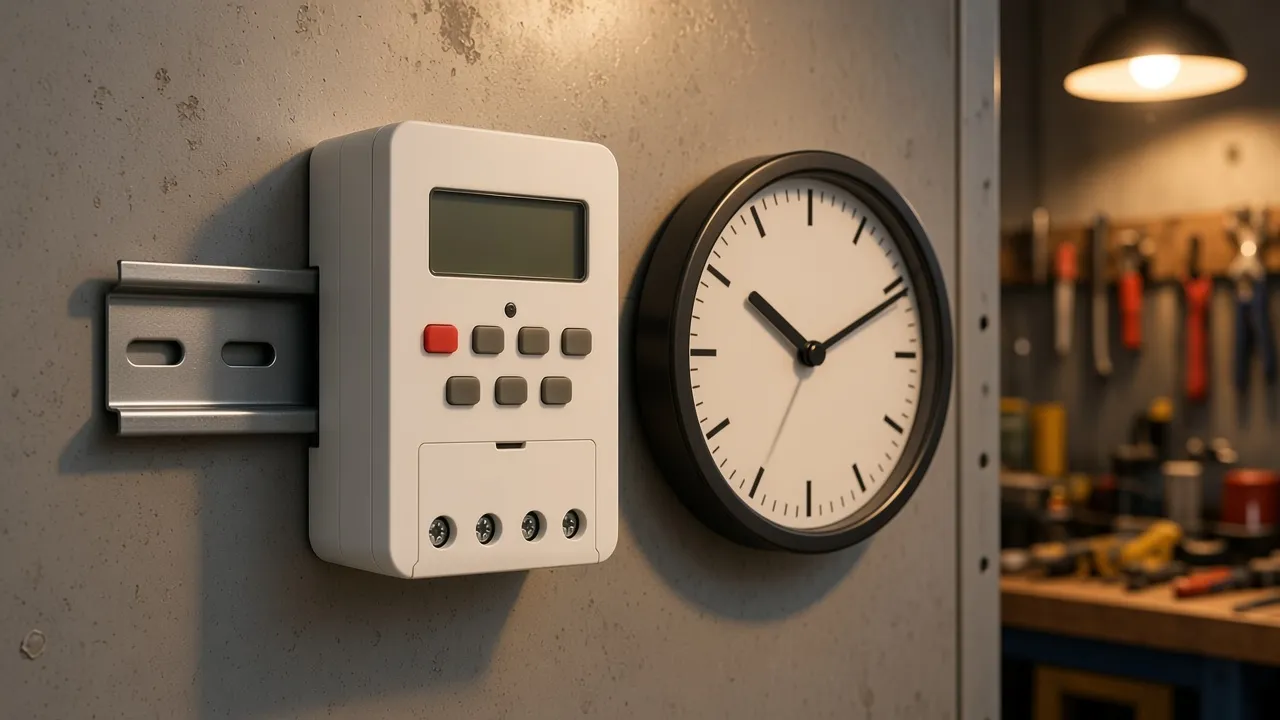
The clock in the picture is the schedule. The rail device is the object that can hold 220 volt control as its supply rating. A decorator wall plate is a different object.
North American mains use a different label
The opened mains page is about how public supplies are named, not about this timer. In North America, the most common combination is 120 V and a frequency of 60 Hz, and the same page also names 240 V or 208 V at 60 Hz.
A search that says “220 volt” often borrows the everyday name for a higher-voltage household circuit. The encyclopedia sentence uses those other combinations. It does not reprint the control line.
| Label you may have heard | Where it was printed |
|---|---|
| 220 V and 380 V control supply | KG316T page |
| 120 V at 60 Hz | Mains page, North America |
| 240 V or 208 V at 60 Hz | Mains page, other combinations |
Read the row that matches the equipment nameplate. Mixing the mains row with the control-supply row is how a wall timer and a rail timer get ordered as if they were the same part.
A time switch stores clock events
A stored event is an on time and an off time. You can attach a weekday, every day, or a group of days. After the off event, the clock keeps running, so the next on event can happen on the following cycle.
That is the microcomputer time control switch job. A countdown ends when the minutes end. A light sensor watches an object or a sky level.
Neither of those jobs is what the control line is describing.
From the field: A hallway timer was meant to follow sunrise and sunset, and it missed that pattern when it was left on summer time instead of solar time.
The comment is about a clock label, not about volts. It still helps here. The name on the search box and the name on the device can both be “timer” while the job differs.
Sixteen actions and the minute limit
The keypad path is short. Timer opens the on setting. Set Week picks a day, every day, or a group of days.
Set Hour and Set Minute place that on time.
Timer again opens the off setting. The same week and clock keys place the off time. Clock returns the display to the running clock.
Auto/Manual moves the mark into automatic after you have passed the off mark.
The same page allows a maximum setting of 168 hours and a minimum setting of 1 minute. Up to sixteen on and off actions can be stored in one day, and they can repeat daily or weekly.
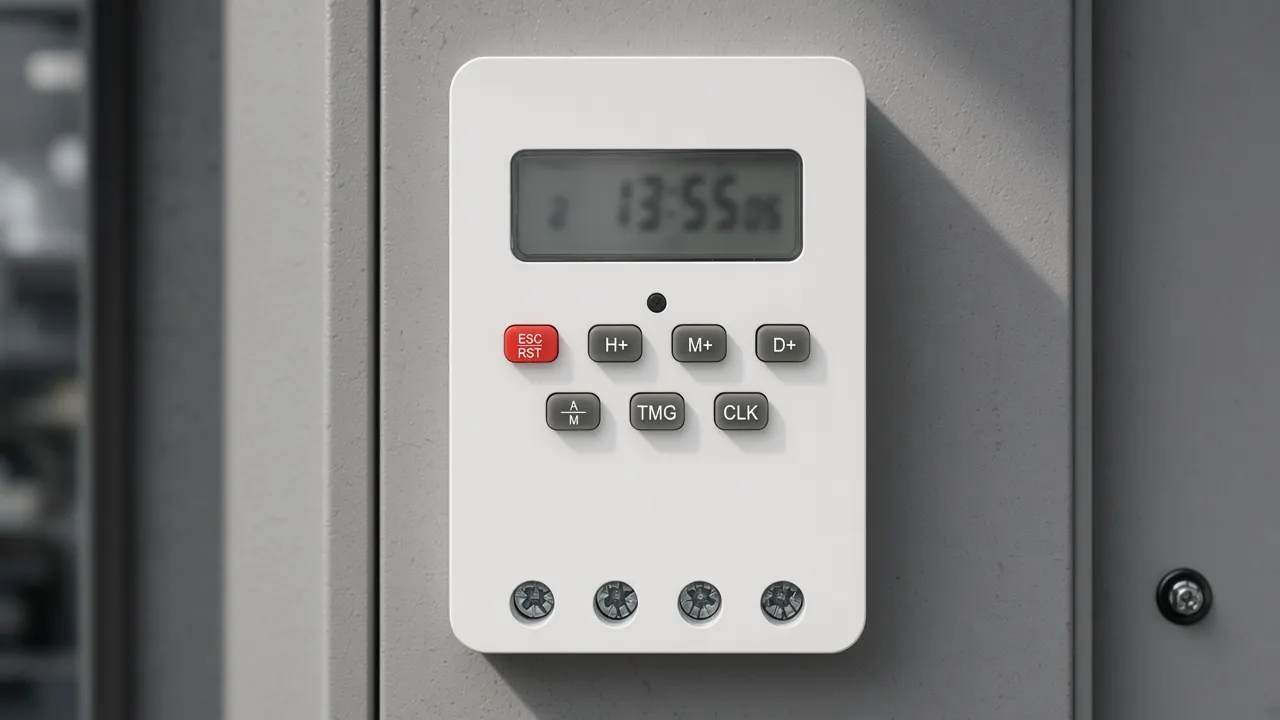
Unused times stay as a dash display. Filling every slot with a guess will click the load at hours nobody asked for. The page also says the unit uses an AAA cell, and a dim display is the cue to replace it.
Cancel/Restore, pressed four times, unlocks a keypad that locks after it sits idle. That lock is a nuisance if you do not know it. It is not a voltage rating.
Load power sits beside the supply voltage
Supply voltage and load power are neighbors on the page, and they answer different questions. The supply asks what the control circuit is. The load row asks what the contacts are allowed to switch.
The KG316T page lists a resistive load of 6 kW, an inductive load of 1.8 kW, a motor load of 1.2 kW, and a lamp load of 0.9 kW.
A heater and a lamp do not share one allowance. A motor allowance is smaller than the resistive allowance. If the real load sits above the matching row, this timer is the wrong device for that circuit.
The rows below repeat those printed lines.
| Load row | Printed allowance |
|---|---|
| Resistive | 6 kW |
| Inductive | 1.8 kW |
| Motor | 1.2 kW |
| Lamp | 0.9 kW |
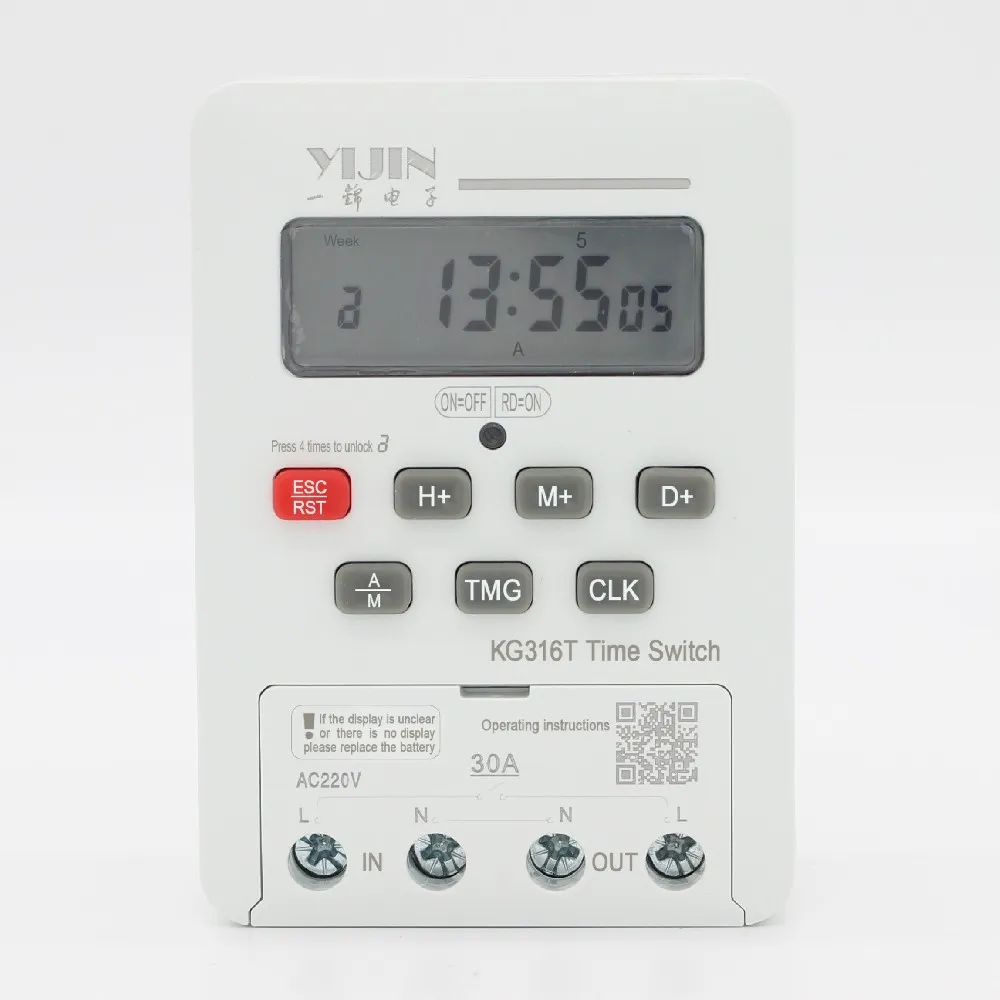
Order from the row that matches the load type. The 220 volt phrase in the search does not raise the lamp allowance. It only identifies the control supply.
A wall timer is a different object
A wall-box lighting switch sits in a finished room and is built around the wiring practice of that room. The KG316T page describes a rail time control switch for control circuits. The timer switch hub is where that family sits on this site.
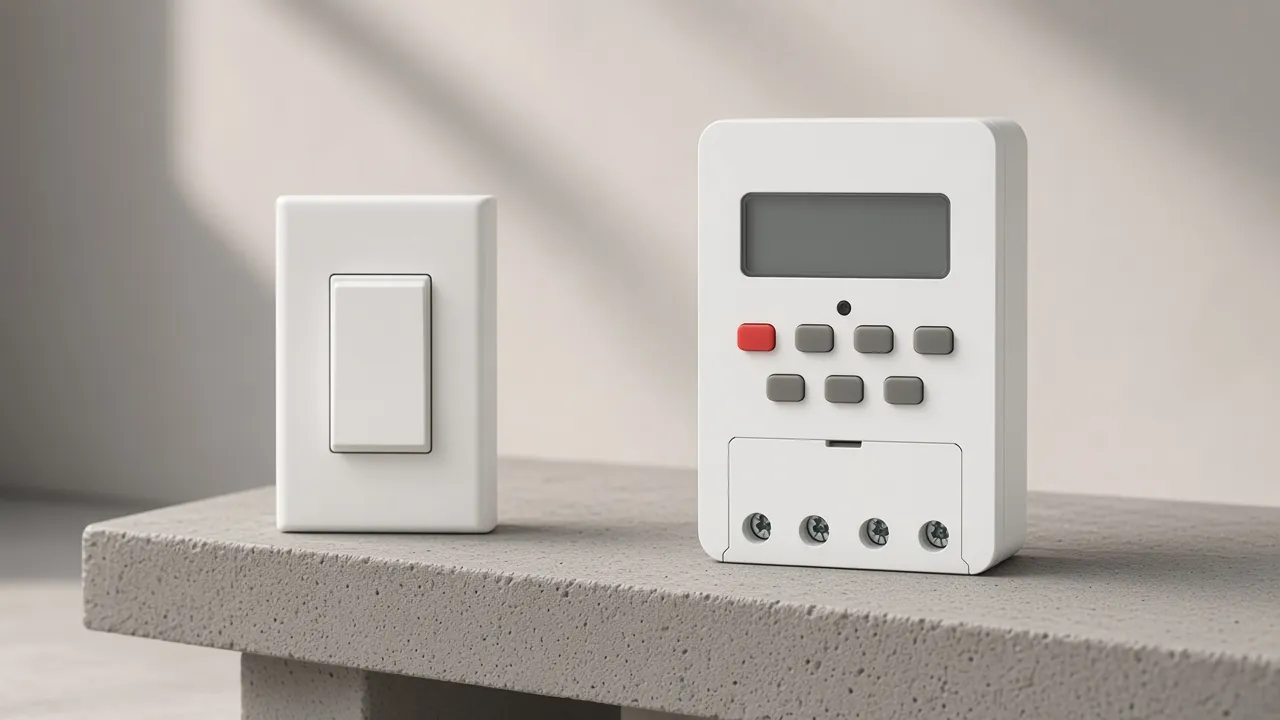
The wall plate on the left is the object many timer searches picture. The rail device on the right is the object whose page prints the control supply.
They can both turn a load on and off. They are not interchangeable parts.
If your circuit is the ordinary lighting circuit described on the mains page as the common North American combination, start with a device built for that combination. If your control circuit matches the KG316T supply line, the rail timer is the page to read.
A relay can carry the load the timer commands
A relay is an electrically operated switch. The time-switch page says a timer may connect through a relay or a contactor. That path lets the clock command a larger load when the relay is rated for the load.
The jobs stay apart. The timer stores the times. The relay carries current when its coil is told to.
The mains page names regional supply labels. None of those three objects replaces the other.
A buyer who only matches the search words will stop at the first timer in a catalog. The control supply, the load row, and the mounting are the three checks that change the order.
The keypad stores weekday groups rather than a single countdown. Leaving unused slots on the dash display keeps the next morning from starting a program you never wanted.
If the nameplate on the control circuit matches the printed supply, the rail timer is a coherent choice. If the nameplate matches ordinary room lighting, keep looking at a device built for that circuit.
Daily repeat and weekly repeat are both on the page. Pick the cycle that matches how the building is occupied, then stop adding extra slots.
A comment on the relay talk page describes lamp contacts that stay closed longer so a flashing rate can show a failed bulb. That longer “on” is a fault signal. It is a different job from a stored clock time on a 220 volt control supply.
Use the KG316T when the control supply matches the printed line and the load matches a printed row. Use another device when the circuit is a wall-box lighting switch or a sensor the page does not describe.
FAQ
What voltage does a 220 volt electric timer switch need on the KG316T page?
Rated control supply on that page is AC 50/60 Hz at 220 V and 380 V. The search phrase points at the first of those two numbers.
Is North American mains practice the same label?
In North America, the most common combination is 120 V and a frequency of 60 Hz, and the same page also names 240 V or 208 V at 60 Hz. Those labels are not the KG316T control line.
How many on and off actions does the KG316T page allow?
The page allows up to sixteen on and off actions in one day. They can repeat on a daily cycle or a weekly cycle.
Can this rail timer replace a wall-box lighting switch?
The rail timer is a control-circuit device. A wall-box lighting switch is built for a different mounting and a different supply habit.
What load rows are printed next to the control supply?
The KG316T page lists a resistive load of 6 kW, an inductive load of 1.8 kW, a motor load of 1.2 kW, and a lamp load of 0.9 kW.
What is the longest and shortest setting on that page?
The same page allows a maximum setting of 168 hours and a minimum setting of 1 minute.