 Yueqing Yijin Electronics Co., Ltd.



What a 2 Pole DC Isolator Switch Actually Buys You
A 2 pole dc isolator switch opens both live conductors of one DC circuit in a single movement, normally the positive and the negative of a PV string. The pole count describes conductors, not capacity — how much voltage and current the device can hold comes from its utilisation category and from a rating table that shifts as the voltage climbs.
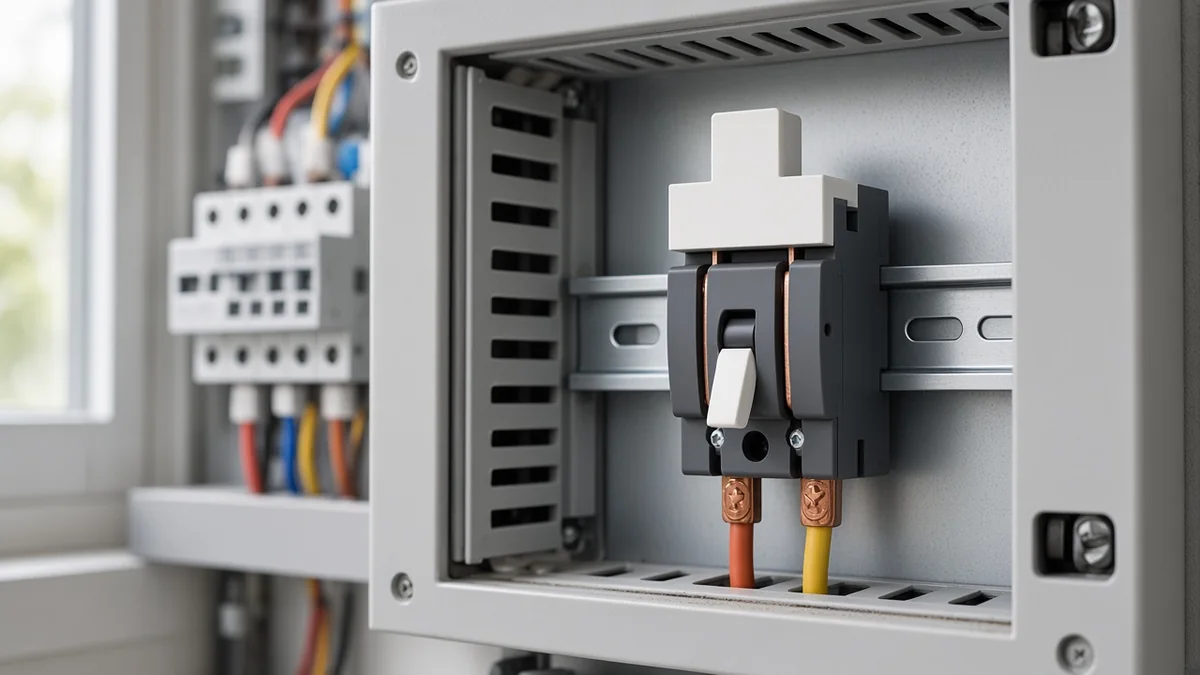
Two Poles, Two Live DC Conductors: What the Label Means
Two poles means two switching contacts on one shaft, so both conductors of the circuit part at the same moment.
An ungrounded PV pair has no neutral to lean on. Both conductors sit live with respect to the array, so opening the positive alone leaves the negative landed and the string still tied to the inverter terminals. That half-open state is the thing every buyer in this market is trying to design out.
A dc isolator switch is also expected to prove it is open. Most families do that with a lockable off position and a contact gap you can either see or trust mechanically, which is what separates an isolation point from an ordinary control switch.
Series-Linked Poles: Why a 4-Pole Block Is Sold as 2-Pole
A block with four visible poles can still be sold, correctly, as a two-pole device.
Order codes admit this openly. One published range legend lists the pole codes 4S, 4T and 4B as four poles in series and classifies all three as 2-pole, because the two series-linked poles on each conductor share the voltage between two breaks instead of one.
Installers meet the same thing from the other end. An electrician on Electricians Forums was told he needed an eight-pole isolator for two strings and could find no reference for it anywhere, until the trade answer arrived: “So whilst its actually 4 pole it sold as a 2 pole.”
So count the conductors you must break and the strings you must break them on, then read the order code. The figure in the product title reports a classification rather than a headcount of the poles inside the moulding.
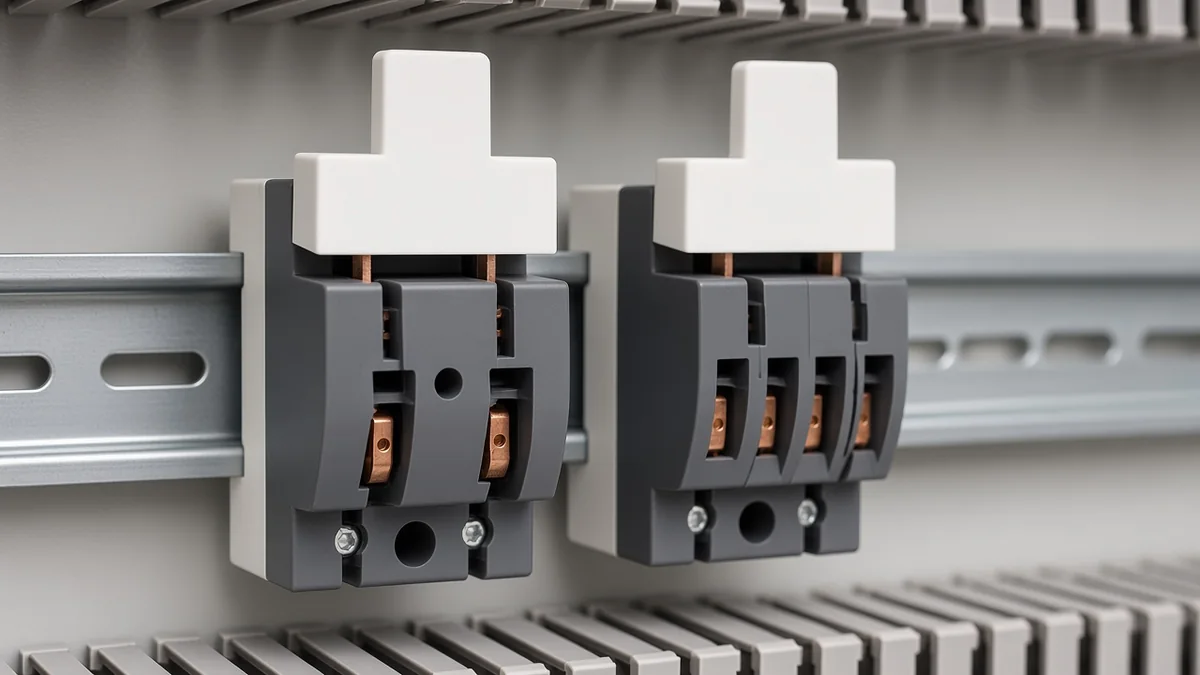
Pole Count, String Count, and Current: The Real Trade-Off
Pole count is a budget, and a catalogue spends it on one of three things: more strings, more voltage, or more current.
One string needs two poles. Two strings can share a single four-pole frame, where each string keeps the base rating, or they can each be given a 2 pole isolator switch, which some designers prefer because one string can then be worked while the other keeps producing.
Spend the same four poles in series and the frame holds one string at a higher DC voltage. Spend them in parallel and the frame carries more current on one string. The moulding looks identical from the front in all three cases.
| Pole code as published | Poles in the frame | What the poles are spent on | Circuit it suits |
|---|---|---|---|
| 2 | two | one conductor pair | single PV string |
| 4 | four | two conductor pairs | two strings on one frame |
| 4S / 2H | four | voltage or current headroom | one string, harder duty |
| 6 | six | three conductor pairs | three strings |
| 8 | eight | four conductor pairs | four strings |
A 4 pole DC isolator is therefore ambiguous on its own. The same frame reaches the market as two strings, as extra voltage headroom, or as extra current headroom, and only the order code and the rating table say which one you are buying. Our note on the double pole double throw knife switch covers the same counting problem on the AC side.
Utilisation Category Decides the Amperes, Not the Pole Count
The ampere figure on a DC isolator belongs to a voltage and a utilisation category together; on its own it tells you almost nothing.
IEC 60947-3 names the DC categories that matter here: DC-21 for resistive load with moderate overload, DC-22 for mixed resistive and inductive load, DC-PV1 for single PV strings without reverse or overcurrent, DC-PV2 for several strings with them.
Watch what happens to one number. Under DC-PV1, a published two-pole block is rated 25 A at 600 V, 11.5 A at 1000 V and 5 A at 1500 V.
Read the same block under DC-22B and the figures collapse to 6 A at 600 V and 1.5 A at 1000 V, because parting an inductive DC load is a far harder job than parting a clean string.
| Duty on one published two-pole block | 600 V | 1000 V | 1500 V |
|---|---|---|---|
| DC-PV1, single PV string | 25 A | 11.5 A | 5 A |
| DC-22B, mixed resistive and inductive | 6 A | 1.5 A | not published |
Duty class sits underneath all of it. A plain isolator carries no arc-suppression path, which makes it an off-load device with very low breaking capacity, meant to be opened once something else has already interrupted the current. A switch-disconnector adds load make-and-break to that isolation job, and it costs more because arc chambers cost more.
The US market asks the same question in its own language. UL 508i was written for manual disconnect switches in photovoltaic systems, covering switches rated up to 1500 V, with an overload test of 50 cycles at 200% of rated current.
Why a DC Arc Needs a Different Switch Than an AC Arc
A DC arc does not put itself out, and that single fact drives the whole device split.
Alternating current crosses zero 120 times per second, so an arc drawn on an AC contact keeps being extinguished and re-ignited and finally dies at a current zero. Direct current runs continuously in one direction, so the plasma sits much hotter and the contacts, gaps and arc chutes have to be built for it.
IAEI Magazine’s PV column states the consequence without hedging: AC rated disconnects must not be used on dc circuits, and using one that way violates the listing.
Important: Source: IAEI Magazine, “Disco Madness — Disconnects in PV Systems”.
An AC-rated switch on a DC circuit behaves normally right up to the day it has to break current, and then nothing in the device is designed to stop the arc. Settle the duty class before the pole count.
Simultaneous Disconnection in Published US Code Text
Published NEC text asks a PV disconnecting means to open the circuit conductors together rather than one at a time.
The 2017 text of Article 690.13(F)(1) reads that “The PV system disconnecting means shall simultaneously disconnect the PV system conductors of the circuit from all conductors of other wiring systems”, and adds that a dc PV system disconnecting means “shall be marked for use in PV systems or be suitable for backfeed operation”. Article 690.13 has been rewritten more than once, so confirm the edition your authority enforces.
Trade forums show why the wording exists. One technician replaced a failed inverter and found nothing between the roof and the equipment: “250VDC energized. I taped the ends of the wires, and worked hot.”
A PV DC disconnect that opens both conductors in one throw is the hardware answer to that sentence of code. Placement and access are a separate question, and our field notes on the DC disconnect switch for solar go through those.
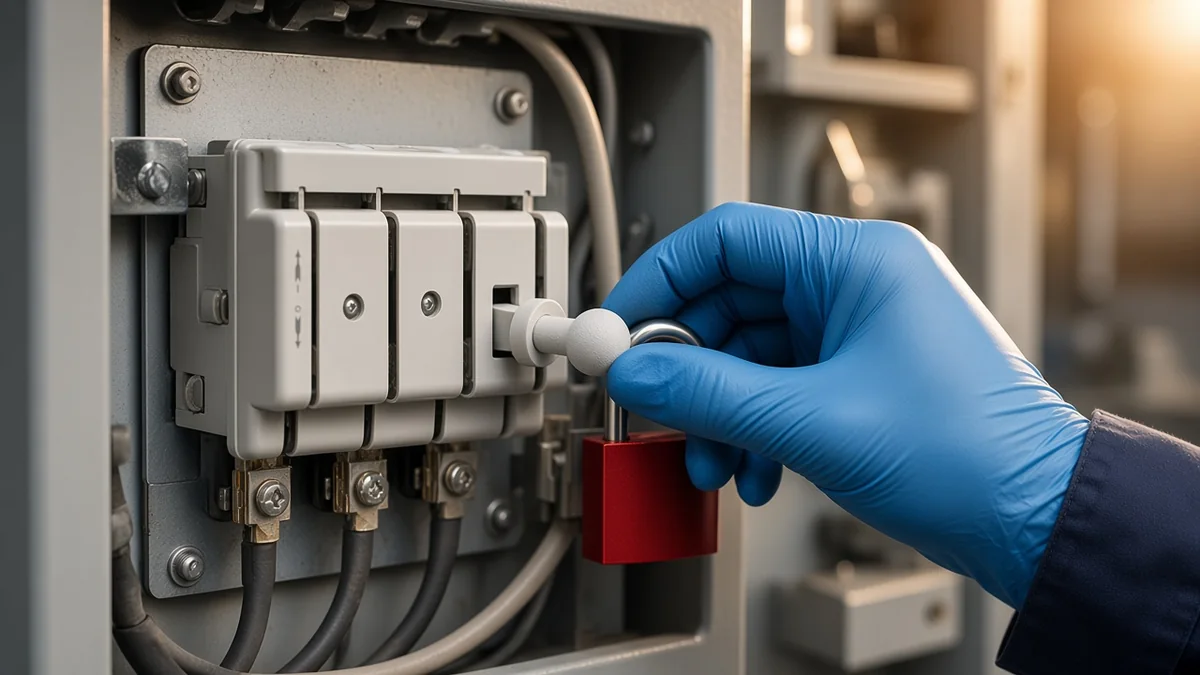
Reading the Yijin Isolating-Switch Family: Poles, Amps, Duty
Nothing in this supplier’s isolating switch category is published as a DC isolator, and that belongs at the top of the section rather than buried under the table.
All six frames print utilisation category AC-20B, 400 V rated operational voltage at 50 Hz, and rated working currents from 63 A to 250 A. The HK18 pages print 6 kV rated impulse withstand voltage, while the HD11F-250 page prints 8 kV together with 1000 V rated insulation voltage and 250 A agreed heating current.
The absences carry the same weight. No DC voltage, no DC current, no DC utilisation category, no UL listing and no NEMA type appears anywhere on the six product pages.
| Model | Poles printed | Rated operational voltage | Rated working current | Utilisation category | Impulse withstand |
|---|---|---|---|---|---|
| HK18 series | 2P, 3P, 4P | 400 V | 63–125 A | AC-20B | 6 kV |
| HK18-125 | 2P, 3P, 4P | 400 V | 63–125 A | AC-20B | 6 kV |
| HK18-160 | 2P, 3P, 4P | 400 V | 125–160 A | AC-20B | 6 kV |
| HK18-250 | 4P | 400 V | 160–250 A | AC-20B | 6 kV |
| HK18G-125 | 4P | 400 V | 63–125 A | AC-20B | 6 kV |
| HD11F-250 | 3P, 4P | 400 V | 160–250 A | AC-20B | 8 kV |
The 2P option itself is genuine. HK18 series, HK18-125 and HK18-160 all print 2P beside 3P and 4P, while HK18-250, HK18G-125 and HD11F-250 print the larger pole sets only.
The mouldings settle the duty question on their own. The photographed HK18-125/2 unit carries Ue 400 V, Ie 125 A, 50 Hz, IP20 and AC-20B, next to two printed lines: “Photovoltaic dedicated” and “Prohibit operation with load”.
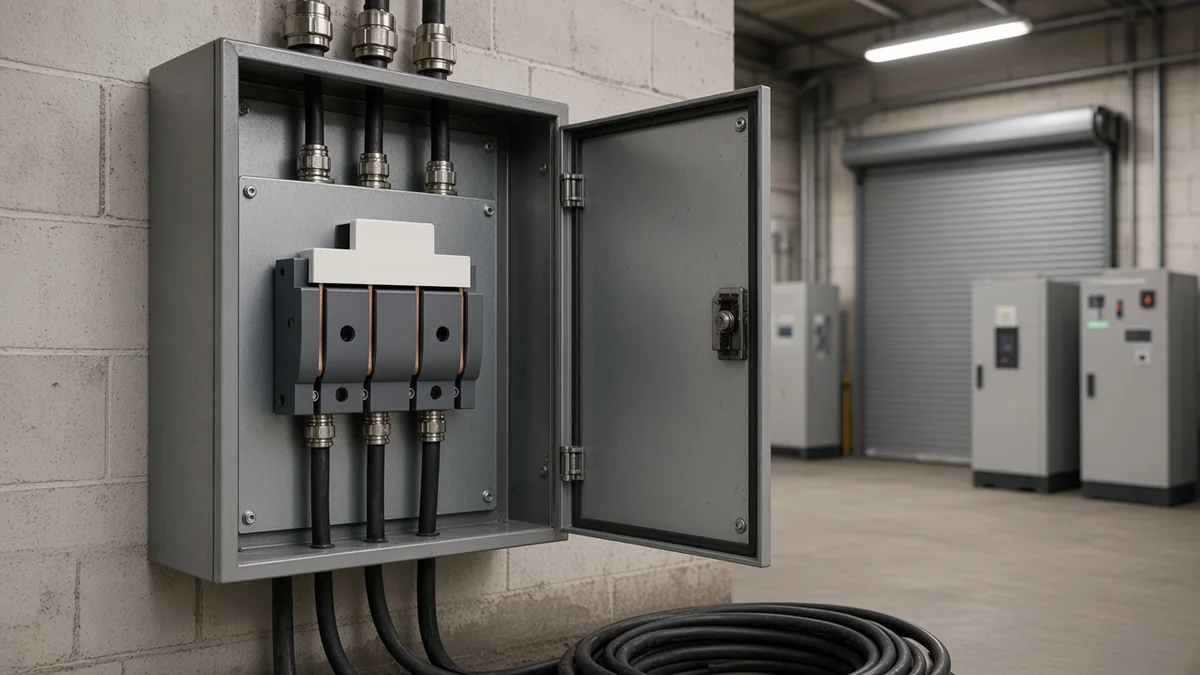
Choose an HK18-125 Knife Isolator for AC Isolation Duty
When the job is an AC-side isolation point rather than a DC string, the frame worth pricing is the HK18-125.
The HK18-125 type knife switch prints 400 V rated operational voltage, 50 Hz, AC-20B duty, working current options of 63 A, 80 A, 100 A and 125 A, 6 kV rated impulse withstand voltage, and compliance with GB/T14048.3 and IEC 60947-3. Because it is offered in 2P, 3P and 4P, a two-pole AC isolation point is a catalogue line here rather than a special order.
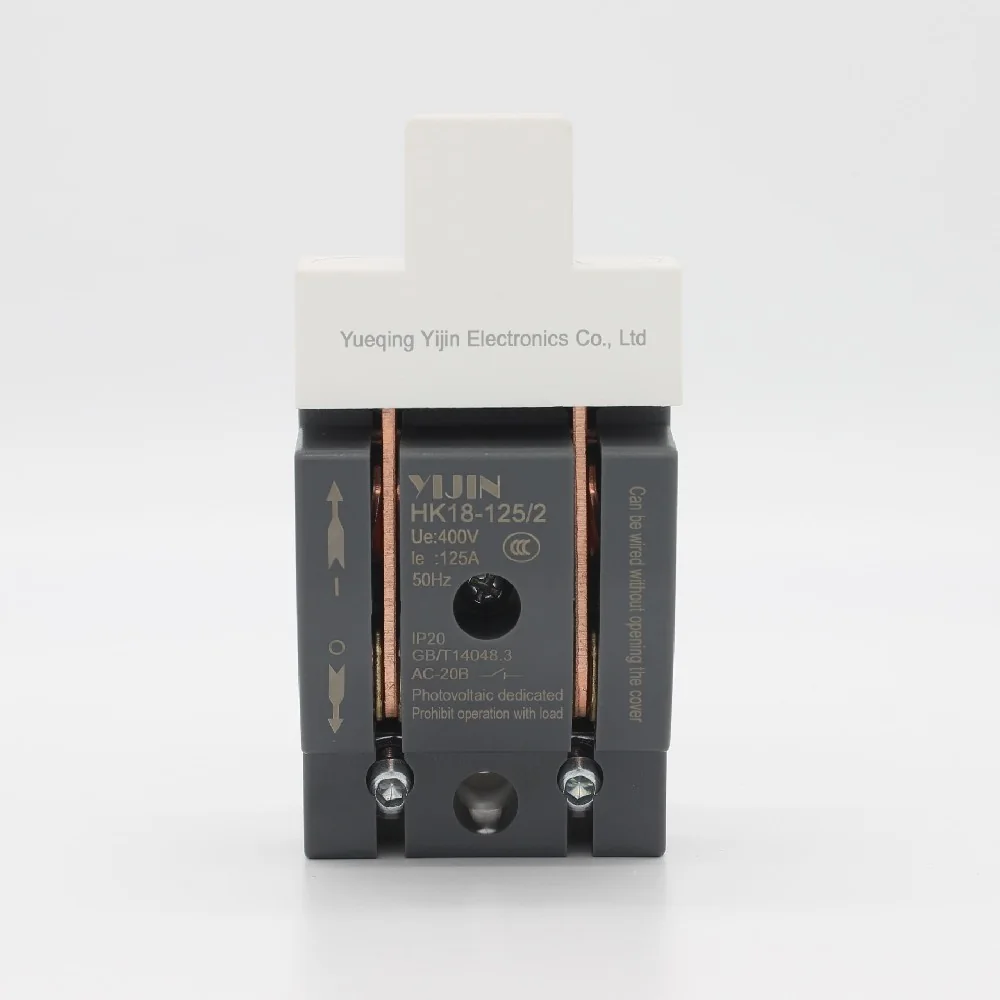
Higher current moves you up the same family. The HK18-160 type knife switch prints 125 A, 140 A and 160 A, and the HD11F-250 protective opening knife switch reaches 250 A in a covered frame. Amp banding on this family is worked through in our piece on the 60 amp knife switch disconnect.
Two conditions travel with these frames. The HD11F-250 page says operation should be carried out under no-load conditions, and the mouldings repeat it as a printed instruction; the IP20 marking gives finger protection with no water protection, and every page asks for a place free of rain or snow, which puts these knives inside a protected board.
For the DC string in the original question, buy a device whose own rating plate prints a DC utilisation category and a DC voltage, because these knife isolators print neither. The rest of the AC isolation hardware sits in the isolating switch category, and drawings or one-line extracts can go to the team through contact us.
FAQ
What is a 2 pole isolator switch?
It is a manual switch with two contacts that open together, so both conductors of one circuit are disconnected in a single movement. On a DC circuit that normally means the positive and the negative of one string.
Can an AC isolator be used for DC?
Not for DC switching duty. IAEI Magazine’s PV column states that AC rated disconnects must not be used on dc circuits, and treats doing so as a listing violation, because a DC arc does not die at a current zero the way an AC arc does.
Do I need a 2 pole or 4 pole isolator?
Two poles cover one string. Four poles cover either two strings on one frame, or one string with more voltage or current headroom when the poles are linked internally, which is exactly why the same frame appears in catalogues under different pole labels.
What is the purpose of a DC isolator switch?
It creates a defined open point between an array and an inverter or charge controller so downstream work can start from a known state. A device without arc suppression only holds that isolation; it is not the tool for interrupting live current.
Why use an isolator instead of a switch?
An isolator is built to guarantee separation, usually with a lockable off position and a defined contact gap. A switch-disconnector goes further and can make and break load current, so the choice comes down to whether the circuit will be dead before the handle moves.
What size isolator switch for solar system?
Take the string’s maximum voltage first, then read the current the device is allowed at that voltage in the category you will operate it under. The same two-pole block can be worth 25 A in one category at one voltage and a small fraction of that in another.
Do solar panels need a DC isolator?
Published NEC text requires a PV system disconnecting means that opens the circuit conductors simultaneously, and installers report finding arrays with no local open at all. Confirm the code edition your authority enforces before you finalise the design.
Does Yijin sell a 2 pole DC isolator switch?
No. The isolating switches on this site are AC-20B knife isolators at 400 V rated operational voltage and 50 Hz, and the 2P option exists inside that AC family, so the two-pole frames suit AC isolation rather than a PV DC string.
References
- Disconnector — Wikipedia
- Disco Madness — Disconnects in PV Systems — IAEI Magazine
- NEC Article 690 text, 2017 code-change course material
- Solar DC Disconnect — Electrician Talk
Humanizer audit: PASS
Humanizer second-pass owner: yijinele-draft-20260916-c
No facts, numbers, names, or citations were added beyond the approved research and brief.
Evidence callouts present: Important (AC-rated switch on a DC circuit).