 Yueqing Yijin Electronics Co., Ltd.


DC Disconnect Switch for Solar: Placement and Class Checks
A dc disconnect switch for solar is the manual isolation point on the PV array / solar panels’ direct-current path so technicians can open that path for service—distinct from the AC disconnect after the inverter. Confirm the array needs a dedicated open, that Dual-pole / multi-pole switching opens ungrounded conductors together, that the hardware is DC-rated for the duty, and that outdoor enclosures or a Protected bay / indoor panel match the device before you treat any “PV-named” Knife switch / HK18 / HD11F as an outdoor string disconnect or solar DC isolator.
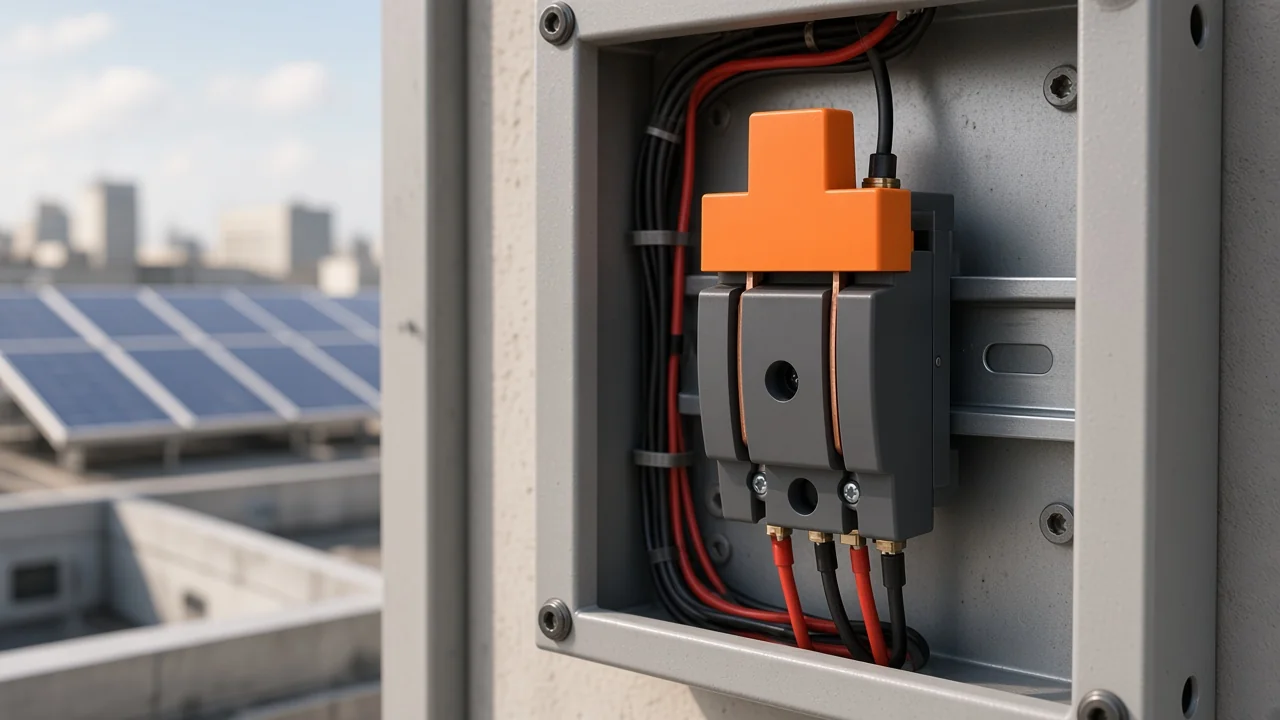
What a DC Disconnect Switch for Solar Actually Does
A DC disconnect switch for solar is a manually operated isolation means on the photovoltaic array’s DC conductors—not the AC shutoff after the inverter.
Photovoltaic systems generate usable power from modules that feed balance-of-system gear; the array field produces DC that an inverter (or charge controller path) conditions for AC loads or the grid. The array DC disconnect sits on that DC path so a worker can create an intentional open between live modules and downstream equipment. An AC disconnect, by contrast, opens after conversion toward the building or utility path. Education pages that size PV hardware typically describe both roles on grid-tied maps; a DC-only shed or camper map may show only the array-side open.
A true isolator or disconnect switch is meant to ensure a circuit can be de-energized for service. Unless the device is designed as a switch-disconnector with load-break capability, treat it as an off-load isolation point: open it after current is already interrupted elsewhere, or select hardware that is explicitly rated to break the DC current you expect.
When the Array Path Needs a Dedicated DC Disconnect
Plan a reachable DC open whenever illuminated strings must be isolated for service—most grid-tied and commercial designs treat that as a required means, not an optional accessory.
US model-code education for PV systems describes a readily accessible PV system disconnecting means so the solar source can be separated from other conductors in a building or structure. Trade education also notes that roofs are not treated as readily accessible locations for that system disconnect. Separately, equipment near an inverter may need its own isolating device so a technician can service that box without assuming the entire site is dead.
Field threads make the risk concrete: technicians have opened inverter work and found rooftop DC still energized with no planned local open from the panels. Community debates about low-voltage DIY arrays sometimes ask “when is a DC disconnect necessary?”—that debate does not erase the service need on illuminated string conductors in typical B2B PV work.
Important: Source: Electrician Talk thread “Solar DC Disconnect” (live rooftop DC without a planned open); IAEI Magazine education on daytime PV hazardous voltages.
Illuminated modules can keep array conductors live even when an inverter display looks quiet. Do not treat “the inverter is off” as proof that the DC path is safe to touch.
Confirm local AHJ expectations and the project one-line before you buy hardware. Education language about PV system disconnecting means is planning context—it is not a listing claim for any particular catalog SKU.
Dual-Pole Checks for Ungrounded PV DC Conductors
Ungrounded PV DC paths are taught to open all ungrounded conductors together—often with a two-pole or multi-pole switch in one throw.
On an ungrounded DC side, interrupting only the positive while the negative stays landed leaves a live conductor in the path. Sizing and application notes for array DC disconnects call out interrupting both positive and negative leads in that case. Installers discussing multiple strings into separate MPPT inputs often choose four-pole (or similar) disconnects so more than one string path opens in a single operation when the design requires it.
Before you order:
- Count how many ungrounded conductors must open at once
- Match pole count to strings that must isolate together
- Prefer a handle that can be locked open when the equipment isolation plan needs lockout/tagout.
Grounded historical layouts sometimes interrupted only the ungrounded leg; modern utility-interactive designs frequently run ungrounded DC and therefore need simultaneous multi-pole opens. Read the one-line, not a shopping-page default.
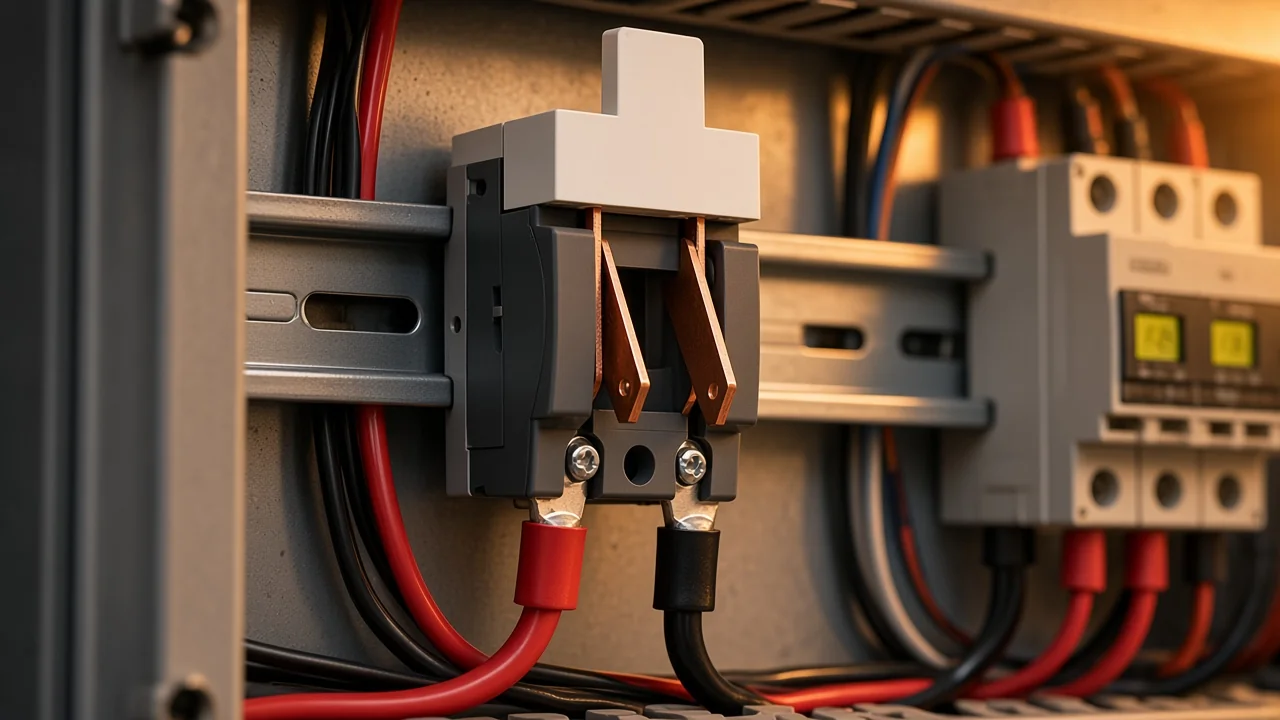
Device-Class Pre-Check: DC-PV Rated vs AC-Only Isolation
Do not use AC-only load-break hardware on PV DC; match interrupting duty and listing expectations to the circuit you are opening.
AC current crosses zero many times per second, which helps extinguish arcs. DC current does not, so DC-rated disconnects use different contact and arc-control design. Trade education is blunt: AC-rated disconnects must not be used on DC circuits for that duty. Marketing pages that sell high-voltage outdoor isolators are aiming at that DC-PV class—whether a given SKU is appropriate still depends on voltage, current, poles, and listing for the project.
IEC knife isolators marked utilisation category AC-20B are isolation devices for infrequent operation without making or breaking load current on AC circuits within their published ratings. That is a different class decision from a listed outdoor DC PV disconnect intended to interrupt illuminated string current at PV voltage. “Photovoltaic” in a product title does not automatically move an AC-20B knife into the outdoor DC disconnect class.
| Pre-install check | Pass condition | Fail signal |
|---|---|---|
| Circuit side | Device is chosen for the DC array path or the AC path—never mixed by accident | AC safety switch ordered for illuminated PV DC strings |
| Pole count | All ungrounded DC conductors open together when the one-line requires it | Single-pole open on an ungrounded +/- pair |
| Duty | Interrupting / isolation category matches load-break vs off-load need | AC-20B or “do not open under load” device used as routine on-load DC shutoff |
| Environment | Enclosure or bay matches rain, sun, and accessibility notes | Indoor-only device mounted in weather without a rated enclosure |
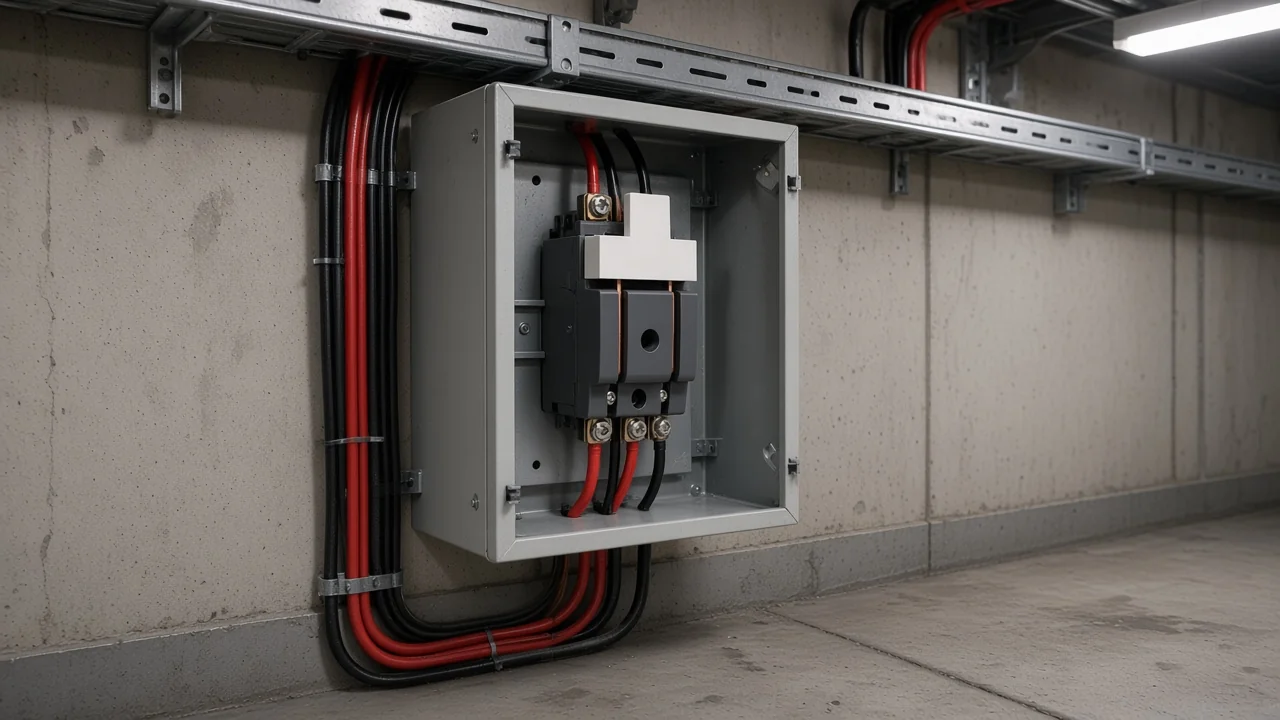
Outdoor Enclosure vs Protected Bay Placement
Weather-rated enclosures belong on exposed mounts; protected bays fit devices whose install notes forbid rain or snow invasion.
If the disconnect sits outdoors beside a combiner or exterior wall, SERP and product education commonly expect a weather-sealed enclosure (IP66 / NEMA-class language appears throughout shopping and how-to content). If the device’s working conditions say install without rain or snow invasion, keep it in a dry indoor panel, covered cabinet, or similarly protected bay—do not “solve” weather with hope.
Placement also tracks two different jobs:
- System-level disconnecting means — education sources want a readily accessible location (not a roof climb) so the PV system can be separated from other building conductors.
- Equipment isolating device near an inverter — education sources want the isolator within sight / near the equipment so service work can open that box’s conductors.
Some inverters include an internal DC disconnect that an AHJ may accept for equipment isolation; that still does not automatically answer outdoor array or readily accessible system-disconnect placement on every project. Rapid shutdown initiation, when required, is a related emergency layer—it is not a substitute for a maintenance open you can prove at the terminals you will touch.
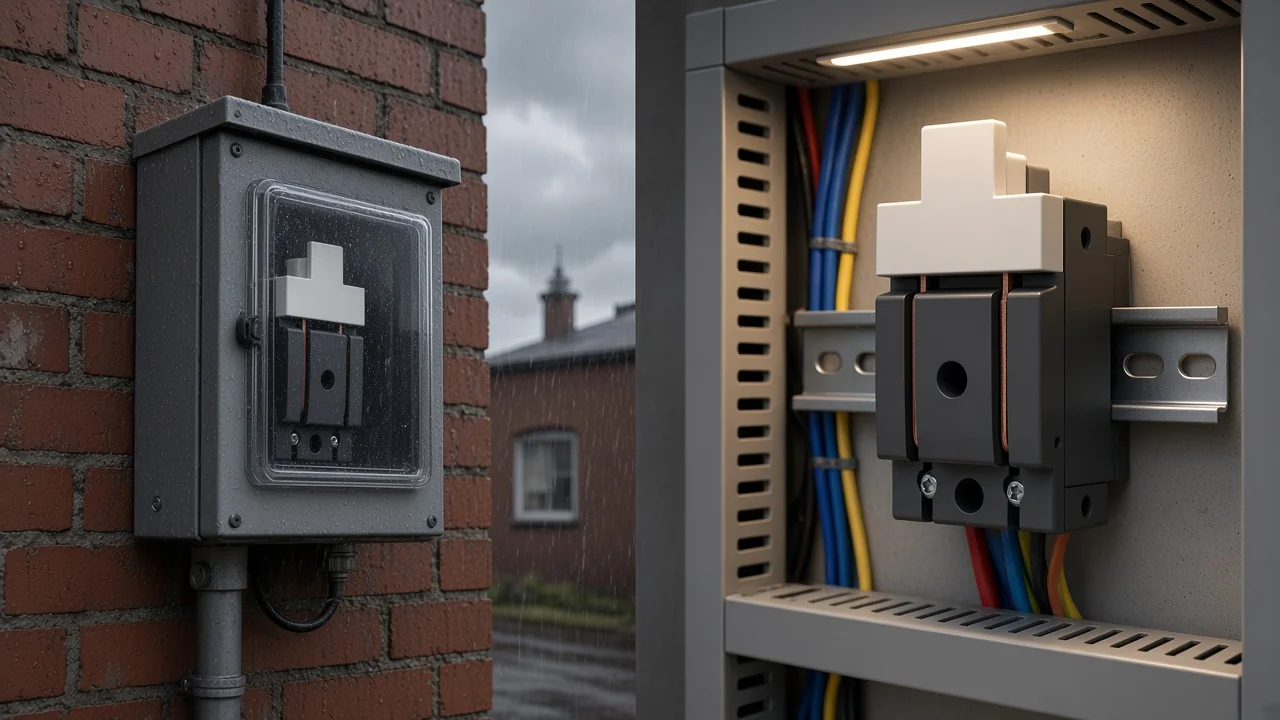
Pre-Install Mistakes That Leave the Array Path Live
AC-on-DC substitutions, rapid-shutdown confusion, blocked access, and wrong catalog neighbors are the mistakes that fail the pre-install check.
Shopping carousels push outdoor PV shutoffs and cabin kits that may be correct for listed DC disconnect duty—and wrong when the drawing calls for a protected IEC isolation knife. The reverse error is equally costly: mounting a no-rain/snow AC-20B knife outdoors as if it were a listed rooftop DC isolator.
Other recurring failures:
- Treating a WiFi breaker or reclosing protector from a mixed isolating-switch catalog as the solar DC disconnect
- Mounting the handle where workers need a ladder or must move storage to reach it
- Assuming rapid shutdown alone means every DC conductor you will touch is already safe
- Ordering pole count for one string when the inverter lands two ungrounded string pairs that must open together
From the field: Source: ExpertCE education on NEC 690.13 vs 690.15 and rapid shutdown context; DIY Solar Power Forum SERP threads confusing DC disconnect with rapid shutdown.
A maintenance DC disconnect opens a defined path for service. Rapid shutdown is aimed at reducing array-boundary voltage for emergency response. Plan both when the project requires them—do not merge the jobs into one shopping click.Tip: Source: Greentech Renewables sizing article on array DC disconnect roles and ungrounded dual-conductor interrupt.
On ungrounded DC, verify the switch opens both positive and negative (or the multi-pole set on the one-line) before you call the path isolated.
When HK18 or HD11F Knife Isolators Fit Solar Projects
Use Yijin HK18 or HD11F knife isolators for protected AC-20B isolation points on solar-related AC distribution—not as listed outdoor DC PV disconnects for illuminated strings.
The HK18-125 type knife switch for photovoltaic applications is published for AC 50 Hz circuits with rated operational voltage up to 400 V, utilisation category AC-20B, rated impulse withstand 6 kV, and compliance statements for IEC 60947-3 / GB/T14048.3. It is offered in 2P/3P/4P with working-current options through 125 A, and its normal working conditions require installation without rain or snow invasion. The HD11F-250 protective opening knife switch follows the same AC-20B isolation family at higher current options (through 250 A), with rated operational voltage 400 V, rated insulation voltage 1000 V, impulse withstand 8 kV, and the same no rain/snow install note; operation is described for no-load conditions.
Browse the Isolating Switch category when you need knife/isolator hardware—and skip WiFi breakers or reclosing protectors in that hub when the job is a solar DC disconnect. For broader PV project context, see the New Energy solution page. These SKUs are not presented here as UL Listed outdoor PV DC disconnects or as NEC 690.13-compliant substitutes; match listed outdoor DC-PV hardware when that is what the one-line and AHJ require.
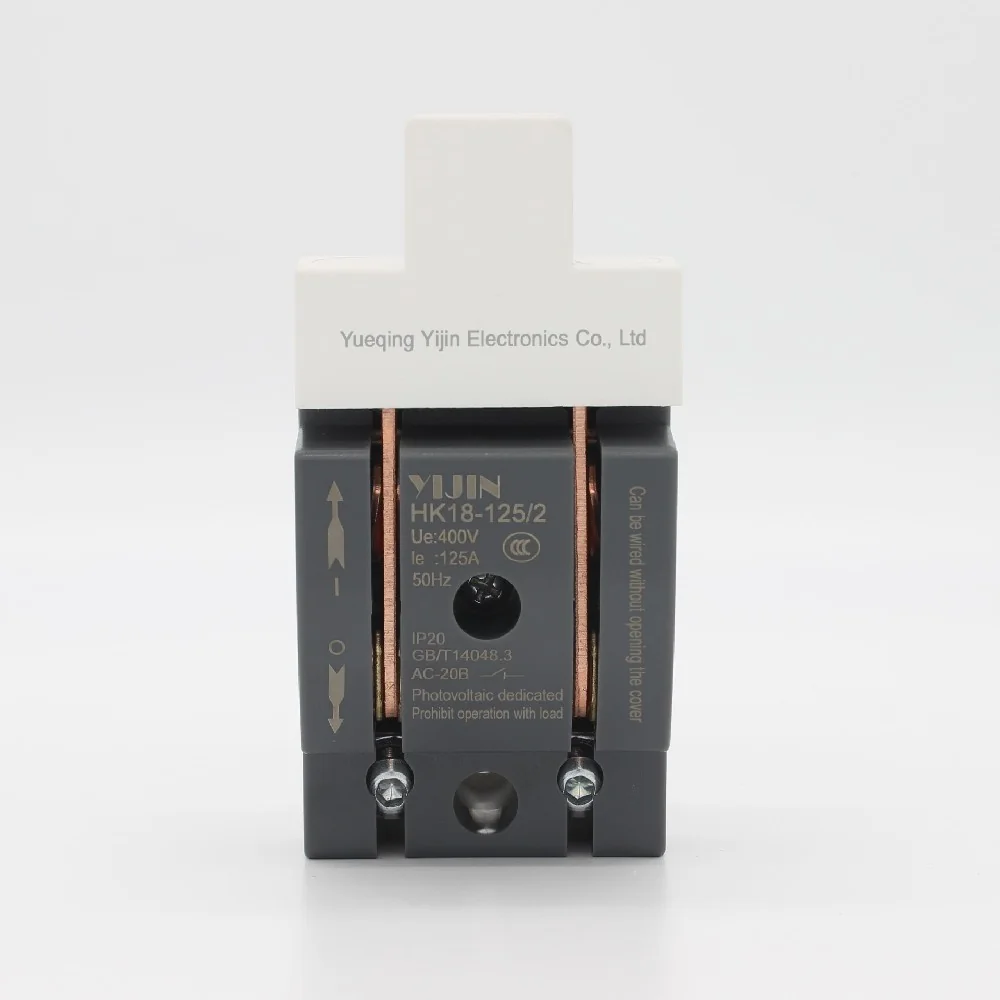
The published parameters that matter for this class-and-placement check are summarized below.
| Parameter | HK18-125 | HD11F-250 |
|---|---|---|
| Utilisation category | AC-20B | AC-20B |
| Rated operational voltage | up to 400 V AC | 400 V AC |
| Frequency | 50 Hz | 50 Hz |
| Working current options | 63–125 A | 160–250 A |
| Poles | 2P / 3P / 4P | 3P / 4P |
| Impulse withstand | 6 kV | 8 kV |
| Install environment note | No rain or snow invasion | No rain or snow invasion |
FAQ
Do you need a solar panel disconnect switch?
Most grid-tied and commercial PV designs plan a disconnecting means so the solar source can be isolated for service and emergency access. Confirm the adopted code edition and AHJ rules for your site—code-education pages are not a product listing for a specific brand.
What is the difference between AC and DC disconnects for solar panels?
A DC disconnect opens the array’s direct-current path toward the inverter or controller. An AC disconnect opens after the inverter toward loads or the utility. Many grid-tied maps include both roles.
What is a DC power disconnect switch?
It is a manually operated switch that opens DC conductors so equipment can be isolated. On solar projects that usually means the array path, not a low-voltage appliance switch.
Where is the solar disconnect switch located in a solar PV system?
Education sources put the main PV system disconnecting means in a readily accessible location—not on a roof climb. Array or equipment isolators may sit near a combiner, exterior wall enclosure, or inverter bay depending on the one-line and device ratings.
When is a DC disconnect necessary?
Whenever you must isolate illuminated PV DC conductors for serviceable work, plan a dedicated open. DIY debates about very low-voltage arrays do not remove that service need on typical string systems.
Can I use an AC disconnect on the PV DC side?
Not for load-break DC duty. AC and DC arc behavior differ; trade education warns against applying AC-rated disconnects on DC circuits.
Is rapid shutdown the same as a DC disconnect?
No. Rapid shutdown reduces array-boundary voltage for emergency response. A maintenance DC disconnect opens a defined path for service. Projects may require both.
Can an AC-20B knife switch be my outdoor PV DC disconnect?
Not on the published HK18/HD11F evidence. Those knives are AC-20B isolation devices for protected installs without rain or snow invasion—not evidenced as UL-listed outdoor PV DC disconnects.
References
- Disconnector — Wikipedia
- Photovoltaic system — Wikipedia
- Disco Madness — Disconnects in PV Systems — IAEI Magazine
- Disconnecting Means for PV Systems — ExpertCE
- Sizing the DC Disconnect for Solar PV Systems — Greentech Renewables
- National Electrical Code standard development — NFPA
- How Does Solar Work? — U.S. Department of Energy
- Solar DC Disconnect — Electrician Talk
- PV DC Disconnecting Means — Electrician Talk
Humanizer audit: PASS
Humanizer second-pass owner: YJ-DRF-AGT-20260909-02
No facts, numbers, names, or citations were added beyond approved research and brief.
Evidence callouts present: Important (live array), Tip (dual-pole), From the field (RSD ≠ maintenance disconnect).