 Yueqing Yijin Electronics Co., Ltd.

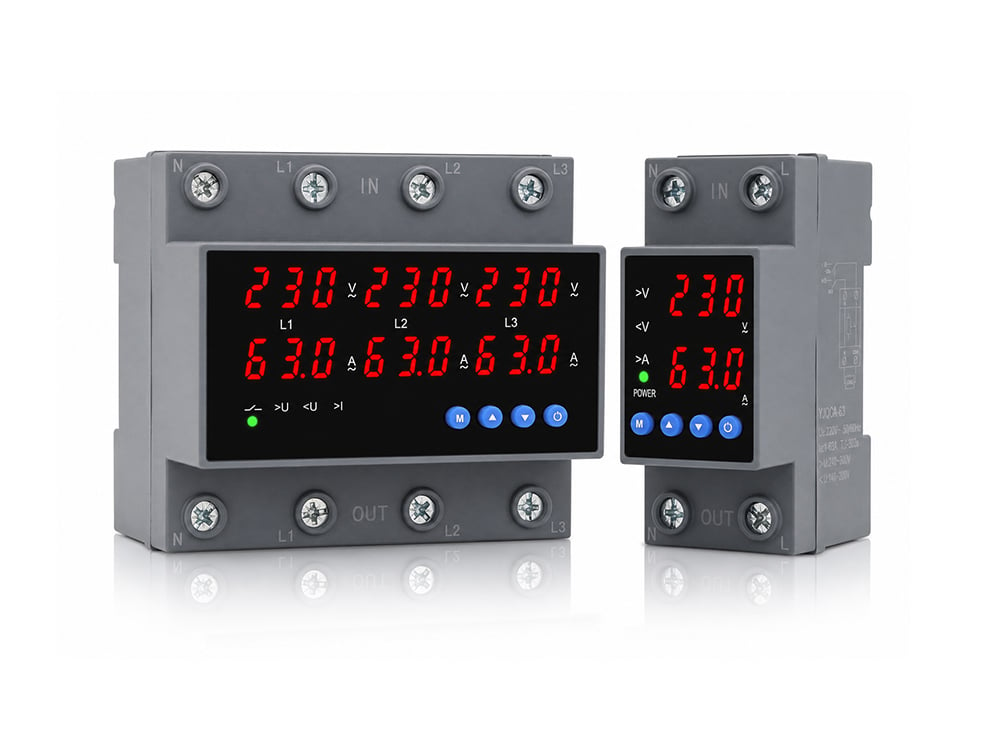



The Panel Job Is Not This Rail
afci breaker installation in United States English search usually means a branch-panel AFCI swap in a load center / panelboard — neutral pigtail, load neutral, load hot, snap-in, and TEST by a qualified electrician. That job is not the same as the standard-rail AFDD install sheet Yijin prints for YJB1-63/AFD. The sections below walk the US panel phases, the live rail parameters, and an honest class split for procurement readers.
What US Searchers Mean by AFCI Breaker Installation
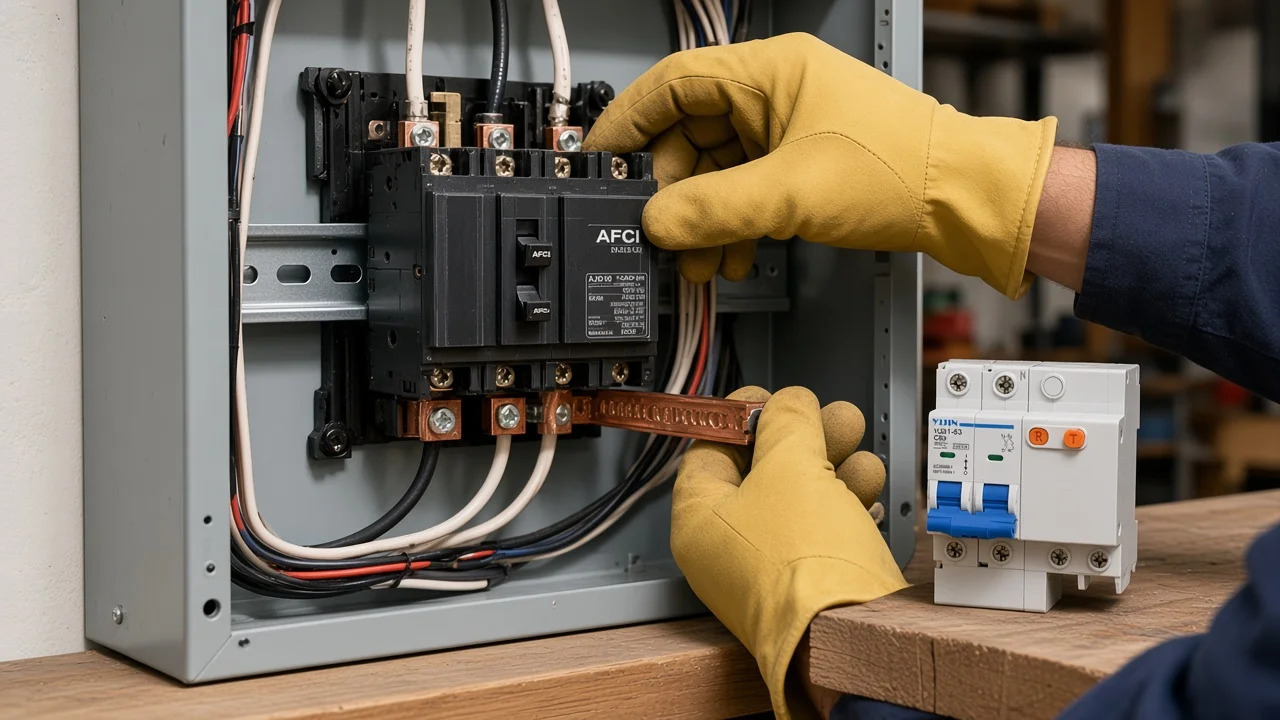
US searchers who type afci breaker installation are usually picturing a listed branch AFCI in a residential or light-commercial load center, not a DIN-rail AFDD module on a distribution board.
Google’s install cluster — trade publishers, retailer how-tos, and live AI Overview steps — repeats the same panel story: shut off the main, open the cover, remove the old breaker, land conductors on the AFCI, seat the breaker, restore the cover, energize, and press TEST.
That vocabulary maps to combination-type AFCI education under UL 1699 naming and NEC dwelling-branch rules in general references. It does not automatically describe every device catalogued as “arc fault” overseas.
AFCI and AFDD are related labels across markets. US practice centers on panel-mounted branch AFCI hardware with hot and neutral routed through the device. Many other regions document AFDD-style breakers on standard rail at different nominal voltages and frequencies.
If your takeoff says “install AFCI breakers” for US bedroom branches, you are in panel AFCI territory. If the board is built around modular rail at the ratings on a Yijin AFDD page, you are in rail AFDD territory. Mixing the two in one purchase order is how the wrong SKU arrives on site.
Browse the mixed AFCI cluster at Others for navigation, but keep the install class decision in this article before you open a carton.
US Panel AFCI Install Checklist From Power-Down Through TEST
A US panel AFCI install is a qualified-worker job that follows de-energize → conductor landing → mount → TEST, not a casual breaker swap.
Opened US how-tos and instruction sheets converge on safety first. The main breaker goes off, the dead-front cover comes off, and the worker verifies de-energized conductors before touching lugs.
Removal means identifying the branch hot and its paired neutral, disconnecting them from the old device, and freeing the breaker from the bus. Installation lands the load hot on the load power terminal and the load neutral on the breaker neutral terminal for typical pigtail-style units.
The coiled factory white pigtail ties to an open point on the panel neutral bus. Plug-on-neutral breakers replace that visible pigtail with a bus contact — the neutral path still must match the breaker family and panel label.
After torque and seating with the handle off, the cover returns, power restores, and the TEST button must trip the device. That trip is part of completion, not an optional extra step.
| Phase | US branch-panel AFCI job (SERP / instruction consensus) |
|---|---|
| Safety | Main off; verify dead; qualified worker only |
| Access | Remove cover; identify branch hot and neutral |
| Remove | Disconnect old breaker; free bus stab |
| Land conductors | Load neutral / load hot on AFCI load terminals (typical pigtail unit) |
| Neutral tie | Pigtail to neutral bus — or plug-on neutral per label |
| Mount | Seat breaker; handle off during landings |
| Closeout | Cover on; energize; press TEST to confirm trip |
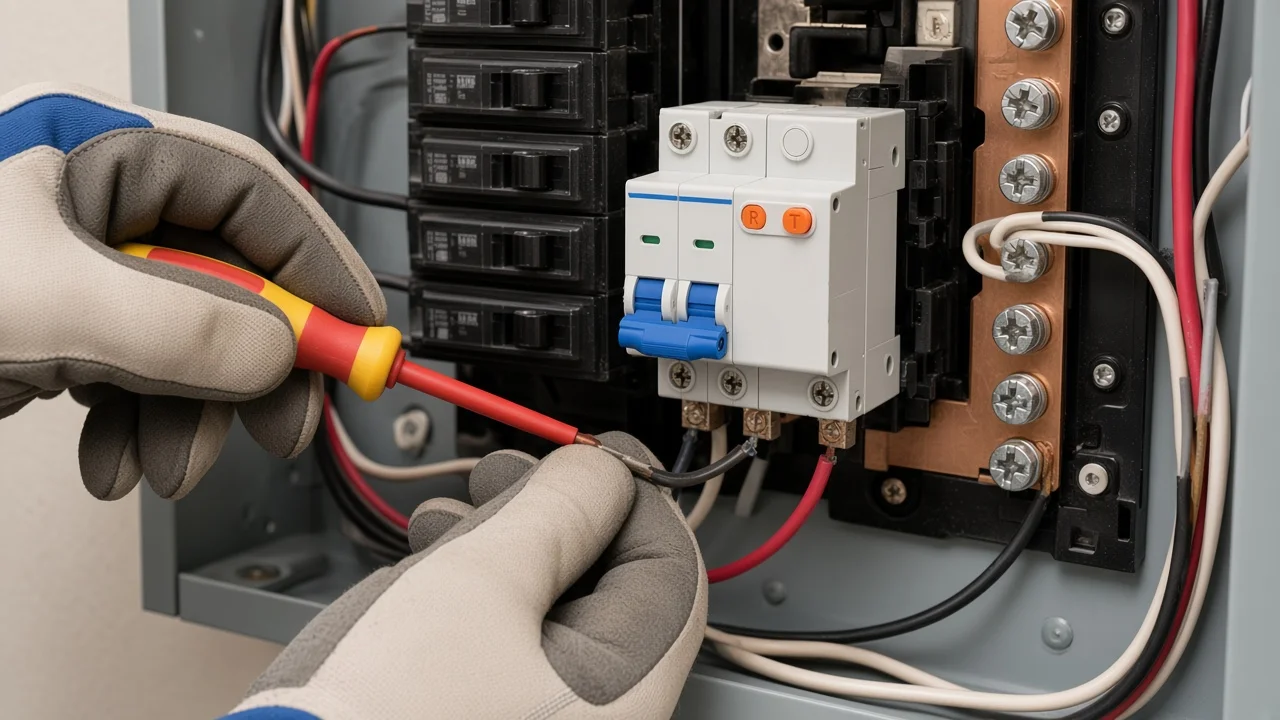
Manufacturer instruction context for US residential electronic breakers often cites 120 V ac and 60 Hz application classes. Those numbers describe the US panel job environment in opened PDFs — not the Yijin rail sheet discussed later.
For readiness gates before tools touch an enclosure, see the sister article on how to install afci breakers. For terminal-mark pre-checks without retracing this job map, see afci breaker wiring diagram.
Load Neutral, Pigtail, and Shared-Neutral Traps on the US Job
The US install fails in the field when the pigtail looks correct but the load neutral never moved onto the AFCI.
AFCI Safety education states the basic difference versus a plain thermal-magnetic breaker: both hot and neutral must connect to the proper AFCI terminals for typical designs, not only the hot conductor.
Community threads on mis-wired neutrals are blunt. If pigtails sit on the neutral bar while circuit whites remain on the bar alone, the breaker may trip immediately or provide no meaningful arc protection.
Each circuit neutral that the AFCI protects must land on that breaker’s neutral lug. The pigtail only bonds the device to the panel neutral system — it does not replace moving the load neutral.
Shared-neutral and multiwire layouts add another blocker. Opened Eaton residential instructions warn that typical single-pole electronic breakers cannot protect shared-neutral circuits. Plan dedicated hot/neutral pairs unless the design and listed hardware explicitly support a multiwire arrangement.
Plug-on-neutral AFCI families change the visible wiring sketch but not the rule: follow the breaker and panel labels for where the circuit white belongs.
From the field: On DIY Stack Exchange, installers who connected pigtails but left circuit neutrals on the bus reported immediate tripping. Accepted answers repeat the same fix — move those circuit neutrals onto the AFCI neutral lugs, not just the pigtail.
What the YJB1-63/AFD Printed Install Sheet Shows
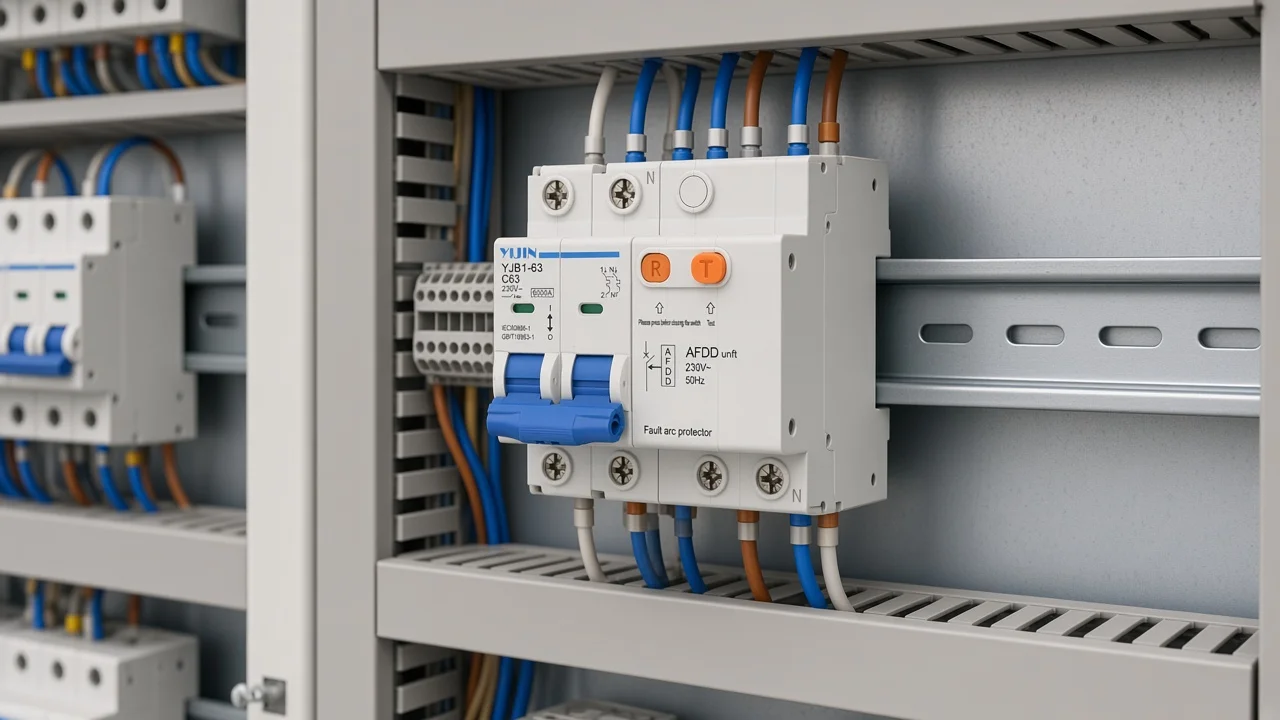
The live YJB1-63/AFD product page describes a standard-rail AFDD assembly — not a US load-center pigtail install drawing.
Yijin lists the model as an AFDD built from a small circuit breaker plus an arc-fault module. Scope text names overload, short-circuit, and series and parallel arc-fault protection.
The parameter table publishes AC 50 Hz, rated operational voltage 230 V, 2P poles, rated currents through 63 A, standard GB/T31143, release characteristics C and D, rated short-circuit breaking 4.5 kV as printed, rated impulse withstand 4 kV, protection grade IP20, ambient −40℃~+75℃, altitude 2000 m, pollution degree II, mechanical life greater than 6000 operations, and installation method standard rail installation.
Minimum arc labels on the page include serial arc 5 and combined arc 75 as printed. Those figures belong to this SKU table only.
The page closes with a qualified electrical operator requirement and power-off / insulation measures before installation. That is the printed install boundary — not a US TEST-button panel sequence copied from Google.
| YJB1-63/AFD line (live product page) | Value as printed |
|---|---|
| Installation method | Standard rail installation |
| Rated frequency | 50 Hz |
| Rated operational voltage | 230 V |
| Poles | 2P |
| Rated current options | 10 A through 63 A |
| Standard cited | GB/T31143 |
| Protection grade | IP20 |
| Rated short-circuit breaking | 4.5 kV |
| Ambient temperature | −40℃~+75℃ |
| Altitude | 2000 m |
Branch-Panel AFCI Job Versus Rail AFDD Install Sheet
The US panel job and the Yijin rail sheet answer different mount and conductor questions even when both mention arc faults.
A branch-panel AFCI install targets a load-center slot, lands branch hot and neutral on the device (or approved plug-on path), ties a pigtail where required, and finishes with TEST in US how-to consensus.
The YJB1-63/AFD sheet targets standard rail mounting, publishes 50 Hz and 230 V class ratings, and cites GB/T31143 — without printing a US LINE/LOAD/pigtail branch-panel diagram on the live page.
| Decision cue | US branch-panel AFCI install job | YJB1-63/AFD printed rail sheet |
|---|---|---|
| Mount | Load-center breaker slot | Standard rail installation |
| Neutral interface | Pigtail and/or plug-on to panel neutral system | Per rail device marks and page table |
| Frequency context in sources | 60 Hz in US manufacturer instructions | 50 Hz on product page |
| Voltage context | 120 V branch work in US instruction PDFs | 230 V rated operational voltage on page |
| Closeout check | TEST button trip in US guides | Qualified operator; power-off per page note |
| Yijin as US listed branch AFCI | Shop listed US panel catalog | Not evidenced on live Yijin pages |
Use this table at procurement review: if the purchase reason is “US afci breaker installation” from SERP language, the rail sheet row is the wrong class unless the project specification explicitly calls for that AFDD architecture.
When YJB1-63/AFD Fits Your Install Class — and When It Does Not
Specify YJB1-63/AFD arc fault circuit breaker when the design is DIN-rail AFDD-class protection that must match the published 50 Hz, 230 V, and current ratings on the product page.
Do not specify it to satisfy a US NEC branch AFCI bedroom retrofit as a verified UL Listed panel substitute. Fact package 1.1 and the live product pages do not present that listing path.
Do not map US pigtail/load-center steps onto this SKU because the page prints standard rail installation instead of a US load-center wiring figure.
When the architecture matches, the page gives enough rail parameters — GB/T31143, IP20, C/D releases, and arc scope text — to align procurement with the install sheet row in the comparison table above.
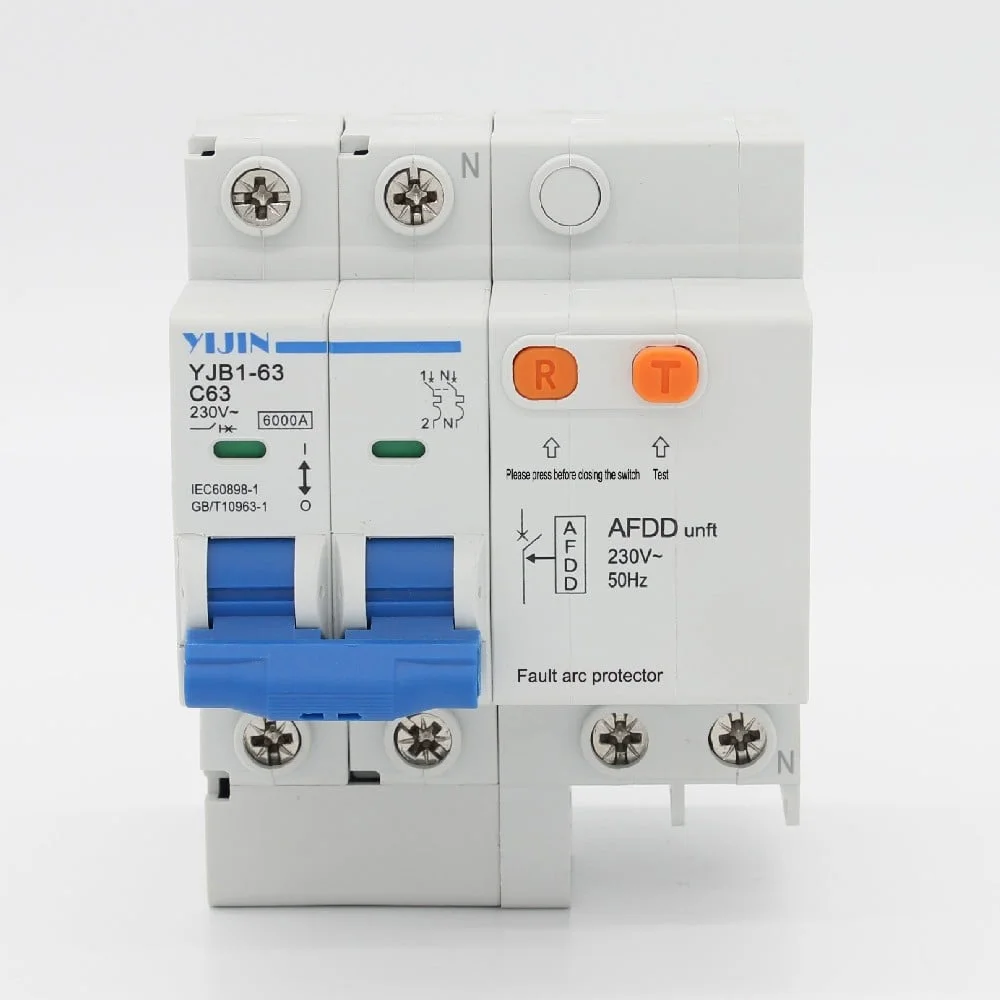
Choose this SKU after the job-versus-sheet contrast confirms rail AFDD is the specified class. Keep US panel AFCI purchases on hardware that carries the listing evidence your jurisdiction expects.
FAQ
Do AFCI breakers need a neutral during installation?
Yes for most US panel AFCI designs. The circuit neutral normally lands on the breaker so the device can monitor the load path, while a pigtail-style unit also ties its factory white to the neutral bus.
What steps are involved in a US panel AFCI breaker installation?
Typical US consensus runs main off, cover access, remove the old breaker, land load hot and load neutral on the AFCI, connect the pigtail where required, seat the breaker, restore power, and press TEST.
Where should AFCI breakers be installed?
Dwelling-branch AFCI rules vary by adopted NEC edition and local amendments. For room-level requirements, use the dedicated location article on the site rather than repeating a room table here.
When should you install an AFCI breaker?
Renovations, new branch circuits, and receptacle upgrades often trigger AFCI work in US education sources when the adopted code set requires arc-fault protection on those branches.
Can I install an AFCI without a pigtail (plug-on neutral)?
Some plug-on-neutral AFCI families land the circuit neutral on the breaker while contacting the panel neutral bus without a visible coiled pigtail. Follow the specific breaker instructions — the neutral path still must match the label.
How is YJB1-63/AFD installed versus a US panel AFCI?
The Yijin page prints standard rail installation with 50 Hz and 230 V class ratings in its table. A US panel AFCI job instead uses a load-center slot with pigtail or plug-on neutral landings and a TEST closeout in US guides.
Is YJB1-63/AFD UL Listed for US NEC branch AFCI installs?
The live Yijin product pages reviewed in this package do not present UL Listed branch-panel AFCI evidence for that use. Keep US listed panel jobs on hardware that documents the listing your AHJ expects.
What voltage and frequency does the Yijin page print?
The product table lists AC 50 Hz and rated operational voltage 230 V for YJB1-63/AFD, with rated currents through 63 A on the same page.
References
- AFCI Safety — what is AFCI
- Arc-fault circuit interrupter — Wikipedia
- IAEI Magazine — NEC 210.12 AFCI means
- Industrial Control Academy — arc-fault protection
- DIY Stack Exchange — AFCI neutrals and pigtails
These sources support the US panel install education, the AFCI versus AFDD naming split, and the neutral mis-wire field pattern cited above.