 Yueqing Yijin Electronics Co., Ltd.



The lights are outdoors; the timer may not be
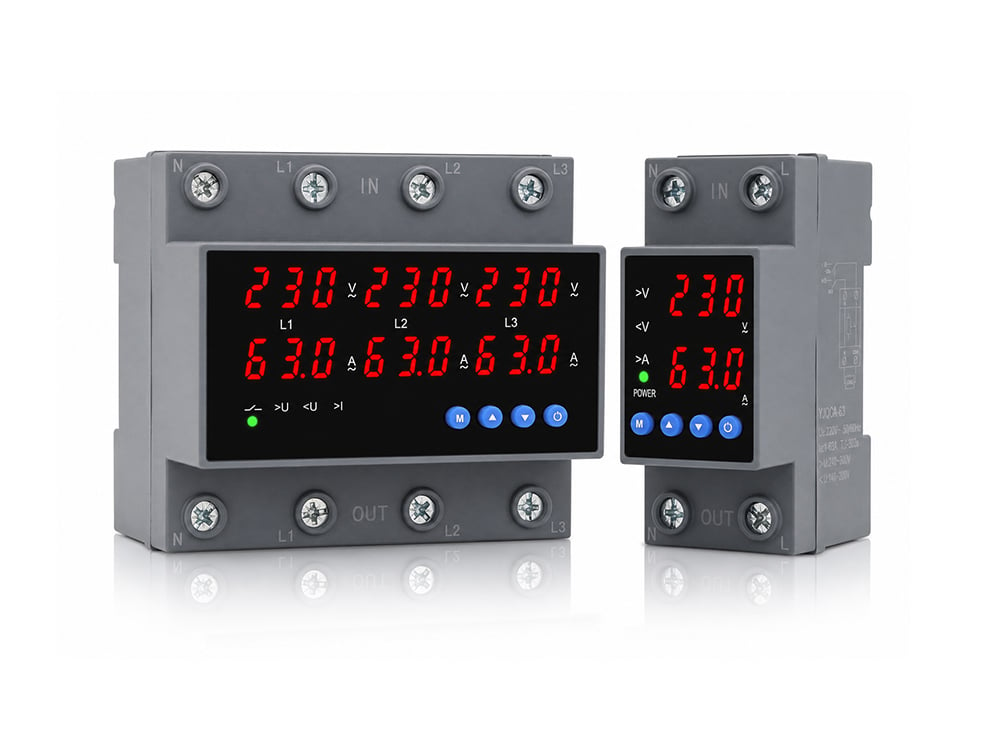
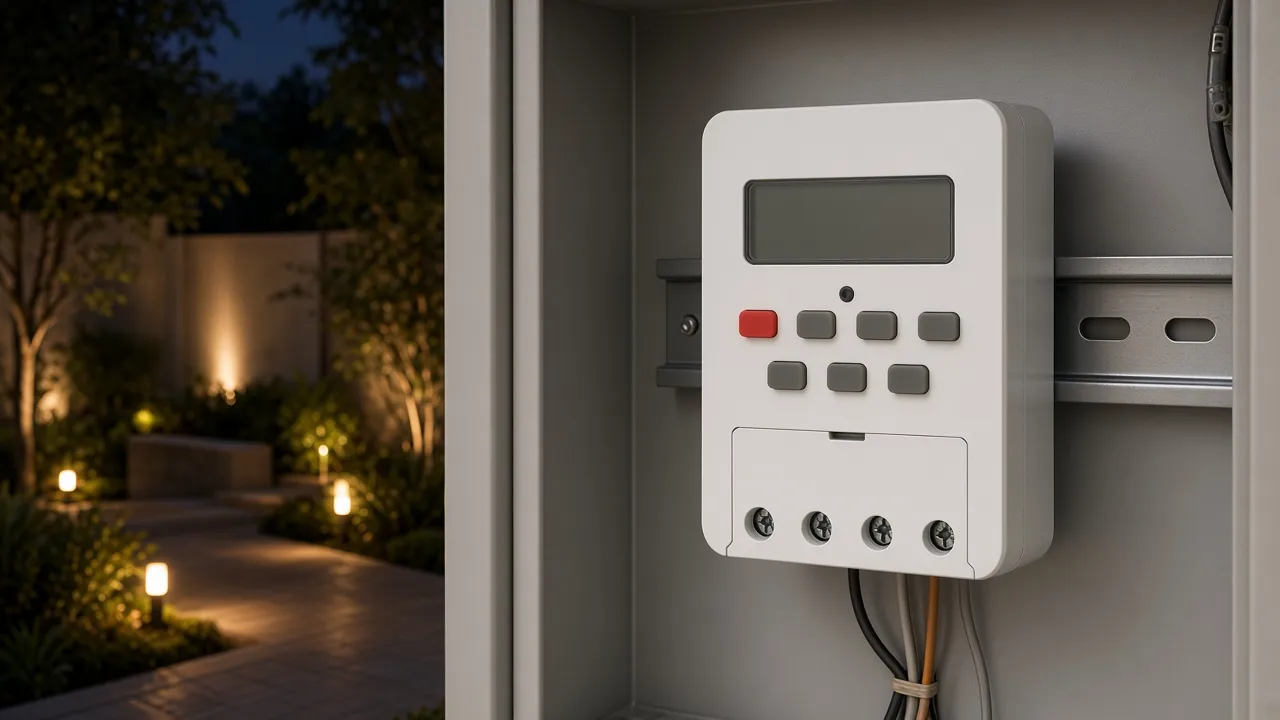
An outdoor timer switch for lights times lamps that sit outside. The timer body may still sit in a dry cabinet. The KG316T page is that rail body with a printed enclosure rating.
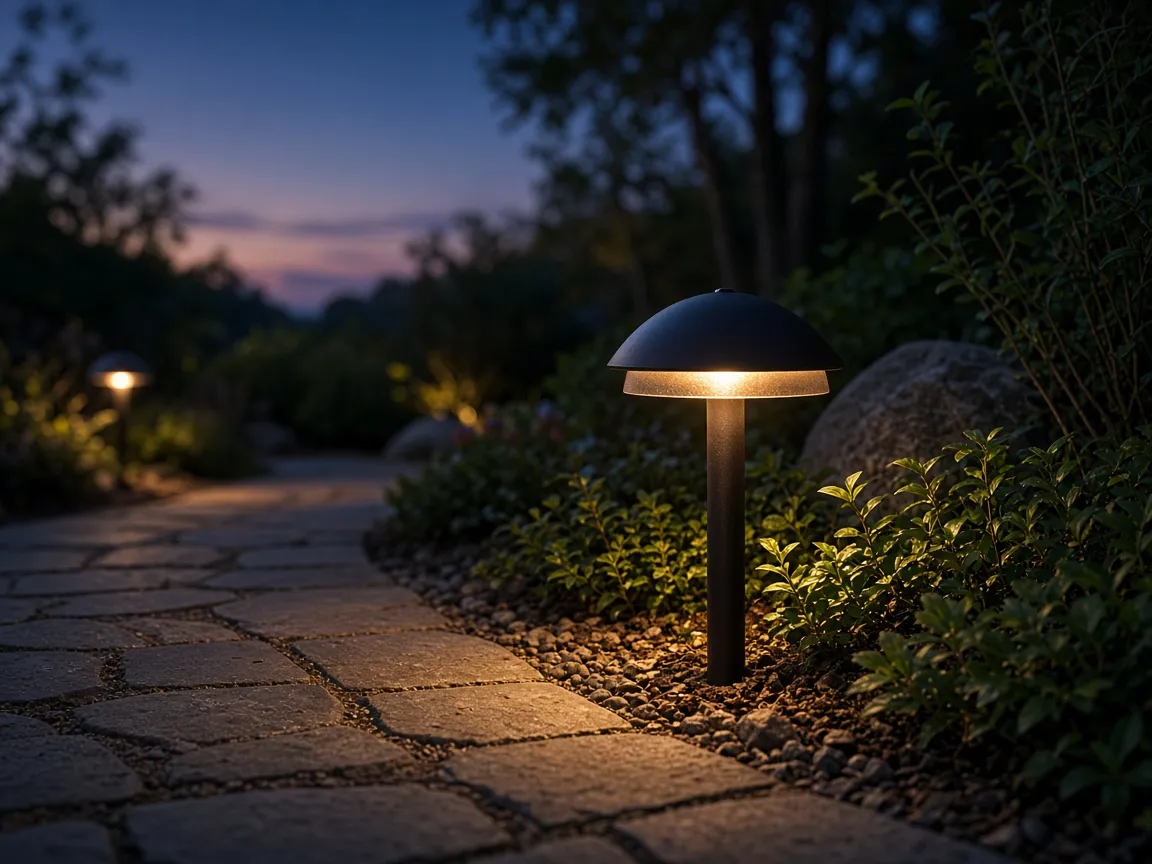
Outdoor names the lights, not the box
The useful picture is the path or the sign you want to control. The schedule belongs to those lamps. The enclosure belongs to the timer you buy.
A time switch (also called a timer switch, or simply timer) is a device that operates an electric switch controlled by a timer. That sentence describes the job. It does not force the box onto a wet wall.
If the lamps are outdoors and the timer is indoors, say both places on the order. Mixing them into one word is how a wet-rated wall timer gets expected when a rail module arrives.
The page prints an enclosure rating
Read the enclosure line before you treat the marketing sentence about street lamps as a wet-box promise. The marketing line names uses. The enclosure line names the body.
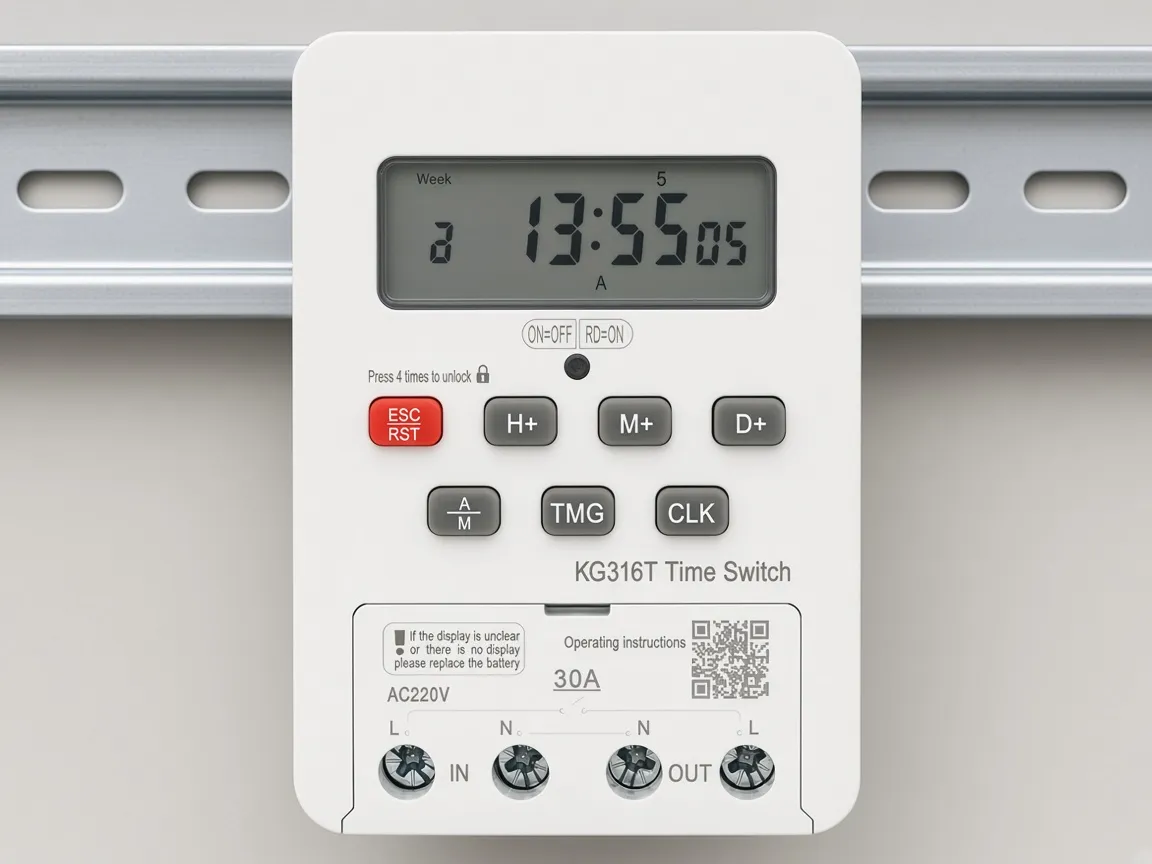
The KG316T page prints a protection rating of IP50. IEC 60529 classifies and provides a guideline to the degree of protection provided by mechanical casings and electrical enclosures against intrusion, dust, accidental contact, and water. The page does not turn IP50 into a wet outdoor wall rating in the prose you can check.
| Place | What you are matching |
|---|---|
| The lamps | Outdoor light loads |
| The timer body | The enclosure line on the sheet |
| A wet wall box | A different product search |
The control supply is still AC
The timer still needs a control supply that matches the page. Outdoor lamps do not change that line by themselves.
The KG316T page prints a rated control supply of AC 50/60 Hz at 220 V and 380 V. Match the cabinet supply to that pair. A different supply without a matching sheet is a different order.
The program stores the hours
The outdoor schedule is stored as on and off events. The page prints how dense that schedule can be.
The page allows up to 16 on and off actions a day, a maximum setting of 168 hours, and a minimum setting of 1 minute. Switching times can repeat on a daily or weekly cycle.
The page also prints a lamp load of 0.9 kW.
If the lamp load is larger than that line, stop and change the page or the load. The schedule density does not raise the lamp rating.
| Printed line | How to use it |
|---|---|
| IP50 | Match the enclosure, not a wet wall slogan |
| Control supply | Match 220 V or 380 V as printed |
| Actions per day | Stay inside 16 on/off |
| Lamp load | Stay inside 0.9 kW |
The rail is only the mount
A DIN rail is a metal rail of a standard type widely used for mounting circuit breakers and industrial control equipment inside equipment racks. The rail holds the timer. It does not keep rain off the path lights.
A relay is an electrically operated switch. The KG316T uses a relay output for the timed circuit. The rail still does not become an outdoor box because the lamps are outside.
A photocell is another job
A photocell turns lights from daylight. A stored program turns lights from the clock. Both can serve outdoor lamps and still refuse to substitute for each other.
From the field: On the time-switch talk page, hallway lights followed Summer Time rather than Solar Time.
Source: Talk:Time switch (Wikipedia talk page).
That mistake belongs to a clock with a calendar basis. It is not an enclosure leak.
If you need dusk without a clock, you need a different product family. If you need a weekly program, stay with the stored events on this page.
Do not import the summer-time drift as a waterproofing fault.
A wet wall box is another product
A timer built into a wet outdoor wall box is a different object from a rail module in a dry cabinet. The lights can still be the same lights.
Write the order as two places. Place one: the lamps outdoors. Place two: the timer body and its enclosure line.
If place two needs rain and snow on the box itself, this IP50 rail page is the wrong sheet.
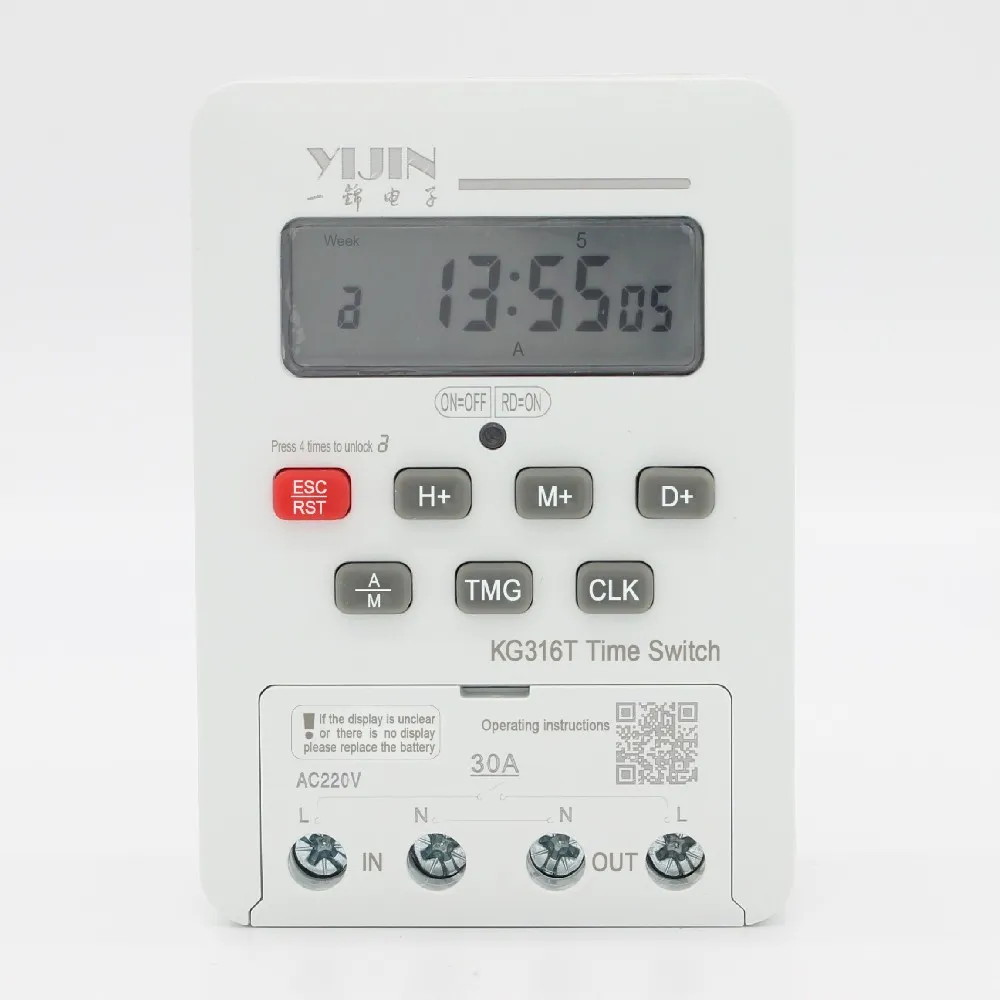
The KG316T time control switch is the rail page for the dry-cabinet case. The timer hub collects the other timer articles if you needed a lat-long astronomical body or a countdown release.
Before you order, say whether anyone will open a wet box on the wall. If the answer is yes, stop. If the answer is a dry rail in a cabinet, read IP50 and the lamp load again.
Say who sets the program. A weekly outdoor schedule that drifts with summer time is a clock problem. A box that fills with water is an enclosure problem.
Keep those calls on separate lines.
If the advertising sign or street lamp language on the page is what brought you here, keep reading the enclosure line. Marketing use cases do not erase IP50. They also do not invent a photocell the page never printed.
Read the note aloud. You want outdoor lights, then enclosure rating, then the lamp load rating. A note that only says “outdoor timer” will mix the lamp place with the box place.
Keep a spare for the person who wires the cabinet. Name the control supply, the number of daily actions, and whether the load is inside the lamp rating.
The path lights stay outside. The module stays where the enclosure allows.
A second person should find the rail without walking the wet path at night. Name the room and the board. If the only instruction is “outdoor timer,” that person will look for a wet box and miss the cabinet.
Street lamps and advertising signs appear in the marketing language on the page. They still do not rewrite IP50. They also do not add a photocell.
Read the enclosure line and the lamp load again before the carton leaves the shelf.
If the cabinet is outdoors and rain can reach the rail, stop. IP50 on this page is not a substitute for a sealed outdoor enclosure the sheet never printed.
Move the timer indoors or change the product family. A garden path that needs dusk-only control is still a photocell conversation. A garden path that needs Tuesday late and Friday early is a program conversation.
This page is the program conversation with an indoor rail body. Keep the lamp place and the timer place on two lines until the order is clear.
A buyer who only says “outdoor timer” will expect a wet box. Answer with the lamp place first. Then answer with the enclosure line.
Only after both are clear should anyone open the KG316T carton for that outdoor-light job.
If the board sits in a plant room with a closed door, IP50 can still be the right enclosure conversation for dust. Rain on the path lights does not move into that room by itself. Write the room on the note so the next person does not walk the wet path looking for a wall box.
When the lamp load sits near the printed lamp line, stay honest about headroom. The page prints that lamp line. It does not print a larger outdoor flood load.
Change the sheet or the load before you invent capacity.
A weekly program with sixteen actions is dense enough for many path schedules. It is still not dusk sensing.
Keep the photocell family on its own shelf note when dusk is the only trigger anyone wants. A clock program and a light sensor answer different outdoor-light jobs even when the lamps look the same from the path.
Frequently asked questions
These answers stay with the pages opened for this draft.
What does a time switch do?
A time switch (also called a timer switch, or simply timer) is a device that operates an electric switch controlled by a timer. The schedule is the point.
What enclosure rating does the KG316T page print?
The KG316T page prints a protection rating of IP50. Read that line as an enclosure fact, not as a wet wall slogan.
Which control voltages does that page print?
The KG316T page prints a rated control supply of AC 50/60 Hz at 220 V and 380 V.
How many on/off actions can be set per day?
The page allows up to 16 on and off actions a day, a maximum setting of 168 hours, and a minimum setting of 1 minute.
What lamp load does the page print?
The page also prints a lamp load of 0.9 kW. Stay inside that line for lamp duty.
Why is a summer-time clock mistake a different problem?
It is a calendar-basis error on a clock schedule. It is not proof that the enclosure line failed.