 Yueqing Yijin Electronics Co., Ltd.

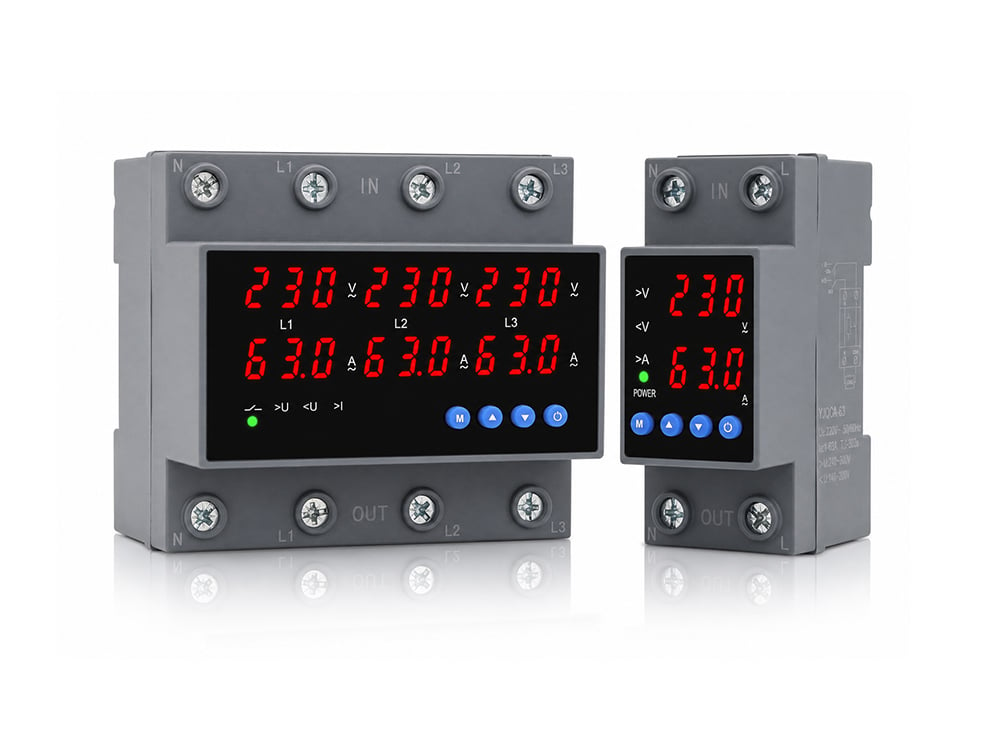



Automatic means the program is running
An automatic timer switch for lights is a timer left so the stored times run the lamp. Nobody has to stand at the switch for the next change. The program has to be the thing actually in charge.
Automatic means the program is in charge
A timer may switch equipment on, off, or both, at a preset time or times, after a preset interval, or cyclically. Those are three ways a device can act while you are elsewhere. A stored light program is the preset-time case: evening on, late off, repeated on the days you chose.
The interval case ends a run and then stops. The cycle case keeps a rhythm. Calling all three automatic is fair at the encyclopedia level.
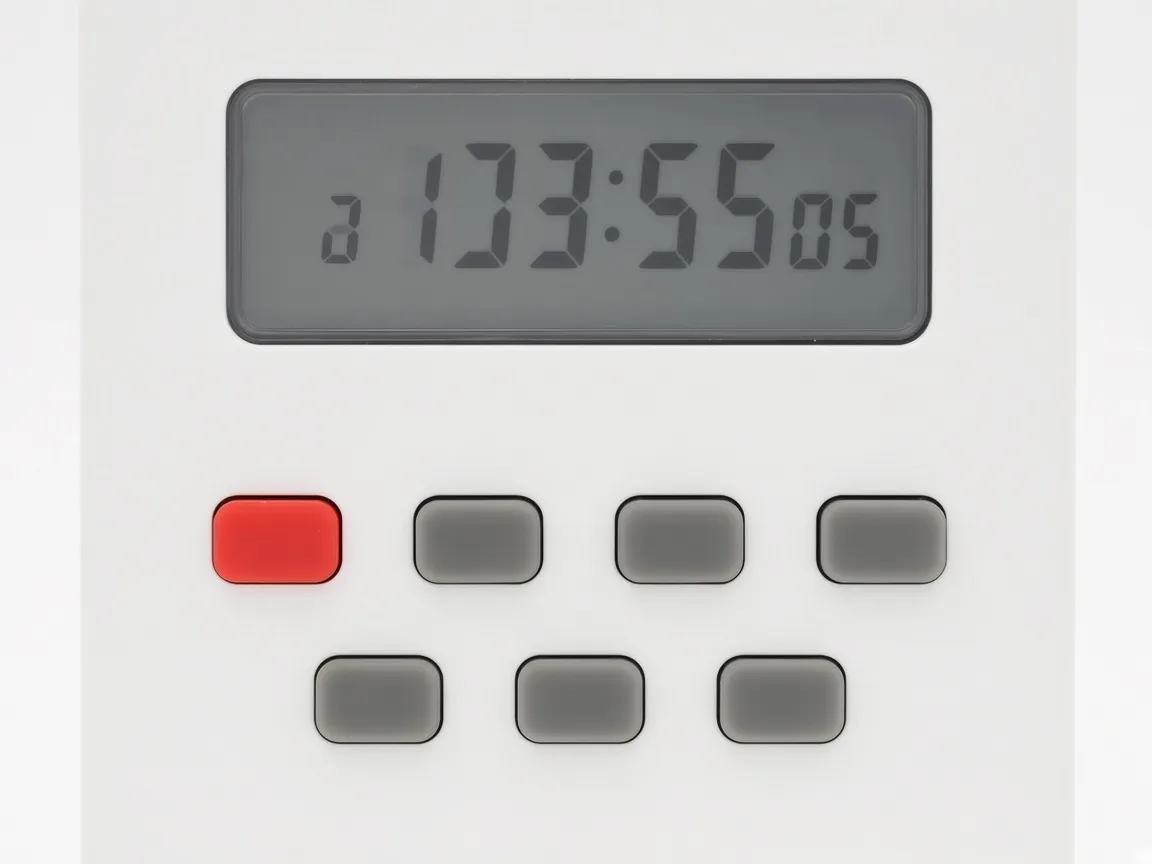
The KG316T page is the stored-time case, with a control you can also take back by hand.
If the lights only change when you press something, you do not have the automatic case yet. You have a switch with a clock nearby. The clock has to be the authority for the next change.
The button has an automatic position
The KG316T steps say to press the Auto/Manual button and set the control to the automatic position. The auto manual key is that button. The steps also pass through the off position on the way.
Off is a stop. Automatic is the program. Leaving the control on the stop means the schedule is not the thing running the output.
Read the display after you move the control. A program that exists in memory still waits if the position is elsewhere. The page is a rail control timer for street lamps, sign lights, and similar cabinet loads.
It is not a faceplate you swap in a finished living-room box.
A stored time is not a presence sensor
A photoelectric sensor is a device used to determine the distance, absence, or presence of an object by using a light transmitter, often infrared, and a photoelectric receiver. Those sensors are largely used in industrial manufacturing. They answer whether something is in the beam.
They do not store Tuesday at dusk.
A lamp that should follow the clock needs the program. A machine that should stop when a box arrives needs the sensor. Mixing the names is how an automatic light timer gets ordered as an object detector, or the other way around.
The KG316T page does not print a photocell.
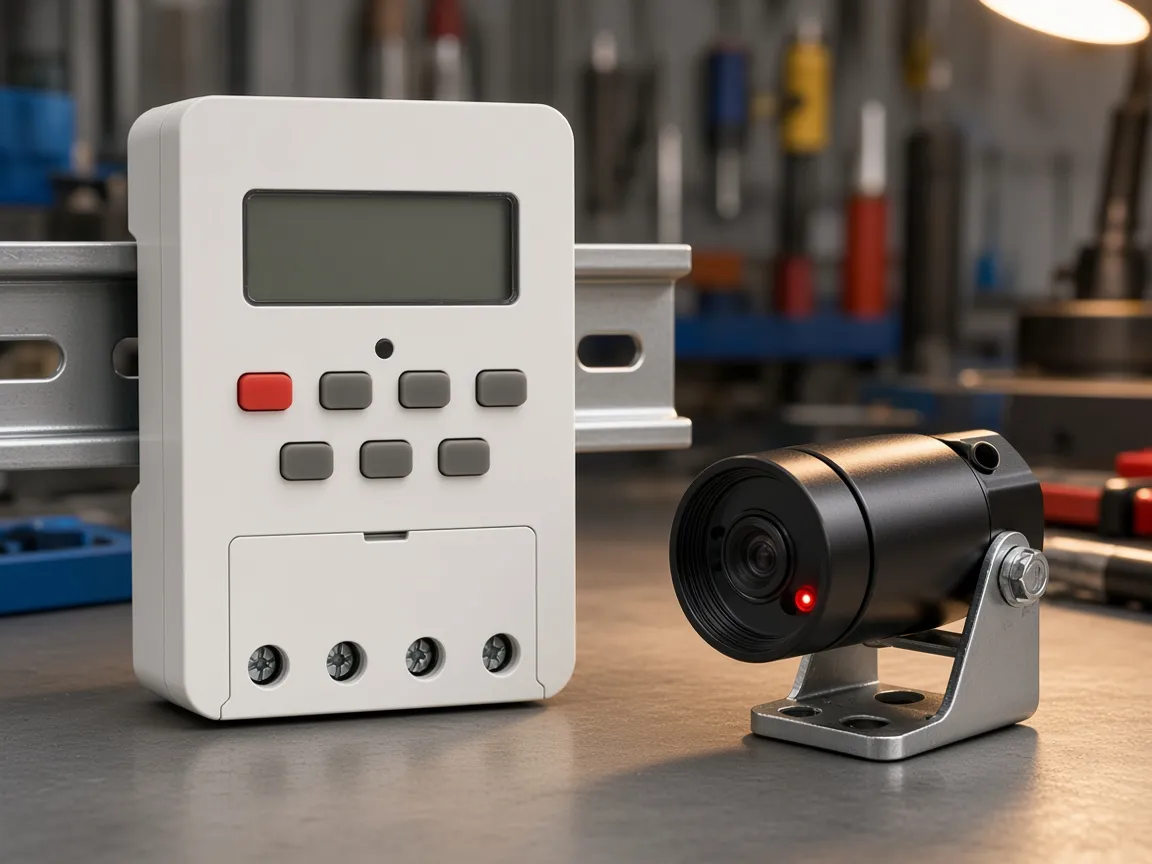
Manual hold leaves the program waiting
Manual is the other side of the same button. A person forces the output and the stored times sit unused. That is useful when you want the lamp now and the program later.
It is a trap when you forget to return the control to automatic and then decide the clock failed.
| What is in charge | What the lights do | What you check first |
|---|---|---|
| Stored program | Changes at the preset times | The automatic position |
| Manual hold | Stays where a person left it | The same button |
| Object sensor | Changes when a beam changes | A different device |
Put the control back on the program before you edit the hours. Editing a program that is not selected feels like a dead timer. The events can be perfect and still never reach the lamp.
The supply line still has to match
Automatic still has to live on the circuit the page names.
The KG316T page prints a control power supply of AC 50/60 Hz at 220 V and 380 V. The page allows up to 16 on and off actions a day, a maximum setting of 168 hours, and a minimum setting of 1 minute. Automatic does not relax those lines.
A program that fits the week still needs a control circuit that matches the supply.
| Printed row | Why it still matters in automatic |
|---|---|
| Control supply | The timer has to be powered as printed |
| Action count | The week has a finite list of changes |
| Time span | Each setting has a printed maximum and minimum |
A lamp on a household receptacle is a different object from this cabinet timer. If that is the only power you have, stay with a device made for that receptacle. Running the KG316T in automatic does not create prongs.
Before you call the timer automatic, walk the cabinet in this order. Look at the control position first. Then look at the weekday and the hour on the display.
Then look at the load and ask whether this body is even the switch for that lamp.
Leave the three checks on the work order in the same order. Position, then clock, then load.
People who start at the lamp spend the afternoon on a bulb that was never the authority for the schedule. The schedule speaks only when the position allows it, and the position is a control on the timer, not a property of the lamp.
Write the result where the next shift can see it. Say whether the control was left on the program.
Say whether the hour matched the intended evening. A lamp that is dark for a boring reason should not become a mystery on the following day.
Add the load name to that note if more than one lamp shares the cabinet. The next person should see which circuit the program was trusted to run. A correct program on the wrong circuit is still a dark lamp, and it still looks like a timer fault until the note says otherwise.
A program can be elegant and still never reach the lamp because the position is manual. A position can be automatic and still miss the evening because the hour is wrong. A correct hour can still be the wrong device if the lamp is on a receptacle and this body is on a rail.
Write the three checks on the work order so the next person does not start at the lamp. The lamp is the last thing that changes. The authority for that change is the program, and the program only speaks when the position allows it.
A clock basis can shift the lights
An automatic schedule inherits whatever clock basis you stored.
From the field: On the time-switch talk page, hallway lights went off at sunrise and came on well before sunset because the timer was set to summer time rather than solar time. The mechanism was running. The basis was wrong.
An automatic schedule inherits the clock you stored. Summer time and solar time are different bases. The lamp will follow the wrong base faithfully.
Fix the clock, then look at the lamp.
On the relay talk page, a flasher changes speed when a lamp fails, because current heats the flasher. That blink is not this program. If your lights change rhythm when a bulb dies, you are looking at a heated cycle, not at the KG316T automatic position.
The rail only holds the body
A DIN rail is a metal rail of a standard type widely used for mounting circuit breakers and industrial control equipment inside equipment racks. The rail supports the body. A relay is an electrically operated switch.
The timer can command that relay, and the relay can carry the load the program is asking for.
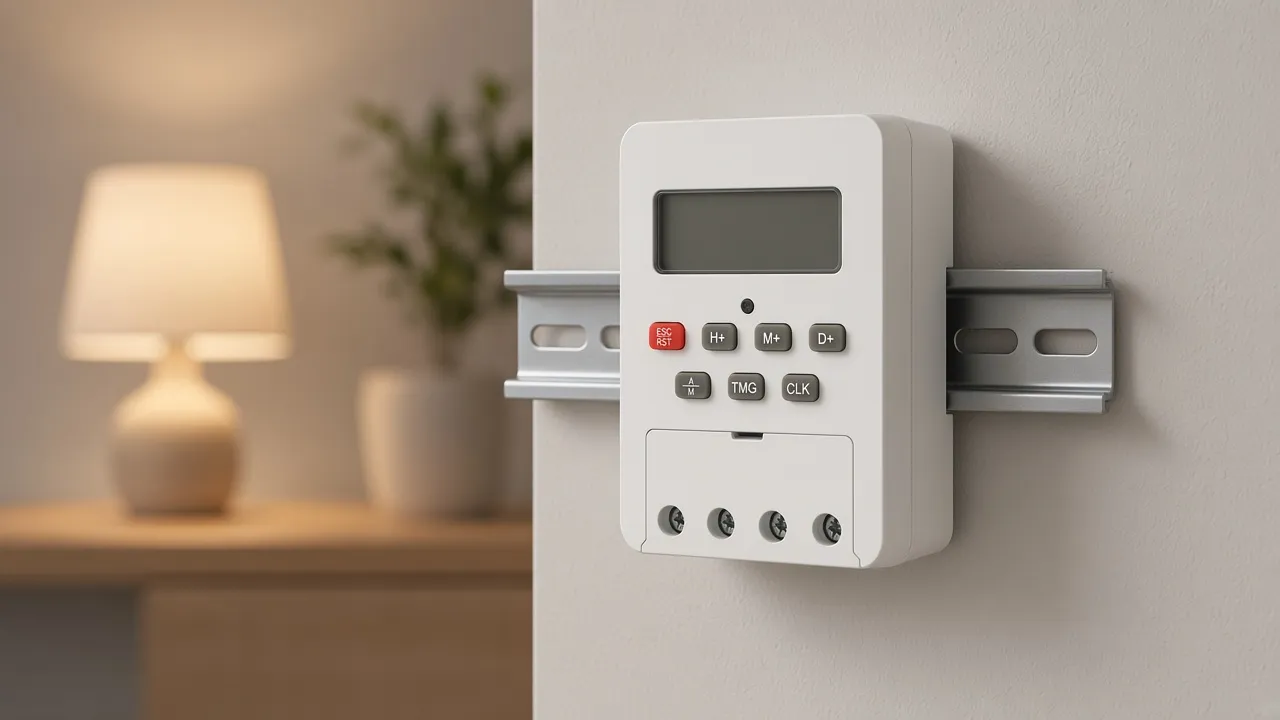
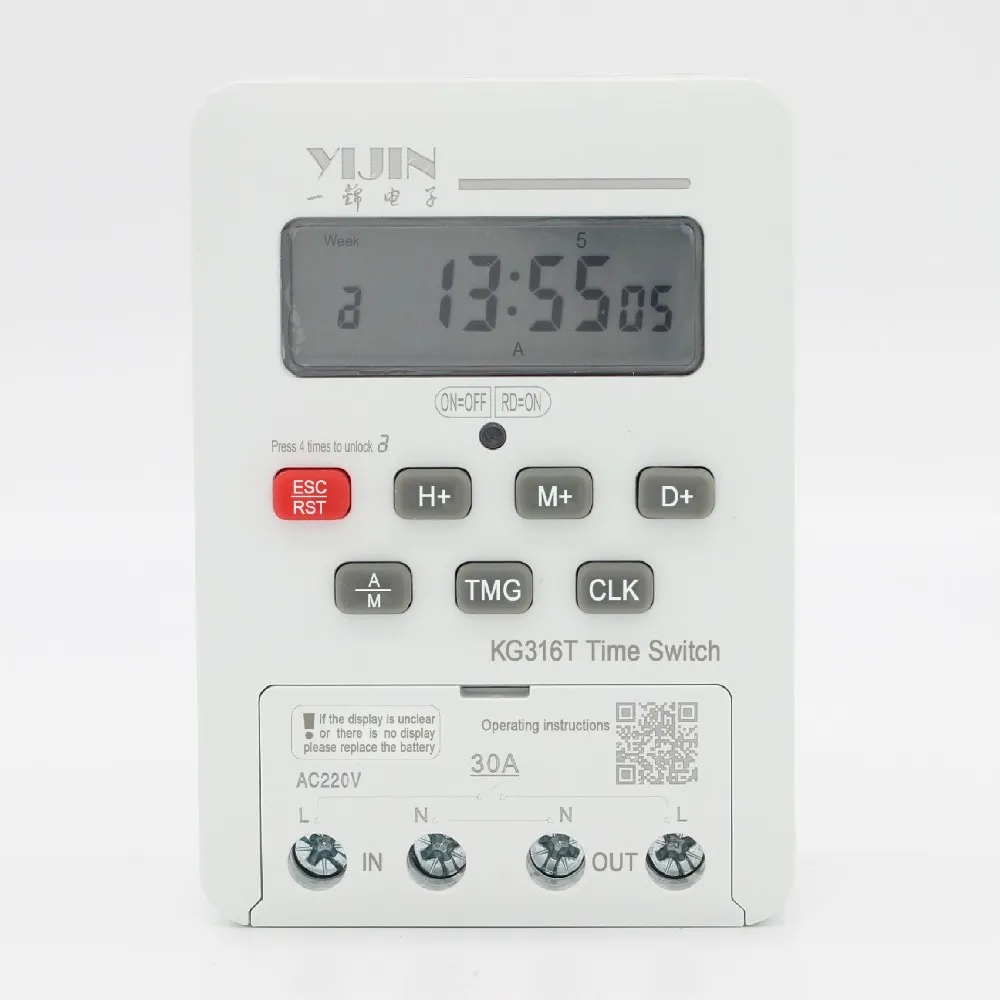
The KG316T time control switch is the rail body with the automatic position. The timer hub collects the other clock articles if the question is a numeral display, a receptacle plug, or a voltage label.
Frequently asked questions
These answers stay with the pages opened for this draft.
What does automatic mean for a light timer?
A timer may switch equipment on, off, or both, at a preset time or times, after a preset interval, or cyclically. For this rail timer, automatic means the stored times are the authority.
Where does the KG316T page name the automatic position?
The KG316T steps say to press the Auto/Manual button and set the control to the automatic position. That position is what leaves the program in charge.
Is a photoelectric sensor that same timer?
A photoelectric sensor is a device used to determine the distance, absence, or presence of an object by using a light transmitter, often infrared, and a photoelectric receiver. It detects an object. It does not store a light program.
What does a manual hold do to the program?
The program stays stored and waits. The output follows the person until the control returns to the automatic position. A perfect program can look dead in that state.
Which control supply does the page print?
The KG316T page prints a control power supply of AC 50/60 Hz at 220 V and 380 V. Match the control circuit to that line.
Why did the hallway lights follow summer time?
The talk note says the timer was set to summer time rather than solar time. The schedule ran. The basis was the mistake.