 Yueqing Yijin Electronics Co., Ltd.

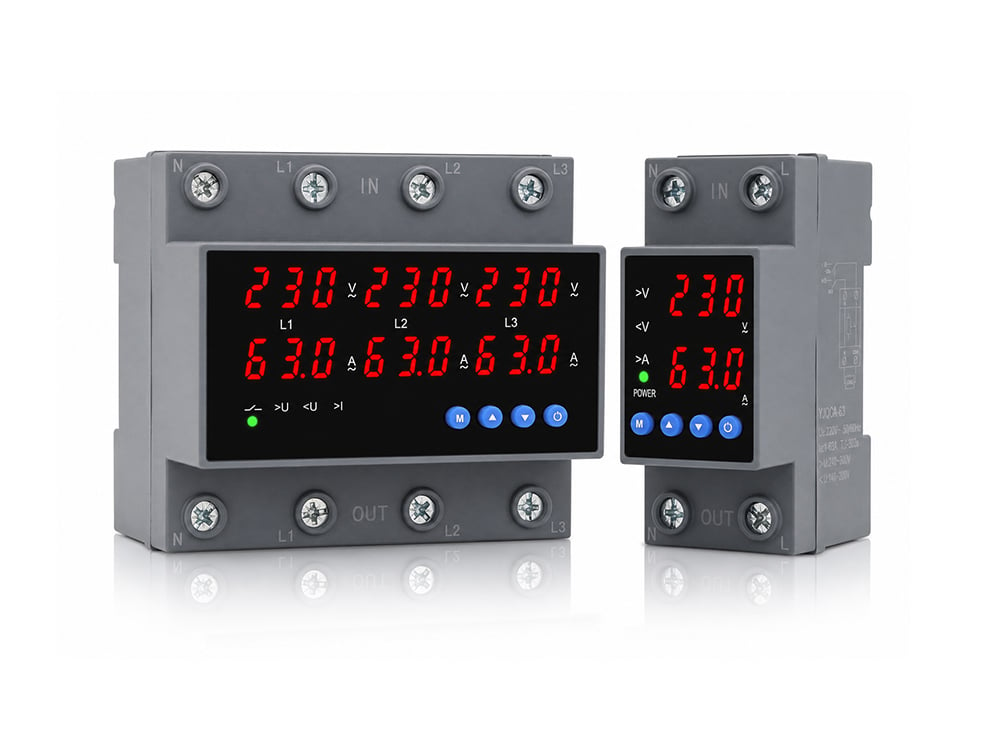



The cord lives in the receptacle
A plug in light timer switch is the form that takes the receptacle for itself and gives the lamp cord a place to land. The clock lives in that small body. The lamp follows the stored times only while that body stays seated.
The plug occupies the receptacle
The outlet timer is the object in your hand when the lamp cord is too short to reach a cabinet. You press the timer into the wall opening, then you press the lamp plug into the timer. The wall opening is doing the holding.
Nothing in that arrangement needs a rail, a cabinet door, or a control wire run across the room.
One form is plugged into a wall outlet with equipment plugged into the timer instead of directly into the power point. That sentence is the whole mechanical picture. The timer borrows the receptacle.
The lamp borrows the timer. Pull either plug and the schedule stops, because the path is only as long as the cord.
People reach for this form when a porch lamp, a shop light, or a holiday string should go dark on a clock and the wall box is already finished. The work is a plug, not a device replacement inside the wall. If the receptacle is switched from another location, the timer still dies when that other switch is open.
The cord cannot invent power the receptacle does not have.
A buyer who already owns a rail timer sometimes tries to treat the rail body as this outlet timer. The shapes do not meet. One body is molded to fill a receptacle face.
The other body is molded to clip into a cabinet. Carrying the cabinet device to the living room does not create a prong.
A time switch stores the clock events
A time switch is a device that operates an electric switch controlled by a timer. The stored events are the product. The housing is only how those events reach a circuit.
A clockwork wheel, a digital weekday list, or a small microcomputer can all be the timer. The reader still has to see which housing the search box assumed.
From the field: On the time-switch talk page, a hallway clock set to summer time rather than solar time turned the lights off at sunrise and on well before sunset. The mechanism was fine. The clock basis was wrong.
That hallway note is useful here because a plug-in lamp timer fails the same way. The prongs can be tight and the lamp can be good while the schedule is still shifted. Read the weekday and the hour before you blame the lamp.
A vacation setting that looked right in June can be an hour off after the clock basis changes.
The same class includes timers built into equipment and timers wired into a heating circuit. Those are real time switches. They are not the receptacle form.
Naming the class without naming the housing is how a rail control timer gets ordered for a table lamp.
The rail page is a control supply
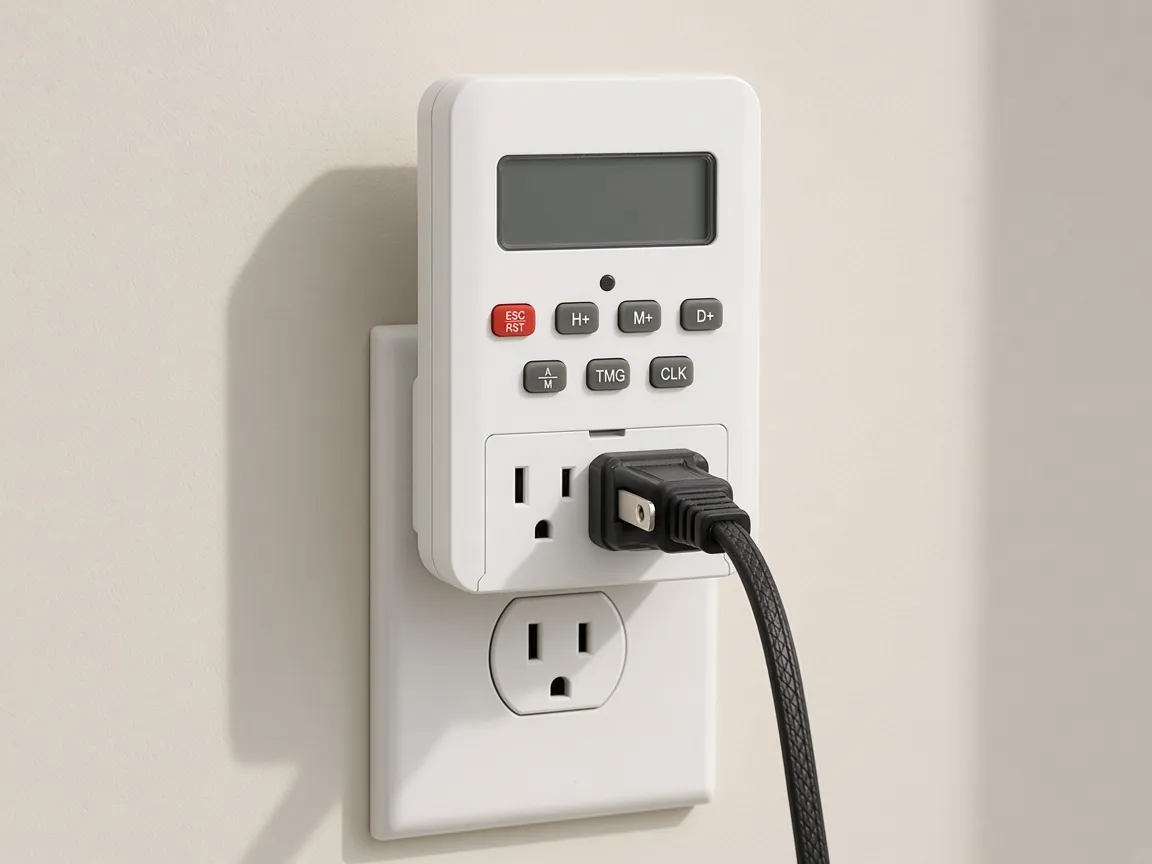
The rail control timer on the Yijin timer page is the KG316T. It is sold for control circuits, street lamps, sign lights, and similar loads that a cabinet can feed. The page describes a microcomputer time control switch with a replaceable clock battery.
It does not describe prongs, a receptacle face, or a lamp cord.
The KG316T page prints a control power supply of AC 50/60 Hz at 220 V and 380 V. That line is the supply the timer itself expects. It is the number to match to the control circuit, not a promise that the body will fit a North American receptacle.
A table lamp on a household outlet is a different assignment from a control circuit in a cabinet.
The product is still the right next read when the real job is a scheduled control circuit and someone only typed the plug-in phrase because that is the timer they know from home. Read the supply line, then decide. If the circuit in the cabinet matches the printed control supply, the rail body belongs in the cabinet.
If the only power available is a finished receptacle, stay with the corded form.
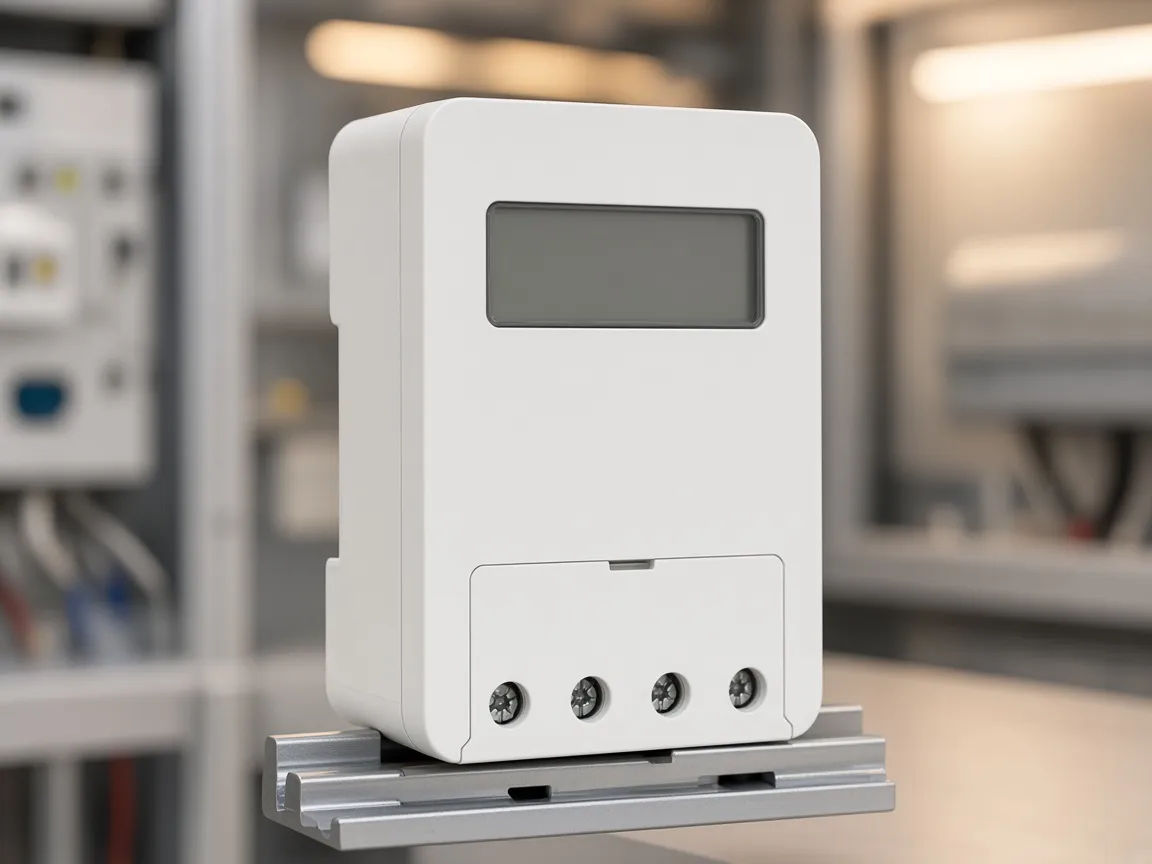
North American labels are a different list
Household practice and the rail page do not share one voltage sentence. In North America, the most common combination is 120 V and a frequency of 60 Hz, and the same page also names 240 V or 208 V at 60 Hz. Those labels come from the mains electricity page.
They describe supply practice. They do not reprint the KG316T control line, and the KG316T line does not rewrite them.
| Form | Where it lives | What you match |
|---|---|---|
| Receptacle plug-in | Wall opening and lamp cord | The outlet the lamp already uses |
| KG316T rail timer | Cabinet control circuit | The printed control supply |
| Built-in equipment timer | Inside the appliance | The appliance instructions |
A traveler who carries a lamp timer between regions already knows outlets and voltages are a pair. The mains page says portable appliances may be inoperative or damaged by a foreign supply. That warning sits on the supply, not on the brand of the timer.
Match the plug shape and the supply together.
The rail is mechanical support
A DIN rail is a metal rail of a standard type widely used for mounting circuit breakers and industrial control equipment inside equipment racks. The rail holds the body. It is not a power conductor.
Clipping the KG316T to that rail puts it with the other control devices, which is the opposite of filling a receptacle in a hallway.
The rail is mechanical support only. A loose clip is a mounting problem, not a schedule problem. Power still has to arrive on the terminals the product expects.
If the cabinet has no rail, the KG316T has nowhere to sit, and a plug-in timer still will not become a substitute inside that cabinet.
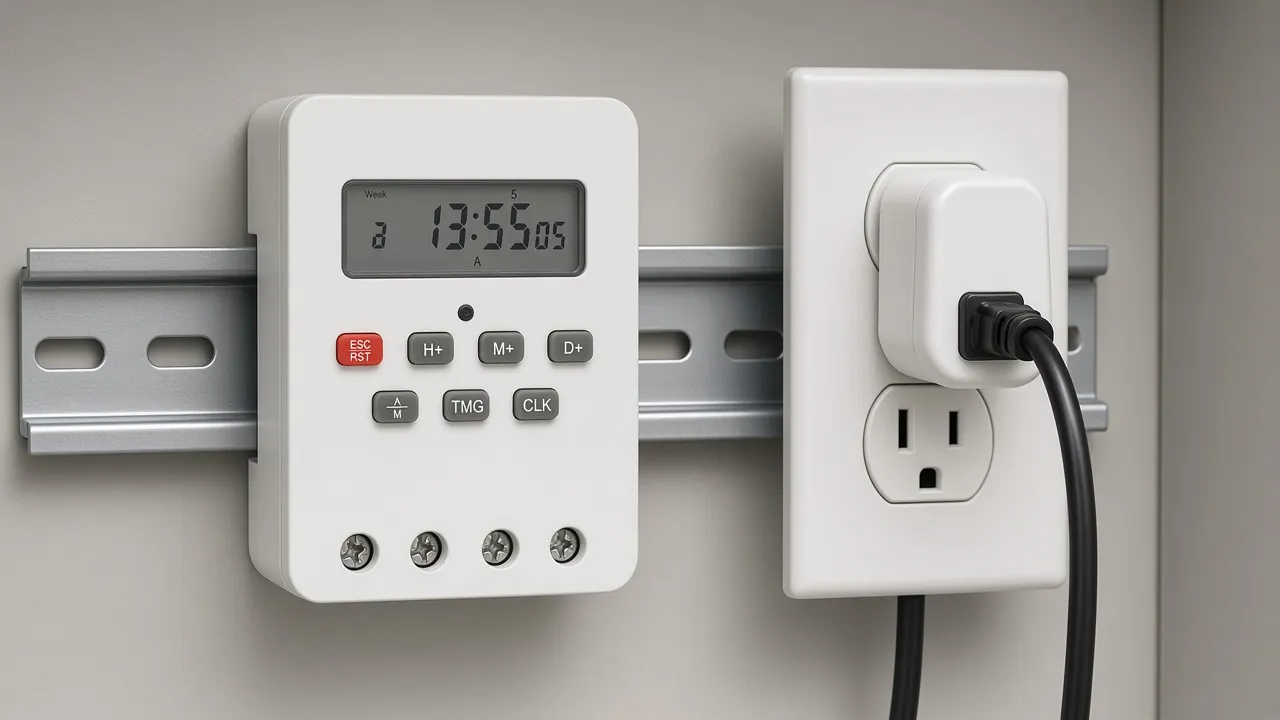
Printed limits sit beside the supply
The KG316T page prints limits next to the supply, and those limits belong to the rail timer. The enclosure rating printed there is IP50. The clock backup on that page is a number 7 cell, also sold as an AAA battery.
Unused timing rows display a dash. The keys include a timer key, weekday and hour keys, a clock key, and an auto or manual key.
The page allows up to 16 timed actions, a maximum setting of 168 hours, and a minimum setting of 1 minute. Load power on that page is resistive 6 kW, inductive 1.8 kW, motor 1.2 kW, and lamp 0.9 kW. Those rows are the rail timer’s printed load list.
They are not a rating plate for a pocket plug-in you buy at a hardware aisle.
| Printed row | What the KG316T page is talking about |
|---|---|
| Control supply | The circuit that feeds the timer |
| Action count and time span | How the stored schedule is sized |
| Load rows | The kinds of load the page lists |
| Enclosure and battery | How the body and the clock are described |
Use the table as a reading order. Start with the supply. Then read how many events the week can hold.
Then read the load row that matches the real machine. A lamp row and a motor row are both printed, and they are not interchangeable hopes. If the load is larger than the matching row, the timer is the wrong device even when the clock program is perfect.
The auto or manual key matters on this rail body because a person can leave the schedule and force the output. A plug-in lamp timer often has a similar override, with a different button. Either way, an override left in the forced position will hide a correct program.
Put the body back on the clock before you decide the program failed.
A relay can carry the lamp current
A relay is an electrically operated switch. The timer can tell the relay when to change, and the relay contacts can carry a load the timer output should not carry alone. That split is ordinary in a cabinet.
It is rare in a pocket plug-in, because the pocket unit already has the lamp plug in its face.
On the relay talk page, a car flasher changes its rhythm when a lamp fails, because the lamp current heats the flasher. That is a current-heated cycle, not a clock. A plug in light timer switch should not behave that way.
If the lamp goes dark and the clock still advances, look at the lamp and the override before you look for a heating trick.
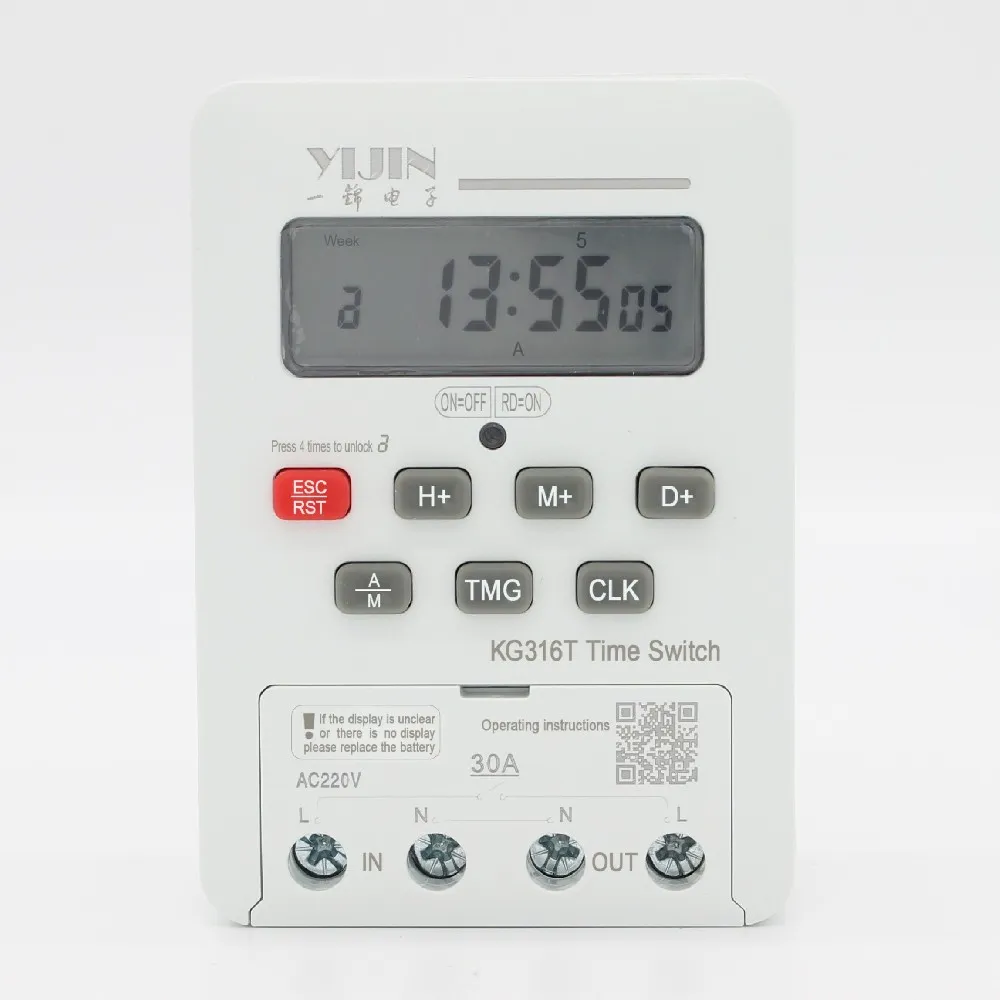
The KG316T time control switch is the rail body to open when the cabinet job is real. The timer hub collects the other clock articles if the question is a wall box, a whole-house fan, or a voltage label instead of a receptacle plug.
Frequently asked questions
These answers stay with the pages opened for this draft.
Can a plug in light timer switch live in a wall receptacle?
Yes. The opened time-switch page describes a timer seated in the outlet, with the equipment plugged into the timer. That is the receptacle form.
Is the KG316T page that receptacle form?
No. The page describes a rail control timer for control circuits. It prints a control supply and load rows.
It does not print a receptacle plug.
Which control supply does the KG316T page print?
The KG316T page prints a control power supply of AC 50/60 Hz at 220 V and 380 V. Match that line to the control circuit, not to a lamp cord.
Which North American mains labels does the opened page name?
In North America, the most common combination is 120 V and a frequency of 60 Hz, and the same page also names 240 V or 208 V at 60 Hz. Those labels are the mains list.
How is the rail timer held in the cabinet?
A DIN rail is a metal rail of a standard type widely used for mounting circuit breakers and industrial control equipment inside equipment racks. The rail supports the body. It does not feed it.
What changes the hallway lights when the clock is on summer time?
The talk note says the lights followed summer time rather than solar time. The clock basis shifted the day. The lamp was not the cause.