 Yueqing Yijin Electronics Co., Ltd.


AFCI Breaker Installation Cost: What Moves the Quote
AFCI breaker installation cost is hardware plus labor—and often a service-call minimum—not the shelf sticker alone. Quotes jump when panel fit, shared neutrals, dual-function devices, or troubleshooting enter the job. The sections below separate US branch-panel AFCI dollar bands from a DIN-rail AFD path, then show where a live Yijin rail product fits without inventing Yijin labor prices.
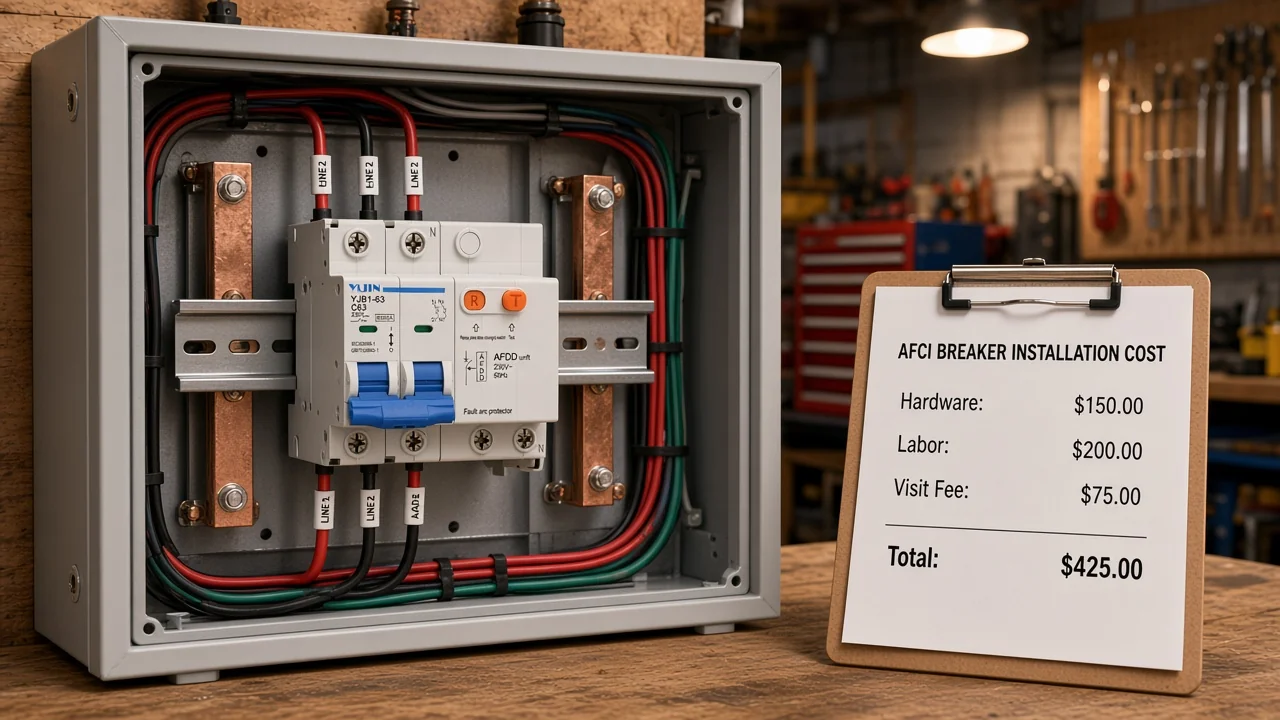
What AFCI Breaker Installation Cost Actually Covers
You pay for the AFCI device, labor time, and often a service-call minimum—not the shelf sticker alone.
Homeowners and buyers regularly compare a hardware-store AFCI tag to an invoice and feel sticker shock. The part is only one line.
Educational 2026 cost guides that break down breaker swaps treat labor and the truck-roll fee as the majority of a single-breaker visit. On a like-for-like AFCI swap where the panel already accepts the breaker, third-party planning bands commonly place single-pole AFCI hardware roughly in the $40–$60 range and an installed total roughly in the high-$100s to high-$200s once labor and a service call are included.
Broader AI Overview style summaries stretch hardware toward $35–$90 and labor/diagnostics toward $75–$150 per circuit, with whole-home upgrades climbing into four figures when many circuits are in scope. Those figures are planning bands from independent cost education—not a bid from Yueqing Yijin Electronics, and not a promise for every ZIP code.
Region, panel brand, dual-function devices, and wiring remediation all move the result. AFCI breaker replacement cost talk on SERP is the same quote anatomy: part, labor, and visit fee.
| Line item (US educational planning) | Typical band | What it usually covers |
|---|---|---|
| AFCI hardware (single-pole) | About $40–$60 (wider retail talk $35–$90) | The electronic breaker itself |
| Labor / diagnostics | About $75–$150 per circuit in many summaries | Open panel, land conductors, test, basic tracing |
| Service-call / truck-roll | About $100–$200 | Mobilization minimum charged once per visit |
| Installed single-pole AFCI (like-for-like) | About $180–$280 in 2026 educational tables | Part + labor + visit economics bundled |
| Dual-function / CAFCI premium | Higher hardware; installed often into the $300s | Arc-fault plus ground-fault in one device |
Bundling matters. Once the truck is on site and the cover is off, each extra breaker usually adds far less than a second full visit fee. If a quote shows one lonely AFCI with a full mobilization charge, ask whether other already-required circuits can share the same opening.
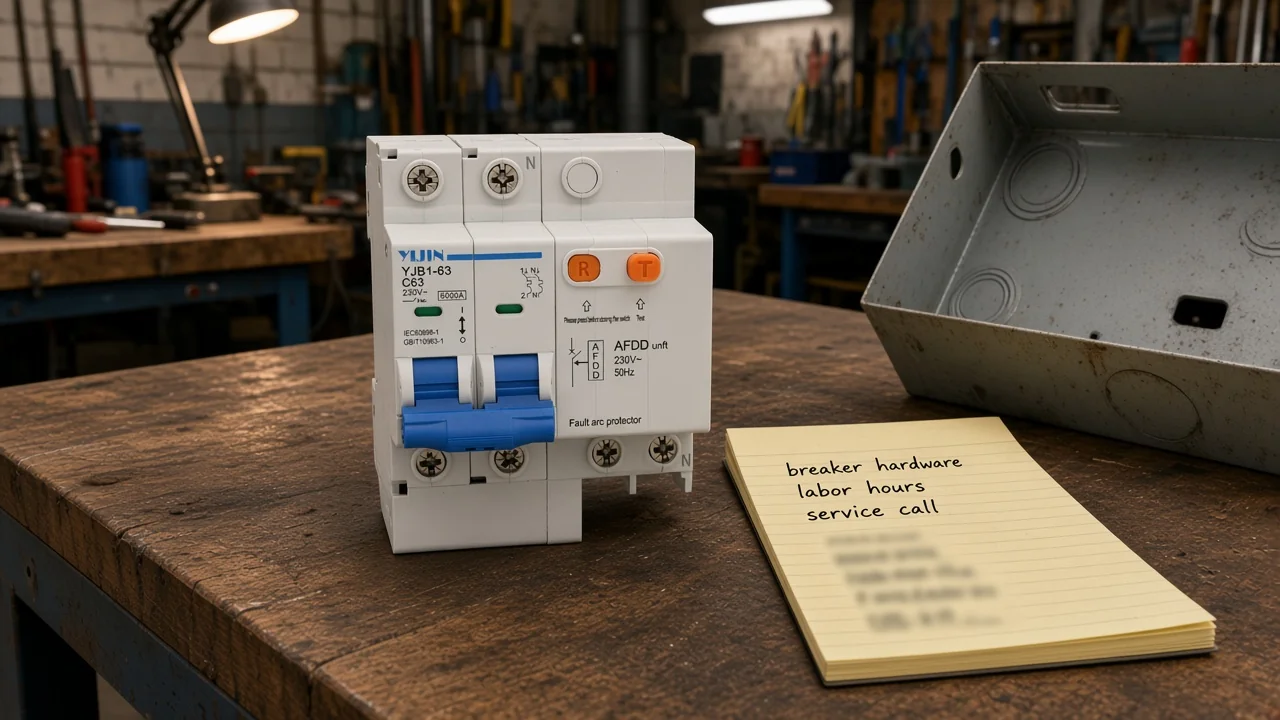
Cost Drivers That Push an Installer Quote Up or Down
Breaker type, panel compatibility, circuit count, and troubleshooting time move quotes more than tiny retail deltas.
Start with device class inside the US panel story. A standard thermal-magnetic breaker is cheap because it only watches overload and short circuit.
An AFCI adds electronics that look for arc signatures ordinary breakers miss. Dual function AFCI GFCI packages (often discussed as CAFCI) put arc-fault and ground-fault protection together, so the hardware line rises again.
Combination-type AFCI language in US education is about covering series and parallel arc behavior—not a free upgrade coupon.
Panel compatibility is the silent fork. Square D, Siemens, Eaton, and GE families are not interchangeable drop-ins.
If the panel cannot accept a listed AFCI for that bus—or if the enclosure is an obsolete type that should not be “saved” with one specialty breaker—the job can leave the swap band and enter a panel upgrade. Educational upgrade bands often sit around $1,500–$4,000 when the panel itself is the constraint.
That is a different project than seating one AFCI in a healthy modern load center.
Circuit count scales the materials line almost linearly, but labor does not scale the same way if the visit is bundled. Troubleshooting scales the other direction: loose connections, damaged insulation, or mystery trips discovered during commissioning can add diagnostic hours that were never in the “swap the breaker” assumption.
Tip: Ask the contractor to separate the visit/truck-roll fee from per-breaker labor. When the mobilization line is visible, bundling several AFCI circuits in one opening usually cuts the average cost per breaker more than hunting a slightly cheaper carton online. — source: https://usecalcpro.com/blog/circuit-breaker-replacement-cost-2026
US Branch-Panel AFCI Path vs DIN-Rail AFD Path
US educational dollar bands describe listed panel AFCIs; DIN-rail AFD is a different install class and different spend.
Search results for AFCI installation cost almost always assume a North American branch-panel or load-center retrofit: a listed combination-type AFCI (or dual-function unit) for the panel brand on the wall. Encyclopedia and technical education treat AFCI and AFDD as related names for arc-fault protection across markets, but that naming overlap is not an automatic listing swap. UL 1699 and NEC 210.12 education describe the US listed panel path; they do not automatically authorize a DIN-rail AFDD catalog as a branch-panel substitute.
Yijin’s AFCI-related products live under the Others category. Live pages describe DIN-rail / standard-rail AFDD-style breakers and a separate fault-arc detector—not a UL 1699 US dwelling-panel AFCI catalog. Comparing a Jacksonville or Midwest panel-AFCI install average to a DIN-rail AFD unit price is an apples-to-railings mistake.
| Decision cue | US branch-panel AFCI path | DIN-rail AFD path |
|---|---|---|
| What SERP “install cost” usually means | Listed AFCI in a load center | Modular rail device in a distribution board |
| Cost education sources | Hardware + electrician labor + visit fee | Project BOM + rail labor under that design’s standards |
| Typical mount | Panel breaker slot for a listed family | Standard DIN rail |
| Naming you will hear | Combination AFCI / dual-function AFCI/GFCI | AFDD / arc-fault rail breaker / fault-arc detector |
| Shared-neutral impact | Often forces 2-pole AFCI or rewiring | Follow the rail device’s wiring rules; do not assume US panel MWBC rules |
Yijin /others/ AFD pages |
Wrong class for a US listed panel swap | Live YJB1-63/AFD family describes rail install |
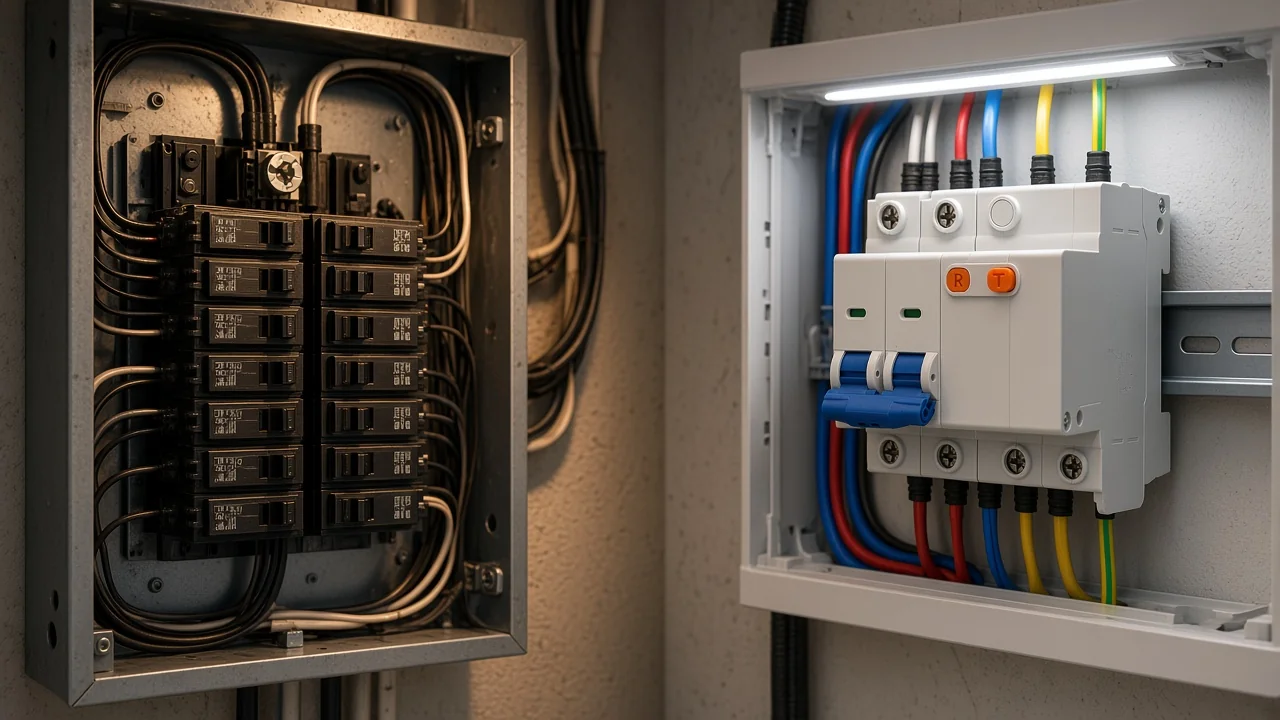
If your purchase order says “AFCI” because a US inspector flagged living-space circuits under an adopted NEC cycle, shop a listed breaker for that panel. If your board is designed around modular rail protection for AC distribution lines, price the rail architecture on its own terms—including whether you need breaker+AFDD behavior or detector/alarm monitoring.
When Shared Neutrals and Multiwire Circuits Inflate Labor
Shared-neutral circuits often need 2-pole AFCI hardware or rewiring, which lengthens the visit.
Multiwire branch circuits (two hots sharing one neutral) are common in older US homes. They are also one of the fastest ways a “simple AFCI swap” stops being simple.
Trade and Reddit threads are blunt: a typical single-pole AFCI expects a dedicated hot/neutral relationship. On a shared-neutral layout, electricians usually reach for a listed 2-pole AFCI with the shared white landed on that breaker—or they rework the wiring so each circuit has its own neutral.
That change hits cost twice. First, 2-pole AFCI hardware often costs more than a single-pole unit; field chatter casually quotes stickers in the high tens of dollars for 2-pole devices.
Second, tracing which cables share a white through junction boxes takes time that a clean one-for-one swap never budgeted. Cost guides that discuss multi-wire / shared-neutral challenges treat them as a significant labor add, not a footnote.
A shared neutral AFCI retrofit is therefore a labor-and-hardware escalator, not a carton-price problem alone.
Important: If an older home uses 12/3 or 14/3 “Edison” style shared neutrals, do not compare that quote to a national average for a single dedicated circuit. The shared-neutral remediation is part of the real AFCI breaker installation cost. — source: https://www.reddit.com/r/electricians/comments/ff3io3/retrofitting_afci_into_shared_neutral_wiring/
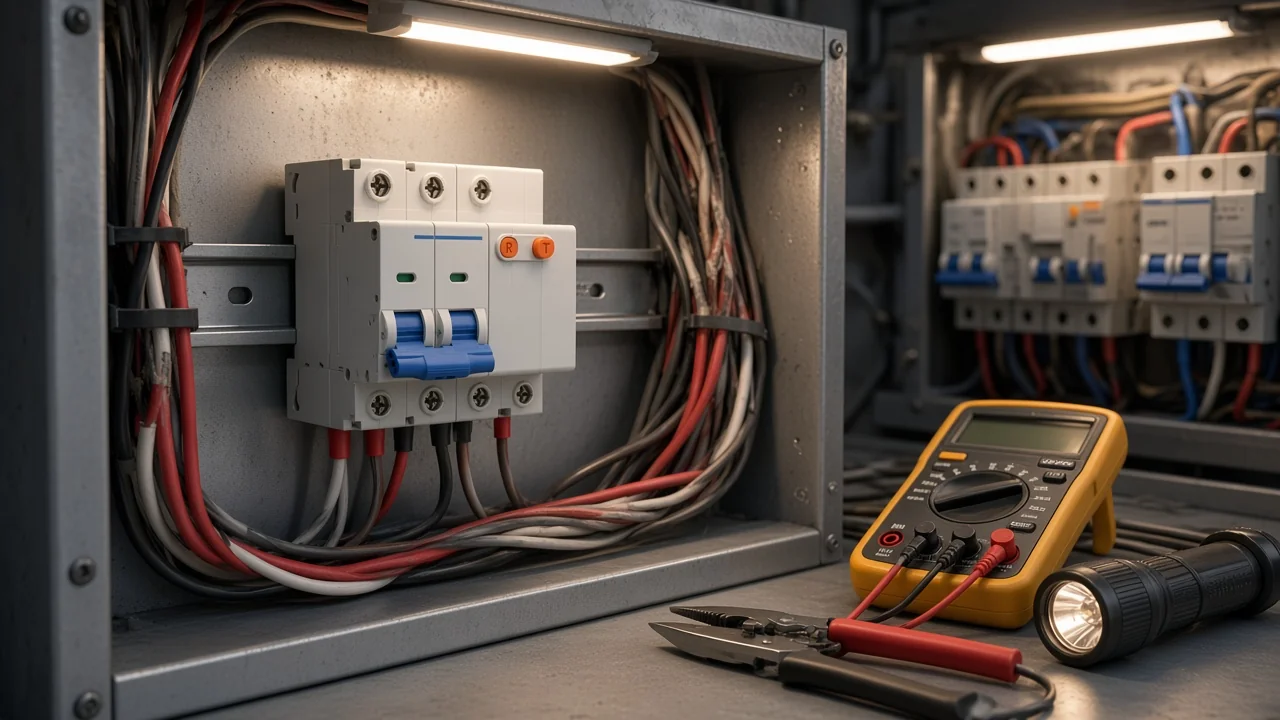
How to Read an AFCI Quote Without Buying the Wrong Class
Itemize device class, panel work, visit fee, and remediation before comparing national averages.
Use this checklist against any written estimate:
- Device class on the line item. Is it a listed US panel AFCI, a dual-function AFCI/GFCI, a 2-pole MWBC device, or a DIN-rail AFDD-style module? If the quote only says “AFCI,” ask which.
- Panel work scope. Like-for-like swap, tandem/slot gymnastics, or full panel replacement? Educational panel-upgrade bands are a different budget.
- Visit economics. Is there a service-call minimum? How many breakers share that visit?
- Remediation allowances. Shared neutrals, damaged wiring, or nuisance-trip diagnosis should appear as provisional hours—or as exclusions.
- Code trigger. Local adoption of the National Electrical Code framework decides which rooms and circuits enter a retrofit. A “replace everything” bid may be broader than the adopted requirement.
- Path honesty for imports. A low DIN-rail AFD unit price does not replace a listed US panel AFCI requirement, and a US install average does not price a rail board overseas.
Chasing “who has the cheapest AFCI breakers” without locking class and listing path is how procurement buys the wrong carton. Price follows the path you actually need.
When a Yijin DIN-Rail AFD Product Fits the Cost Decision
Use YJB1-63/AFD (or the leakage variant) for DIN-rail AFDD-style jobs matching published ratings—not as a UL panel AFCI substitute.
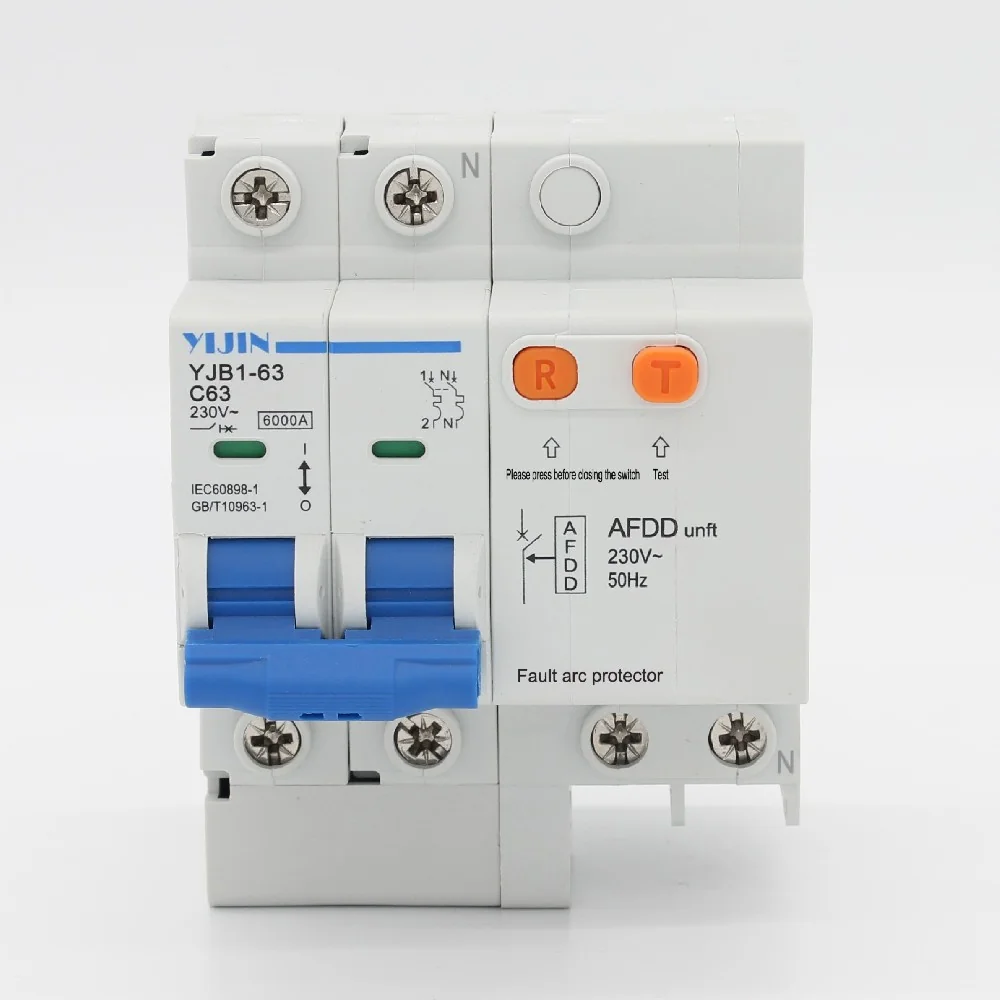
When the cost decision lands on a DIN-rail architecture, start with the live YJB1-63/AFD arc fault circuit breaker.
The live page frames YJB1-63/AFD as a compact AFDD-style protector: miniature breaker plus arc-fault module, covering overload, short circuit, and series/parallel arc events on the protected line.
Published ratings list AC 50 Hz operation at 230 V, currents through 63 A, GB/T31143, C/D trip curves, IP20, and standard rail mounting for board builds.
Those are first-party ratings for a rail job—not a published US retail price list and not evidence of UL 1699 branch-panel listing.
If the same rail path also needs leakage monitoring, the YJB1-63/AFD Circuit Breaker with Leakage Arc Fault keeps the AFDD framing and adds leakage monitoring with window indication and a leakage test feature, still on standard rail.
If the project needs detection and alarm/monitoring rather than a breaker swap, the YJ-AFD-SMG Fault Arc Detector is a different spend: an independent fault-arc detector referencing GB14287.4-2014, with audible/visual alarm, mute/test/reset, and communication options. That is not a US panel AFCI replacement quote.
Browse the mixed Others hub for navigation, then price the rail BOM against the published electrical ratings. Do not invent a Yijin labor table to “beat” a US homeowner install average—those are different cost paths.
FAQ
What does AFCI breaker installation cost usually include?
Usually the AFCI device, electrician labor to install and test, and often a service-call or truck-roll minimum. Educational guides treat the visit fee as a large share of single-breaker invoices.
Why are AFCI breakers more expensive than standard breakers?
They include electronics that watch for dangerous arc signatures ordinary overcurrent breakers miss. Dual-function AFCI/GFCI units cost more again because they add ground-fault protection in the same package.
How do shared neutrals change AFCI installation cost?
Shared-neutral / multiwire circuits often require a 2-pole AFCI with the shared white landed on that breaker, or rewiring for dedicated neutrals. That raises hardware cost and tracing labor beyond a simple single-pole swap.
Is a dual-function AFCI/GFCI quote the same job as a standard AFCI?
No. Dual-function devices combine arc-fault and ground-fault protection, so the hardware line is higher and the protection scope is broader. Confirm which device the quote specifies.
Do I need AFCI outlets if I already have an AFCI breaker?
Not automatically. An AFCI breaker can protect the branch from the panel; outlet-branch devices are an alternate topology in some designs. Cost and code means depend on how the circuit is protected end to end—ask for the means of protection on the drawing, not a duplicate device by default.
Can I compare a US panel AFCI quote to a DIN-rail AFD price?
Only after you lock the install class. US educational install averages describe listed panel AFCIs.
DIN-rail AFD products are a different mount and standards path. Mixing the two numbers creates false “savings.”
Which Yijin product fits a DIN-rail arc-fault path?
For breaker-style rail protection matching published ratings, start with YJB1-63/AFD; choose the leakage variant when leakage monitoring is required; choose YJ-AFD-SMG when the job is detector/alarm monitoring rather than a breaker swap.
Does local code decide how many circuits enter the quote?
Yes. AFCI location rules sit in the National Electrical Code framework as adopted by the local jurisdiction. The adopted cycle and the rooms being modified decide which circuits belong in a retrofit quote.
References
- Arc-fault circuit interrupter (Wikipedia)
- National Electrical Code development (NFPA)
- Circuit Breaker Replacement Cost 2026 (UseCalcPro)
- Arc Fault Breakers Cost Guide (Builds and Buys)
- Arc Fault Protection education (Industrial Control Academy)
- Shared neutral wiring into AFCI (r/AskElectricians)
- Retrofitting AFCI into shared neutral wiring (r/electricians)
Humanizer notes (Draft Agent YJ-DRF-AGT-20260911-02): Patterns found: reduced parallel “X is not Y” stacks; varied paragraph length; kept third-party dollars conditioned; avoided inventing Yijin price anecdotes. Second pass: removed meta-process wording; kept callouts sourced to shared-neutral and visit-fee economics. Humanizer audit: PASS