 Yueqing Yijin Electronics Co., Ltd.



Symptoms of a Bad AC Contactor: Failure Signs That Matter
The clearest symptoms of bad ac contactor problems are a load that will not start, a load that will not stop, buzzing or chattering at the device, or burnt and pitted contact faces. Those signs point to an electromechanical switch that no longer makes or breaks the circuit cleanly. The sections below map those complaints to failure modes, separate capacitor and breaker look-alikes, cover safe checks, and show when a modular DIN-rail AC contactor from the published Yijin family is a rational next step after diagnosis.
What a Failing AC Contactor Is Actually Doing
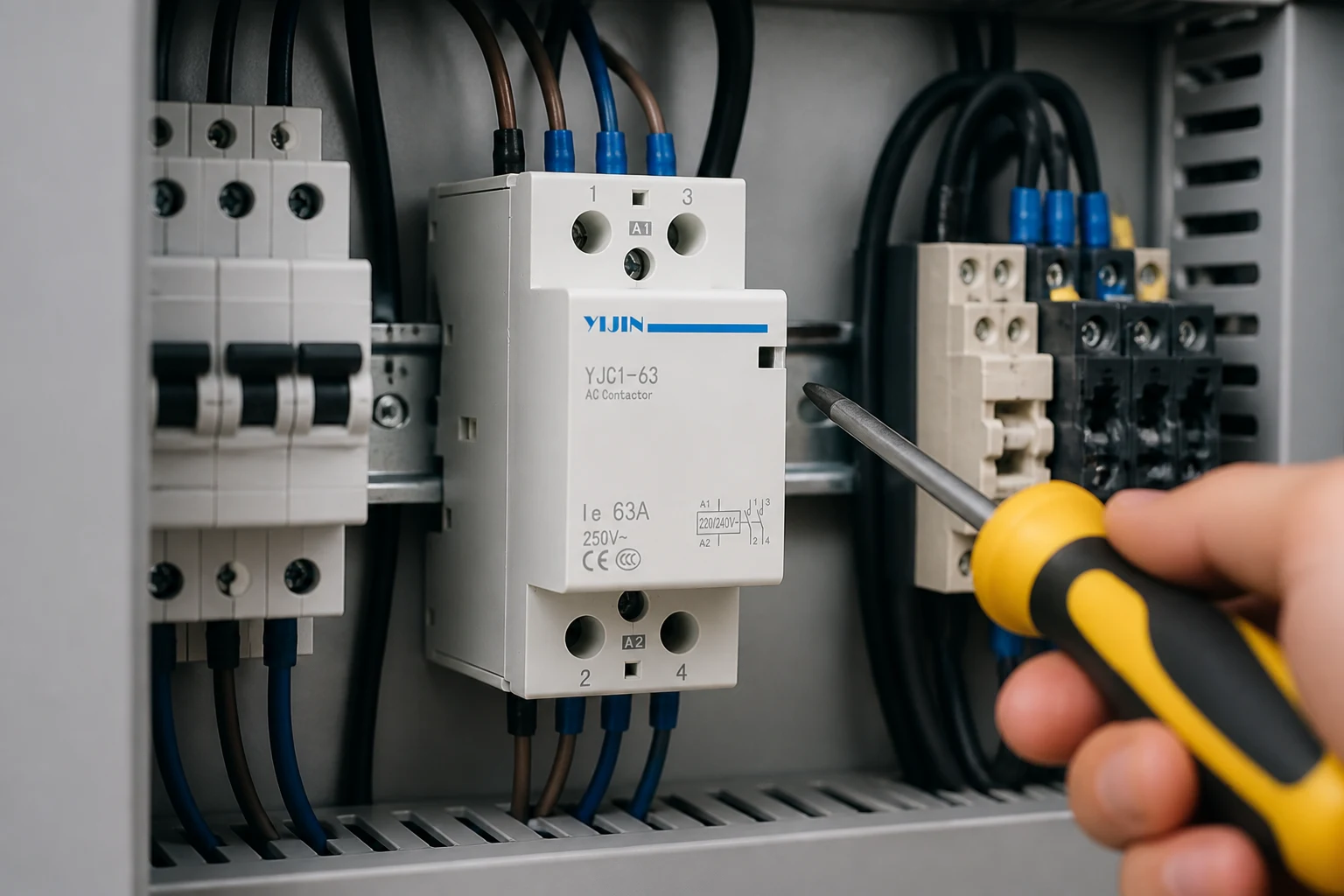
A failing AC contactor is an electromechanical switch that no longer makes or breaks the load path cleanly under its control signal. In normal service, a control circuit energizes the contactor coil, the magnetic armature pulls in, and the main contacts close so the load can run. When the control signal drops, the armature releases and the contacts open.
When that chain breaks, the complaint is usually about behavior, not part names. The coil may not pull in. The contacts may close only partway.
Dirt on the magnetic faces can keep the armature from seating, so the device buzzes instead of latching. Contacts / contact tips that are already pitted make heat and arcing worse on every cycle.
That mechanism language matters for buyers who only hear “the AC won’t start.” An AC contactor is a high-power electromechanical switch for load circuits, not a protective breaker and not a lockable disconnect. Knowing what moved — coil, armature, or contact tips — keeps the next check from becoming a random parts swap.
Symptom Map: Won’t Start, Won’t Stop, Buzz, Chatter, and Heat Marks
Most field complaints cluster into stuck-open, stuck-closed, unstable coil/armature, or damaged contact surfaces. Use the map below as a scan sheet for ac contactor failure symptoms, then confirm with de-energized inspection and qualified electrical testing.
| Observed symptom | Likely contactor mode | What to confirm next |
|---|---|---|
| Load never starts after a control call | Stuck open, open coil, or contacts that no longer close | Control voltage at the coil; contact face condition |
| Load keeps running after the call ends | Contacts welded or mechanically stuck closed | Kill upstream power; inspect for welded tips |
| Loud buzz or hum with weak pull-in | Coil energized but armature not seating fully | Coil supply under load; debris on pole faces |
| Rapid click-click (chatter) | Unstable hold from low control voltage, dirt, or damaged shading parts | Control circuit integrity before condemning the power circuit |
| Black pitting, charring, or melted housing | Arcing and heat at the contact path | Replace the device; check for overload or wrong duty |
| Intermittent start / drop-out | Worn contacts or borderline coil hold | Reproduce under call; inspect tips and terminations |
Stuck-closed is the safety-critical twin of “no start.” If contacts weld closed, the load can keep running after the control call ends. Treat that as uncontrolled power until an upstream disconnect opens the circuit.
Buzz and chatter are not the same complaint. A steady buzz often means the magnet is trying to seat and cannot. Chatter is rapid open/close that hammers the tips and can finish as welded contacts.
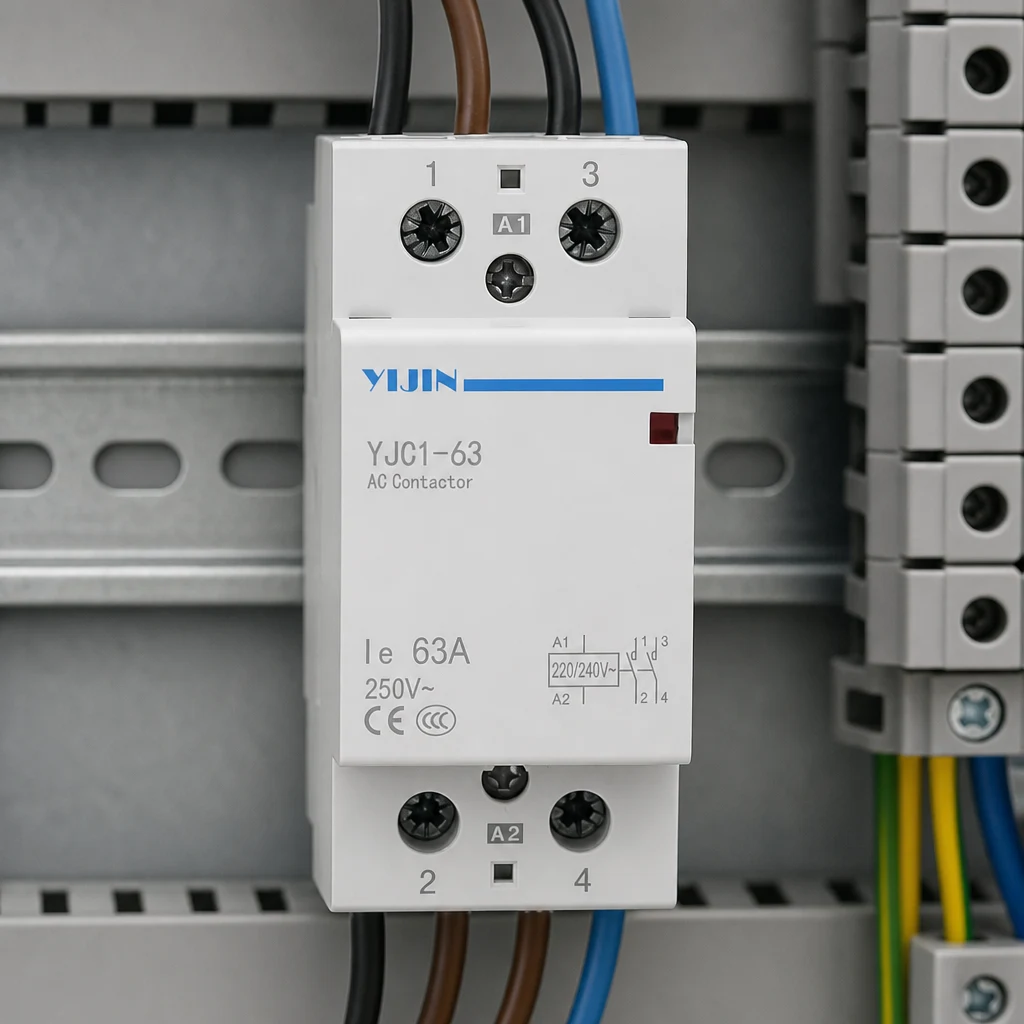
Tip: Field chatter is often a control-circuit problem first — low coil voltage, dirty pole faces, or a damaged shading coil — not “the motor forcing the contactor to chatter.” — source: Electrician Talk discussion on chattering contactors.
Contactor Trouble vs Capacitor or Breaker Look-Alikes
Capacitor and breaker faults can mimic contactor symptoms, so separate the roles before you replace parts. In many HVAC service narratives, a humming outdoor unit with a compressor that will not start can be a weak capacitor as easily as a scorched contactor. A silent outdoor section after a thermostat call can also be a tripped breaker, an open disconnect, or a dead control signal.
Keep the roles distinct:
- A contactor switches the load path under a control signal.
- A capacitor supports motor start/run behavior on many AC systems.
- A circuit breaker protects against overcurrent; it is not a contactor and should not be described as one.
If the breaker trips repeatedly, do not “fix” the story by installing a larger contactor. Find the overload, short, or mis-sizing that is creating the trip. If only the indoor blower runs while the outdoor compressor stays dark, the contactor is a candidate — still after control power and other open points are checked.
Procurement readers should ask technicians for the failure mode in plain language: stuck open, stuck closed, chatter, or burnt tips. That sentence is more useful on an RFQ than “bad contactor, send one.”
Safe Checks Before You Condemn the Contactor
De-energize for inspection, treat welded-closed as uncontrolled power, and never use the contactor as the lockout disconnect. A basic how to test ac contactor workflow starts with safety, not with probing live terminals by guesswork.
- Open the documented upstream disconnect or breaker and verify zero energy with appropriate instruments.
- Look for pitting, black transfer, melted plastic, insects or debris in the magnet gap, and loose terminations.
- With qualified procedures only, confirm that the control signal actually reaches the coil when the system calls.
- Confirm contact continuity behavior matches the expected open/closed state for the call condition.
Important: Contactors and similar control-circuit devices are not energy isolating devices for lockout/tagout. Use a proper disconnect for servicing — OSHA’s interpretation on control-circuit devices is clear on that boundary (OSHA letter, 15 July 2003).
Do not invent a “reset button” story. Contactors are not miniature breakers. If someone asks how to reset an AC contactor, the honest answer is that you diagnose the failure mode and replace or re-secure the device after the circuit is safe — you do not tap a thermal button and call it fixed.
Why Contactors Chatter, Pit, or Weld Early
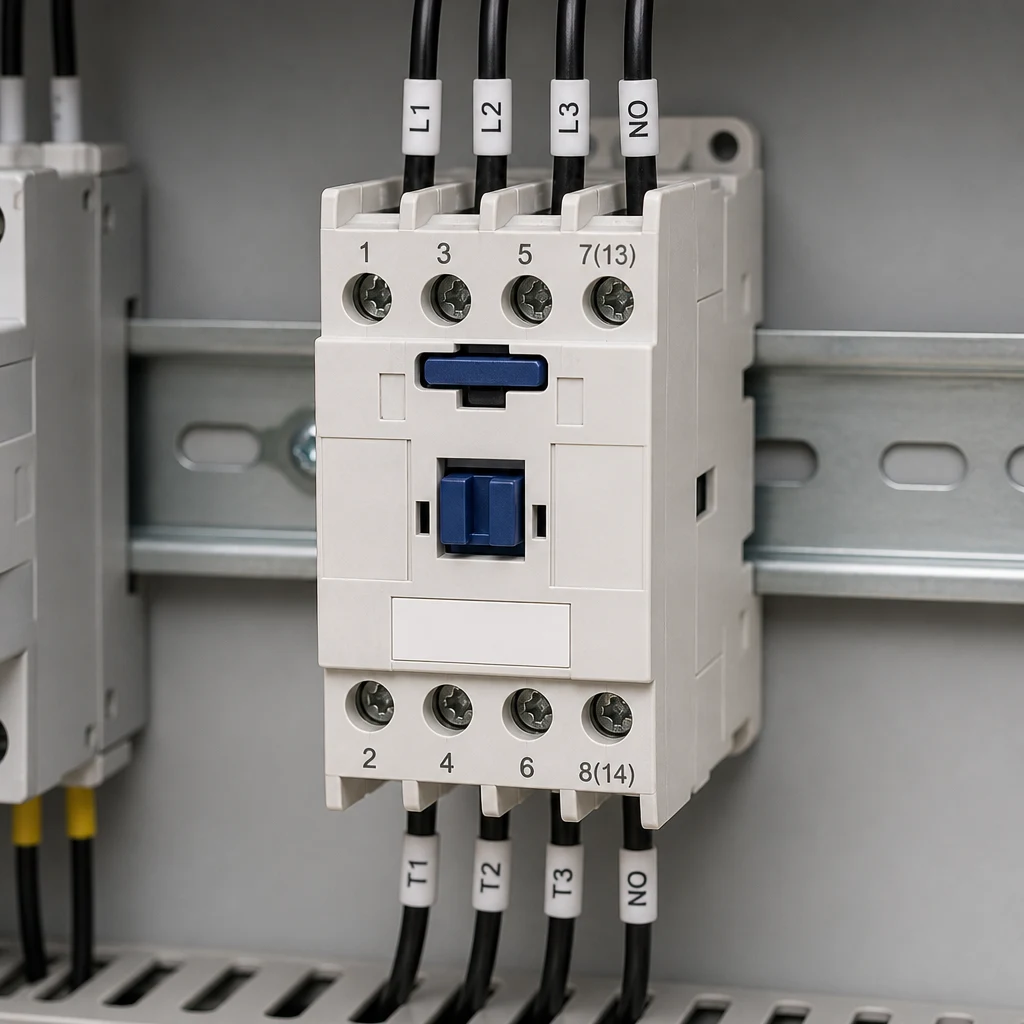
Chatter and early pitting often trace to control voltage, contamination, or a utilization mismatch — not “mystery motor energy.” Electricians on the Electrician Talk chatter thread repeatedly point back to coil voltage, dirty magnet faces, and control wiring before they blame the driven machine.
Pitting and welding grow when contacts bounce or carry duty they were not selected for. Utilization categories exist so buyers match the contactor’s published duty to the load type. A utilization category label is the duty code on the device family, not a marketing slogan.
Common early-wear drivers:
- Control voltage sag when the coil tries to pull in
- Contaminants or rust on magnet faces
- Loose control connections that drop out under vibration
- Contact tips already eroded from prior chatter
- Load duty outside the published utilization path
Fix the cause when you replace the device. Installing a new contactor into the same low control voltage or wrong duty simply restarts the failure clock.
When to Choose a Modular AC Contactor After Symptom Checks
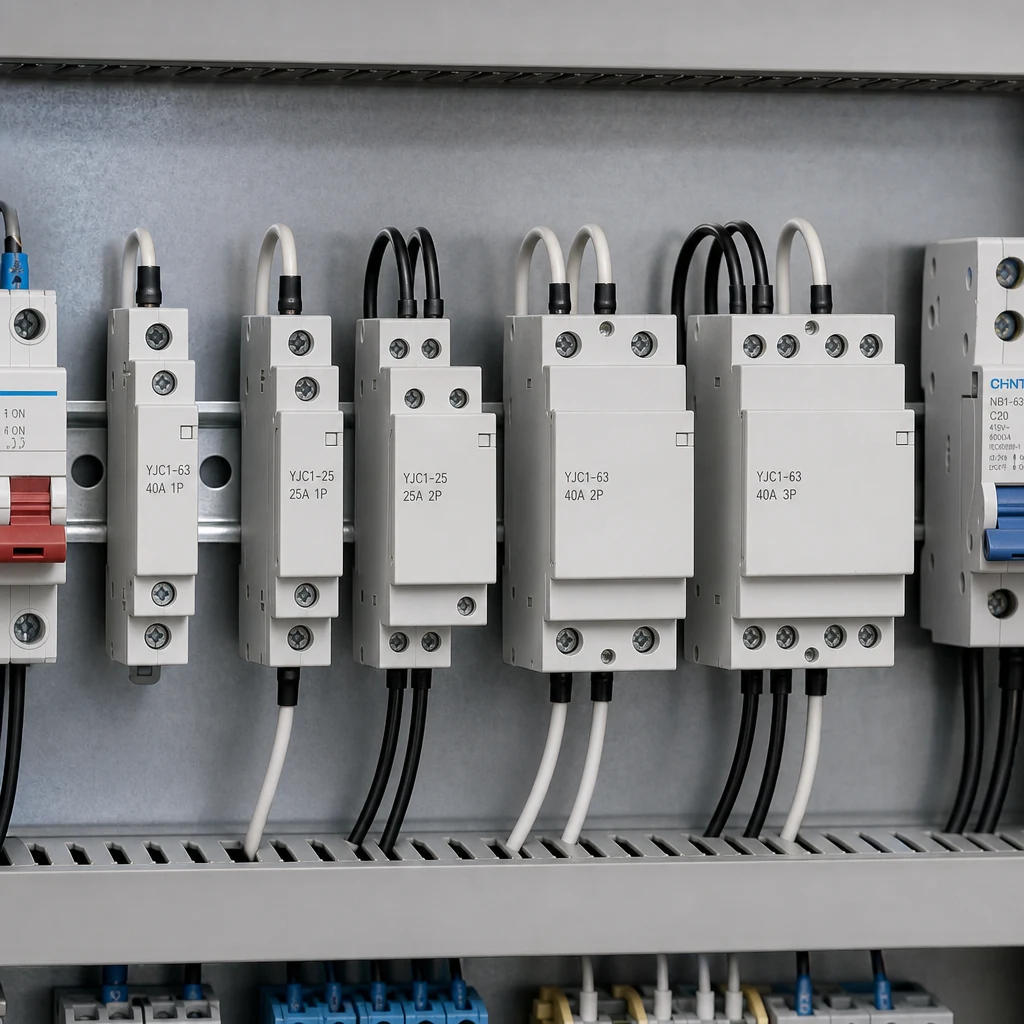
After the failure mode is clear, choose a modular AC contactor by poles, published utilization, and the live 230 V family ratings. Outdoor HVAC definite-purpose contactors and DIN-rail modular household AC contactors are not interchangeable form factors.
If the application is a modular panel product for remote switching of low-inductance or household motor loads on a published 230 V AC-7a path, review Yijin’s Contactor category after diagnosis — not before.
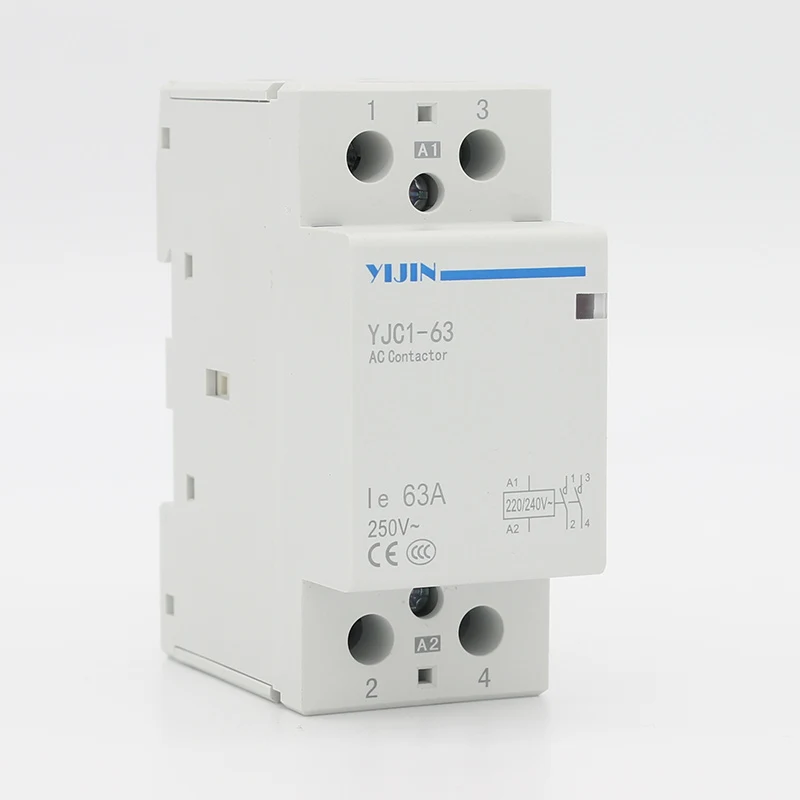
For a 2-pole modular replacement path in that family, start with the YJC1-63 2P Modular AC Contactor. The live page places the device in the YJC household AC contactor family for AC 50 Hz or 60 Hz systems with a rated working voltage of 230 V, used under the AC-7a usage category as a remote switch and main-circuit control for low-inductance loads and household motor loads, and states compliance with GB17885 and IEC1095 as printed. Conventional products are normally open; normally closed versions can be customized per the page note.
| Published item (live product pages) | YJC1-63 2P family context | YJC-1-25 2P family context |
|---|---|---|
| Form factor | Modular AC contactor, TH35-7.5 DIN rail | Modular AC contactor, TH35-7.5 DIN rail |
| Rated working voltage | 230 V (as printed) | 230 V (as printed) |
| Frequency | AC 50 Hz or 60 Hz | AC 50 Hz or 60 Hz |
| Utilization categories shown | AC-1, AC-7a, AC-7b rows | AC-1, AC-7a, AC-7b rows |
| Mechanical lifespan (published) | Not less than 1,000,000 cycles | Not less than 1,000,000 cycles |
| Electrical lifespan (published) | Not less than 100,000 times | Not less than 100,000 times |
| Ambient / altitude (published) | −5 °C to +40 °C; altitude not exceeding 2000 m | −5 °C to +40 °C; altitude not exceeding 2000 m |
Lighter published 2P options in the same family include the YJC-1-25 2P Modular AC Contactor. Match pole count to the circuit, and confirm every current and utilization row on the live SKU page before ordering. Do not invent coil voltage figures — the reviewed YJC pages do not publish a coil voltage number to quote here.
Do not choose this modular family when you still need a lockable energy-isolating disconnect, when the load sits outside the published utilization path, or when the failed device was an outdoor HVAC definite-purpose contactor with a different control architecture. For project confirmation, use Contact Us with pole count, load type, and the failure mode you already observed.
FAQ
What are the most common symptoms of a bad AC contactor?
Won’t start, won’t stop, buzz or chatter, intermittent drop-out, and visible pitting or burn marks. Those are the patterns repeated across service guides and the symptom table above.
Can a bad contactor keep equipment running after the control signal stops?
Yes. Welded or stuck-closed contacts can leave the load powered after the control call ends. Open the upstream disconnect and treat the circuit as live until proven otherwise.
Does chattering always mean the contactor is finished?
Not always. Chatter often starts with low coil voltage, dirty magnet faces, or control wiring faults. Replace a damaged contactor, but fix the control-side cause or the next unit will chatter too.
Is a contactor the same as a circuit breaker?
No. A contactor switches a load under control. A breaker protects against overcurrent.
Using one name for both jobs creates wrong replacements and unsafe assumptions.
Can I reset an AC contactor like a breaker?
No. Contactors do not “reset” like thermal-magnetic breakers. Diagnose the mode, make the circuit safe, and replace or reterminate as required.
Will a fan or load still run if the contactor is bad?
Sometimes. A stuck-closed contactor can keep a load running. A stuck-open contactor can leave a load dark while other circuits still run.
Partial pole damage can also leave one path alive and another dead.
What published specs matter on Yijin modular AC contactors after diagnosis?
Poles, published utilization category rows (AC-1 / AC-7a / AC-7b), 230 V working-voltage family wording, DIN rail mounting, and the ambient/altitude limits printed on the live product page. Confirm current rows on the exact SKU.
Should a contactor be used as the lockout disconnect for servicing?
No. Use a proper energy-isolating disconnect for lockout/tagout. A contactor is a control switching device, not the lockable isolator for service work.
References
- Wikipedia, Contactor
- Wikipedia, Utilization categories
- OSHA, Interpretation letter, 15 July 2003 (control-circuit devices and energy isolation)
- Electrician Talk, Chattering Contactors
Humanizer self-audit: PASS — varied paragraph length; Tip/Important sourced; no claim IDs in prose; no UL/NEC; no invented coil volts. Second self-pass: no “in this article we will”; no five identical symptom templates; product H2 uses choose/fit language.