 Yueqing Yijin Electronics Co., Ltd.




What Is a Smart Circuit Breaker and How Connectivity Fits
A what is a smart circuit breaker question starts with the breaker job, not the app icon. A smart circuit breaker still interrupts overload or short-circuit current like a conventional breaker, then adds networked monitoring and/or remote open-close control on top of that protection duty. The sections below define that protect-plus-connect idea, draw short boundaries against wall smart switches and reclosing language, place the United States market context without inventing listings, and show where Yijin’s WiFi intelligent rail devices sit honestly.
What a Smart Circuit Breaker Is
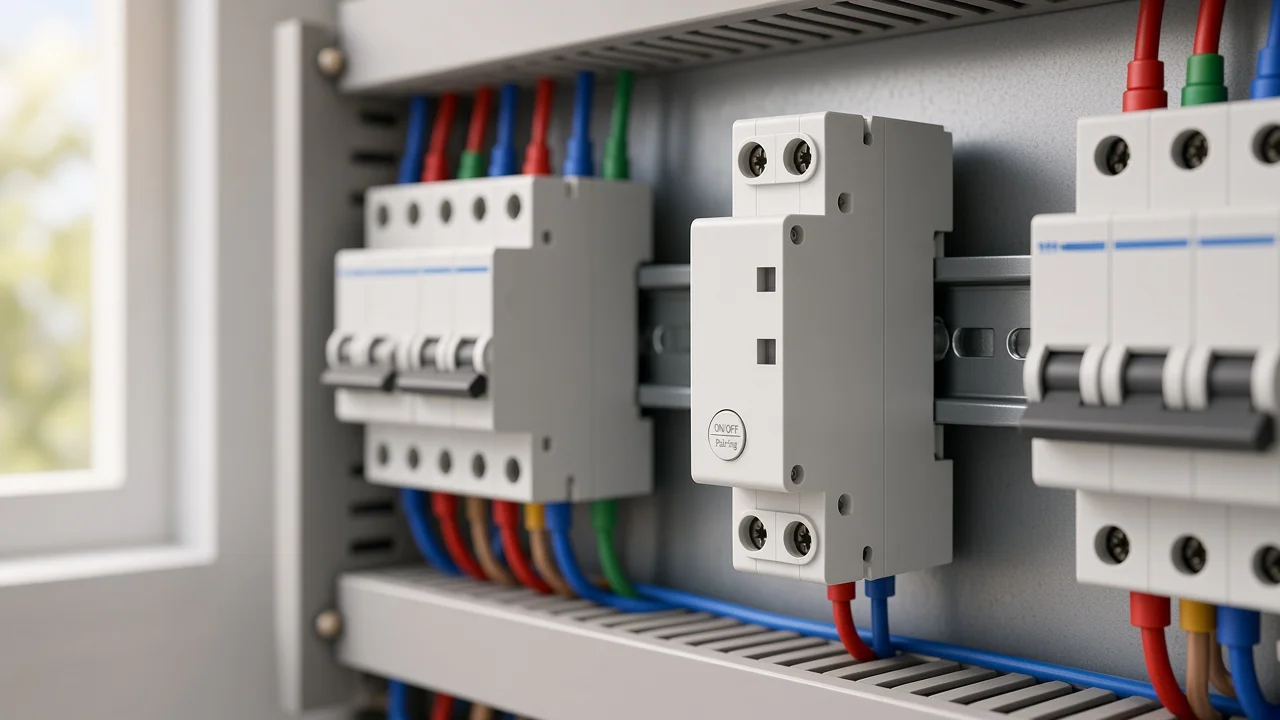
A smart circuit breaker keeps overcurrent interruption and adds connected monitoring and/or remote control. The “smart” layer rides on the trip job; it does not remove it.
An ordinary circuit breaker is an automatic switch that opens when current exceeds a designed limit and can later be reset. A smart model keeps that baseline duty, then adds remote control / monitoring so status or energy data can leave the panel and authorized remote commands can come back where the product supports them.
In catalogue talk you will also see “smart breaker,” “WiFi circuit breaker,” and “connected circuit breaker.” Those phrases usually point to the same genus: breaker protection plus connectivity. They do not guarantee the same sensors, the same app stack, or the same UL / NEC listing path.
| Layer | Ordinary breaker | Smart circuit breaker |
|---|---|---|
| Overcurrent interruption | Yes | Yes (when the device is truly a breaker) |
| Local manual operation | Handle / rocker | Handle / rocker still present on most designs |
| Status or energy visibility | At the panel only | Often to an app, gateway, or cloud |
| Remote open/close | No | Where the product and listing allow it |
If a brochure only remotes a load and never states overload or short-circuit interruption, treat it as a connected switch until the protection job is proven on the datasheet.
How Protect-Plus-Connect Works in Principle
Local sensing and protection stay on the device; connectivity publishes status and carries authorized remote commands. The useful mental model is a short stack, not a marketing feature list.
- Sensing — the device watches current and, on many designs, voltage, power, or temperature.
- Local protection logic — overload, short-circuit, and any other stated protective functions still decide when contacts must open.
- Connectivity — Wi-Fi, another radio, or a gateway path reports state and receives commands.
- Human or system action — an app schedule, a maintenance remote open, or a building system uses that channel.
University and industry explainers describe the same two “smart” additions again and again: remote control and energy or status monitoring layered onto breaker hardware. Semiconductor reference notes for Wi-Fi-enabled breakers show the same loop in engineering form — report open/close state, notify on a fault opening, and allow an authorized operator to command position when the design permits it.
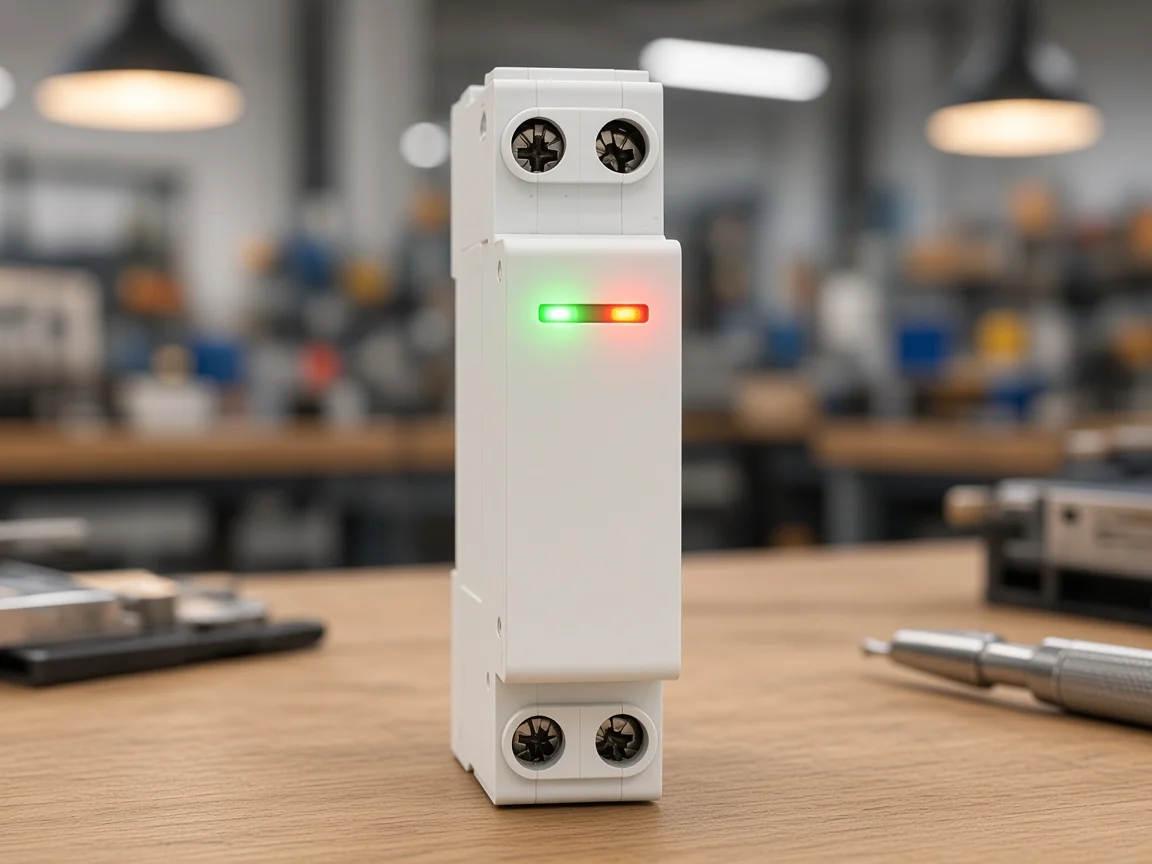
Protection is local. If the network drops, a breaker that truly provides overcurrent interruption should still be able to trip on the faults it was built to clear. Connectivity changes visibility and command reach; it cannot replace the trip unit.
Tip: Some operators like remote load control on feeder circuits, yet community threads also call house Wi-Fi a weak path when people care about security and reliability for breaker-facing control. Source: r/FranklinWH discussion.
Smart Switch, Breaker Duty, and Reclosing Language
A smart switch remotes a load; a breaker interrupts overcurrent; auto-restore on DIN rail is not a utility medium-voltage recloser. Keeping those three jobs apart prevents a wrong RFQ.
A wall or load smart switch is built to turn a circuit or appliance on and off from an app. It may sit behind an ordinary breaker. Remote convenience is real; breaker duty is not automatic just because the listing says “WiFi.”
Independent teardowns of DIN-rail products marketed as Wi-Fi “circuit breakers” have shown cases that behave as smart switches and still need an upstream MCB or RCBO for overcurrent duty. Read the stated protection functions and standards before treating the module as the branch protector.
Automatic reclosing / auto-restore language on low-voltage DIN rail protectors usually means the device waits through a delay, checks that voltage has returned to a window, then attempts to put the circuit back on. That is a low-voltage restore behavior. A utility recloser on the distribution line — see the encyclopedia note on a utility recloser — is medium-voltage switchgear, not a DIN-rail module.
| Role | What it is trying to do | What it is not |
|---|---|---|
| Wall / load smart switch | Remote on/off for a load | Proof of overload/short-circuit interruption |
| Smart circuit breaker | Interrupt overcurrent and add connected monitor/control | An everyday light switch you should cycle all day without reading duty |
| DIN-rail auto-restore / reclosing protector | Restore after a voltage or related event per its design | A medium-voltage utility recloser |
From the field: When people ask how to “flip a breaker remotely,” replies often push a smart plug or relay on the load and warn that breakers are not everyday switches — wear can matter when the same contacts must still open a fault. Source: r/HomeKit thread.
Buyer-class shopping among WiFi breakers, wall smart switches, and automatic reclosing protectors already lives on Yijin’s related class-map article. The job here stays on definition and principle.
Why US Buyers Hear Smart Breakers as Panel Ecosystems
US education often assumes plug-on loadcenter ecosystems and listing talk that export DIN-rail pages do not automatically inherit. That mismatch is why the same English phrase “smart circuit breaker” can point at different hardware.
In United States residential and light-commercial talk, “smart breaker” frequently means a brand-compatible plug-on breaker inside a listed loadcenter family, with app energy graphs and remote control inside that ecosystem. University teaching materials describe networked breakers that still prevent overload and short-circuit damage while adding monitoring and load management — and they note brand-compatible panel limits.
Export DIN-rail WiFi modules sold for AC rail boards speak a different mechanical language: modular rail width, IEC/GB catalogue lines where published, and app pairing that is not a US panel brand lock by itself. Neither story is “wrong.” They answer different form-factor and listing questions.
For US procurement, the practical caution is soft but firm: the live Yijin product pages do not present UL Listed or NEC approval language for these WiFi intelligent devices. A “smart” or “WiFi” title alone does not create Matter, Alexa, or panel-listing claims.
Where Yijin WiFi Intelligent Breakers Fit That Definition
YJA2 publishes WiFi over/under-voltage protection plus APP timing on rail hardware; YJB2 pages publish remote open/close with overload and short-circuit language. Both sit in the connected-device conversation; each page reads the “smart circuit breaker” label differently.
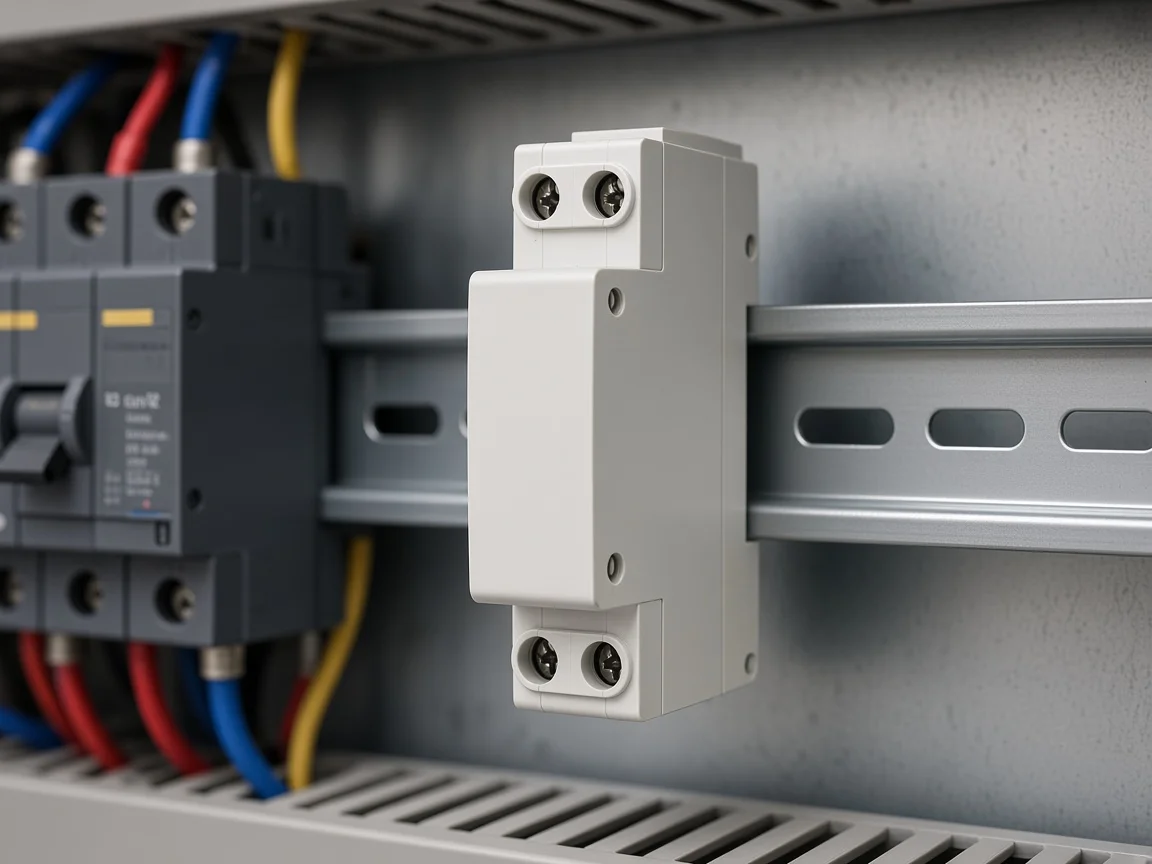
The YJA2-WiFi Intelligent Circuit Breaker page titles the SKU as an intelligent circuit breaker and describes a WiFi over/under-voltage protector for control circuits. Published parameters include rated operational voltage AC230V, current 40A, APP setting, overvoltage protection 275±5V with recovery 250±10V, undervoltage protection 175±5V with recovery 195±5V, and a self-recovery delay of 30s±10s. Working modes include timer and several delay styles, with rail-type installation.
Related YJB2-125Wifi / 1P+N and YJB2-125Wifi / 3P+N pages describe a WiFi intelligent reclosing circuit breaker for AC 50Hz loads, rated working voltage language at 400V, rated working current of 100A and below, overload and short-circuit protection, phone remote open/close with real-time status, modular rail installation, and compliance statements naming GB 10963.1 and IEC 60898-1.
| Live Yijin reading | What the page emphasizes | How it maps to “smart circuit breaker” talk |
|---|---|---|
| YJA2-WiFi | WiFi OV/UV windows, APP timers, self-recovery delay, AC230V / 40A rail | Connected rail protector titled as intelligent circuit breaker; OV/UV-forward |
| YJB2-125Wifi | Overload/short-circuit + remote open/close + status; IEC 60898-1 / GB 10963.1 | Closer to classic smart MCB + connectivity language on the live page |
Neither page is firsthand test evidence, and neither page is a UL panel smart-breaker listing sheet. Use the published numbers; leave US listing claims off unless a live certificate page says otherwise.
Product recommendation: YJA2-WiFi Intelligent Circuit Breaker
Choose YJA2 when you need published WiFi OV/UV windows, APP timing, and self-recovery delay on DIN-rail hardware — skip it when the requirement is a claimed UL plug-on US panel smart breaker.
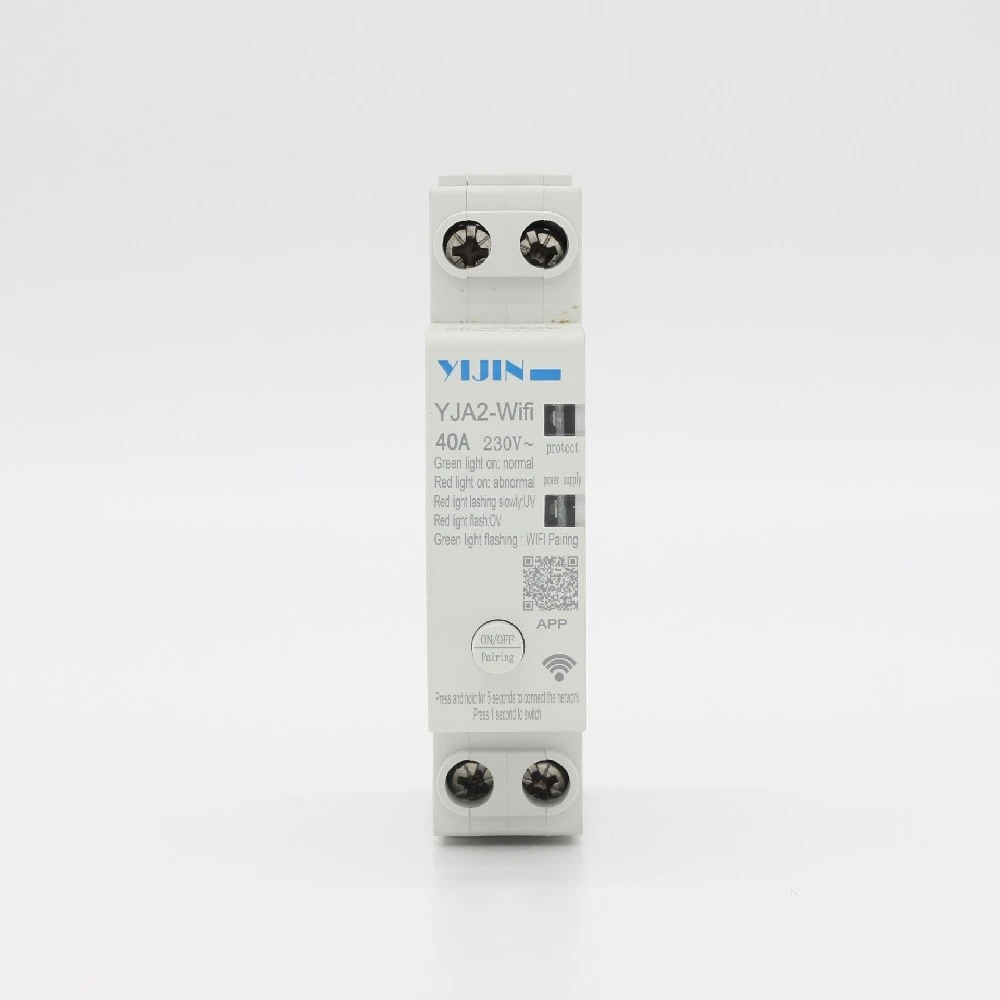
The YJA2-WiFi Intelligent Circuit Breaker is the primary recommendation after the definition above. It fits readers who want a rail-mounted WiFi device with stated over/under-voltage windows, APP configuration, timer and delay modes, and a published self-recovery delay around thirty seconds.
Reach for the YJB2-125Wifi pages instead when the written need is overload and short-circuit protection plus remote open/close status on a ≤100A rail frame with IEC 60898-1 / GB 10963.1 language on the live page. Browse the isolating-switch hub when you are still mapping related rail families, and use the sibling WiFi-breaker class-map article when the job is shopping among device classes rather than defining the entity.
FAQ
What is a smart circuit breaker in one sentence?
A smart circuit breaker is a circuit breaker that still interrupts overcurrent and adds networked monitoring and/or remote control.
Does a smart breaker still protect if the app is offline?
Overcurrent interruption is a local function on a true breaker. Cloud features may pause without a network, but the trip duty should not depend on the phone being online.
How is a smart circuit breaker different from a wall smart switch?
A wall smart switch remotes a load. A smart circuit breaker must still carry breaker protection duty; connectivity alone does not prove that duty.
Is automatic reclosing the same as a smart circuit breaker?
No. DIN-rail auto-restore after a voltage event is a low-voltage restore behavior. A utility recloser is medium-voltage line equipment. Connectivity may appear on either story, but the jobs differ.
Are Yijin WiFi intelligent breakers UL Listed for US panels?
The live YJA2 and YJB2 product pages do not present UL Listed or NEC approval claims. Treat the “smart” or “WiFi” title as a feature label, not a US listing.
What does the YJA2 page actually specify?
It publishes a WiFi OV/UV protector / timed control device on rail hardware: AC230V, 40A, APP setting, OV 275±5V / recovery 250±10V, UV 175±5V / recovery 195±5V, and self-recovery delay 30s±10s.
When is YJB2-125Wifi the closer “breaker” reading?
When you need the live-page combination of overload and short-circuit protection, remote open/close with status, and IEC 60898-1 / GB 10963.1 statements on a ≤100A rail frame.
References
- Circuit breaker — Wikipedia
- Recloser — Wikipedia
- Review & Teardown: AT-MIBO Electric Wi-Fi Tuya DIN Rail “Smart Switch / Circuit Breaker” — Gough Lui
- Grid IoT Reference Design: Connecting Circuit Breakers and Sensors — Texas Instruments
- Has anyone used a WiFi (or otherwise connected) Circuit Breaker? — r/homebridge