 Yueqing Yijin Electronics Co., Ltd.




One direction, then an opening
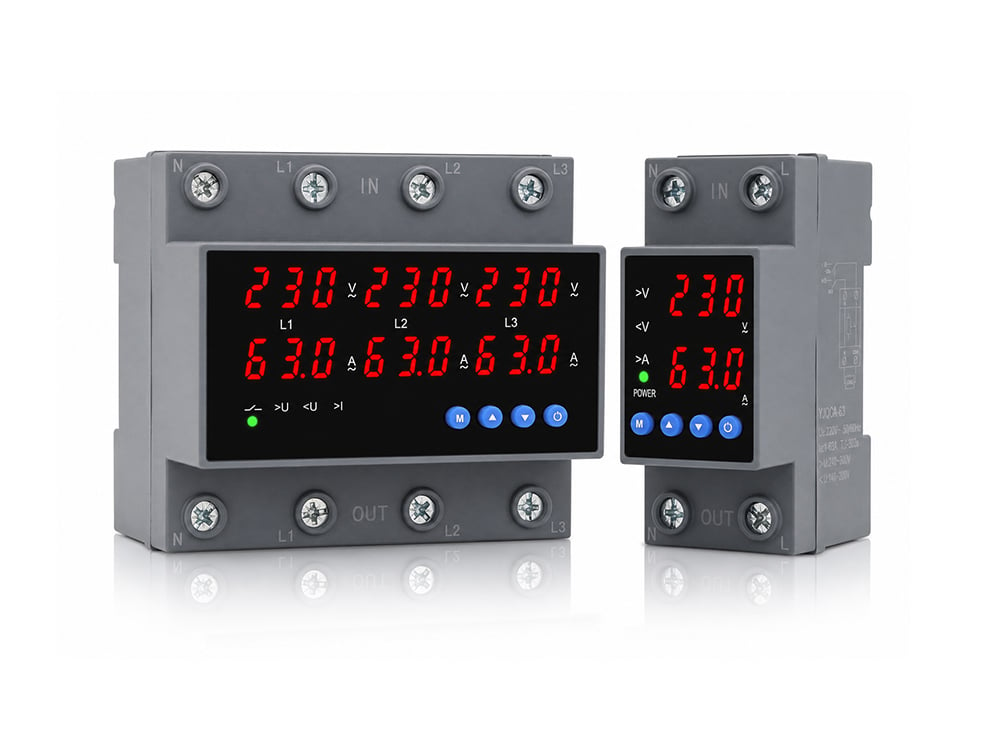
Readers who type what is a dc breaker are asking which device opens a circuit whose current keeps one heading. The device is a breaker built for that heading. After it opens, a person can close it again once the fault is gone.
The flow stays on one heading
Direct current is one-directional flow of electric charge. The charge keeps a heading for as long as the source holds that heading. A battery, a rectifier that has already been judged to be DC, or a DC bus in a cabinet can be the source.
The breaker does not create the heading. It only agrees to live on a circuit that already has one.
Call the flow one-direction current when you want the plain words. The encyclopedia sentence is shorter and stricter. If the current reverses every half cycle, you are on a different kind of circuit, and a breaker built for one heading is the wrong body to assume.
People still paste the letters DC onto any waveform that spends time above zero. That habit is how a rectifier output gets the same name as a steady bus. The breaker page you are about to read is about a DC distribution circuit, with printed voltage and a polarity note.
It is not a lecture on every waveform that looks flat from across the room.
Overcurrent is the job
A circuit breaker is an electrical safety device that interrupts overcurrent and can be reset, unlike a fuse that must be replaced. Too much current is the event. The mechanism opens.
The equipment and the wiring get a chance to stay intact. When the cause is gone, the handle closes the path again.
The YJB1Z-63 page names the same two events in product language: overload and short circuit. A thermal release watches the slower rise. An electromagnetic release watches the fast rise.
An arc-extinguishing path, described there as a permanent-magnet system, is part of how the contacts survive the opening. Those are the pieces the page lists. They are the job, told in parts.
A breaker is also not a switch you flick all evening to run a lamp. The handle will open and close, and the page even places the handle on the front for that motion. The reason the body exists is the fault, not the daily schedule.
A clock belongs to a timer. A fault belongs here.
The printed breaker is YJB1Z-63
The printed breaker is the YJB1Z-63 small DC circuit breaker. The page says it is for facilities and electrical equipment in DC distribution systems, including power, postal and telecommunications, transportation, and industrial sites. The body contains a housing, an operating mechanism, a thermal release, an electromagnetic release, a contact system, and an arc-extinguishing system.
The YJB1Z-63 page is suitable for circuits with rated current of 63 A and below, and a DC rated voltage of 250 V and 440 V. That page prints a short circuit capacity of 10 kA. The feature paragraph prints a mechanical life of more than 20000 times.
The page says this product complies with GB10963.2 and IEC60898-2. A note on the page says 1P DC 220 V and 2P DC 440 V need to be customized.
The parameter table on that page breaks its breaking-current cells into unreadable fragments. Those cells are left unused here. The prose and the note above are the lines a buyer can actually read.
If a quote sheet copies a cell you cannot find in the prose, ask for the prose line instead.
Plus and minus are wiring marks
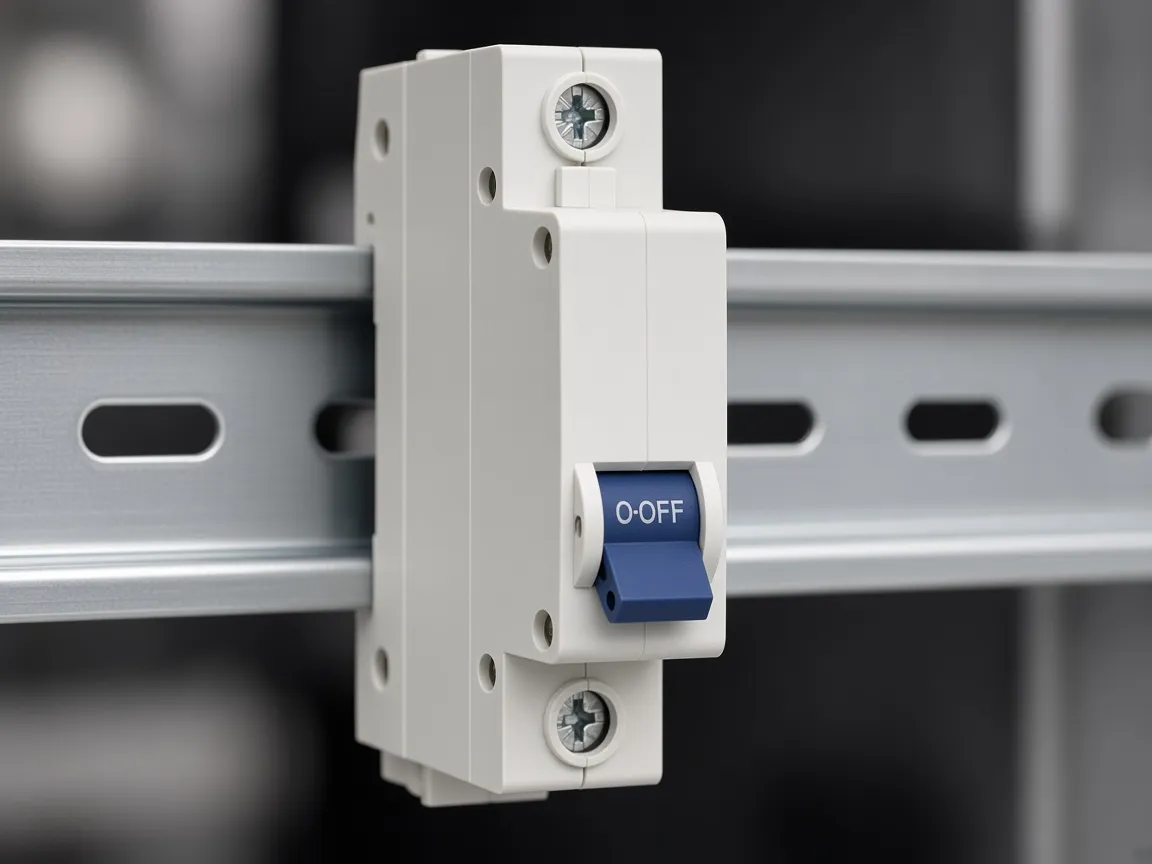
The page says attention must be paid to the polarity of plus and minus when wiring. Those polarity marks are the landing instruction. One-direction current still has a source end and a load end.
Landing the wires against the marks puts the permanent-magnet arc path in the orientation the body was built for.
Swapping the lands is not a style choice. The page bothers to print the warning because the heading of the current is part of the device. An AC breaker that ignores polarity is a different habit.
Bringing that habit to this body ignores the sentence the manufacturer put next to the terminals.
The handle sits on the front so the motion stays clear of the terminals. That is a handling note, not a second rating. Close the handle only after the lands match the marks and the fault that opened the breaker is understood.
A breaker that opens again at once is reporting the circuit, not a sticky handle.
A fuse ends as a replacement
A fuse stops current by melting a metal strip, and then the strip has to be replaced. The opening is real. The ending is different.
The breaker handle returns the same body to service. The fuse asks for a new element.
| Ending | After the overcurrent | What you bring back |
|---|---|---|
| DC breaker | The mechanism opens and can be closed | The same body, if the circuit is fit |
| Fuse | The strip melts | A replacement element |
| Timer | A clock reaches an event | Not an overcurrent device |
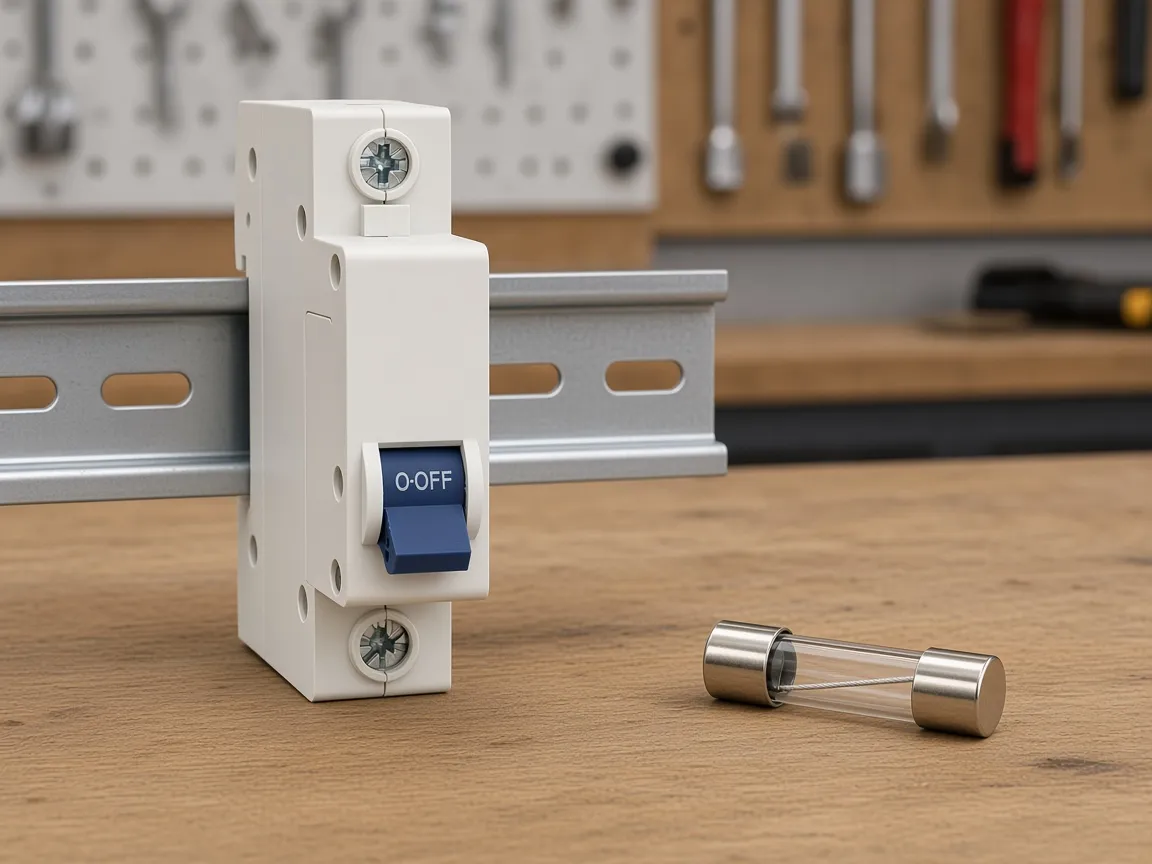
A car flasher on the relay talk page changes speed when a lamp fails, because current heats the flasher. That heat-timed blink is neither this breaker nor a fuse. If a DC circuit is blinking, you are looking at a different device.
The YJB1Z-63 page describes protection, then a handle you close on purpose.
The rail only holds the body
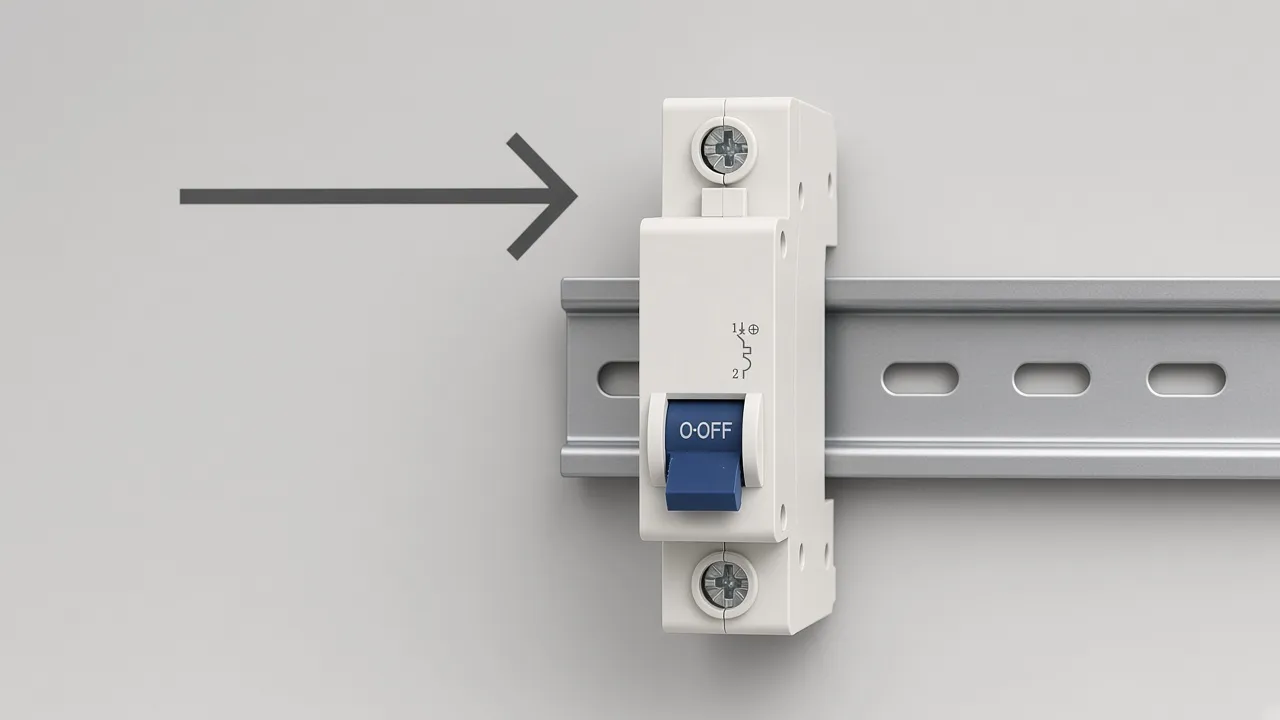
The installation rail printed on the page is TH35-7.5 steel. A DIN rail is a metal rail of a standard type widely used for mounting circuit breakers and industrial control equipment inside equipment racks. The metal supports the housing.
It is not the DC bus, and it is not a polarity mark.
Clip the body on the rail, then land the wires on the terminals. The order matters because a body that is only hanging on the wires will stress the terminals. The rail does not set the trip point.
The printed current and the trip type do that. The page names B and C trip types in its time-current test. Read that test on the product page before you treat the letters as decoration.
A rectified wave is a separate argument
A drawing can say DC while the waveform is still a rectifier output. Read the name before you read the breaker.
From the field: Mak17f wrote on the direct-current talk page that a full-wave rectified signal is not DC, and that the term has been overloaded. The warning is about the name, before any breaker is chosen.
Use that warning when a drawing shows diodes and someone has already written DC on the wire. A rectified wave can have a one-way average and still be a poor match for a breaker described for a DC distribution system. Settle the waveform with the people who own the power source.
Then read the YJB1Z-63 ratings as ratings, not as a nickname for every positive pulse.
| Prose line on the product page | How to use it |
|---|---|
| Rated current and DC voltage | Match the circuit magnitude and the system voltage the prose names |
| Short-circuit capacity | Read the feature paragraph, not the broken table cells |
| Standards line | Keep the printed standard tokens with the product |
| Custom pole note | Treat the note as a factory option, not as the default stock story |
| Polarity sentence | Land plus and minus as printed |
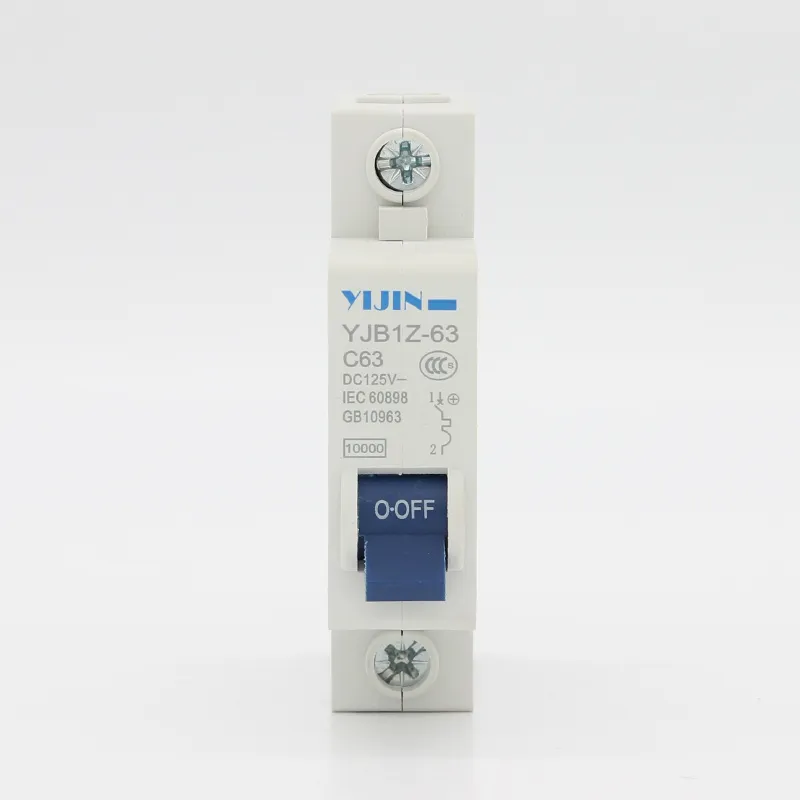
The YJB1Z-63 small DC circuit breaker is the product page for this question. The circuit-breaker category collects the other DC bodies if the current or the pole count is a different page. An AC miniature breaker, a fuse, and a clock timer answer other questions.
Frequently asked questions
These answers stay with the pages opened for this draft.
What current does a DC breaker interrupt?
It interrupts current in excess of what the circuit can safely carry. On the YJB1Z-63 page that event is named as overload and short circuit. The handle can close the body again after the cause is gone.
Why is the flow called one-directional?
Direct current is one-directional flow of electric charge. The source holds one heading. The breaker is chosen for a circuit that already has that heading.
How is a fuse different after it opens?
The fuse has melted a strip and needs a replacement. The breaker is the body you can close again. The opening can look similar.
The next step does not.
Which ratings does the YJB1Z-63 page print in prose?
The YJB1Z-63 page is suitable for circuits with rated current of 63 A and below, and a DC rated voltage of 250 V and 440 V. That page prints a short circuit capacity of 10 kA. The page says this product complies with GB10963.2 and IEC60898-2.
Why does that page mention plus and minus?
The current has a heading, and the arc path is built around that heading. The page tells the reader to observe plus and minus at the terminals. The marks are the wiring instruction.
What did a talk page say about calling a rectified wave DC?
Mak17f wrote that a full-wave rectified signal is not DC. The name gets stretched. Settle the waveform before you treat the wire as a DC distribution circuit.