 Yueqing Yijin Electronics Co., Ltd.

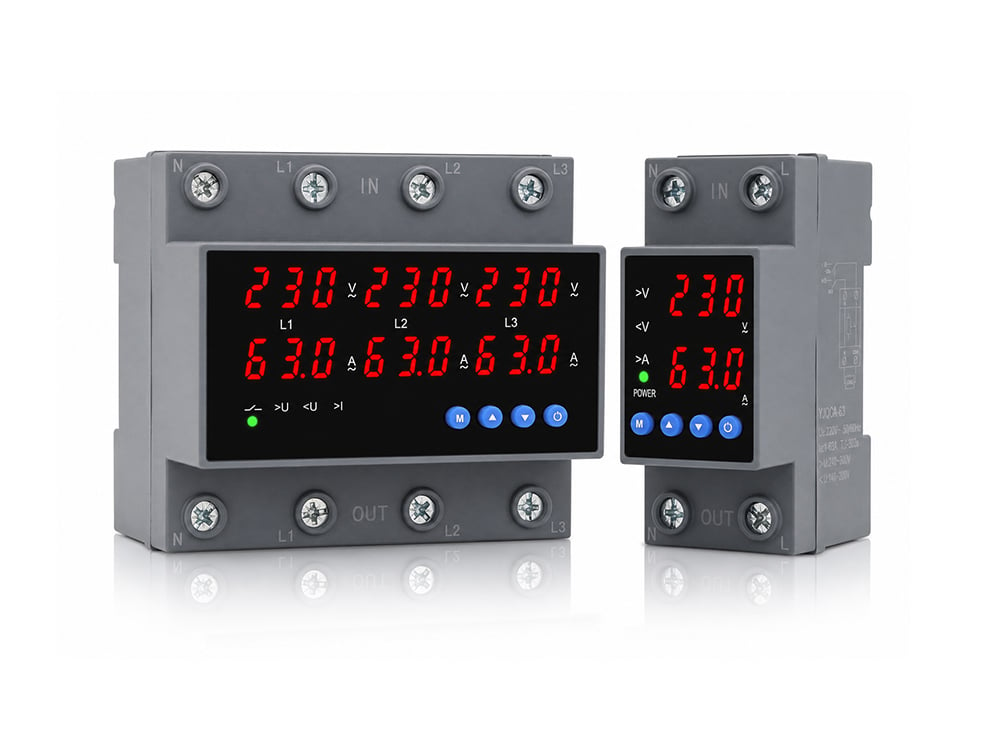



Surge Protector vs Voltage Protector: Which Device Fits
A surge protector vs voltage protector choice turns on disturbance duration, not which label sounds tougher. A surge protective device (SPD) clamps short voltage spikes; a voltage protector disconnects the load when supply RMS stays too high or too low. For US B2B boards this page separates those jobs, shows when both belong, and maps live Yijin SKUs without treating one device as the other.
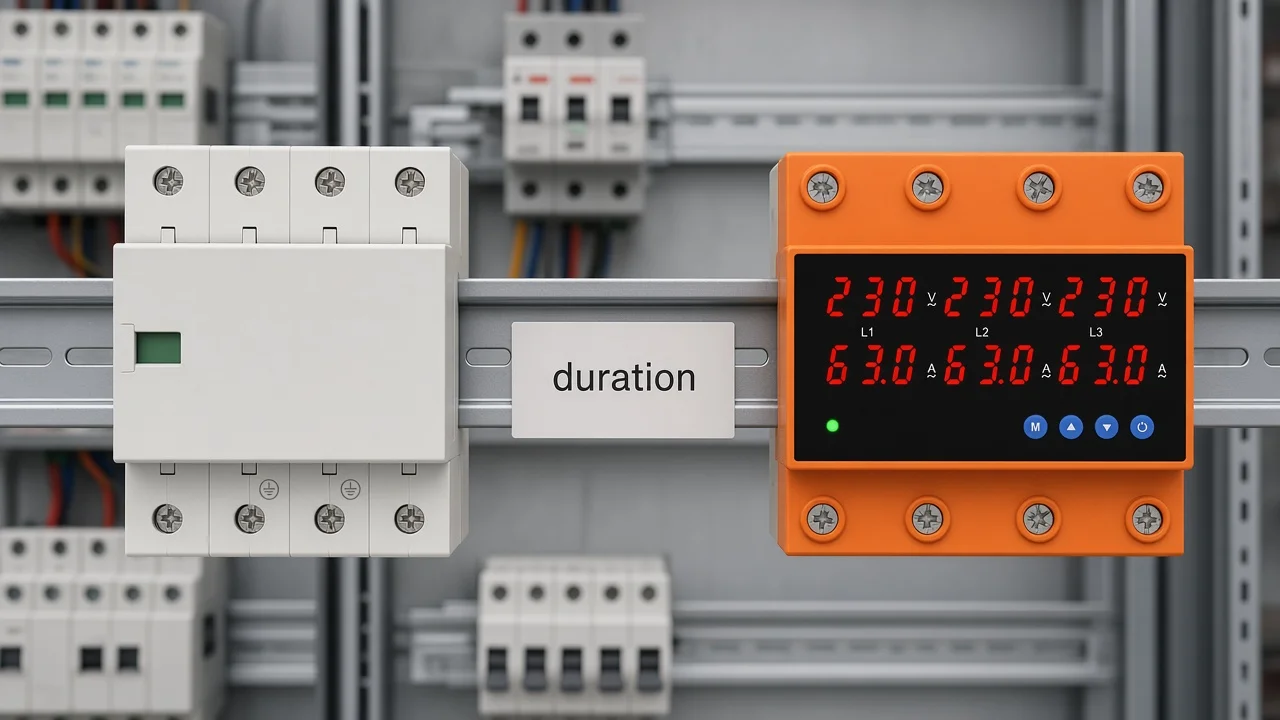
Readers comparing voltage protector vs surge protector language usually need the same duration rule below.
The One Decision Rule for Surge Protector vs Voltage Protector
Sustained out-of-range voltage needs disconnect; short spikes need clamping — the product names are not interchangeable.
If measured supply stays above or below a configured window long enough for monitoring logic to act, remove power from the load. That is the voltage-protector job on DIN-rail over under voltage protector devices such as those in Yijin’s over and under voltage protector category.
If the event is a short transient from lightning effects or switching, limit the voltage stress while giving surge current a path. That is the Surge protector / SPD job on Yijin’s surge protection device hub.
US trade talk sometimes collapses the labels. On Reddit’s AskElectricians discussions, readers still ask whether the two names mean the same thing, and answers note that “voltage protector” is not a very standard term. Ask what the voltage is doing and how long it lasts.
Why Microseconds and Sustained RMS Are Different Jobs
Transient protectors handle microsecond-scale spikes; Sustained RMS over/undervoltage sits outside that duty.
Encyclopedia descriptions of surge protectors frame the threat as voltage spikes with very short duration measured in microseconds, limited by clamping or diverting energy.
The same pages note that a long-term overvoltage lasting seconds, minutes, or hours — for example from certain utility faults — is not what a transient protector is built to manage, and that other means such as overvoltage relays may apply.
Class II SPD education separates that seat further. Class II testing uses an 8/20 μs discharge current language, which is a surge-device worksheet, not an RMS window trip table.
NICEIC technical writing maps Class I roughly to 10/350 μs impulses and Class II to In with 8/20 μs — useful when you are reading an SPD card, useless when you are trying to disconnect a lasting brownout.
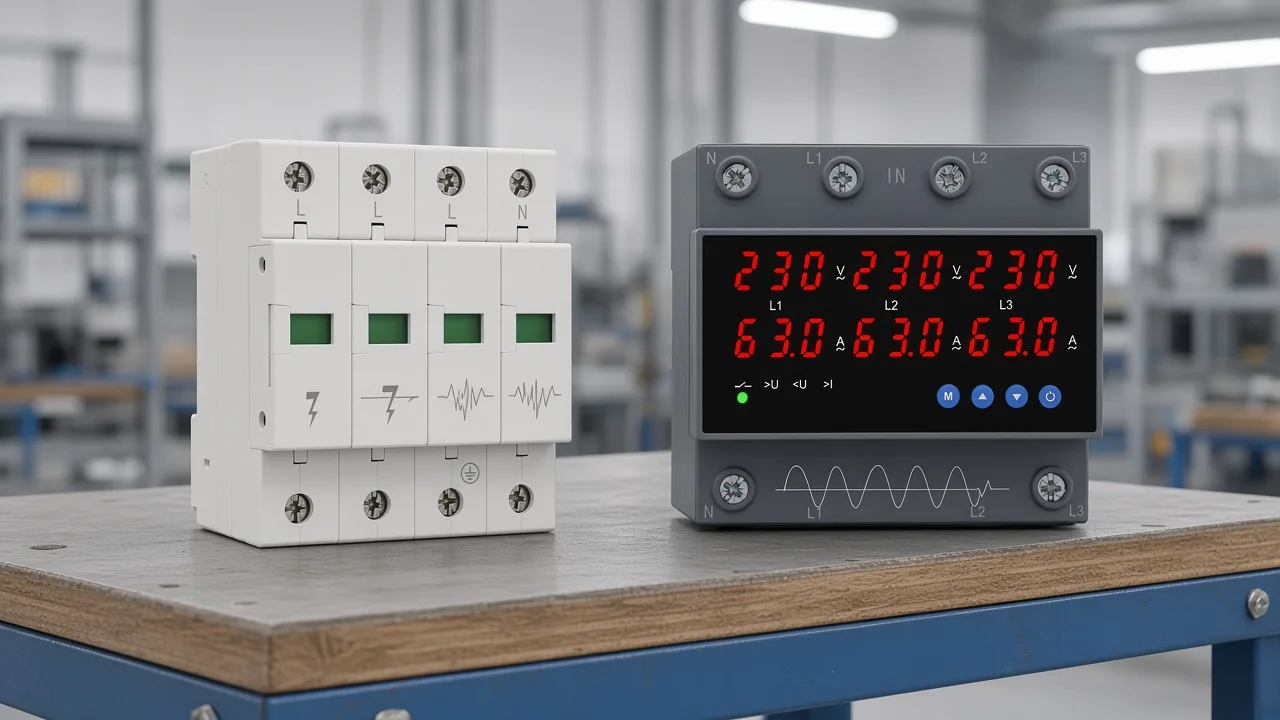
Spike duration points to MOV / clamping. Lasting RMS deviation points to disconnect.
Side-by-Side Comparison: Action, Timing, and What Each Device Does Not Do
One scan table separates target, timing, action, and the substitutions that fail.
| Decision field | Voltage protector | Surge protector (SPD) |
|---|---|---|
| Disturbance | Sustained overvoltage / undervoltage (RMS window) | Short transient / spike |
| Typical timing language | Milliseconds to seconds of monitoring, then trip logic | Microseconds (SPD duty); Class II 8/20 language on cards |
| Protective action | Disconnects the load path | Clamps / diverts surge energy; normally keeps the circuit energized |
| Recovery | May restore after Auto-restore delay and reset window | Stays parallel; may age or indicate failure after surges |
| Does not do | Does not clamp lightning-class spikes as an SPD | Does not open for sustained undervoltage or boost low voltage |
| First-party Yijin example | YJQGA-63 OUV + overcurrent reclosing protector | YJ1-C40 Class II module |
An overvoltage trip on a monitoring relay does not automatically make that relay an SPD. Surge protection needs declared transient performance for the installation class you intend.
Likewise, an SPD’s continuous operating voltage (Uc / MCOV) is a selection limit for the SPD mode. It is not a user-adjustable undervoltage disconnect setting.
Choose a Voltage Protector When the Supply Stays Out of Window
Pick a voltage protector when measured supply stays high or low long enough that cutting power is the safe response.
Typical buying scenes include motors and compressors that should not keep running through a long undervoltage, and boards that see recurring high-line conditions. The acceptable answer is a planned outage rather than hoping electronics ride through.
On that path, verify nominal voltage, single- or three-phase arrangement, over/under thresholds, hysteresis, delay and reset logic, and whether the device also supervises overcurrent. Yijin’s live YJQGA-63 3P+N page is one published example of that disconnect-and-restore pattern for AC220 V / 230 V systems stated on the table.
From the field: Electricians on Mike Holt’s forum describe over/under voltage relays wired to shunt an entire MCC, then nuisance-tripping when a compressor start drops voltage — and warn against setting undervoltage too tightly. Source: https://forums.mikeholt.com/threads/symcom-motor-saver-500.2556979/
The restore delay exists so the load is not slammed back on while the line is still moving. Wrong sensing location and whole-board trip boundaries create a different problem than protecting one motor circuit.
For a plain-language definition of the device class itself, see Yijin’s sibling note on what a voltage protector is. This page stays on the decide-which-device question.
Choose an SPD When the Threat Is a Short Spike
Pick a surge protective device Class II module when the design must limit transient overvoltage, not manage a lasting RMS window.
Storm-related and switching spikes are the classic brief. Sensitive electronics and control boards care about let-through during those events. The SPD normally sits in a high-impedance standby state at acceptable system voltage, then a nonlinear path clamps when a transient drives the protected mode high.
On Yijin’s mid Class II card, the live YJ1-C40 surge protector table prints Class II experiment language, Uc (L-N) 385 V, In 20 kA (8/20), Imax 40 kA (8/20), and Up 1.8 kV, with a recommended series device of 32A/10kA and response time ≤25 ns. That is a surge seat. It is not an undervoltage disconnect.
Browse the wider family from the surge protection device category when the worksheet is about SPD class and discharge ratings. Deep In/Imax/Uc sizing belongs on a sizing article, not this comparison.
When Buyers Need Both a Voltage Protector and an SPD
Use both when the board sees unstable RMS and transient exposure — the functions stay separate.
A facility can live with recurring voltage excursions and still have outdoor feeders or switching that produce spikes. In that arrangement:
- The SPD limits transient voltage between its connected conductors.
- The voltage protector monitors supply voltage and initiates load disconnection when its settings require it.
- Upstream overcurrent devices still handle short-circuit and overload jobs.
- Earthing and bonding follow the system design — “use both” is not a universal wiring order.
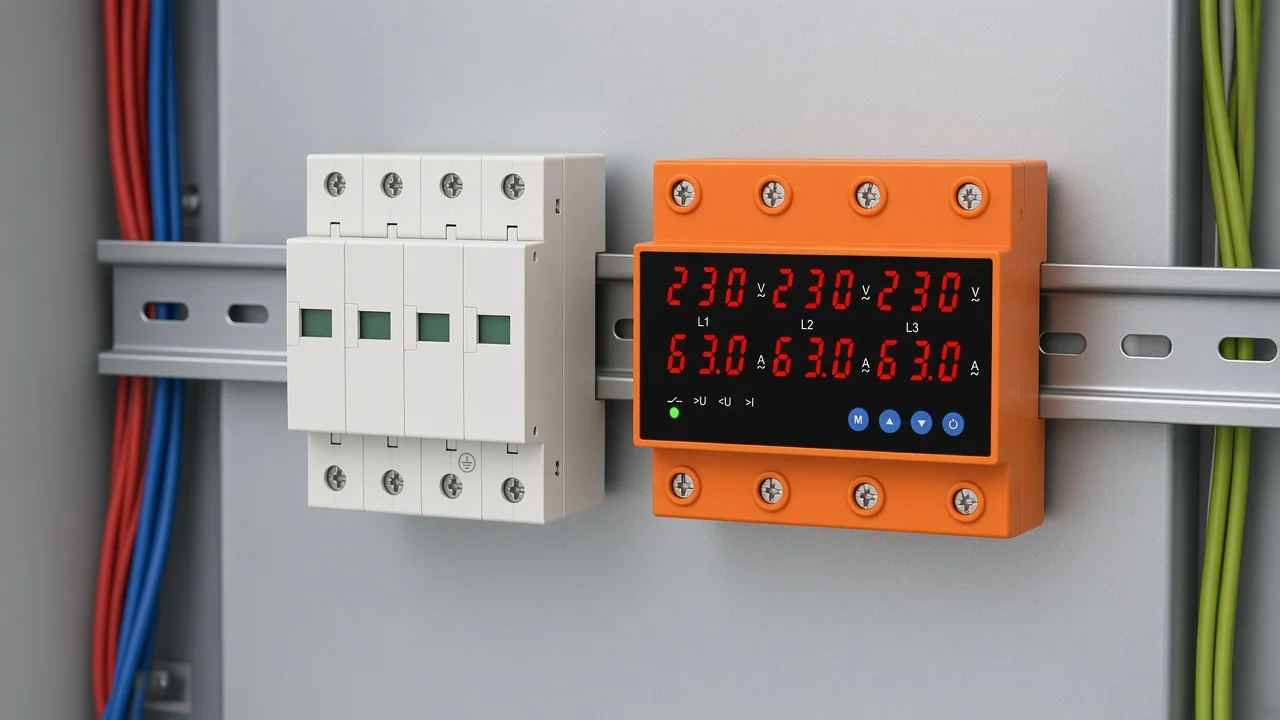
Coordinate two device classes when both risks are real. Treat a multifunction product as proven only after each declared function shows its own ratings.
What This Decision Is Not: AVR, Power Strip, or Breaker Swap
A Voltage regulator / AVR corrects voltage; a consumer strip is not this DIN-rail decision; a breaker is overcurrent — none replace the duration rule.
Search results and videos often drag in AVR / stabilizer language. A voltage regulator changes the input-to-output relationship so the load keeps running through variation.
A voltage protector decides whether the measured voltage is acceptable and disconnects when it is not. Those are different jobs.
Retail “surge protector” power strips are a consumer shopping intent. They are not the DIN-rail Class II SPD conversation this site’s SPD hub describes, and they do not answer a sustained undervoltage disconnect need.
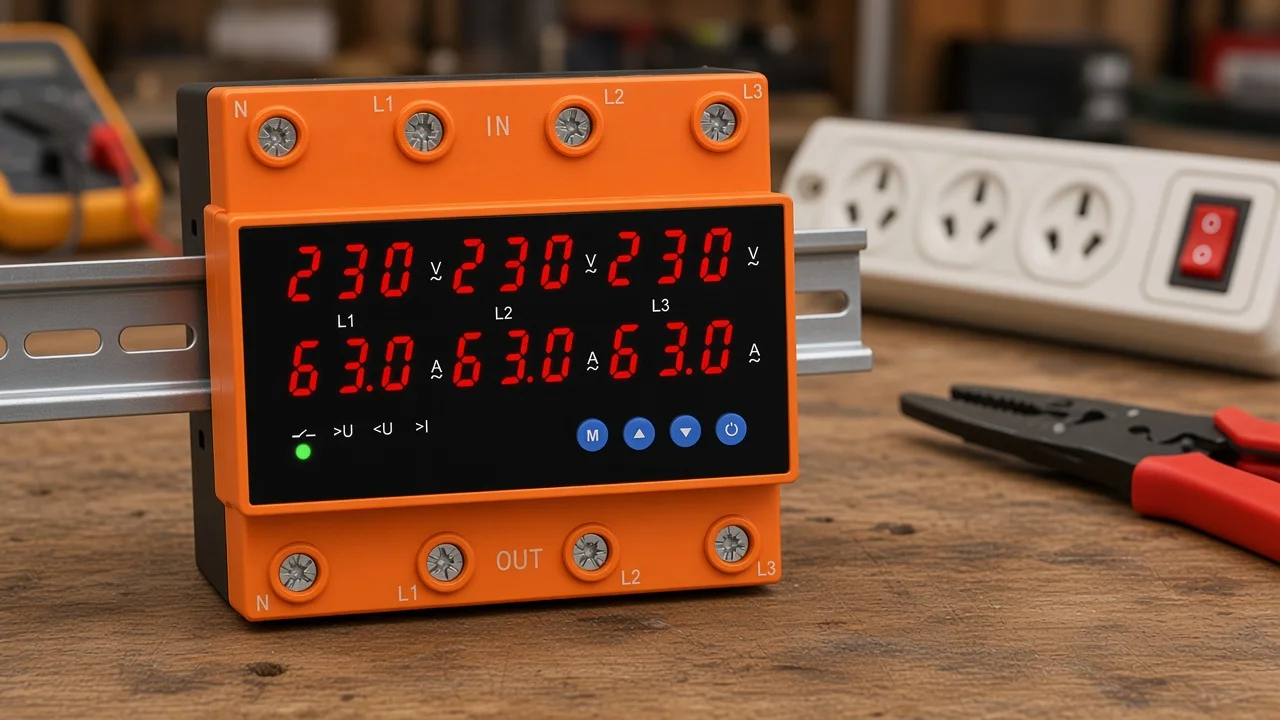
A circuit breaker protects against overcurrent. It remains required upstream of these devices. It does not become an SPD or an OUV monitor by being called “protection.”
Which Product to Choose: YJQGA-63 for Sustained Windows, YJ1-C40 for Surge
Recommend YJQGA-63 when the job is OUV disconnect; point to YJ1-C40 only when the job is Class II surge.
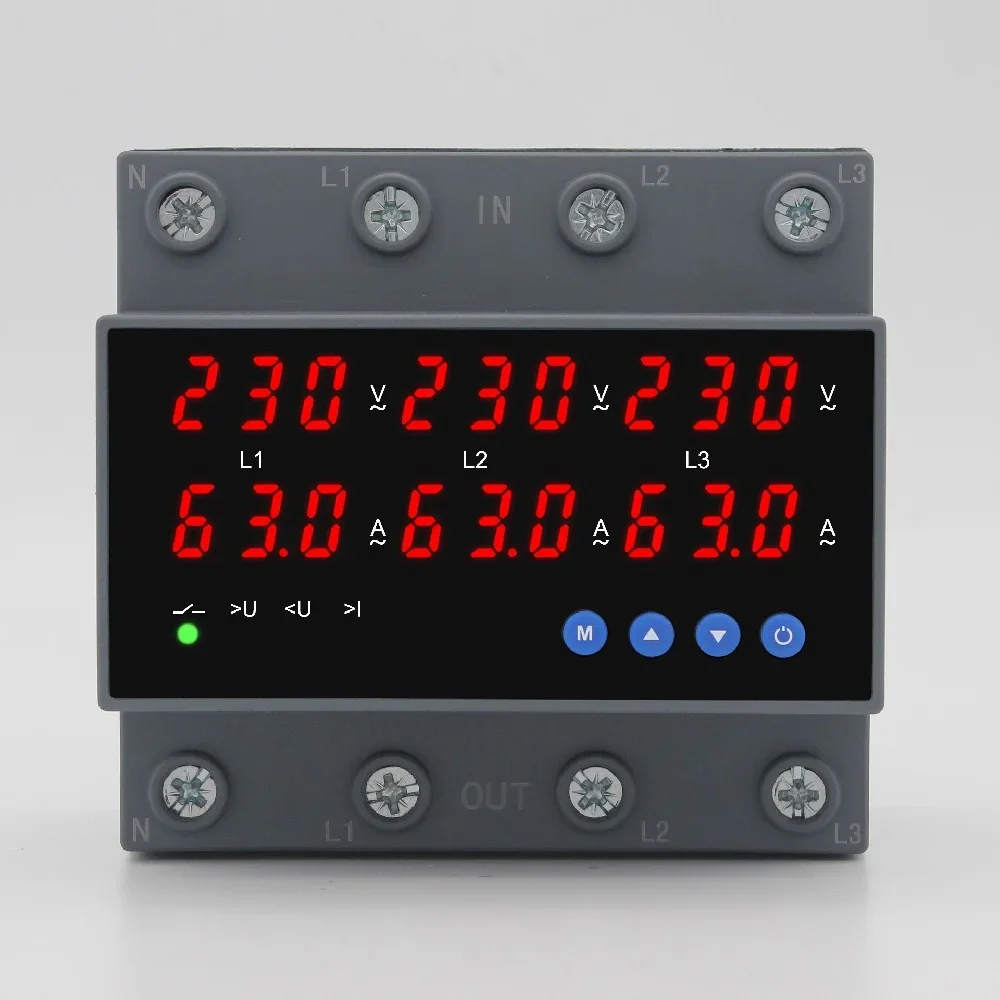
When the disturbance is sustained high or low RMS on a low-voltage board and disconnect-plus-delayed-restore is the required action, start with the live YJQGA-63 3P+N over/under voltage and overcurrent reclosing protector.
Published table values on that page (model claim only): poles 1P+N / 3P+N; rated voltage AC220 V / 230 V; rated current 1–63 A (default 63 A); 50 Hz / 60 Hz; overvoltage cutoff 240–300 V (default 270 V); undervoltage cutoff 140–200 V (default 170 V); overcurrent 1–63 A; power-on delay 1–300 s (default 5 s); OV/UV reset delay 5–300 s (default 30 s).
Line voltage should not exceed 330 VAC per the page note. Those numbers are model claims for that SKU, not universal factory defaults for every market voltage.
| Job | Start here | Why |
|---|---|---|
| Sustained OV/UV (+ overcurrent) disconnect with delayed restore | YJQGA-63 3P+N | Live OUV + overcurrent + delay table |
| Mid Class II surge clamp on AC boards stated on the SPD page | YJ1-C40 | Class II In 20 kA / Imax 40 kA / Up 1.8 kV / Uc 385 V L-N |
| Browse more SPD options | Surge protection device hub | Category navigation |
Tip: YJQGA’s feature text mentions delayed reconnect after unstable voltage and claims no false operation on transient overvoltage. Keep the surge path on the SPD family with its own Class II In/Imax/Up ratings. Source: https://yijinele-group.com/product/yjqga-63-3pn-over-under-voltage-overcurrent-reclosing-protector/.
UL 1449 / NEC approval is outside what this package verifies.
IEC61643-1 / GB18802.1 design-basis language and UL94 V-0 housing marks on the SPD page are page wording, not a substitute for a U.S. listing claim.
This article is not a hands-on review.
FAQ
Are surge protectors and voltage protectors the same thing?
No. An SPD clamps short spikes; a voltage protector disconnects when supply RMS stays outside a window. Shared marketing words do not merge the jobs.
Can a surge protector replace a voltage protector?
No. A standard SPD does not open the load because voltage stayed low for minutes, and it does not boost undervoltage.
Can a voltage protector replace an SPD?
No. Disconnecting on a monitored RMS window is not the same as limiting a microsecond transient with declared SPD ratings.
Do I need both a surge protector and a voltage protector?
Often yes when the site has both unstable RMS and transient exposure. Coordinate both functions rather than inventing one substitute from a label alone.
What does YJQGA-63 actually do on the live table?
On the live 3P+N page it combines overvoltage, undervoltage, and overcurrent protection with adjustable windows and delayed restore on AC220 V / 230 V, 50/60 Hz systems as published — it is not published as an SPD.
When should I look at YJ1-C40 instead?
When the job is mid Class II surge clamping. The live table prints Uc 385 V L-N, In 20 kA, Imax 40 kA, and Up 1.8 kV. Start from the SPD hub if you need siblings.
Do SPD page marks equal a US listing?
No.
UL94 V-0 is plastic flammability language.
IEC61643-1 / GB18802.1 appear as design-basis wording on the product page.
Neither sentence is a U.S. listing claim for this article.
Why can a voltage monitor nuisance-trip a whole board?
Field threads describe over/under relays wired to shunt an entire MCC and UV settings that are too tight for normal motor-start voltage drop. Boundary and delay choices matter as much as the brand name.
References
- Types of Surge Protective Devices (SPDs) — NICEIC / Professional Electrician — Class I / Class II test-class language (10/350 vs 8/20).
- Surge protective devices — IET Wiring Matters — Type 1 at origin; Type 2 at sub-distribution; Type 3 as supplement.
- Electrician Talk — Surge protection at panel ratings — trade thread noting panel ampere rating does not dictate surge discharge choice.
Humanizer self-audit (Draft Agent YJ-DRF-AGT-20260927-01): preserved claim facts; varied section openers; removed source-first and meta-process language from reader prose; no invented UL/NEC or lab tests; second “what still sounds AI?” pass completed before review handoff.