 Yueqing Yijin Electronics Co., Ltd.

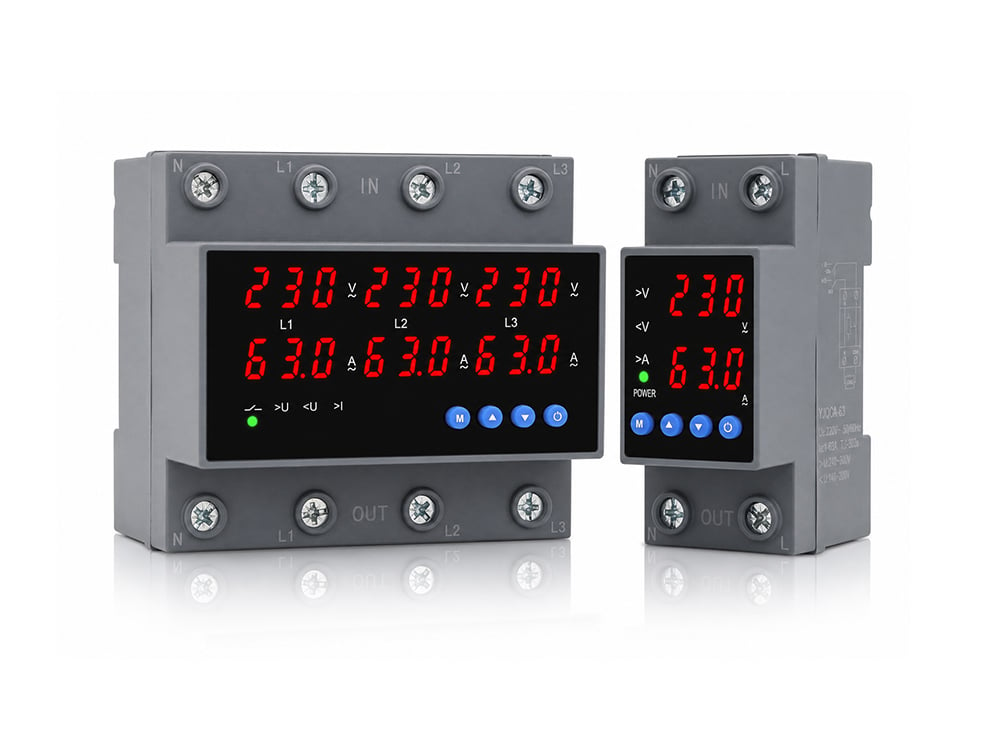



Match a surge protection device for home to a rail module or a service unit
A surge protection device for home is usually either a plug-in strip or a unit on the service equipment. Those are different objects from a DIN-rail module.
The module on this page is a Class II rail part for a distribution box. It does not become a meter-base whole-home device because the search said “home.”
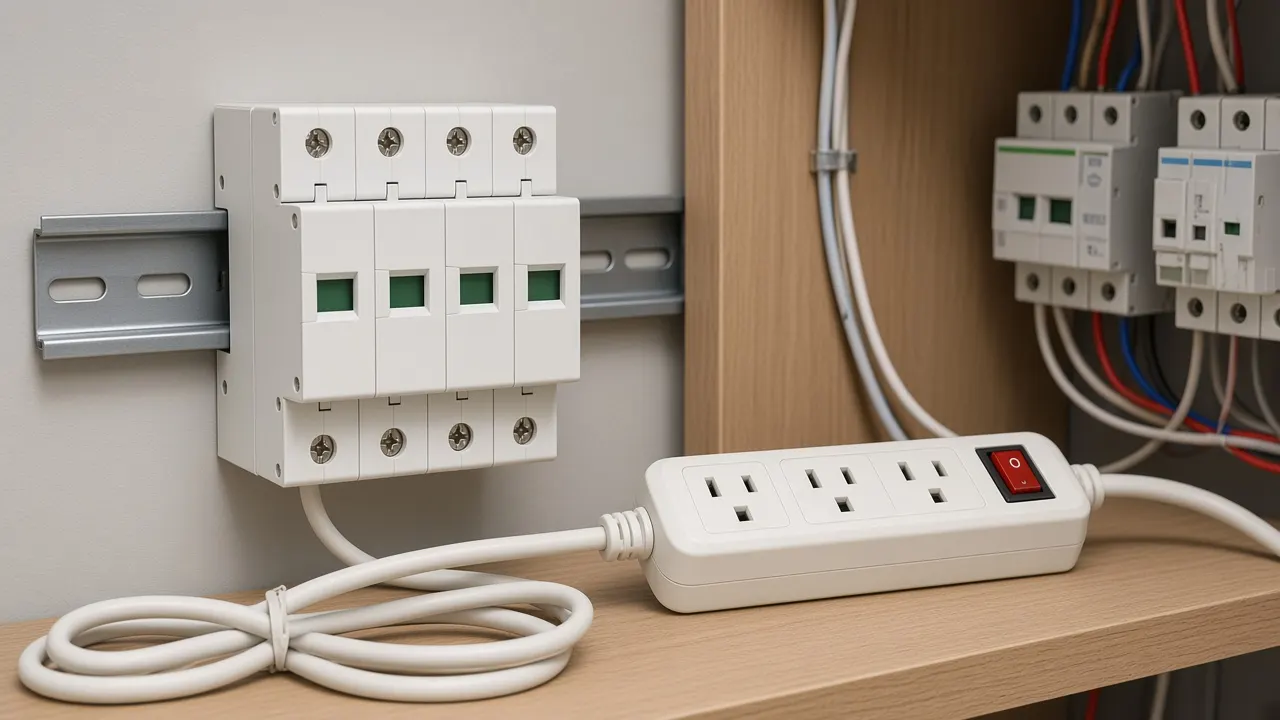
Separate a plug-in strip from a panel surge device
A surge protector is a device meant to protect AC equipment from short voltage spikes. That definition covers more than one piece of hardware.
A plug-in power strip sits on a desk or a floor and adds outlets. Some cartons say surge.
The encyclopedia’s domestic note, which the page itself marks as unsourced, still draws a line. A panel unit on the incoming feed is a different product, and it usually needs a professional install. A strip label does not copy that panel job.
Readers get lost on the marks. One talk-page question asks what the line-to-neutral and line-to-ground marks on a three-prong plug-in unit are trying to say.
Another asks what a distribution board is, after a sentence about surge strips and boards. Those are strip questions. They are not a datasheet for a rail module.
Important: A power strip that says surge on the carton is still a portable outlet block. It is not the rail module’s Class II table.
Keep the three names separate before you compare prices: plug-in surge strip, service panel surge device, and rail module.
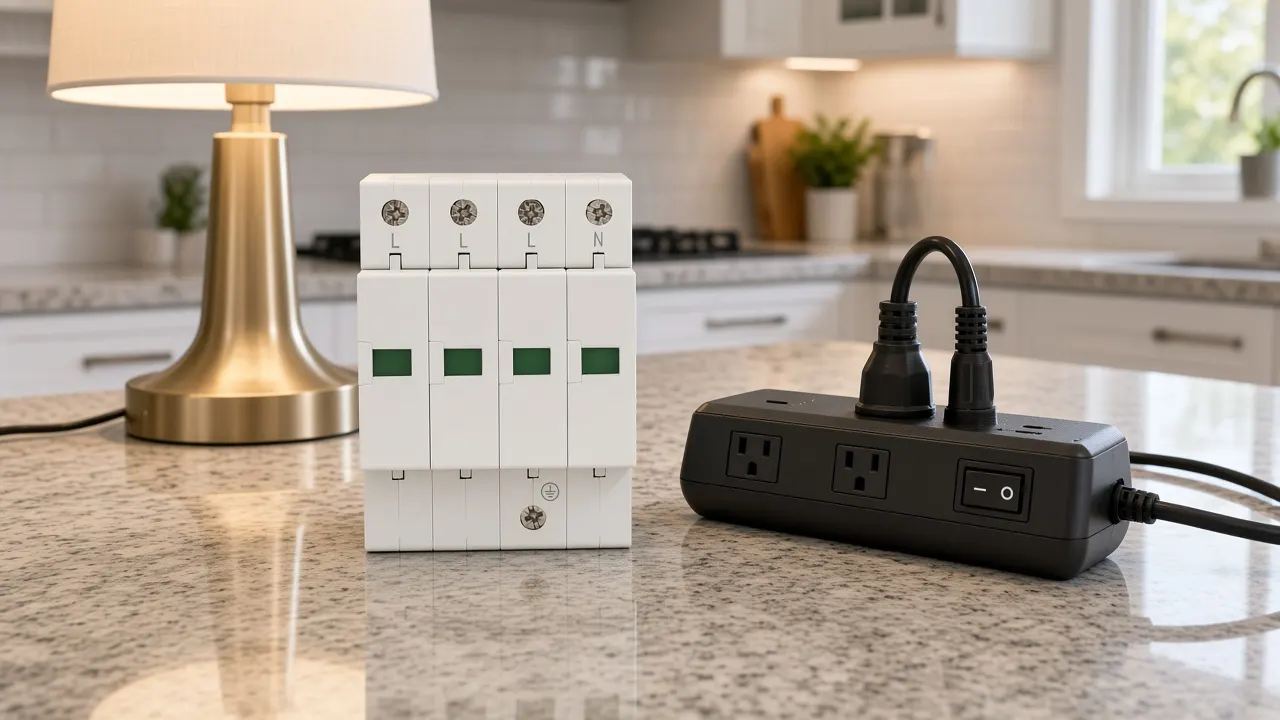
Read the Class II rail module as its own class
The YJ1-C40 surge protector is a din-rail class ii module. The page says the experiment category is Class II.
That phrase is the page’s own class mark. It is not a US service-entrance label, and the page does not print a surge-device listing.
The page limits the series to AC 50 Hz systems at 380 V and below.
It names TT, IT, TN-S, and TN-C-S. It mounts on a DIN rail.
A feature line mentions a waveform mark that does not match the parameter table. Use the table when you cite discharge current. Do not average the two marks into a third number.
A varistor clamps after a voltage threshold. That is the component idea behind many protectors. It does not add a joule rating this page never printed.
If a shopping page ranks strips by joules, leave that ranking on the strip. It is not a column on this sheet.
The category index is only a family list: surge protection device. The decision is the model table, not the menu.
Use the printed continuous voltage before the discharge numbers
Continuous voltage is the level the module can see all day. Discharge current is a short test wave. Buyers who read only the kiloampere figure skip the line that tells them the system voltage.
The YJ1-C40 table lists Un at 220 V AC 50 Hz, Uc from line to neutral at 385 V AC 50 Hz, and Uc from neutral to protective earth at 255 V AC 50 Hz.
The same table lists nominal discharge at 20 kA for an 8/20 microsecond wave, maximum discharge at 40 kA for that wave, and a voltage protection level of 1.8 kV.
Match Un to the system the board is actually on. A US dwelling service is often a different voltage class from the Un line in that table.
If the service voltage is not the printed Un, this module is the wrong candidate. Do not make it fit a home search by ignoring Un.
The page also says the design basis complies with IEC 61643-1. That is the page’s statement.
The public IEC list page does not, by itself, spell out this model’s type test. Treat the sentence as a first-party design claim, not as a copy of the standard in your hand.
| Printed line | What to compare |
|---|---|
| Un | The system voltage on the board |
| Uc line to neutral | The highest continuous line-to-neutral voltage you expect |
| Discharge current | A short-wave test, read only after Un matches |
| Listing mark | Nothing on the page is a surge-device listing, so do not add one |
Treat the status window as a failed-module flag
The page says the window is green when the module is normal and red when it is in fault. A failed module can disconnect after overcurrent, overheating, or breakdown. The window is how that disconnect is shown.
Green is not a promise that every load in the house is safe. It means the module still sees itself as in service.
Red means the page wants that module treated as failed. Replace or isolate it under the maker’s instruction. Do not scrape the window and keep using a red module because the lights are still on.
A talk-page note about plug-in units also says people struggle to prove that a surge, rather than age, ended a protector. That doubt is another reason to trust the window the sheet defines, instead of a story about one storm.
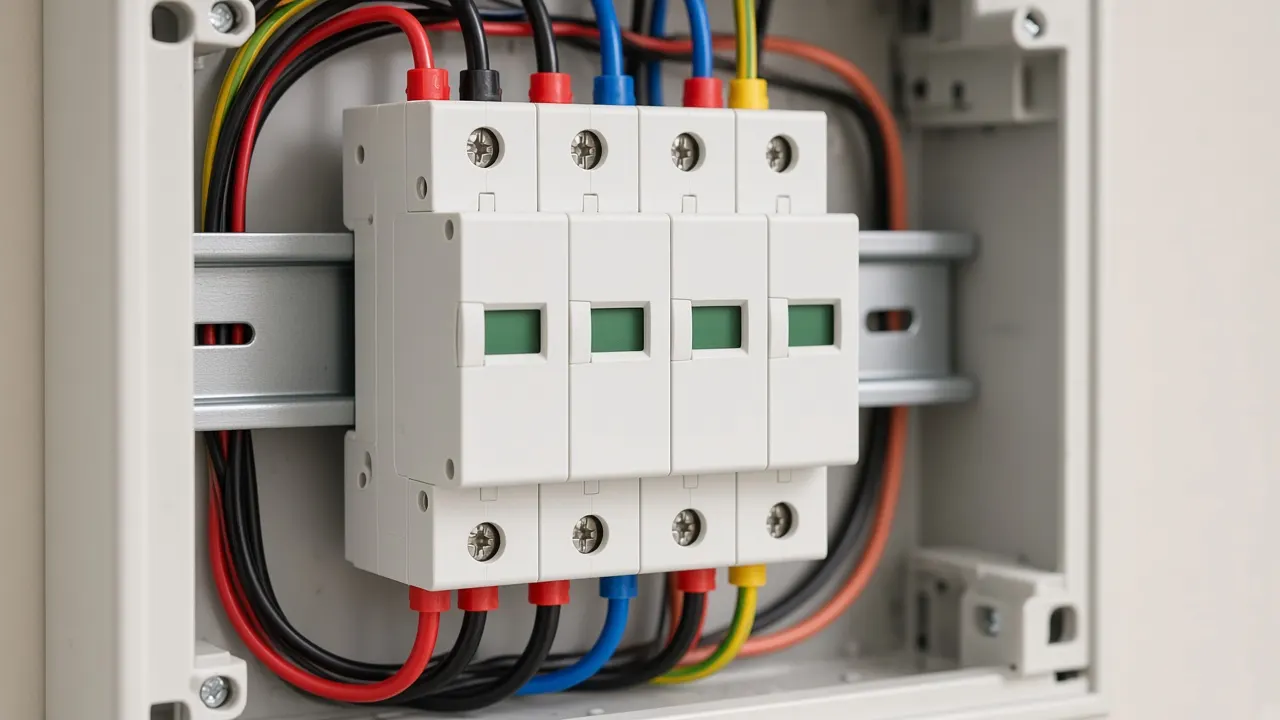
Keep the module off the meter-base whole-home job
A service panel surge device, in the encyclopedia’s domestic note, is installed on the incoming feed so spikes on that feed meet the protector before the branch circuits. The note is unsourced on that page. It still describes a different object from a module that clips onto a rail inside a box.
This sheet never says meter base, never says Type 1, and never shows a photo of outdoor service equipment. Calling YJ1-C40 a whole-home service SPD would invent that job. The honest sentence is narrower: it is a Class II rail module whose voltages are printed above.
A lightning rod on the roof is a third object again. It is an air terminal for the building. It does not replace either the strip or the rail module.
If the project really is a meter-base or service-entrance unit, stop on this URL and specify that other class. If the project is a rail slot in a box whose voltage matches Un, keep reading the table.
Ask which board the module is meant to sit in
A distribution board is the enclosure that splits a supply into branch circuits. A rail module lives in that kind of enclosure. A strip lives in a room, on the load side of a receptacle.
Walk the board before you order. Note the system type the panel already uses, then put that note next to the TT, IT, TN-S, or TN-C-S list.
A villa box on the page is still a distribution box. It is not a reason to skip the voltage check.
The page says an SPD should be installed in residential distribution boxes for dispersed small villas. That is the house sentence this model actually prints.
It is not a US service-entrance detail. Read “villa distribution box” as the page’s own words, then check that your board voltage is the printed Un.
OSHA’s equipment rule is the workplace version of a simple limit: electrical equipment has to be examined and kept free of recognized hazards. This article does not turn that rule into a wiring procedure. Power stays off before a module is added or removed, and the terminals get tightened the way the page requires for its own terminals.
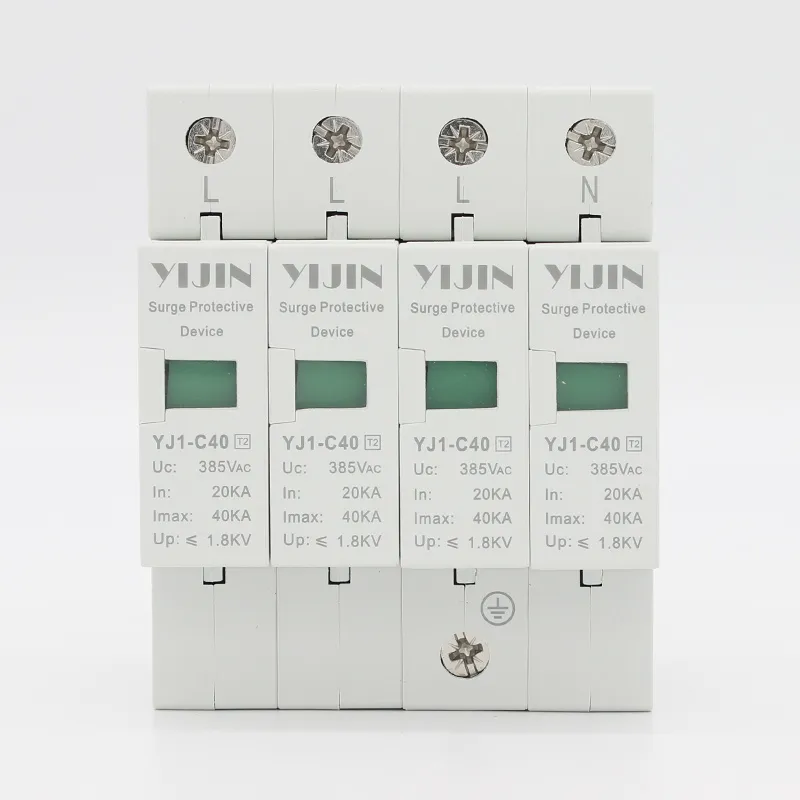
The photo is the rail module named on the product page.
| Question on the box | Answer from this page |
|---|---|
| Is the board voltage the printed Un | If not, this module is out |
| Is the slot a DIN rail in a distribution box | That matches the mechanical class |
| Is the job a plug-in strip | Buy a strip, not this module |
| Is the job a meter-base service unit | This page does not claim that job |
FAQ
Is a plug-in strip the same object as a rail surge module?
A strip adds outlets in a room. A rail module clamps on a DIN rail inside a board. The carton word “surge” does not merge them.
What does Class II mean on this product page?
It is the experiment category printed for YJ1-C40. It is not a service-entrance label, and the page does not add a listing mark.
Which voltage is the continuous operating voltage?
Uc is the continuous operating voltage on the table. Un is the rated voltage beside it. Read both before the discharge current.
What does a red window mean?
The page uses red for fault and green for normal. A red module is a failed module under that description, not a module to keep in service.
Can this module replace a meter-base whole-home unit?
No. The page describes a rail module for distribution boxes. It does not describe a meter-base service unit.
Which board does the page name for a house?
It names residential distribution boxes for dispersed small villas. Confirm the board voltage against Un before you treat that sentence as your project.
References
- Surge protector, AC spike device and the strip-versus-panel note: https://en.wikipedia.org/wiki/Surge_protector
- Varistor, clamp after a voltage threshold: https://en.wikipedia.org/wiki/Varistor
- Distribution board, the enclosure class: https://en.wikipedia.org/wiki/Distribution_board
- OSHA 1910.303, examination of electric equipment: https://www.osha.gov/laws-regs/regulations/standardnumber/1910/1910.303