 Yueqing Yijin Electronics Co., Ltd.




A buzz is not a printed fault
Bad ac contactor symptoms in the field often start as a noise. The Yijin page for this body does not list noises. It lists what the household contactor is built to switch.
A buzz is the field complaint
The useful complaint is a sound you can point to. Someone hears it in a cabinet and asks whether the part is finished. That question is older than this product page.
From the field: On the contactor talk page, a reader asked whether a buzzing sound means the contactor usually needs to be replaced. A later comment on the same page says contactors and large relays may hum or buzz when they are energized with AC power.
A hum on AC power is described there as something the device can do while it is energized. It is not written there as a code number.
The product page does not add a code either. If the only note you have is “it buzzes,” you still need the sheet before you call the part dead.
A shading-coil comment on the relay talk page treats buzz as a flux problem at the zero of the cycle. That is a design remark.
It is not a pass-fail line for the YJC1-63. Keep the remark in the talk page and the ratings on the product page.
The page names a household contactor
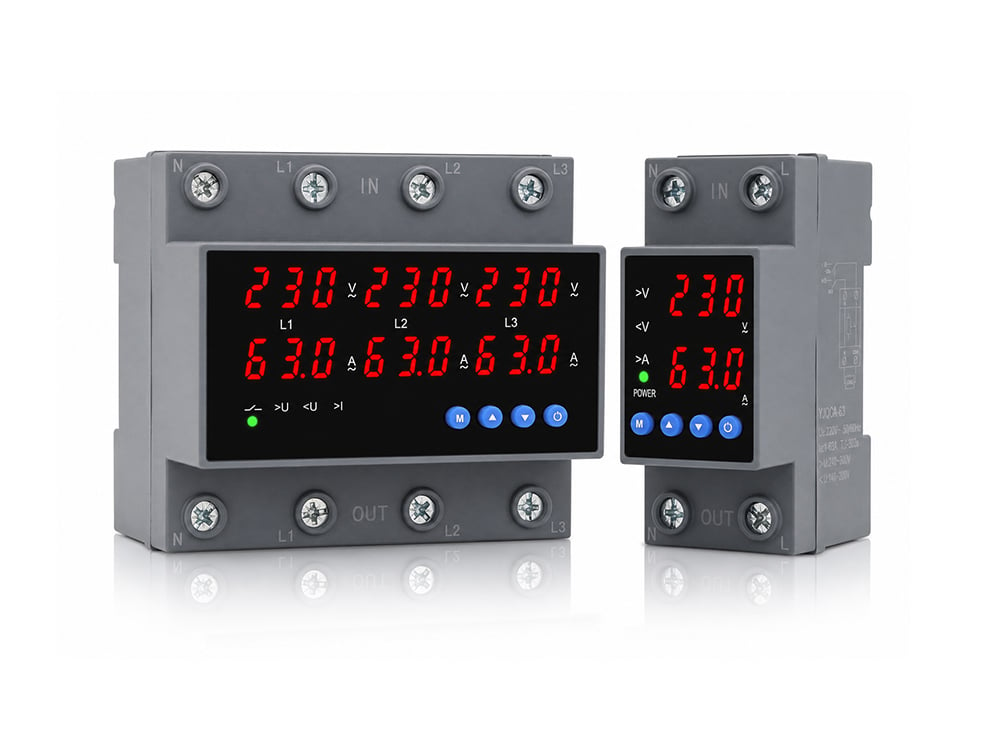
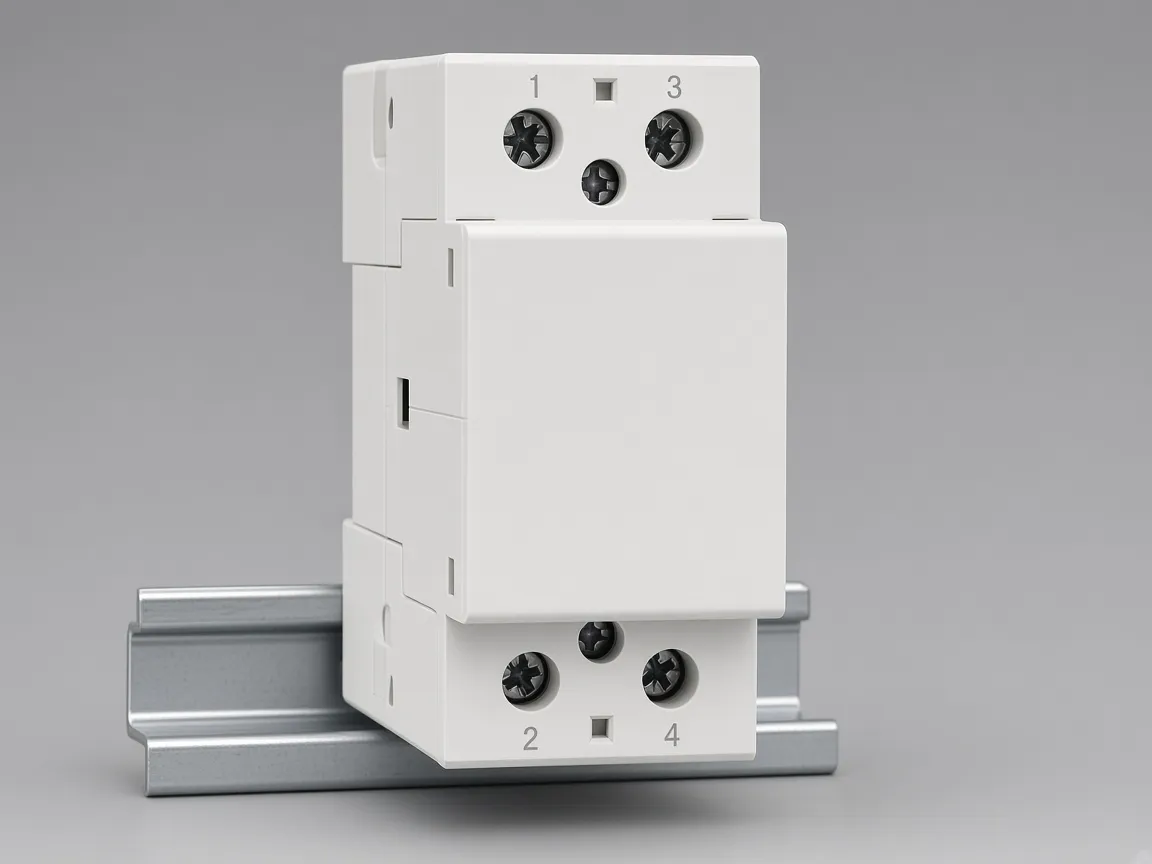
The rail product is the YJC1-63. The page calls it a household contactor and a remote switch. The control supply band on the later section is a different line from this job description.
A contactor is a type of relay with a high power rating. Contactors are typically used to control electric motors, lighting, heating, capacitor banks, thermal evaporators, and other electrical loads.
The Yijin scope is narrower than that list. It names low-inductance loads and household motor loads.
The YJC1-63 page prints a rated working voltage of 230 V at 50 Hz or 60 Hz and a rated working current of 63 A. The page says the product complies with GB17885 and IEC1095.
Conventional units are normally open. A normally closed unit is described as a custom build.
| What you brought | What the page can answer |
|---|---|
| A buzz in the cabinet | It does not name the buzz |
| A household motor that stopped | It names that class of load |
| A request for a coil ohm | It does not print a coil ohm |
| A request for the working voltage | It prints the working voltage |
Closing needs a control band
The coil is fed from a control supply the page calls Us. The contactor is supposed to pull in when that supply is inside a printed window. Outside that window the page is simply not promising a close.
The page says the contactor can close at any voltage from 80% to 110% of the rated control supply. The page says the release voltage is neither higher than 75% of that supply nor lower than 20% of that supply.
Those two sentences are the control supply band. They are not a diagnosis that a buzz has crossed the band.
If the control supply was never measured, the band cannot be applied yet. Write down the supply you intended, then compare it with the band. A story that skips the supply and jumps to “bad coil” is ahead of the page.
Life is printed as cycles
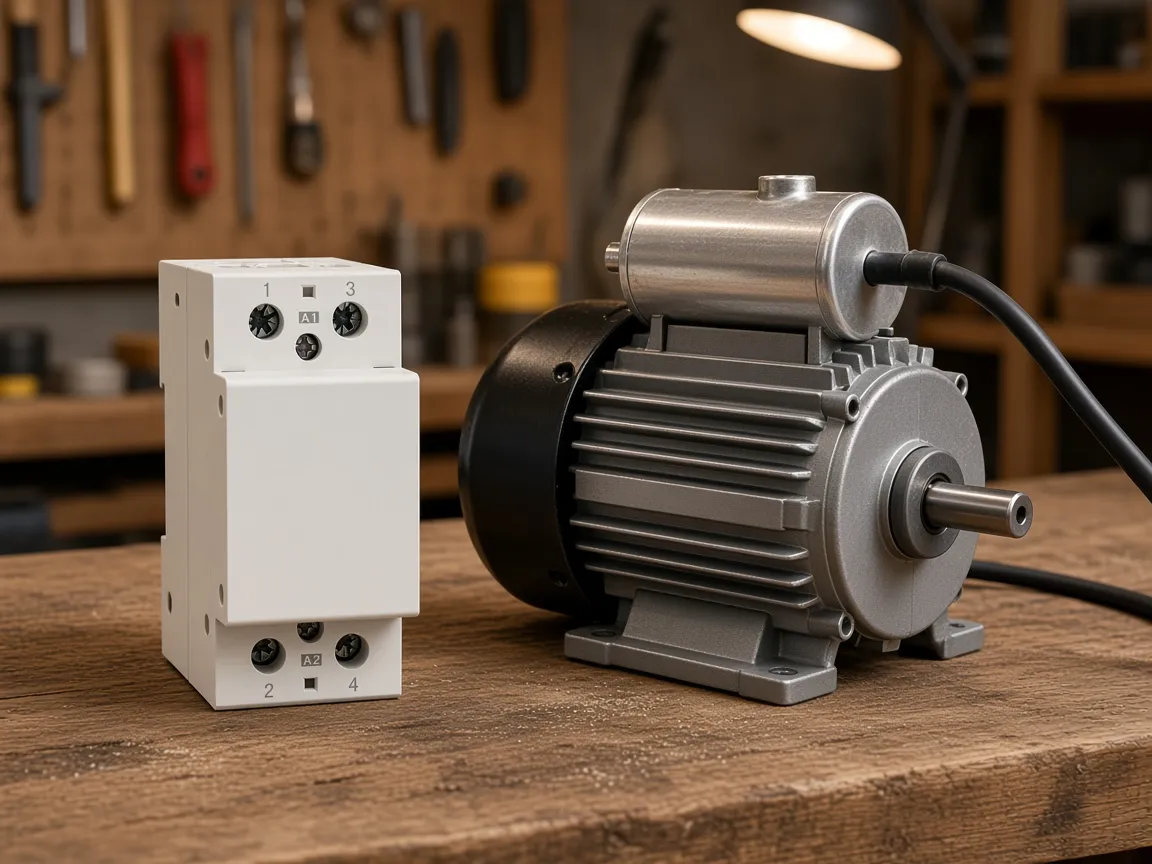
Life on this page is a count of operations, not a calendar year and not a noise level. Two counts are printed, and they are not the same count.
The page says the mechanical lifespan is not less than 1 million cycles and the electrical lifespan is not less than 100000 times. Mechanical life is the mechanism.
Electrical life is the current-carrying duty in the utilization category the table is aiming at. A buzz does not increment either counter by itself.
The spelled-out cells in the parameter table are hard to read, so this draft stays with the prose life lines. If a cell looks like a word where a number should be, leave the cell out of the order. Ask for the sentence you can read aloud.
A relay is the wider class
A relay is an electrically operated switch. The contactor page is the high-rating case of that idea. A small relay in a signal circuit can click and still be the wrong spare for a household motor circuit.
The talk page also warns that a contactor article and a relay article repeat each other. Use that warning as a filing rule.
If your part is switching a household motor at the printed working voltage, stay on the contactor page. If your part is a signal relay, this sheet is the wrong one.
The rail is only the mount
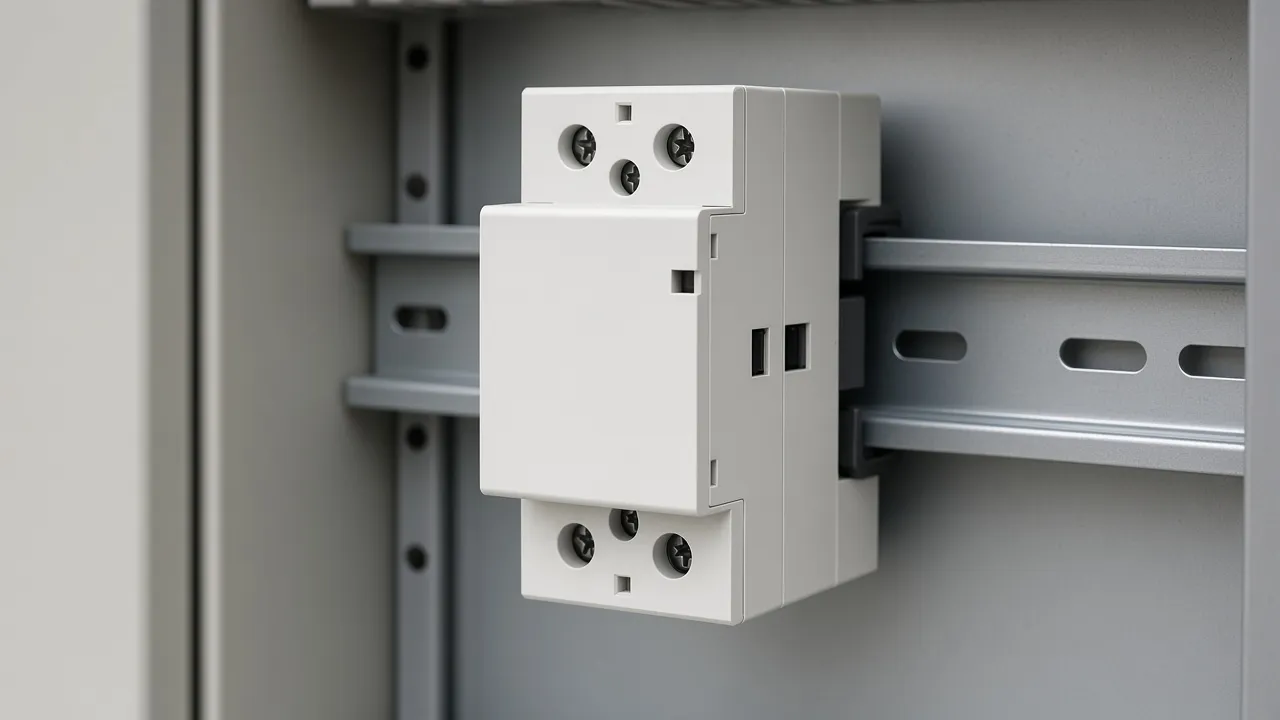
A DIN rail is a metal rail of a standard type widely used for mounting circuit breakers and industrial control equipment inside equipment racks. The page names the TH35-7.5 rail.
The rail holds the body. It does not store the buzz, and it does not decide the close.
A loose clip can make a rattle that a listener calls a buzz. Seat the clip before you judge the coil.
The altitude note says the installation is not over 2000 m. That line is a place limit, not a sound limit.
A meter check is another article
A coil-resistance procedure already exists as its own page. This page does not repeat the meter steps.
Unlike a fuse, which interrupts once and then must be replaced, a circuit breaker can be reset to resume normal operation. The contactor is neither of those. It is a remote switch for the loads named above.
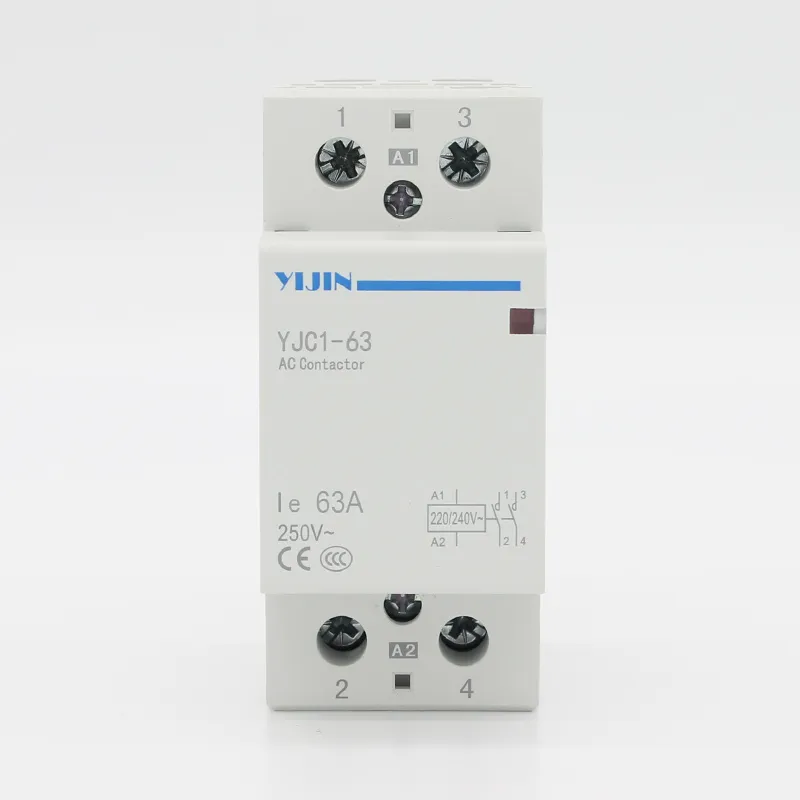
The YJC1-63 modular AC contactor is the sheet to read beside the complaint. The contactor hub collects the other contactor pages if the question is a pole count or a smaller frame.
Before you order a replacement, write the complaint and the sheet on two lines. Line one is the sound. Line two is the working voltage, the current, and whether the control supply was inside the band.
If line two is blank, the sound is still only a sound.
Say who heard it and where the cabinet is. A hydro heater in a house and a bench motor in a shop can both buzz, and they are not the same spare. The page you are on is the household frame with the printed life counts.
If the load is a signal lamp on a control board, stop and look for a relay instead. If the load is a household motor and the voltage matches the scope, stay here. The buzz question from the talk page remains open until the supply is known.
Read the request once more. You want household contactor, then the control supply band, then the complaint. A request that only says “bad” will come back as a guess.
Keep a spare note for the person who opens the cabinet next. Write the frame, the pole count, and whether the unit is the normal open build.
A custom closed unit is a different order, and the page says so. The buzz still does not choose between them.
If the motor runs and the sound is only a soft hum while the coil is energized, the talk page already allows that hum. You still compare the supply with the band before you replace the frame. Replacement without that comparison spends the electrical life count on a guess.
| What you brought | What the page can answer |
|---|---|
| A buzz in the cabinet | It does not name the buzz |
| A household motor that stopped | It names that class of load |
| A request for a coil ohm | It does not print a coil ohm |
| A request for the working voltage | It prints the working voltage |
Frequently asked questions
These answers stay with the pages opened for this draft.
What did the talk page ask about a buzz?
It asked whether a buzzing sound means the contactor usually needs to be replaced. The product page does not answer that with a yes or a no.
What load does the YJC1-63 page name?
It names low-inductance loads and household motor loads. It also calls the device a remote switch.
Which voltage and current are in the scope?
The YJC1-63 page prints a rated working voltage of 230 V at 50 Hz or 60 Hz and a rated working current of 63 A.
Which close band does the page print?
The page says the contactor can close at any voltage from 80% to 110% of the rated control supply. The page says the release voltage is neither higher than 75% of that supply nor lower than 20% of that supply.
Which life counts does the page print?
The page says the mechanical lifespan is not less than 1 million cycles and the electrical lifespan is not less than 100000 times.
Why is a breaker a different device?
Unlike a fuse, which interrupts once and then must be replaced, a circuit breaker can be reset to resume normal operation. This contactor is a remote switch, not that reset.