 Yueqing Yijin Electronics Co., Ltd.




Off is a visible gap, not a load break
An ac isolator switch on or off mark is a visible gap in the circuit, opened so the circuit can be worked on. An isolator switch has visible contacts and is used so the circuit is completely de-energized for service. The handle words look like any other switch until you ask what off is allowed to interrupt.
Off means a visible isolating gap
Off, on this device, means you can see that the blades have left the contacts. The point of that gap is service and maintenance, not everyday control of a lamp or a motor.
The disconnector page says the device is usually not intended for normal control of the circuit. It is there so apparatus can be isolated.
High-voltage versions in substations isolate breakers, transformers, and lines. The low-voltage opening knife switch on this site is the same idea at the distribution board: a gap you can look at.
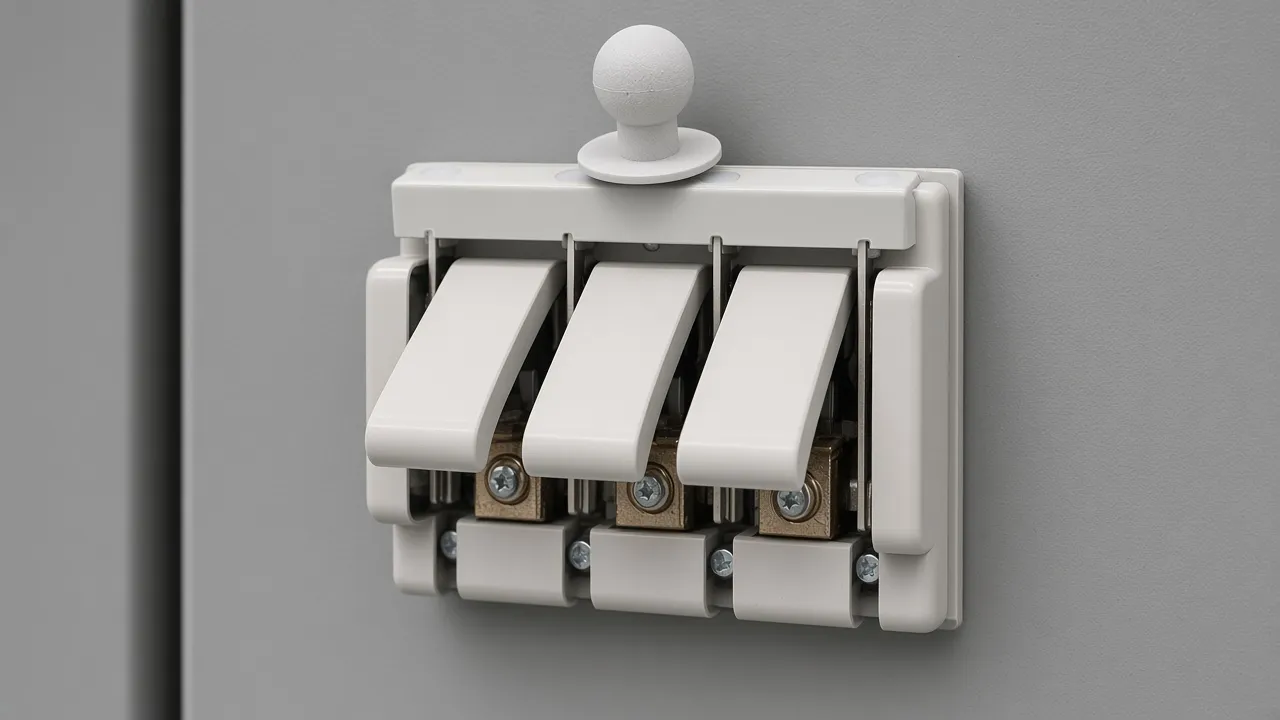
The open blades are the picture of off. If the blades are hidden inside a molded case, you are looking at a different kind of device. The page on integrated disconnecting breakers even warns that a hidden gap raises doubts during maintenance.
Open it only after the current has stopped
An isolator lacks a mechanism for suppression of the arc that appears when current is torn apart. The disconnector page therefore calls it an off-load device. It is meant to be opened only after some other device has already interrupted the current.
Safety practice on that page says the utility’s rules must prevent an attempt to open the disconnector while it still supplies a circuit. Some designs add a lock so the handle cannot be flipped by accident.
Some designs can also earth the isolated section. Those extras do not change the order: stop the current, then open the gap.
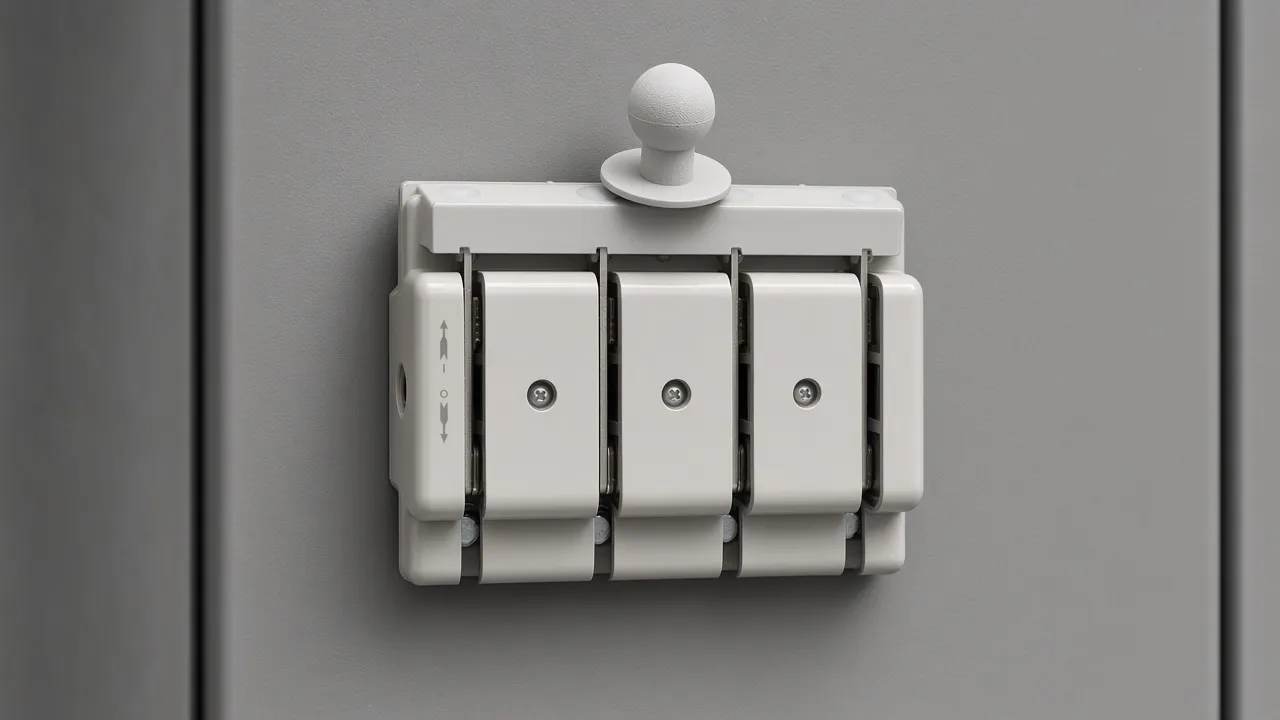
Closed blades are the on position. They are not a promise that this handle may interrupt a running load.
A switch disconnector, by contrast, combines isolation with the ability to make and break nominal current. Read the name of the device before you treat every isolator as that combined object.
A light switch is normal control
A wall switch is normal control of a lighting circuit. People flip it while the lamp is the load, and the switch is built for that small interruption. An isolator’s off mark is a maintenance gap.
From the field: Qwfp wrote that calling an isolator an off-load device and a breaker an on-load device is useless until someone explains how that differs from a standard light switch.
That comment is the whole query. The words on and off are shared. The job is not.
Switchgear is used both to de-energize equipment so work can be done and to clear faults downstream. The isolator sits in the first of those jobs.
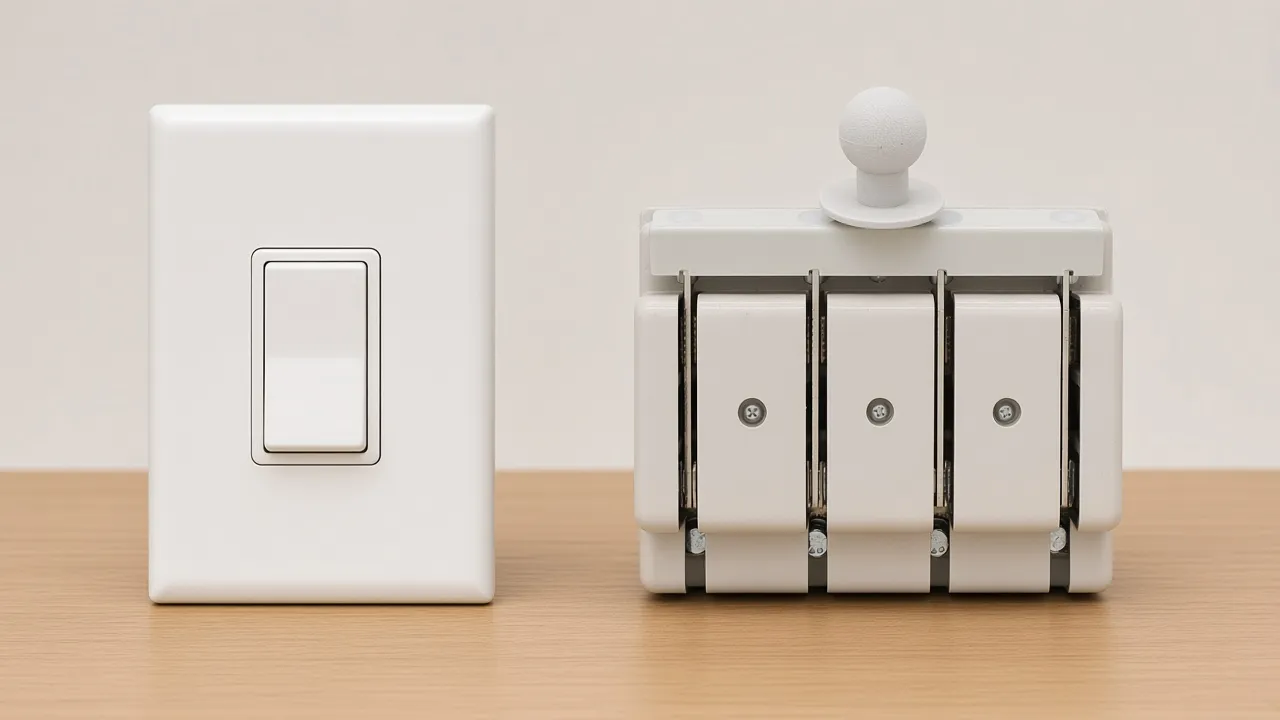
The toggle on the bench is the light-switch picture. The open knife switch is the isolator picture. Training someone to treat them as the same handle is how a gap gets opened under load.
An emergency stop is a different handle
A reader on the disconnector talk page asked whether an isolation switch is the same as an emergency stop on workshop equipment. The stop button is a control that tells a machine to halt. It is often a maintained or monitored circuit in the control scheme.
An isolator is the gap you open once the machine is already stopped, so a person can work on the circuit. Using the mushroom button does not by itself show a visible blade gap. Using the isolator does not by itself provide the stop function the machine builder designed.
If a label says emergency stop, follow that device’s own instructions. If a label says isolator, or if the hardware is an opening knife switch, read the off position as isolation.
What the HD11F-250 page prints for on and off
The model page describes infrequent manual connection, disconnection, and isolation of the supply in low-voltage distribution equipment. The HD11F page says the operation should be carried out under no-load conditions.
The utilization category printed on the page is AC-20B. The form is offered as 3P and as 4P. The HD11F-250 opening knife switch is the page that carries those lines, and the isolating switch hub is where it sits in the catalog.
Rated working voltage is 400 V, rated insulation voltage is 1000 V, and rated impulse withstand is 8 kV. Agreed heating current is 250 A, and the rated working current steps are 160 A, 180 A, 200 A, 225 A, and 250 A. Rated working frequency is 50 Hz and the short-time withstand current is 3 kA.
The page names IEC 60947-3 together with GB/T 14048.3. Ambient limits on that page are an upper limit not exceeding +70 °C, a lower limit not lower than -25 °C, a 24 hour average not exceeding +35 °C, and an altitude not exceeding 2000 m.
The printed lines sit together in one view.
| Line on the HD11F-250 page | Printed wording |
|---|---|
| Working voltage | 400 V |
| Insulation voltage | 1000 V |
| Impulse withstand | 8 kV |
| Heating current | 250 A |
| Working current steps | 160 A to 250 A |
| Frequency | 50 Hz |
| Category | AC-20B |
| Short-time withstand | 3 kA |
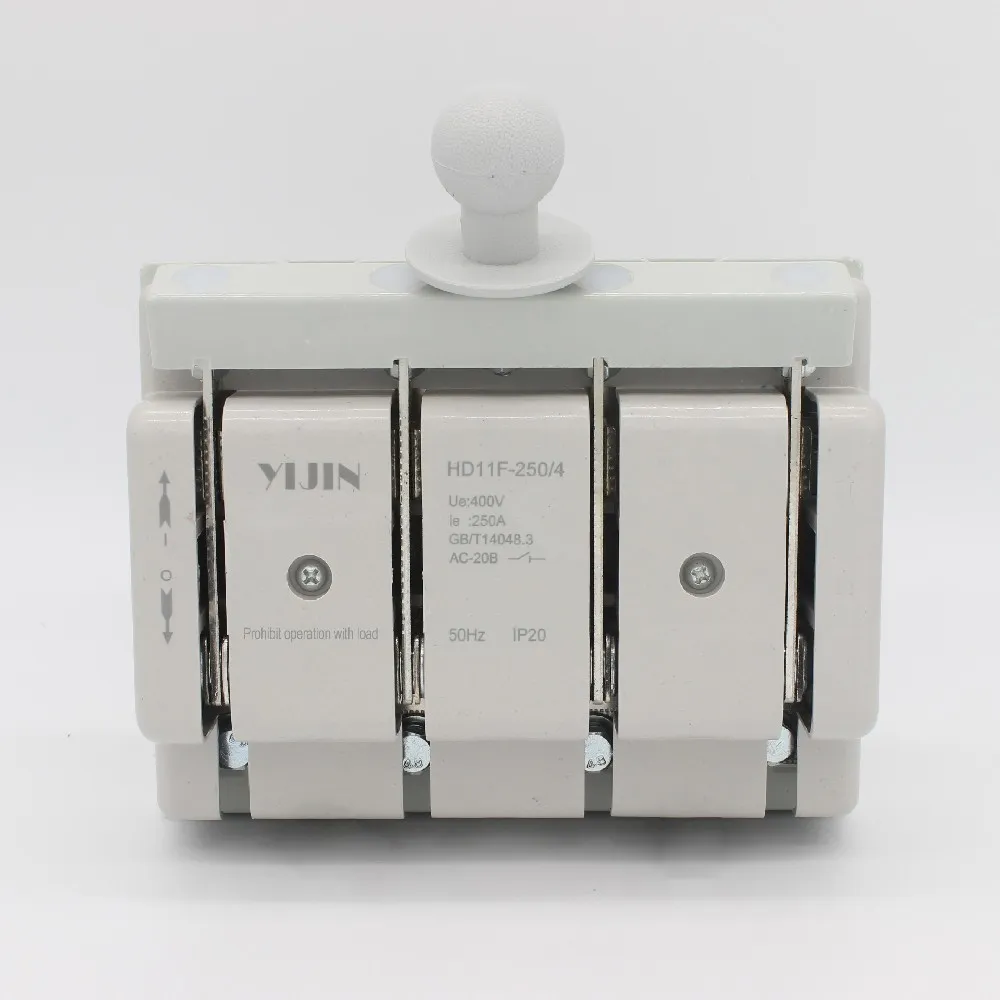
Match the working current step to the circuit, and keep the operation on the no-load side of the instruction. The on and off marks do not add a load-breaking duty the page does not print.
A breaker interrupts current and then resets
A circuit breaker protects a circuit from current in excess of what the equipment can safely carry. It interrupts that current to protect equipment and to prevent fire. Unlike a fuse, it can be reset.
A fuse stops overcurrent by melting a metal strip, and then it has to be replaced. Both of those devices are about too much current. The isolator is about a visible gap after the current is already gone.
| Handle | What off is for |
|---|---|
| Isolator | A visible gap for work, opened off load |
| Circuit breaker | Interrupting overcurrent, then a reset |
| Fuse | A melted link that is replaced |
| Light switch | Normal control of a lamp |
The talk page was right to demand that explanation. “Off-load” only helps after you can picture the gap and the other device that stopped the current first.
A timer on or off is a clock event
A time switch operates an electric switch controlled by a timer. On and off there are clock times. They return the next day if the program says so.
They are not a maintenance gap, and they are not a visible blade position.
Before the gap is opened, the load current has to be gone. After the gap is open, the blades are what a second person can see.
A padlock hasp, when the hardware has one, keeps that off position from being closed while someone is still working. The disconnector page treats that lock as part of making inadvertent operation impossible.
The HD11F page limits the duty to infrequent manual operation. It is a maintenance device in distribution equipment, not a switch you flip every hour.
Two people can share the work if one stops the load and the other watches the blades. The handle words alone do not tell you which person owns which step.
A hallway comment on the time-switch talk page worried about summer time versus solar time. That is a schedule problem.
An isolator problem is whether the blades are open before someone works on the circuit. The shared words hide two different devices.
Use the HD11F-250 when you need the printed no-load isolation, the AC-20B category, and a working voltage that matches the page. Use a breaker when the job is interrupting overcurrent. Use a timer when the job is a clock.
FAQ
What does off mean on an AC isolator switch?
Off means a visible gap so the circuit is de-energized for service. It is not the everyday control of a load.
Why is an isolator opened only after the current has stopped?
The device lacks arc suppression, so it is an off-load device. Another device interrupts the current first.
How is that different from a light switch?
A light switch is normal control and is flipped while it serves the lamp. An isolator’s off mark is a maintenance gap.
Is an isolator the same thing as an emergency stop?
A stop button tells a machine to halt. An isolator opens a visible gap after the circuit can be isolated.
What utilization category does the HD11F-250 page print?
The utilization category printed on the page is AC-20B. The page also says to operate under no-load conditions.
Which voltage and current lines are on the HD11F-250 page?
Rated working voltage is 400 V, rated insulation voltage is 1000 V, and rated impulse withstand is 8 kV. Agreed heating current is 250 A, and the rated working current steps are 160 A, 180 A, 200 A, 225 A, and 250 A.