 Yueqing Yijin Electronics Co., Ltd.



Single-phase is not this sheet
A 220v ac contactor single phase search often names HVAC contacts. The YJC1-63 page answers with a household contactor.
The sheet prints a household working voltage. The outdoor coil lives on another page.
Single-phase names the supply
Single-phase names the waveform that feeds a house or a small shop. A single-phase supply is the feed, not the carton on a rail.
Single-phase electric power is the simplest form of alternating current used to supply electricity. All the voltages vary together in unison.
A buyer can say single-phase and still need a household module. A buyer can say the same words and still need an outdoor coil. The supply word does not choose between them.
Write the supply on one line. Write the printed working voltage on the next line. Keep those lines apart.
The class often sits on three phases
A contactor is a type of relay with a high power rating. The class is wider than one printed voltage.
Contactors are typically built for and used in three-phase applications. Other relays are more commonly used in single-phase applications.
That habit belongs to the class. It is not a line on the YJC1-63 sheet.
A three-phase motor starter can sit in the same family. A household 2P module can sit in the same family. Mixing the habit into one spare is how the query label gets blamed on the wrong body.
Coil voltages for contactors are often from 24 V AC/DC all the way up to 600 V AC. That sentence is about the family. It is not a line on this sheet.
This sheet prints the household voltage
Life and close bands only belong next to the voltage the page describes. An HVAC coil from the outdoor unit is not this spare, even if both click.
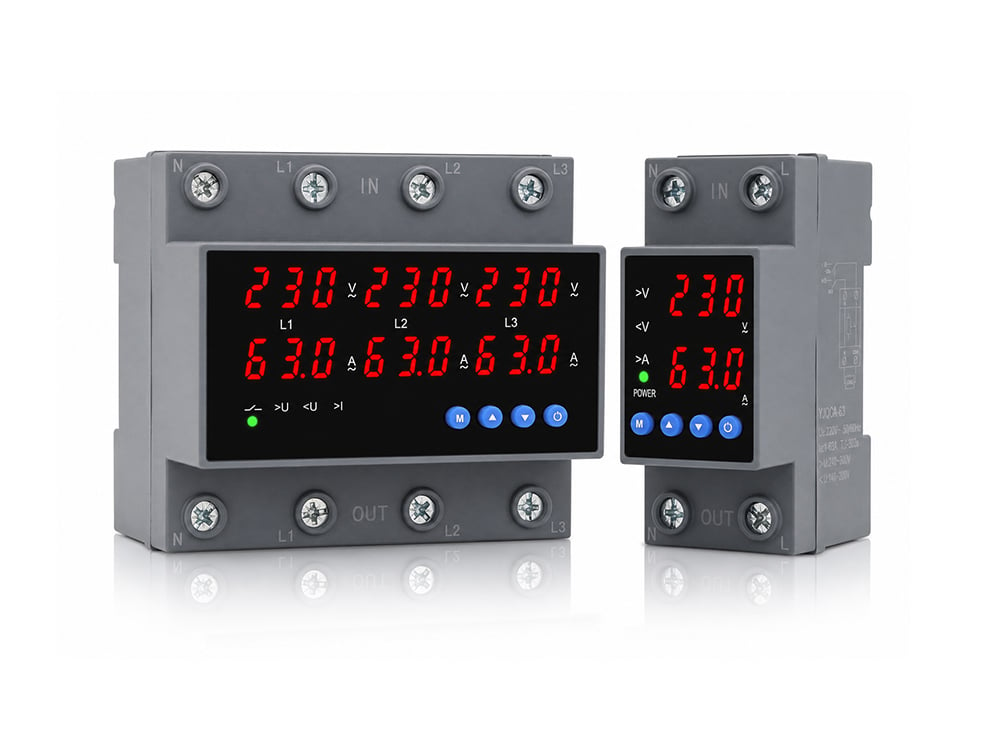
The YJC1-63 page prints a rated working voltage of 230 V at 50 Hz or 60 Hz and a rated working current of 63 A. The page says the product complies with GB17885 and IEC1095.
It names low-inductance loads and household motor loads. Conventional units are normally open. A normally closed unit is described as a custom build.
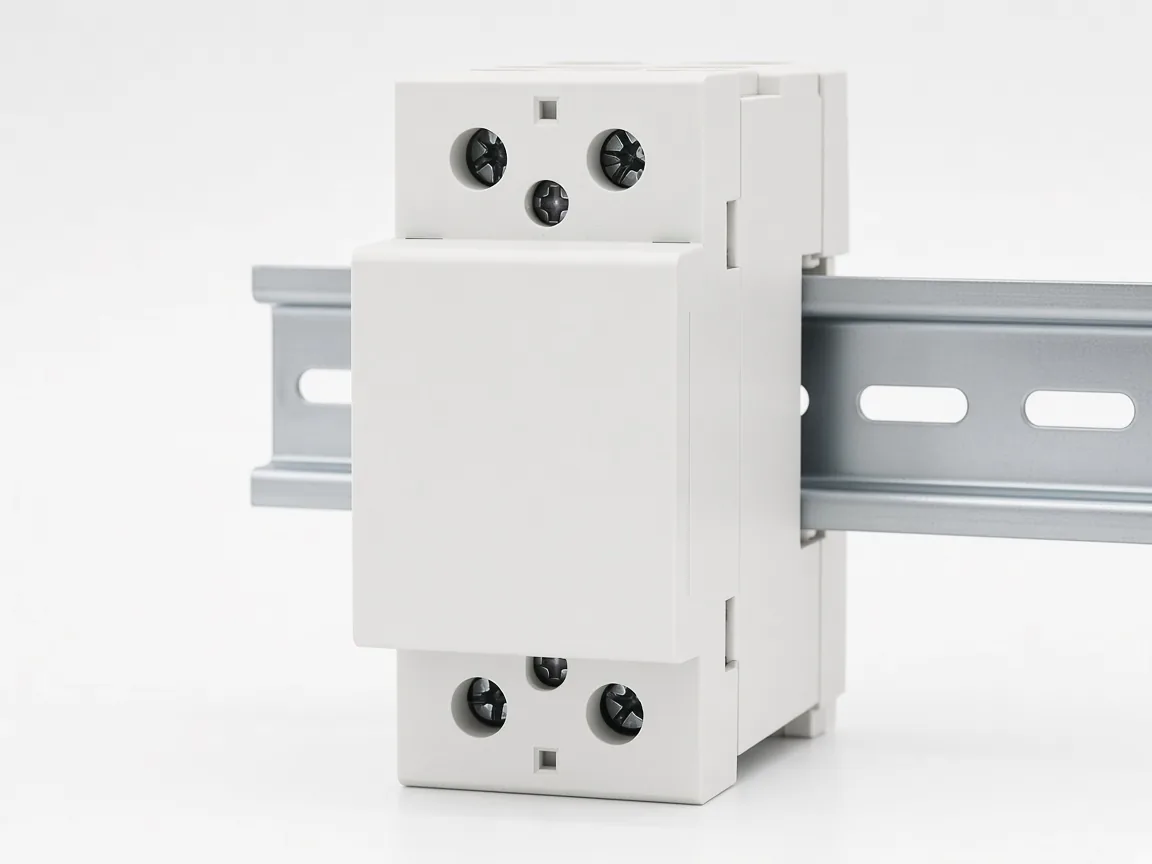
The face of the module is the household body.
A household motor on that voltage is inside the story. An outdoor contact pair is outside it.
The page says the contactor can close at any voltage from 80% to 110% of the rated control supply. The page says the release voltage is neither higher than 75% of that supply nor lower than 20% of that supply.
Those lines are the control supply band for this body. They are not an outdoor-coil promise.
| What you brought | What can answer it |
|---|---|
| A 220 V single-phase label | The supply name |
| A 230 V household spare | The printed working voltage |
| A 24 V outdoor coil | A different carton |
A coil from the outdoor unit is another body
The useful first picture is an outdoor condenser and a low-voltage coil. The household sheet lives on another page.
From the field: On an HVAC advice thread, a reply said the important specs are a 24 V coil and 240 V on the contacts. Get the coil wrong and it will not turn on.
Source: Reddit r/hvacadvice contactor-specs thread.
A later DIY reply named single pole, 220 V contacts, and a 24 V coil. That split keeps the higher number on the contacts. It keeps the lower number on the coil.
If those two numbers are the job, stop before you open the household carton. The sheet never promised to invent that outdoor coil.
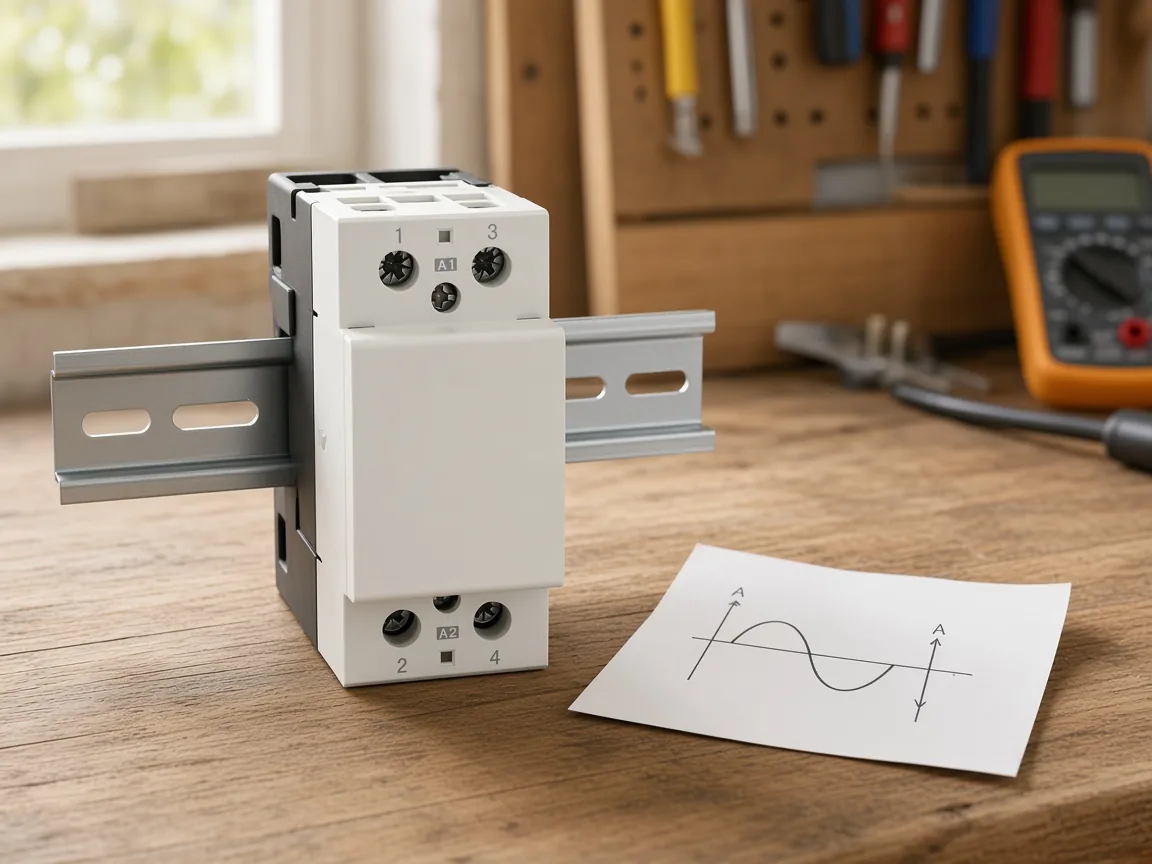
The rail body stays on the board.
Keep the outdoor coil on its own shelf note. Keep this page for the printed household voltage.
A stores person can stock the household frame without inventing an outdoor coil from the class range. Ask for the printed working voltage first. Leave the outdoor coil on its own note.
Two poles are not one pole
The title on this page is a 2P modular body. Outdoor replies often want one pole with a shunt.
A 2P household module can open both sides of a small board. A 1-pole outdoor contact can leave one leg live. Those are different endings.
Write the pole count beside the voltage. A household board on the printed working voltage is inside this story. A condenser that only ever saw one pole is not.
Do not borrow the pole count from a photograph of another brand. Read the title on this page.
A custom closed unit is a different order, and the page says so. The query label still does not choose between them.
The rail still only holds the body
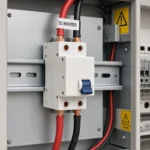
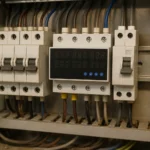
A DIN rail is a metal rail of a standard type widely used for mounting circuit breakers and industrial control equipment inside equipment racks. The page names the TH35-7.5 rail.
The rail holds the body. It does not store the query voltage.
A loose clip can rattle. Seat the clip before you treat the noise as a wrong spare.
The altitude note says the installation is not over 2000 m. That line is a place limit, not a supply-label limit.
A breaker is a different ending
Unlike a fuse, which interrupts once and then must be replaced, a circuit breaker can be reset to resume normal operation. A contactor is a remote switch. It is not that reset.
A relay is an electrically operated switch. The contactor page is the high-rating case.
When the question is only the query label, stay with the supply word and the printed household voltage. When the question is a trip on overcurrent, open a breaker page instead.
The YJC1-63 modular AC contactor is the sheet with that working-voltage line. The contactor hub collects the other frames if the pole count is different.
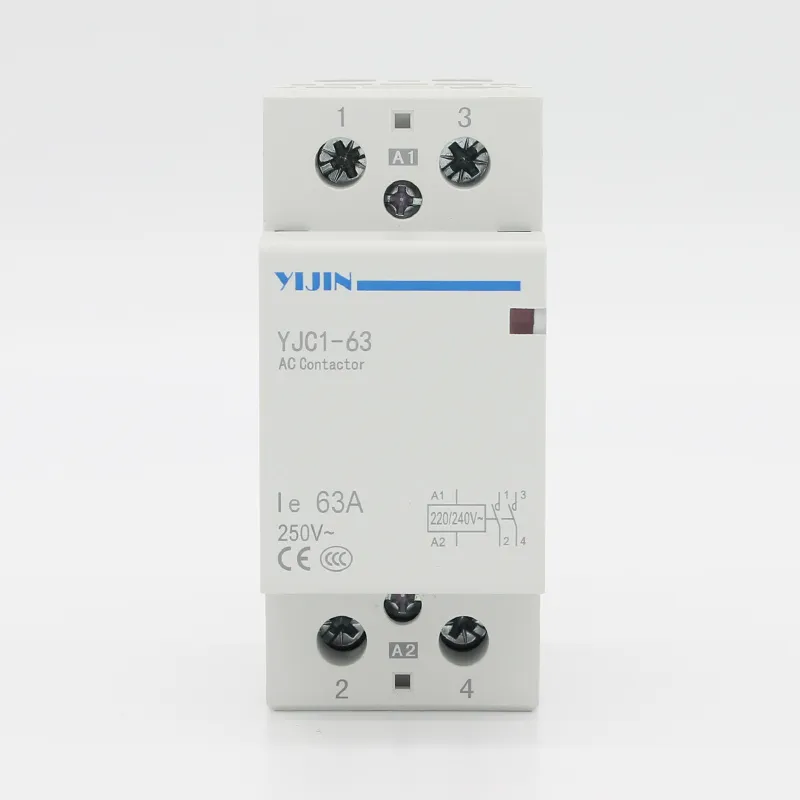
The household module is the sheet on that product page.
Before you order from this page, write two lines. Line one is the supply name. Line two is the printed working voltage.
If line one is an outdoor coil, stop. This sheet is the wrong body.
Say who named the supply and where the cabinet is. An outdoor condenser and a household rail board can both click, and they are not the same spare.
Read the request aloud. You want the supply name, then the printed working voltage, then the pole count. A request that only names single-phase will come back as a guess if the body is unnamed.
Keep a spare note for the person who opens the cabinet next. Write the frame, the pole count, and whether the unit is the normal open build.
If the motor is a household load on the printed working voltage, stay with this sheet after the supply is known. If the motor is an outdoor low-voltage coil, change the family.
A stores person can stock the household frame without inventing an outdoor contact from a shopping title. Ask for the printed working voltage first. Leave the outdoor coil on its own note.
Write the duty beside the voltage. A household pump on the printed working voltage is inside this story. A condenser that only ever saw the outdoor coil is not.
The sheet still only prints the household working voltage. Your note has to carry the supply word.
If you already replaced a buzzing unit last season, do not reuse that story as a supply-label reading. The buzz page and this page stay separate.
One talks about noise. One talks about a supply label.
A buyer who only wants one number will push for one carton. Answer with the supply word first. Then read the printed working voltage.
Only after both are on the note should anyone open the YJC1-63 carton for that job.
A second person should find the rail without walking to the outdoor unit. Name the room and the board. If the only instruction is the query label, that person will look for a condenser and miss the household board.
Keep the HVAC family on its own shelf note when the outdoor coil is the only story anyone brought. This page is the household-voltage conversation.
The class range still does not rewrite the printed working voltage. Ask for the sheet first. Then ask for the supply.
A household lighting board can sit next to this page after the voltage is known. A rooftop compressor cannot borrow that board by repeating the words single-phase.
If the only photograph anyone sent is an outdoor 1-pole body, stop. This title is a 2P household module.
If the only photograph anyone sent is this rail body, stay. Read the printed working voltage again before the carton leaves the shelf.
Keep those two photographs on two notes. Mixing them into one order is how the wrong body leaves the shelf.
Frequently asked questions
These answers stay with the pages opened for this draft.
What coil voltage do HVAC readers name first?
A Reddit reply said the important spec is a 24 V coil. That coil is the control voltage. It is not the printed household working voltage on this sheet.
What working voltage does the YJC1-63 page print?
The YJC1-63 page prints a rated working voltage of 230 V at 50 Hz or 60 Hz and a rated working current of 63 A.
Are contactors typically single-phase or three-phase in the encyclopedia?
Contactors are typically built for and used in three-phase applications. Other relays are more commonly used in single-phase applications. That habit is the class, not this sheet.
What pole count do outdoor-unit replies ask for?
A DIY reply named a single pole with 220 V contacts. This page titles a 2P module.
Which utilization category does the household sheet print?
The household sheet prints that utilization category beside the working current.
Why is the outdoor coil a different spare from this module?
The outdoor coil sits on the condenser control path. This sheet prints a household working voltage and does not print that coil.