 Yueqing Yijin Electronics Co., Ltd.

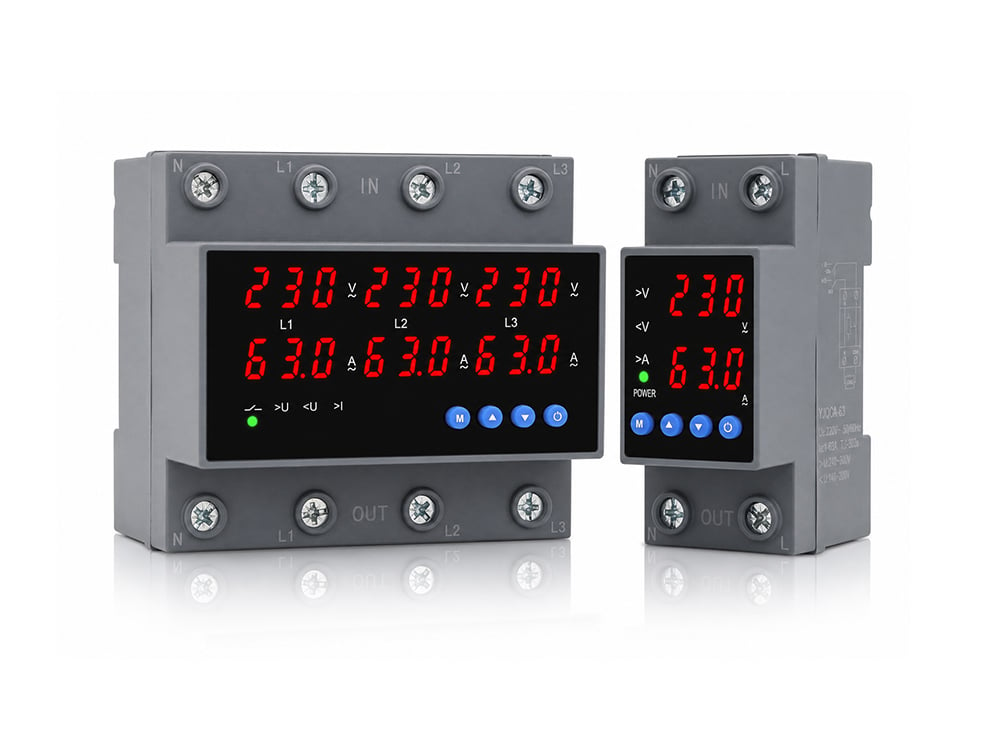



The countdown opens a breaker
A 24 hour countdown timer switch is the name for a countdown that can cover a full day and then stop. The run has an end. A repeating clock does not work that way.
A countdown ends a run
A countdown time switch switches power, usually off, after a preset time. You start it. It counts.
At the end it changes the circuit and stays there until someone starts it again. That ending is the whole point of the search.
A cyclical timer, on the same page, switches on and off and then repeats. The period is often a day or a week. People mix the two because both can mention a day.
One day as a countdown is a single run. One day as a cycle is a loop.
From the field: On the time-switch talk page, hallway lights followed summer time rather than solar time. That mistake belongs to a clock with a calendar basis.
A countdown that simply reaches zero fails differently. It ends because the count ended.
The printed span is longer than one day
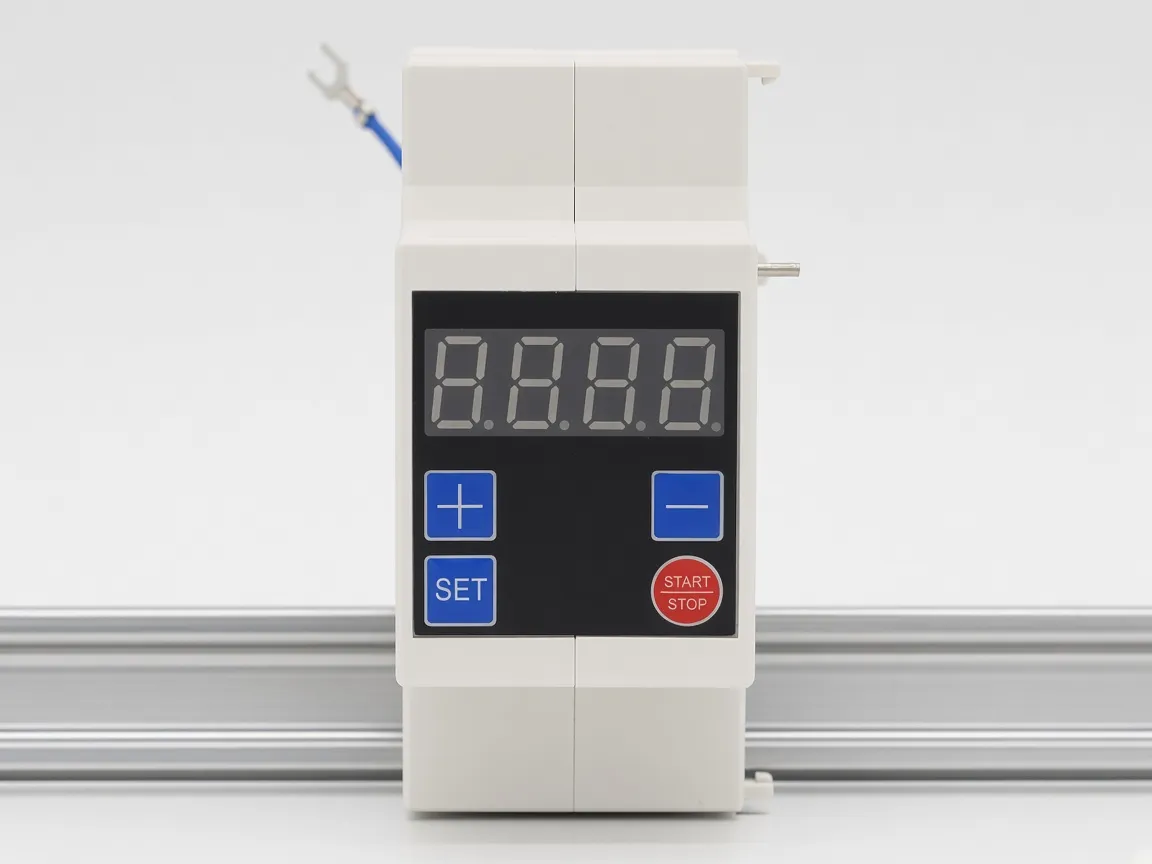
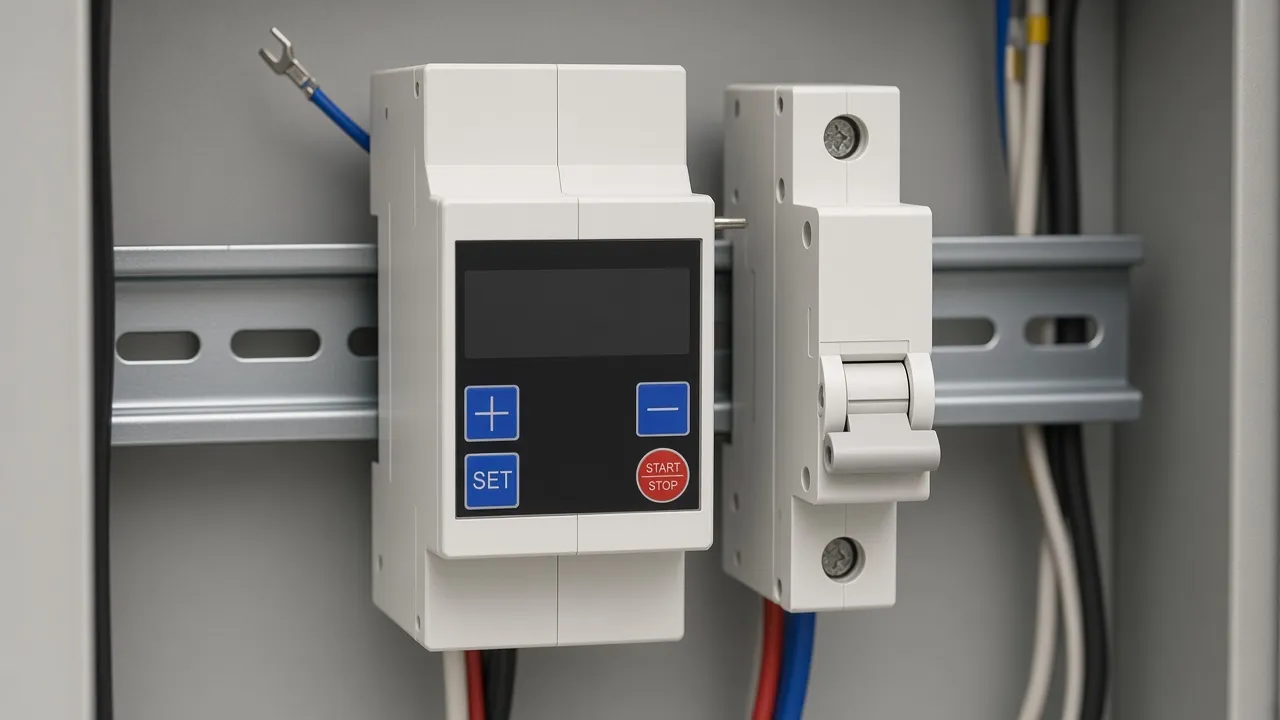
The rail page for this job is the YJDST-I digital countdown release. The printed span is the fact to read before you assume the device stops at one day.
The same page prints a minimum time of 2 seconds and a maximum time of 99 hours, 59 minutes, and 59 seconds. A one-day run fits inside that maximum. The page does not make one day a special mode.
You set the time you need, including a time that happens to be a day, and the count uses the same mechanism.
The page says the product width is 36 mm. It also says the body can be matched with an NXB-63 model. Those are fit notes for the rail and the breaker beside it.
They are not a promise about a wall box.
Closing the switch starts the time
The page says timing starts after the switch closes. The countdown release is idle until that close. There is no separate “start the day” ritual beyond the close the page names.
If the switch never closes, the display can still be set and the run never begins. That looks like a dead timer. Check the close before you change the setting.
A second close after the first run is a new count, not a resume, unless the page had said otherwise. It does not.
The job is to open a small breaker
The purpose line says the product is for countdown power-off of small circuit breakers. The count ends by opening that breaker. The lamp or the machine stops because the breaker opened, not because a peg reached a mark.
The YJDST-I page prints a rated voltage of AC 110 V to AC 240 V at 50/60 Hz. Match that range to the control the release sees. A wall countdown made for a different plug and a different box is still a different object, even when both can be set near one day.
A clock program is a different job
A stored weekday program turns loads on and off and then does it again next week. The countdown release does one run and then waits for another close.
If you need the lamp every evening without a person, you want the clock. If you need a run to end and stay ended, you want the countdown.
| Job | What repeats | What you do next |
|---|---|---|
| Countdown release | Nothing, until you start again | Close the switch for a new run |
| Repeating clock | The stored days | Leave the program in charge |
| Wall day dial | A wheel, if that is the timer you bought | Read that dial’s own sheet |
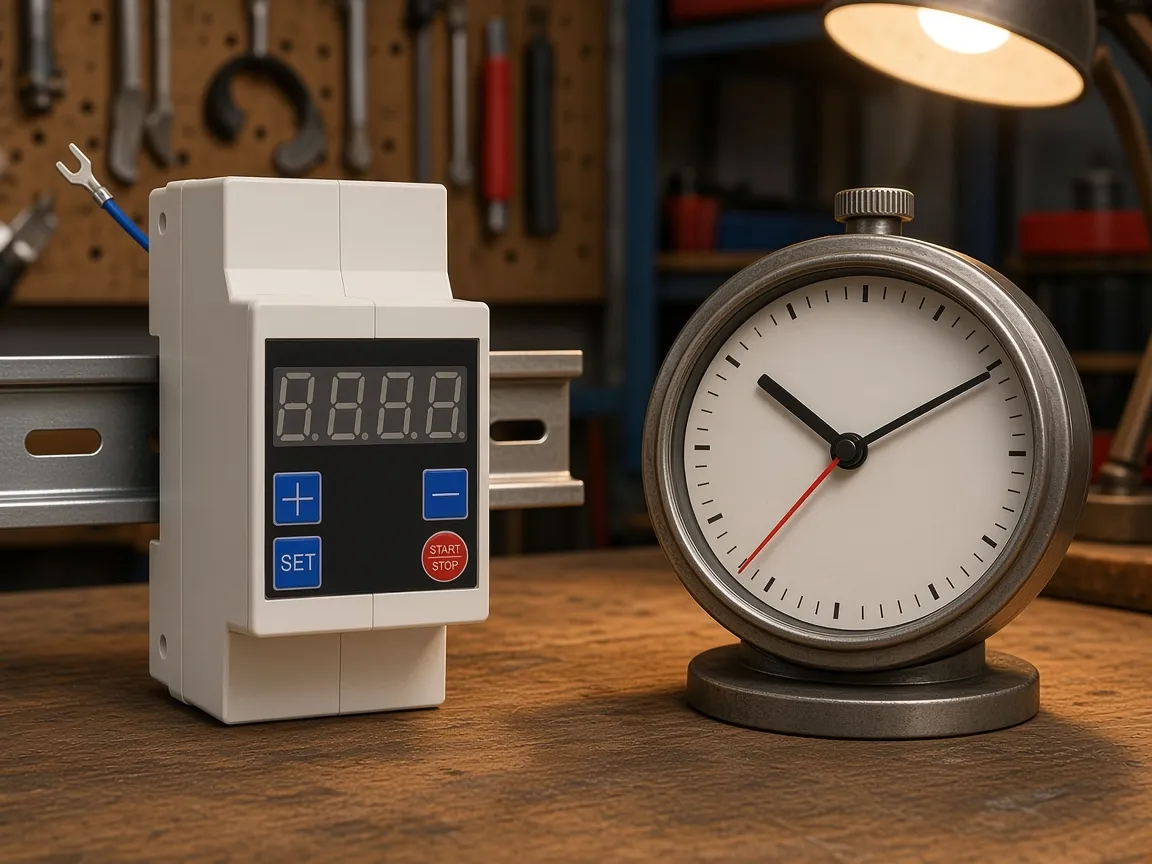
The hallway summer-time story is a clock story. Do not import it as a fault of a countdown that reached zero on purpose.
Do import it when someone set a repeating timer and the lights drifted. Those are different service calls.
The rail only holds the body
A DIN rail is a metal rail of a standard type widely used for mounting circuit breakers and industrial control equipment inside equipment racks. The rail supports the release and the breaker it is paired with. It does not store the time, and it does not decide when the count ends.
The page also limits the place. Rain and snow are outside the duty it describes. A wet wall in a shower room is not the cabinet this rail expects.
That is why a bathroom wall countdown stays a different article. This page is the dry cabinet release.
| Printed line | How to use it |
|---|---|
| Time span | Set a run inside the minimum and the maximum |
| Voltage | Match the AC range the page prints |
| Purpose | Expect a small breaker to open |
| Place | Keep it on the rail, out of the weather |
A fuse does not restart the count
A fuse melts a metal strip and then must be replaced. A circuit breaker is an electrical safety device that interrupts overcurrent and can be reset, unlike a fuse that must be replaced. The countdown opens a breaker as its timed job.
That opening is not the same event as a fuse melting on a fault, and it is not the same event as the breaker tripping on its own overcurrent.
On the fuse talk page, a commenter said a household fuse article is not the whole distribution story. Use that caution here.
The YJDST-I is not a household fuse with a clock drawn on it. It is a countdown that opens a small breaker.
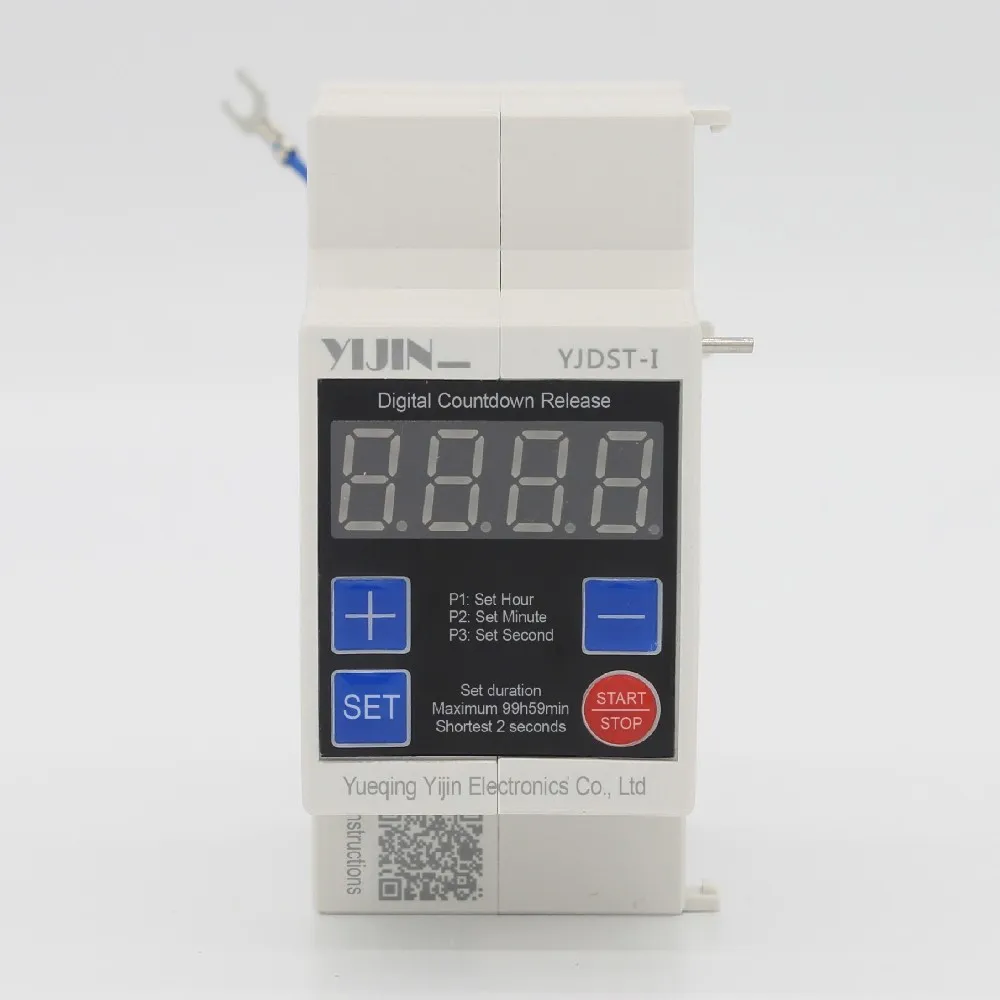
The YJDST-I digital countdown release is the product page for this run-and-stop job. The timer hub collects the clock articles if you actually needed a repeating program.
Before you order, write three words on the request: countdown, breaker, rail. If the request says wall, dial, or every evening, stop and change the page you are reading.
The span on this page can include a day. The body is still the release that opens a breaker. The end state you should expect is a small breaker open.
Say the job in one sentence a second person can repeat. The release counts, then the breaker opens, then the load stays off until someone closes the switch again.
If the sentence you hear is “it comes on again tomorrow,” you are describing a clock. Change the page before the box is ordered. A day can appear in both sentences, and the verb is what separates them.
Write the place next to the job. The page expects a rail in a dry cabinet. Rain and snow are outside that duty.
A shower wall, a porch, and an outdoor fan housing are other articles. Naming the room stops a countdown release from being sent to a box it was never drawn for.
Write the start next to the place. Timing begins when the switch closes. A setting that was entered and never closed is a display, not a run.
If a test fails, close the switch and watch one full count before you change the numbers. A second close is a new run.
Keep the fuse and the breaker on their own lines. The fuse is finished when it melts. The breaker can be closed again.
The countdown’s job is the timed opening of that breaker. A fault that melts a fuse is a different call, even if it happens on the same afternoon as a countdown that reached zero.
Read the request aloud. You want to hear countdown, then breaker, then rail.
If you hear dial, peg, or every evening, you are in the clock article. If you hear a cord and a receptacle, you are in a plug-in timer article. This page stays with the release that ends one run.
Frequently asked questions
These answers stay with the pages opened for this draft.
What does a countdown do when the time ends?
A countdown time switch switches power, usually off, after a preset time. On this product the end is the breaker opening.
How long does the YJDST-I page allow?
The same page prints a minimum time of 2 seconds and a maximum time of 99 hours, 59 minutes, and 59 seconds. A one-day setting sits inside that maximum.
What starts the timing?
The page says timing starts after the switch closes. Until that close, the setting is only a setting.
What does this countdown open?
It is for countdown power-off of small circuit breakers. The count ends by opening that breaker.
How is a repeating clock different?
A clock repeats the stored days. This release does one run and then waits for another close.
A day on a clock is a loop. A day on this release is one run.
Which voltage does the page print?
The YJDST-I page prints a rated voltage of AC 110 V to AC 240 V at 50/60 Hz. Match the control the release sees.