 Yueqing Yijin Electronics Co., Ltd.




The worksheet blank is a dangerous arc
An afci breaker is used because it detects a dangerous arc, the kind tied to a loose or broken connection. An arc-fault detection device is the encyclopedia name for that breaker. A plain overcurrent breaker is built to interrupt too much current, which is a different event.
Fill the blank with the arc itself
The quiz line often ends with a blank. The clean phrase is the same question, and the blank is not a brand name. The fill-in is the dangerous arc.
The opened AFCI page says the device breaks the circuit when it detects electric arcs that are a signature of loose connections in home wiring. Loose connections can heat up over time. The page says they can sometimes become hot enough to ignite house fires.
That is the job the worksheet is pointing at. Series and parallel arcs are the two path names you will meet next. The YJB1-63/AFD page is the model that prints both names beside overload and short circuit.
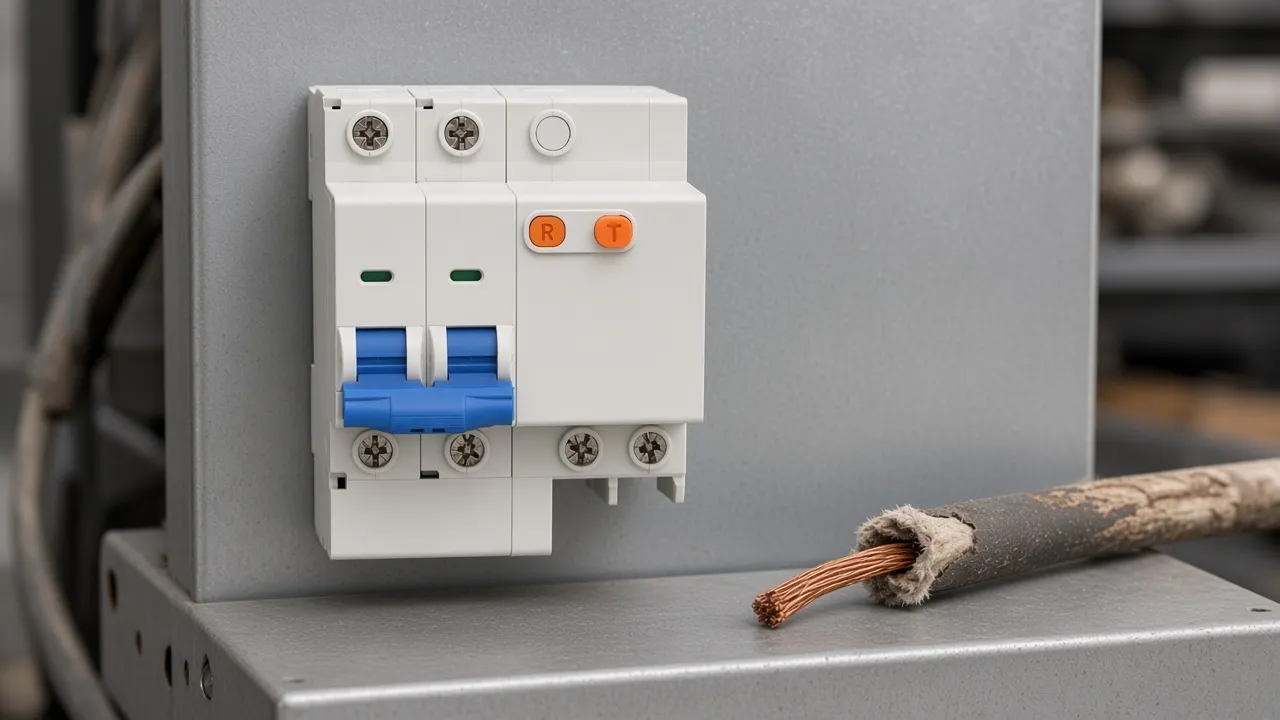
The cord in the picture is the broken-conductor case. The rail module is the object this site can document. The picture is an illustration of the job, not a lab report.
Series arcs and parallel arcs are different paths
The same encyclopedia page describes parallel arcing as line to neutral. It describes series arcing as a loose, broken, or otherwise high-resistance segment in a single line. It also names ground arcing from line or neutral to ground.
A series arc is in one conductor. The current still tries to serve the load, but it has to cross a bad spot. A parallel arc is a path between conductors that should stay apart.
Both can heat the point where the metal is failing.
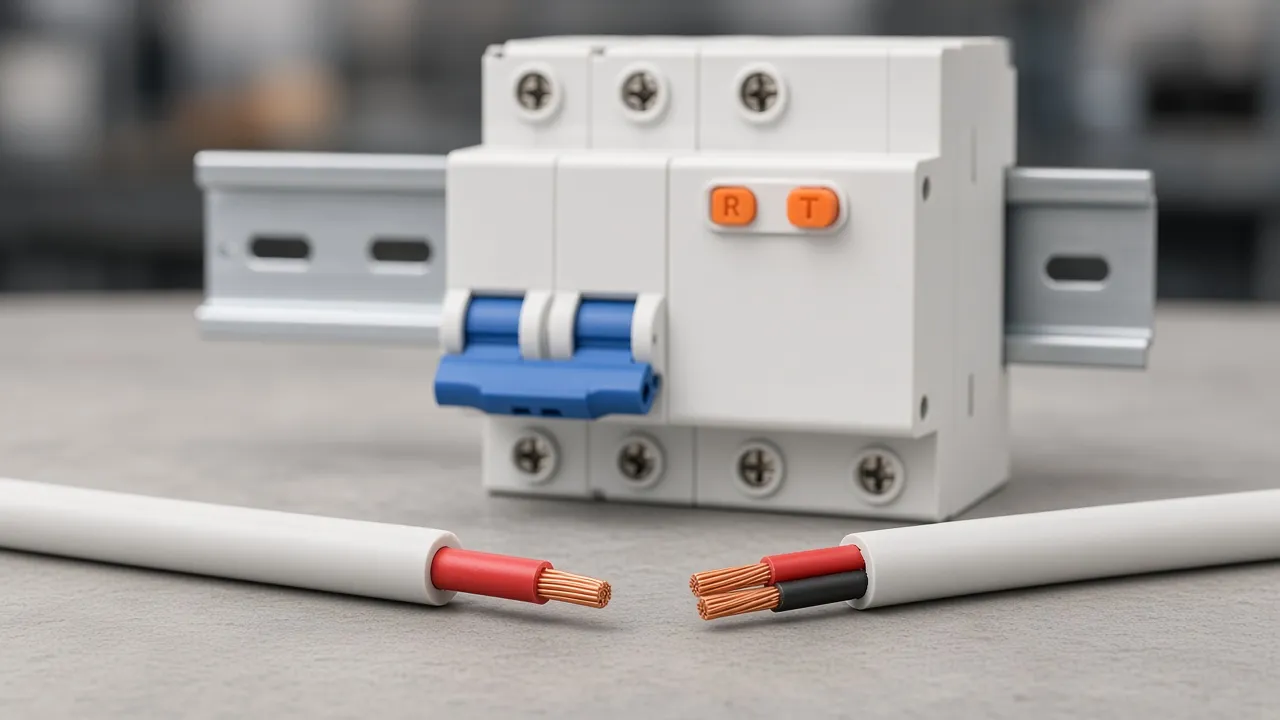
The nicked single conductor is the series picture. The two conductors touching is the parallel picture. The page also says the AFCI opens if dangerous arcing is detected, and that the same breaker family is described as covering overload and short circuit as well.
You can hold the two paths in one sentence without mixing them. A series arc is a break along one wire. A parallel arc is a bridge between wires.
A switch arc is not the same event as a broken conductor
The encyclopedia lead says an AFCI distinguishes a harmless arc from a dangerous one. The harmless examples are the ordinary operation of switches, plugs, and brushed motors. The dangerous example is a lamp cord with a broken conductor.
A click at a switch is expected. A glowing spot in a cord is not. The device is there to tell those signatures apart, which is why the worksheet says “detects” instead of “trips on any spark.”
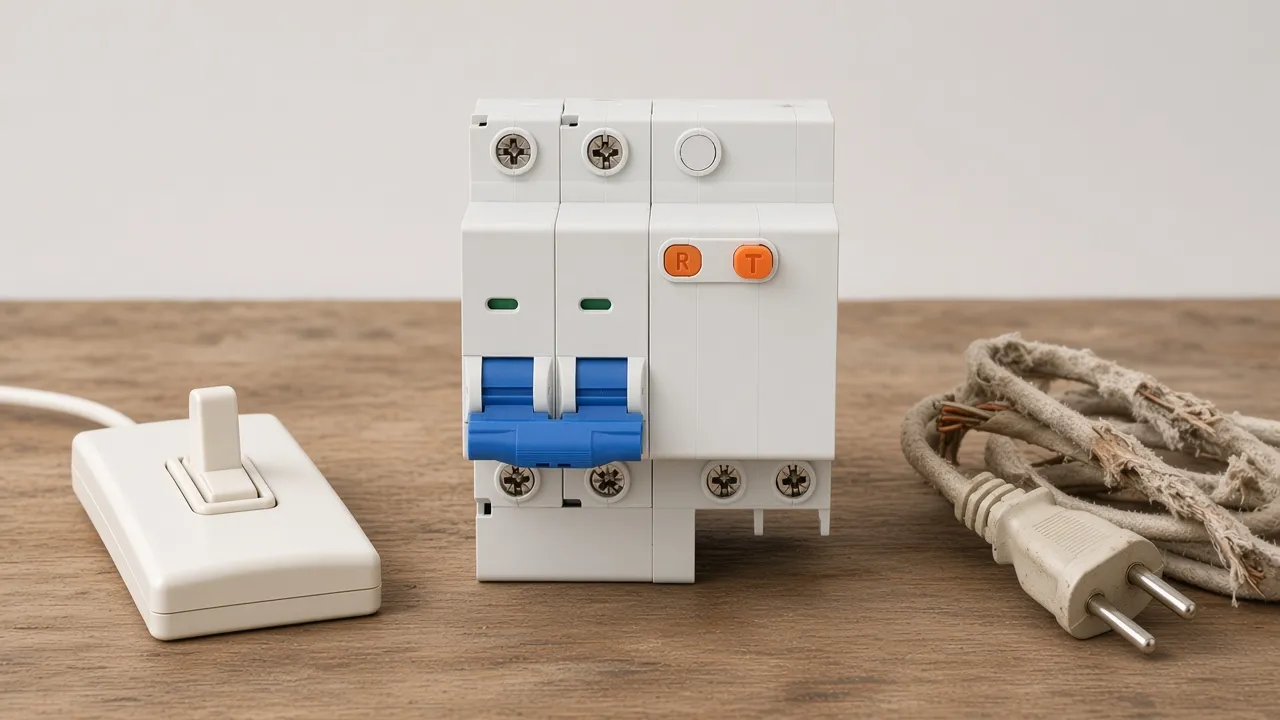
The switch on the bench is the harmless class in that sentence. The frayed cord is the dangerous class. A buyer who replaces an AFCI because a vacuum with a brushed motor sometimes makes it open is meeting that distinction, not a mystery brand code.
A talk-page reader asked whether a high-power audio amplifier fed from a noisy AM radio could look like a bad arc. The worry is real as a question. The follow-up on that page treated the radio’s power supply as a filtered load.
A new bench test is outside this page.
Overcurrent protection does not name an arc
A circuit breaker is an electrical safety device that protects a circuit from current in excess of what the equipment can safely carry. Its basic function is to interrupt that current, to protect equipment and to prevent fire. Unlike a fuse, it can be reset.
That function is overcurrent. A bolted short is a lot of current. An overload is current above the rating for too long.
An arc at a loose strand can be a poor connection that never reaches the current a standard breaker is waiting for.
The jobs sit side by side:
| Device job | Event it is built around | Reset |
|---|---|---|
| Overcurrent breaker | Current above what the equipment can carry | Yes, unlike a fuse |
| Arc-fault detection device | Dangerous arc from a loose or broken connection | Opens when that arc is detected |
| Time switch | A clocked on time and off time | Not an arc detector |
OSHA 1910.303 says electric equipment shall be free from recognized hazards that are likely to cause death or serious physical harm to employees. A fire from a failing connection is in that family of hazards. The section does not name this model.
A comment on the circuit-breaker talk page says a circuit breaker is a switching device, and that switchgear is a broader term. The worksheet blank still has to say “arc,” or the answer collapses into every switch.
What the YJB1-63/AFD page says it detects
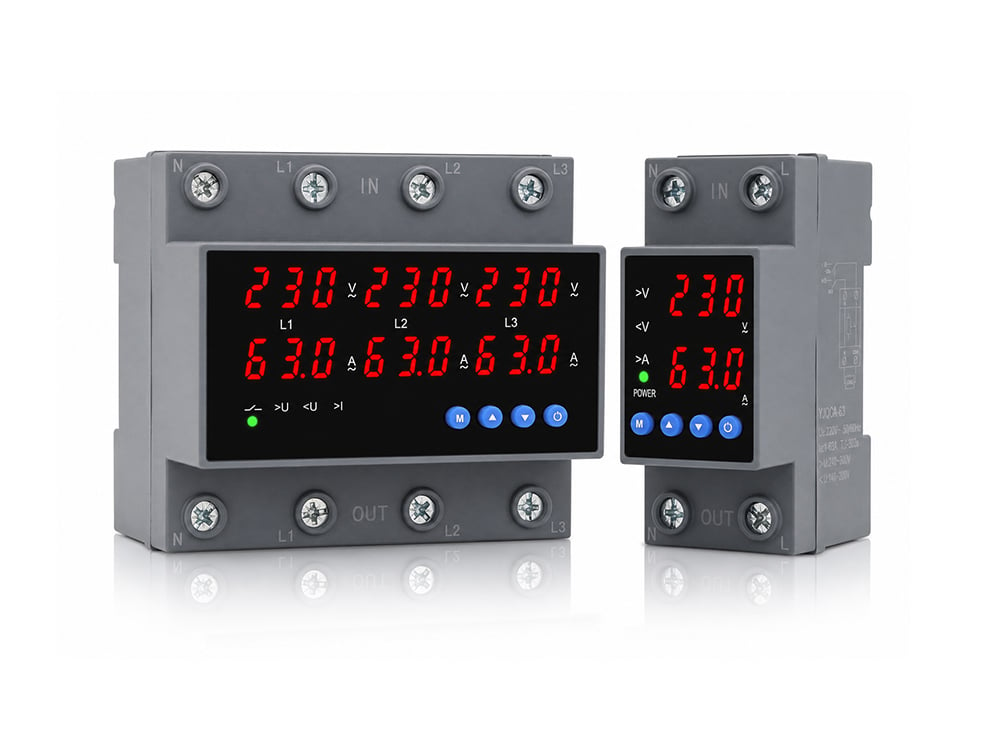
The YJB1-63/AFD arc fault circuit breaker page says the AFDD is assembled from a small circuit breaker and an arc-fault protection module. It lists overload, short circuit, and arc fault protection.
The YJB1-63/AFD page says the device is suitable for AC 50 Hz, rated voltage 230 V, and rated current up to 63 A and below. It says the device can protect against arc faults, parallel arc faults, and series arc faults. The fire-risk line is limited by the words “to a certain extent,” and it points at device rupture or wire aging.
Ambient limits on that page are an upper limit not exceeding +40 °C, a lower limit not lower than -4 °C, and a 24 hour average not exceeding +30 °C.
The others hub is where this module sits in the catalog. Read the model page for the voltage and the current. The encyclopedia’s bedroom-code history is a different country’s installation story, and it is not printed on the YJB page.
| Line on the YJB1-63/AFD page | Printed wording |
|---|---|
| Supply | AC 50 Hz |
| Rated voltage | 230 V |
| Rated current | up to 63 A and below |
| Arc wording | arc faults, parallel arc faults, series arc faults |
| Also listed | overload and short circuit |
| Ambient upper | +40 °C |
| Ambient lower | -4 °C |
| 24 hour average | not over +30 °C |
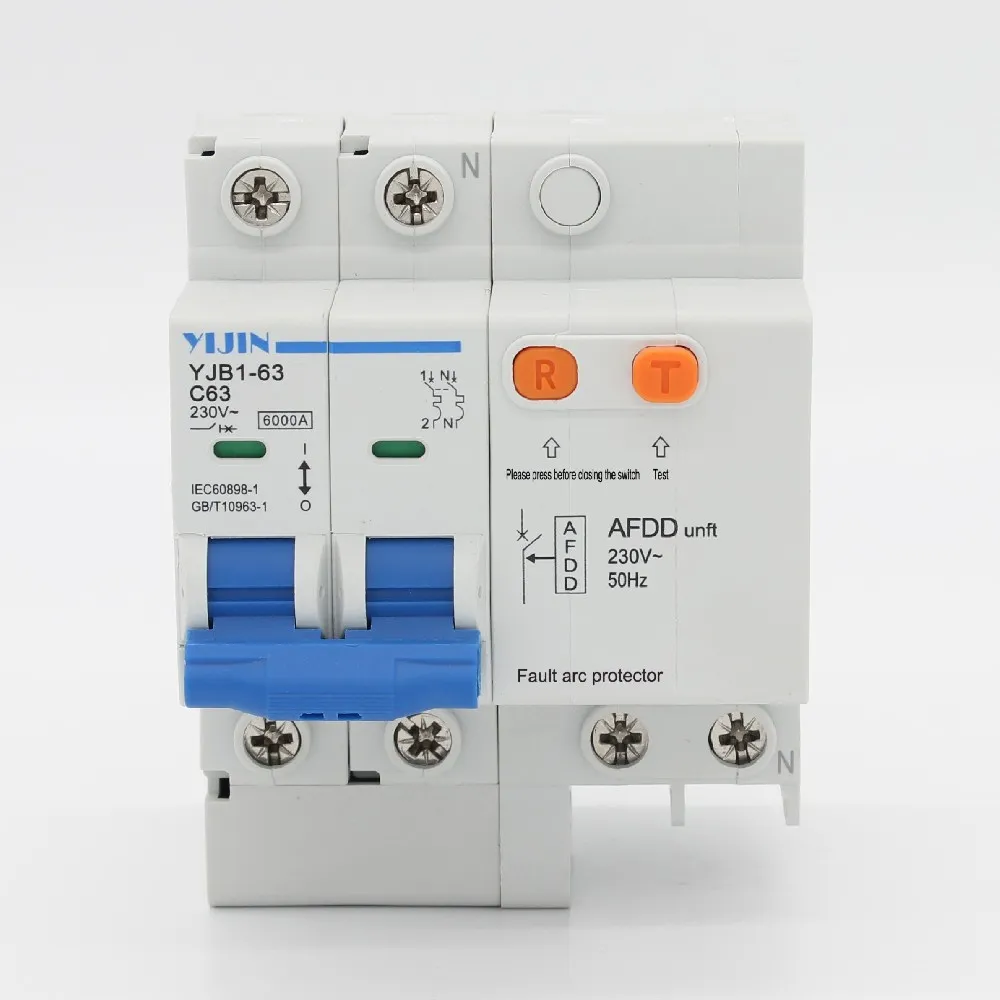
Use this module when the circuit matches those printed lines and you want the page’s series and parallel wording in the same device as overload and short circuit. Leave it on the shelf when the specification asks for a panel breaker the page does not describe.
Readers still ask how the detection is done
LorenzoB wrote on the AFCI talk page in 2011 that he came seeking the method used to detect arcs and found none. That gap is why a worksheet feels abrupt. The lead tells you the event.
It does not hand you a filter schematic.
From the field: LorenzoB wrote that he came to the AFCI article seeking the method used to detect arcs and found no information in that regard.
Another comment on the same page asks about nuisance tripping from an audio load. The honest reply in a buying article is small. Ordinary switch arcs are the harmless class on the encyclopedia page.
A broken conductor is the dangerous class. A specific appliance complaint needs the maker’s note for that load, which this page leaves untouched.
The detection method inside the YJB module is not printed as a schematic on the page we opened. What is printed is the event list: series arc faults, parallel arc faults, overload, and short circuit.
This module page is not a combination-type listing
The encyclopedia says that, as of 2013, devices then current were referred to as combination type. That sentence lives on the encyclopedia page. The YJB extract we read does not use that label, and it does not print a UL mark or an IEC number.
Combination type, on that encyclopedia page, is a name for a generation of AFCI devices. Copying the name onto this DIN-rail module would invent a listing. The page you can cite is the one that says series arc faults and parallel arc faults at the voltage and current printed there.
If a form asks for a US combination-type breaker, answer with the listing the form names. If the form asks why an AFCI is used, answer with the dangerous arc, then open the YJB page only when that module is the part you intend to buy.
FAQ
An AFCI breaker is used because it detects which kind of event?
It is used because it detects a dangerous arc, described as a signature of loose connections. The harmless class on the same page includes ordinary switch, plug, and brushed-motor arcs.
What is a series arc compared with a parallel arc on the opened AFCI page?
Series arcing is a loose, broken, or high-resistance segment in a single line. Parallel arcing on that page is line to neutral.
What does a standard circuit breaker interrupt, if the page is about overcurrent?
It interrupts current in excess of what the equipment can safely carry. It can be reset, unlike a fuse.
Which arcs does the YJB1-63/AFD page name?
The page names arc faults, parallel arc faults, and series arc faults. It also lists overload and short circuit.
Why did a reader say the AFCI article never explained the detection method?
LorenzoB wrote in 2011 that he found no information on the method used to detect arcs. The lead still names the event, which is the worksheet answer.
Is the YJB1-63/AFD page a UL combination-type listing?
The extract read for this article does not print a UL mark or the combination-type label. The printed lines are the 230 V and 63 A wording plus series and parallel arcs.