 Yueqing Yijin Electronics Co., Ltd.


DC Isolator for Solar Panels: Where It Belongs on the String Path
A dc isolator for solar panels is the manual isolation point on the PV array / string DC path so technicians can separate illuminated modules from a Combiner box output or Inverter DC input. This guide maps that use case: where the isolator sits, how its job differs from a DC circuit breaker, which field patterns show up, why daylight still matters, how load-break vs no-load changes service, and when Yijin Knife switch / HK18 / HD11F hardware matches a protected AC-20B isolation point rather than an outdoor DC-PV string isolator.
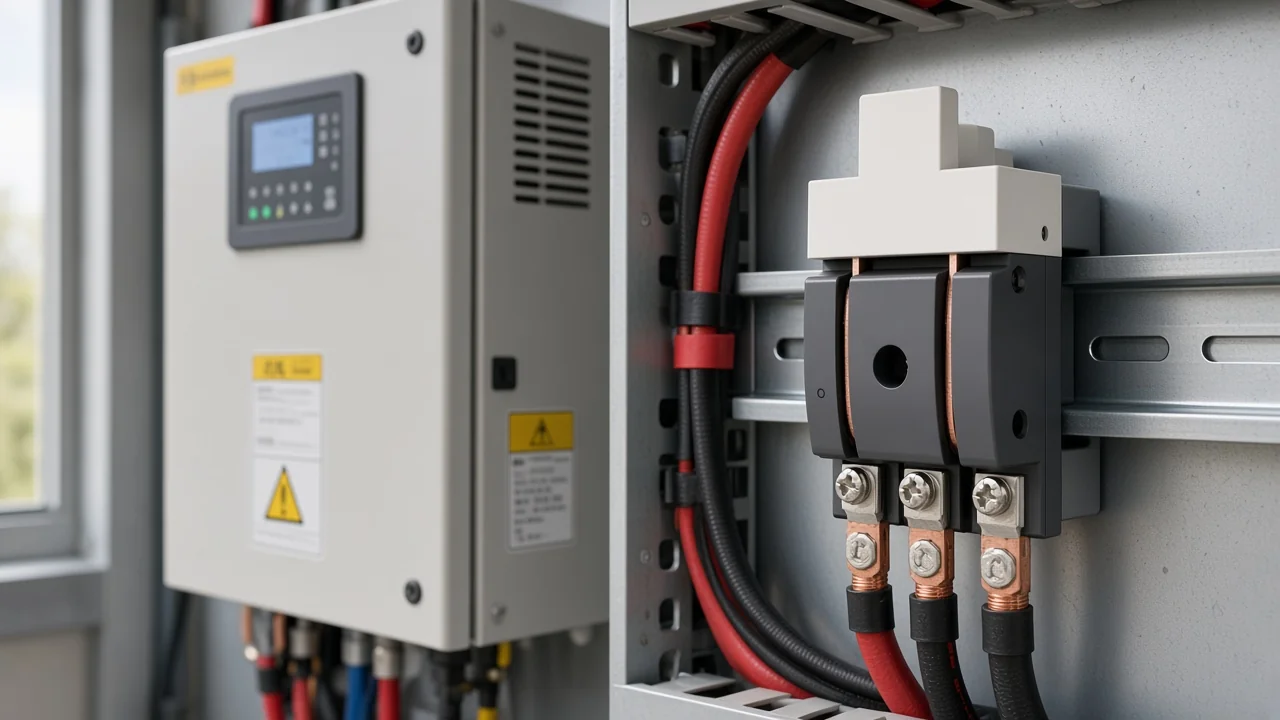
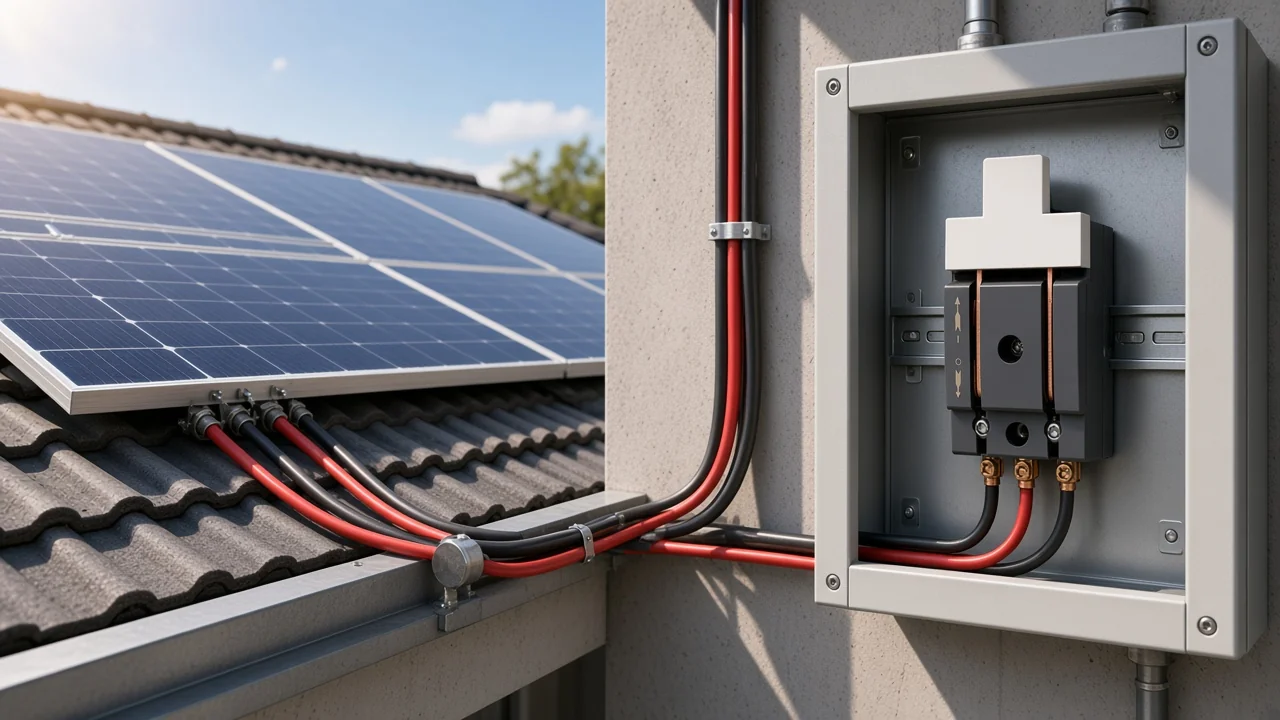
Where a DC Isolator Sits on the Solar-Panel String Path
It sits in series on the PV DC path between the array (or combiner output) and the inverter DC input.
Solar photovoltaic systems convert sunlight into electricity that balance-of-system gear conditions for use. On a typical string path, module strings feed DC conductors toward a combiner or straight into a string inverter. A PV DC isolator — often specified as a solar DC switch-disconnector — creates an intentional open on that path so workers can isolate downstream equipment for service.
Think of the map as: array → optional combiner protection → DC isolator → inverter PV input. An AC disconnect belongs after conversion toward building or utility conductors. Placement details still follow the one-line and local rules, but the buyer question “where does the isolator go?” usually lands on that DC series point.
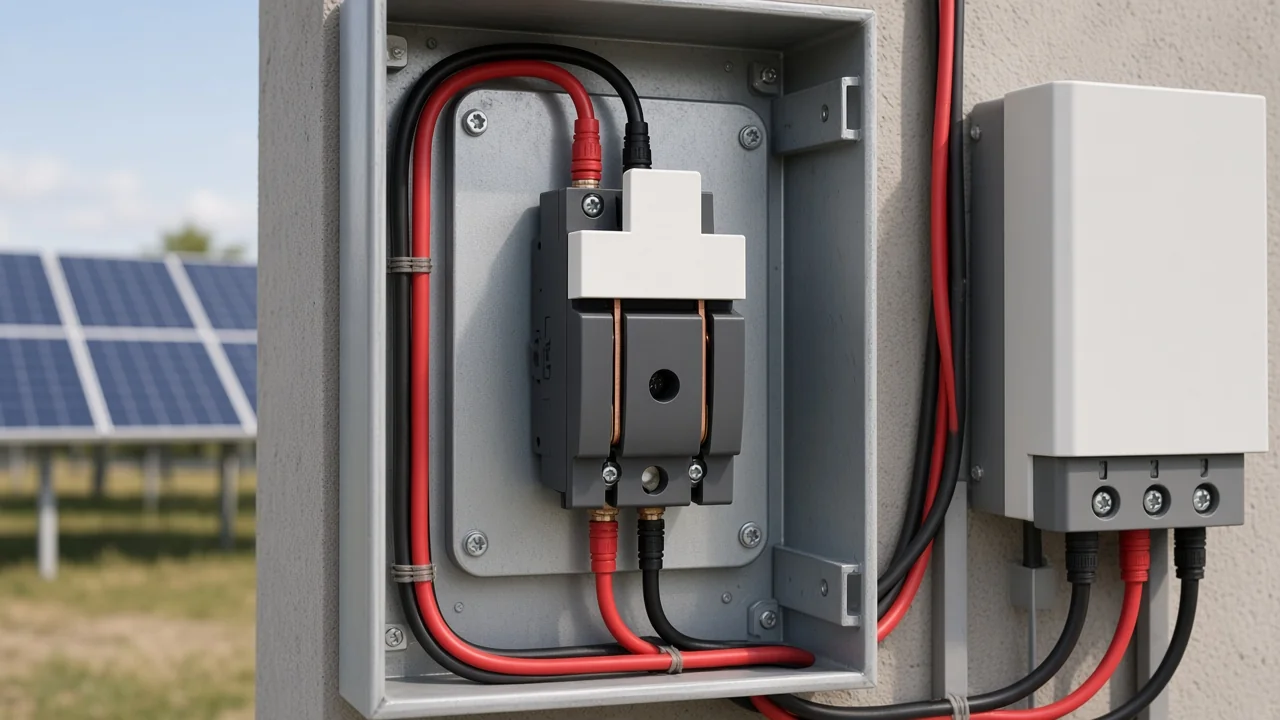
Isolator Job vs DC Breaker Job on the Same Path
The isolator’s job is manual isolation; the breaker’s job is automatic overcurrent interruption — do not swap them by default.
A DC isolator vs DC breaker comparison is a function decision, not a catalog synonym. The isolator is chosen so a person can open a defined path and confirm isolation.
A DC circuit breaker is chosen to detect and interrupt overcurrent or short-circuit current within its interrupting rating. Many combiner and inverter layouts need both functions, whether as two devices or as one product that is explicitly rated for both duties.
| Device | Primary job on the PV DC path | What it does not automatically provide |
|---|---|---|
| DC isolator / switch-disconnector | Manual, intentional isolation for service | Overcurrent or short-circuit clearing unless also rated and accepted for that protection duty |
| DC circuit breaker | Automatic overcurrent interruption within rating | A dedicated maintenance isolation point unless the datasheet and AHJ accept it for that isolation duty |
Forum threads still show buyers mounting AC panel breakers as PV disconnects because the amp number “looks close.” AC-rated hardware must not be assumed suitable for PV DC duty. Read the utilisation category and DC listing for the circuit you are opening.
Tip: Source: Solar Panel Talk thread “PV Disconnect/Breaker”; isolator-vs-breaker education.
Specify an isolator for clear service isolation, and DC-rated overcurrent protection for fault clearing — do not let one shopping label answer both jobs.
String-Inverter and Combiner Use Cases in the Field
Walk string-direct, combiner-output, built-in inverter, and array-side visibility use cases.
String-direct path. One or more series strings run to a charge controller or string inverter. A garage- or wall-mounted DC isolator near that equipment is a common application when the design needs a reachable open on the home-run.
Combiner-output path. Multiple strings land in a Combiner box with string fuses or breakers, then a combined output often passes through a DC isolator before the inverter. The isolator still owns isolation; the fuses or breakers still own string-level or output protection.
Built-in inverter isolator. Some inverters include a compliant DC isolator. That can cover the isolation use case beside the inverter when the equipment and local rules accept it. It does not automatically answer every array-side visibility or multi-string layout.
Array-side visibility use case. When inverters are not in sight of a ground-mount array, plan checkers and owners often still want a DC disconnect at the array. That is a placement use case — still isolation — with outdoor listing and pole-count decisions that follow the one-line.
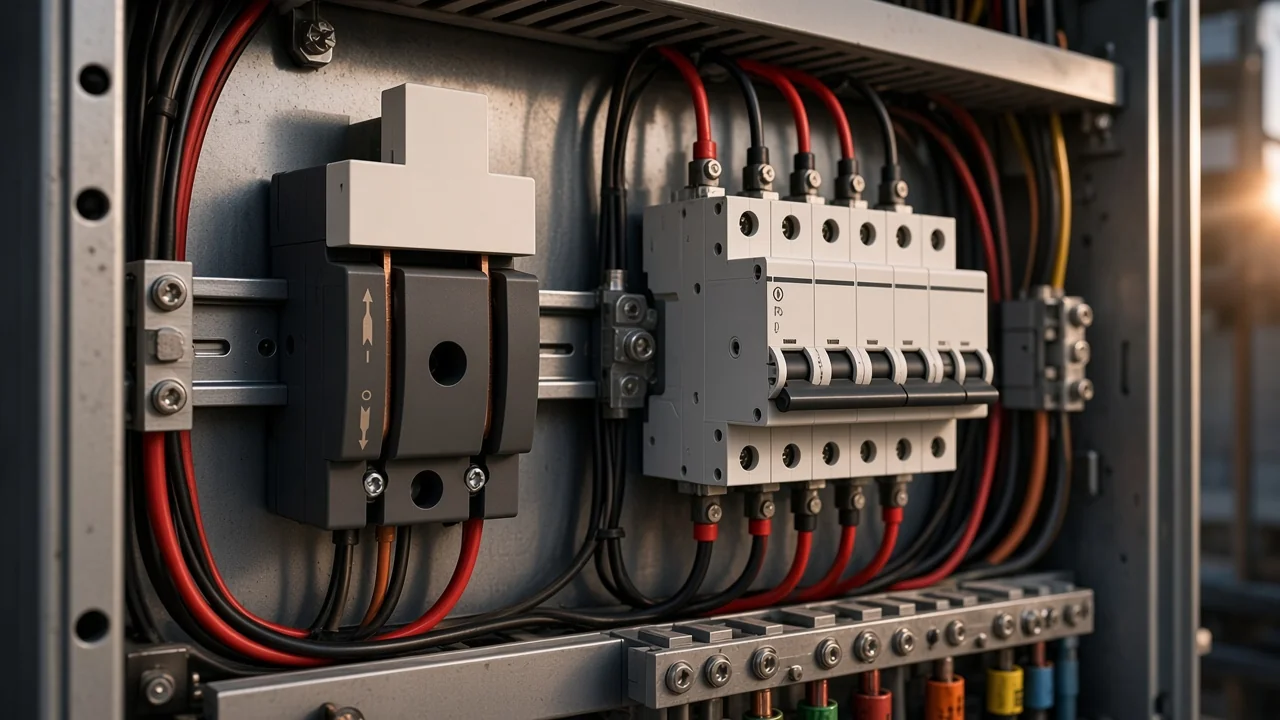
Daylight-Live Arrays: Why the Isolation Use Case Still Matters
Illuminated modules can keep DC conductors live even when the inverter is off.
Turning off AC to an inverter stops conversion, but sunlight on the modules can still energize the PV array / string conductors upstream. Trade education on PV disconnects treats daytime array voltages as a real service hazard. That is why the isolation use case exists even after someone says “the inverter is already shut down.”
Rapid shutdown is related emergency equipment aimed at reducing array-boundary voltage for first responders. It is not the same job as a maintenance DC isolator on a defined service path. Keep both concepts on the project list when the jurisdiction requires them — without treating one label as the other.
Important: Source: IAEI Magazine education on daytime PV hazardous voltages; Solar Panel Talk disconnect-placement discussions.
Do not treat a quiet inverter screen as proof that illuminated string conductors are safe to open by hand. Plan the isolation point, then follow the device’s load-break or no-load rules.
Load-Break vs No-Load Isolation in PV Service Workflows
Match opening practice to the device’s load-break vs no-load duty.
When the service plan expects opening under operating current, specify a load-break DC isolator within its published rating. When another device must reduce current first — for example after an upstream breaker opens — a no-load isolator can create the visible isolation gap afterward.
IEC 60947-3 is the switch-disconnector and disconnector family standard often cited for these products. Utilisation category markings tell you which duty was tested.
If a device is marked for infrequent no-load isolation, do not improvise daytime live switching because the handle is convenient. If the project expects routine load-break opening on illuminated strings, the datasheet must support that duty.
When Yijin HK18 and HD11F Knives Fit This Isolator Use Case
Use AC-20B PV-named knives for protected no-load isolation — not as printed outdoor DC-PV string isolators.
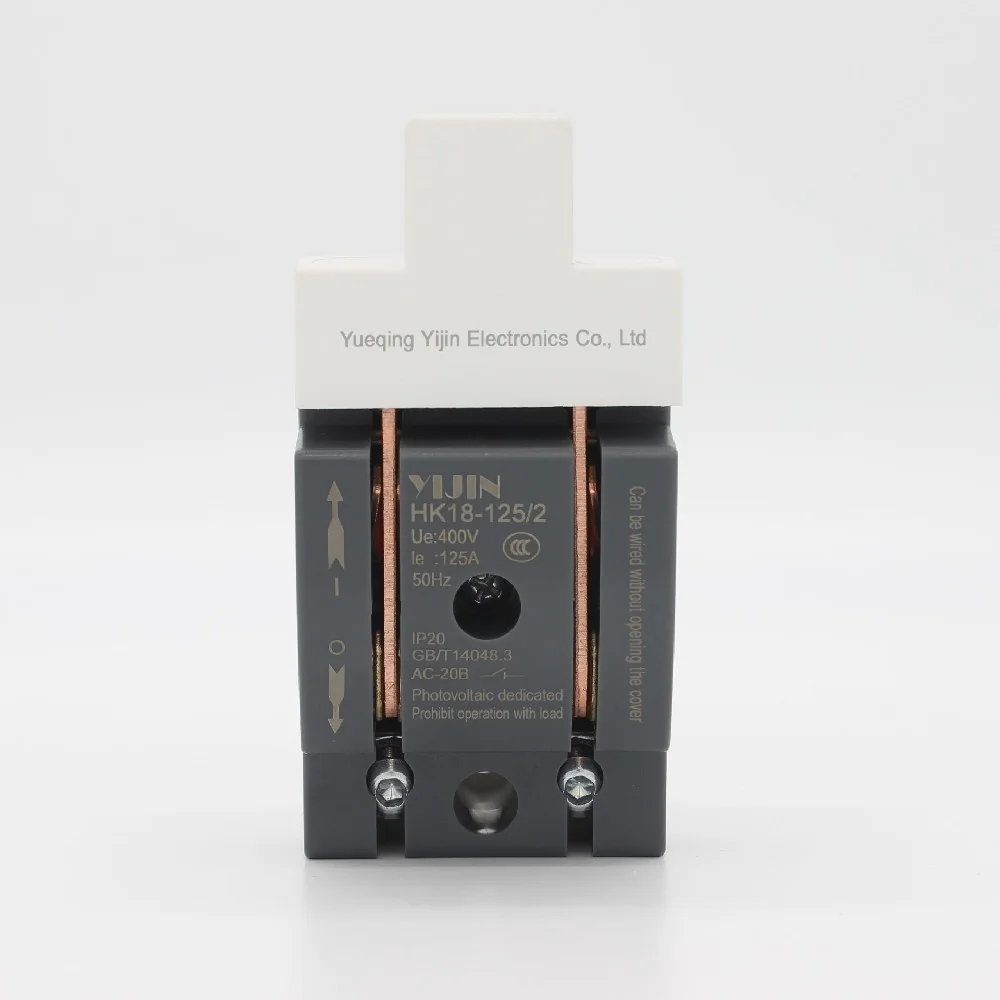
Live Isolating Switch inventory lists six knife SKUs: HK18-125, HK18-160, HK18-250, HK18G-125, the HK18 series page, and HD11F-250. None of those live pages print DC-PV1, DC-PV2, DC-21B, UL Listed, or NEMA outdoor disconnect ratings. “Photovoltaic” in a title does not rewrite the utilisation category printed on the page.
The HK18-125 knife switch for photovoltaic applications is published for AC 50 Hz circuits with rated operational voltage up to 400 V, utilisation category AC-20B, rated impulse withstand 6 kV, and compliance statements for IEC 60947-3 / GB/T14048.3. Working-current options run through 125 A in 2P/3P/4P. Normal working conditions require installation without rain or snow invasion.
The HD11F-250 protective opening knife switch stays in the same AC-20B family at higher current options through 250 A, with rated operational voltage 400 V, rated insulation voltage 1000 V, impulse withstand 8 kV, and the same no rain/snow install note. Operation is described for no-load conditions.
| Expectation buyers bring from SERP | What the live Yijin knife pages print |
|---|---|
| Outdoor DC-PV string isolator with DC-PV / DC-21B style duty | Utilisation category AC-20B on AC ≤400 V circuits |
| Weather-rated rooftop / NEMA outdoor disconnect | Install without rain or snow invasion |
| On-load opening of illuminated string current | Infrequent isolation; HD11F states no-load operation |
| UL Listed PV disconnect language | Not printed on these six SKU pages |
When the one-line needs a listed outdoor DC-PV isolator on illuminated string conductors, specify that class of hardware. When the project needs a protected-bay AC-20B isolation knife adjacent to PV work, review the Isolating Switch category and New Energy solution context at Yijin New Energy.
FAQ
Do I need a DC isolator between solar panels and the inverter?
Often yes for a reachable isolation point on the PV DC path, unless a built-in inverter isolator and local rules already cover that duty. Confirm the one-line and AHJ expectations before omitting an external open.
Where does a DC isolator sit on a PV string path?
Typically in series between the array or Combiner box output and the Inverter DC input. Exact location still follows the drawing and local access rules.
Isolator vs DC breaker — can one replace the other?
Not by default. The isolator owns manual isolation; the DC circuit breaker owns automatic overcurrent interruption. Use both functions when the design needs them.
Why isolate if the inverter is already off?
Illuminated modules can keep array DC conductors live in daylight. Inverter shutdown alone is not proof that the PV array / string path is de-energized.
Can I use an AC isolator on solar DC conductors?
Do not assume AC-rated isolators or breakers are suitable for PV DC duty. Match DC ratings and utilisation category to the circuit.
Load-break or no-load — what changes in service?
Load-break devices may open under rated operating current. No-load devices require current already reduced before opening. Follow the marking on the chosen SKU.
Are Yijin HK18 / HD11F printed as DC-PV outdoor isolators?
No. The six live knife pages print AC-20B and no rain/snow install notes. They do not print DC-PV1, DC-PV2, DC-21B, UL Listed, or NEMA outdoor disconnect ratings.
Does “photovoltaic” in the HK18 title mean UL/NEMA outdoor DC disconnect?
No. Read the utilisation category and install conditions on the product page. Title language does not replace those facts.
References
- How Does Solar Work? — U.S. Department of Energy
- NFPA National Electrical Code development page
- IEC switches, disconnectors, and switch-disconnectors publication
- Disco Madness: Disconnects in PV Systems — IAEI Magazine
- Specifying and installing a DC switch-disconnector for solar PV systems — Professional Electrician / NICEIC
- Combiner box/DC disconnect — Solar Panel Talk
- PV Disconnect/Breaker — Solar Panel Talk
Humanizer audit: PASS
Humanizer second-pass owner: YJ-DRF-AGT-20260920-01
Patterns removed: repeated listing-disclaimer filler; parallel checklist openings; meta-process research language.
Facts preserved: published utilisation category, voltage and impulse values, rain/snow install note, live knife inventory count, and the absence of outdoor DC-PV listing language on those pages.