 Yueqing Yijin Electronics Co., Ltd.




Bathroom Fan Timer Switch Installation for Exhaust Run-On
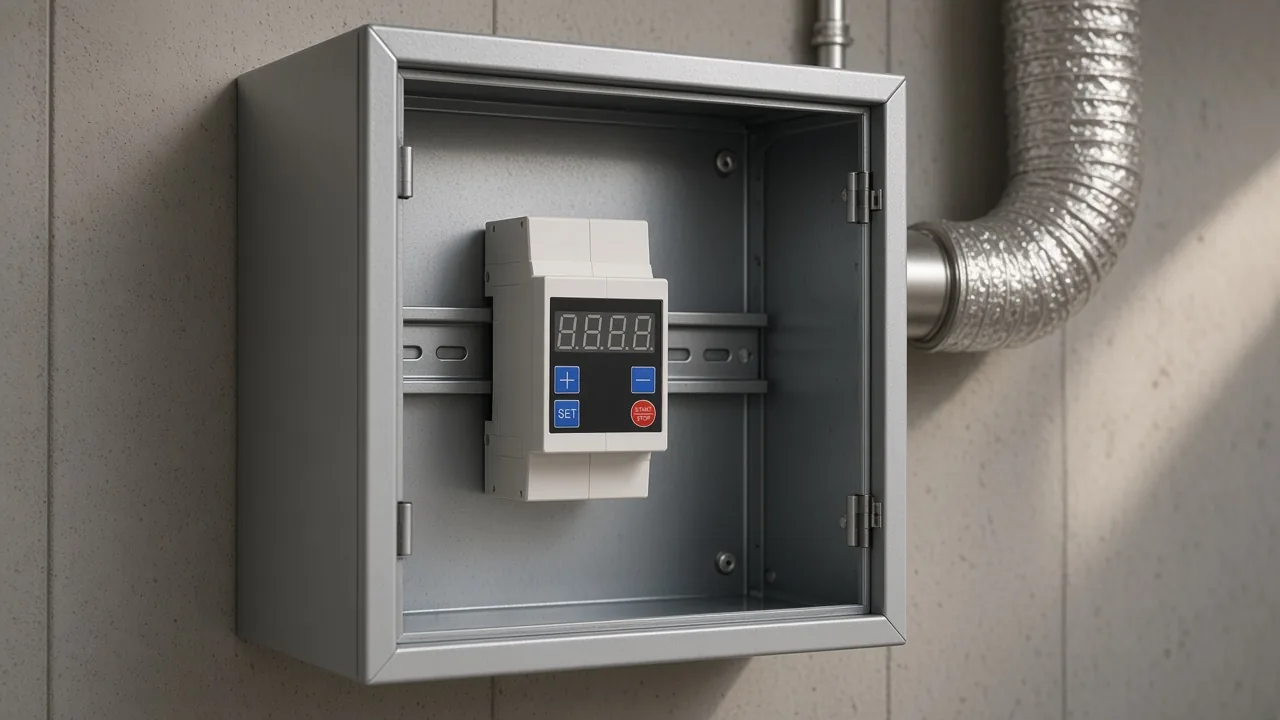
A bathroom fan timer switch installation decides how an exhaust fan keeps running after someone leaves, and where that control is allowed to sit. Shower steam wants a countdown. A fan that must start at the same hour every day wants a weekly program. A DIN-rail countdown release belongs in a dry cabinet, beside the breaker it opens.
The wall-box videos stop at wire colors. This piece stays on the class decision: run-on versus clock, wet wall box versus protected bay, then the live Yijin devices that match only one of those jobs. The timer switch category is the cabinet-device shelf, not a decorator-switch aisle.
When a bathroom exhaust fan needs timed run-on
Time the fan when the job is a finite run after a shower or a toilet visit, not when the only plan is to leave it spinning all afternoon.
A bathroom exhaust fan timer earns its place when people walk away and the air is still wet or still stale. The useful pattern is a start, a limited run, then an open circuit.
Leaving the fan on for the rest of the day is extra air movement with an energy cost. Source control still comes first: squeegee the glass, crack the door, stop the steam at the shower rather than treating the fan as a permanent dryer.
The U.S. Environmental Protection Agency puts source control ahead of extra ventilation for home indoor air, and notes that more outdoor air can raise energy use. A timer is the middle path: enough exhaust to finish the job, then off.
A forgotten switch fails in two directions. One household never starts the fan. Another starts it and never comes back.
A countdown covers the second habit. A humidity sensor covers the first, which is a different device class and shows up later. Copying a lighting schedule onto the fan does not fix either habit.
From the field: Installers comparing in-wall bath timers keep coming back to the box, not the brand. Electronic units usually need a neutral sitting in that box. If the whites are missing, the fallback they name is a spring-wound mechanical timer, not another electronics board (source: Garage Journal in-wall bathroom fan timer discussion).
Countdown run-on versus a weekly on/off program
Shower moisture wants a countdown. A weekly program fits a fan that must follow the clock.
A countdown timer starts from a duration you set and runs toward zero. You can stop it early.
A time switch is the other object: a timer that operates an electric switch at clock events, often the same events every day or every week. Those two mechanisms look alike on a shelf labeled “timer” and they fail different jobs.
Press a countdown timer switch after a shower and the fan keeps clearing the room for that stretch, then drops out. You do not need to remember the off.
You also do not get a Monday-through-Friday morning start unless the device is actually a programmer. People who only want odor control after a toilet visit use the same countdown class, often with a shorter press.
People who want a fan to come on at the same minute every weekday, with no one in the room, need the weekly clock.
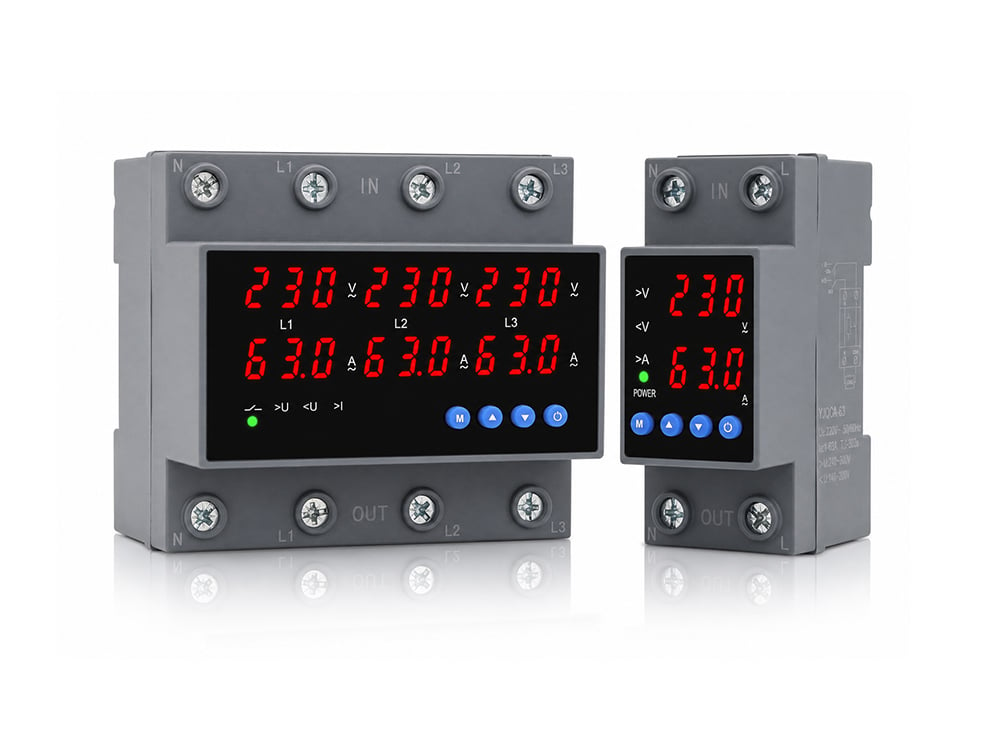
KG316T is built for control circuits at AC 50/60Hz and 380V and below, with a motor load of 1.2KW. That time control switch can be set from 1 minute to 168 hours on a daily or weekly cycle.
It is a programmer for predetermined on and off, including household appliances KG316T names, and the enclosure is IP50. That rating is the cabinet story.
The shower wall comes next. If the job really is a seven-day clock, the weekly programmable article is the place for that program screen, not this exhaust-fan decision.
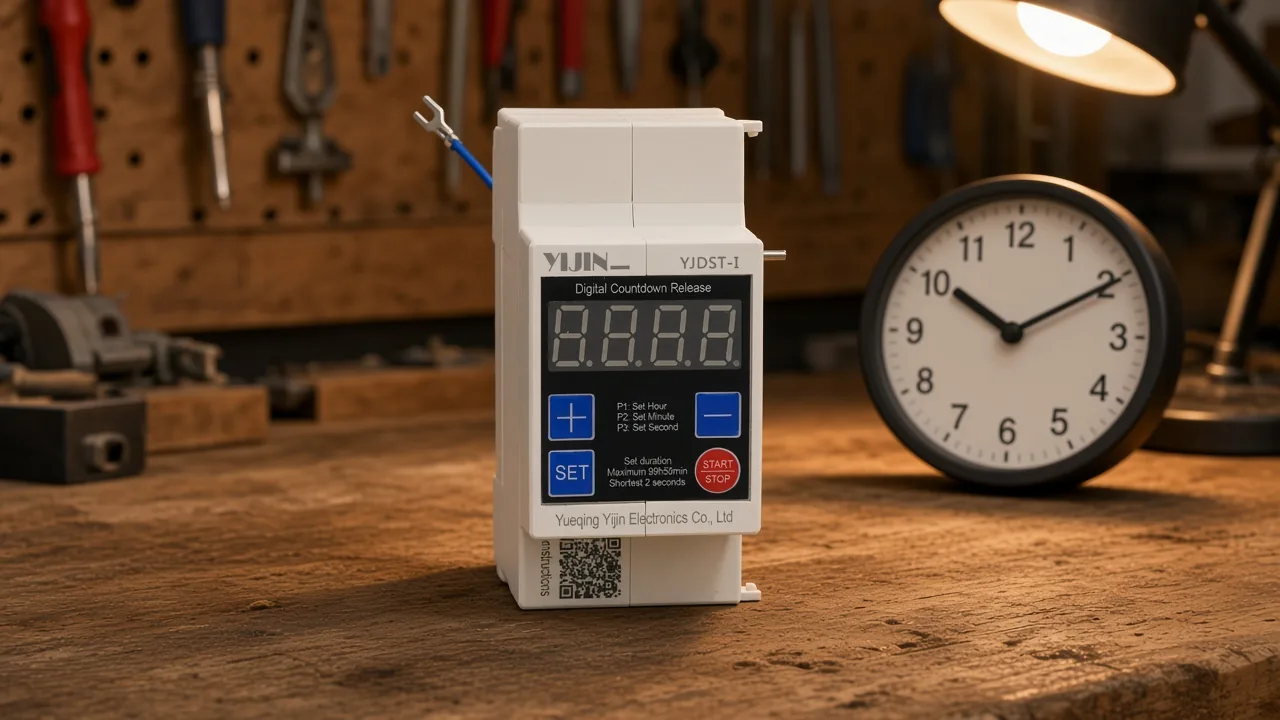
| Job in the room | Control that matches | Why the other class fails |
|---|---|---|
| Clear steam or odor after someone leaves | countdown timer switch | A weekly clock does not know a shower just ended |
| Start and stop at the same clock times | time switch, daily or weekly | A countdown has no weekday calendar |
| Start the fan when moisture rises | humidity sensor fan switch | A button timer still depends on someone pressing it |
A wet-location wall box is a different job from a protected bay
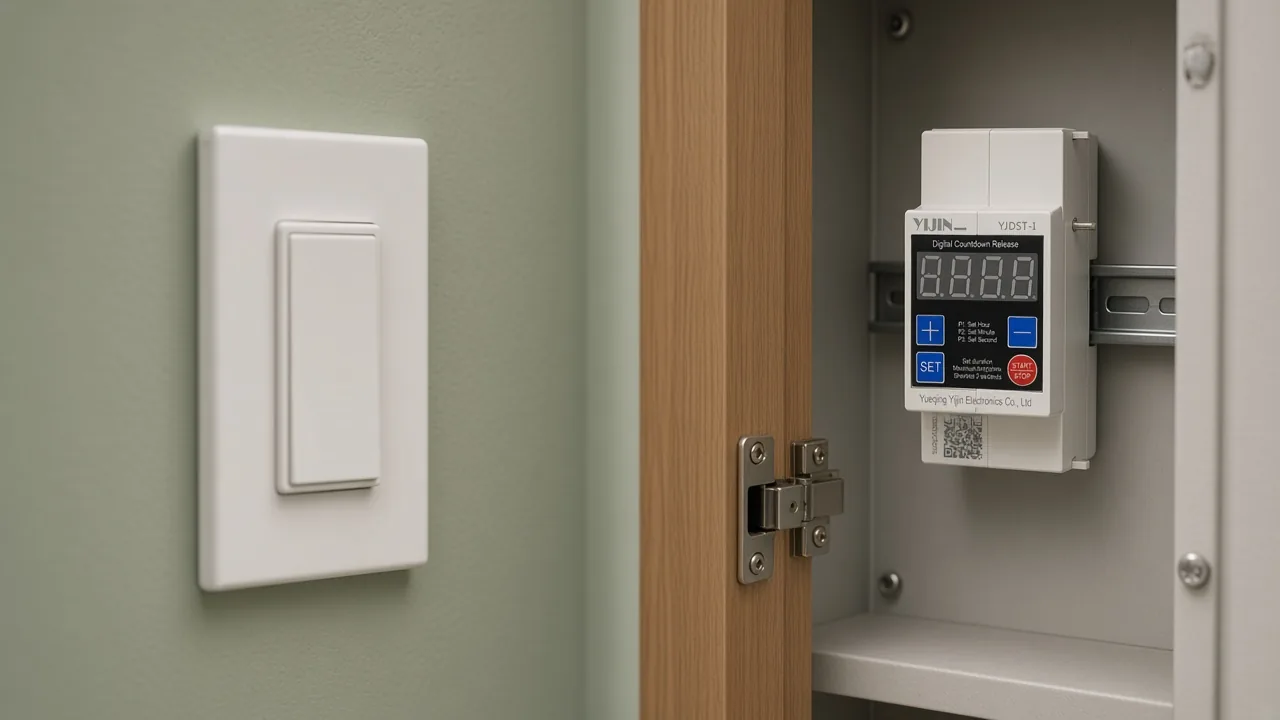
The device in the install videos lives in the wall box. A Yijin countdown release lives on a DIN rail in a protected board.
Search results for this phrase are almost all decorator swaps: plate off, tester on, black to the incoming hot, red toward the fan, white into the neutral bundle, green to ground, then a countdown test. That sequence describes a wall countdown built to occupy a switch box.
It describes a location as much as a wiring diagram. The box is in or beside the bathroom. Moisture, steam, and a faceplate someone touches with wet hands are part of that job.
YJDST-I, YJDST-II, and KG316T do not describe that faceplate. YJDST-I and YJDST-II are digital countdown releases whose installation method is a DIN standard rail.
Their working place must not be eroded by rain or snow. KG316T’s enclosure is IP50, and its page also keeps rain and snow off the device.
A buyer who only watched a wall-box video cannot land those SKUs behind a bathroom plate and call the job finished. Those ratings describe a cabinet.
The practical split is the switching point. If the fan’s hot is switched in the bathroom wall, the control that belongs there is a wall-box class made for that box.
When the fan circuit already opens and closes at a breaker in a dry board, a rail countdown can sit at that board and open the breaker after a set run. Same fan, different place, different product.
A lighting pre-check is a neighboring decision, not this one. A timer switch for lights is about lamp loads and a lighting box. An exhaust motor, a wet room, and a run-on after use change the class even when the word “timer” is shared.
What the wall box has to offer a countdown fan timer
An electronic wall countdown usually needs a real neutral, labeled line and load, and a motor rating above the fan.
Open the plate before you buy the face. Two black conductors on the old switch, plus a bundle of white conductors nutted in the back and not landed on the switch, is the usual sign of a neutral you can pigtail.
A white conductor already on a switch screw is often a re-identified hot in an old switch loop. Color is a clue. The connection is the test.
Community threads keep repeating the same stall: the new timer has a white lead, and the box does not have a neutral on the same circuit.
Line and load are the other stall. On the common wall countdown the search results describe, the red lead is the one that continues to the fan, and the black lead is the incoming hot.
A two-hot timer body still needs its own labels. Guessing from insulation color is how a light in a shared box goes dark, because someone treated a spare white as an extra neutral and pulled it out of the fan’s return.
Mark the fan conductor before the old switch comes off. A shared vanity light in the same gang is a second circuit path, not a free spare.
Motor rating is the third check, and it is easy to skip because a fan feels small. The switch has to be rated for a motor load above that fan.
A lighting-only timer can sing, chatter, or quit when it sees the motor. Guests also have to understand the face.
A mystery knob gets left alone. A large button that repeats the last duration gets used.
Shared fans and humidity sensors change the control class
A humidity sensor or a shared attic fan is a different control class from a single wall countdown.
Some exhaust fans already watch the room. Their manual pair can be a dry contact, a low-voltage signal that tells the fan to run, not a 120-volt switched hot.
Landing a powered wall timer on that pair puts line voltage where the fan expected a contact. The symptom in those threads is a fan that will not follow the new switch, or a control pair that was never meant to see mains.
If the fan’s own sheet calls the extra conductors a control circuit, the wall device has to be a dry contact or a plain switch, and the countdown may already live in the fan.
A humidity sensor fan switch solves the other failure: nobody pressed anything. It starts from moisture, then often holds a run-on of its own.
In a kids’ bath the sensor earns its keep. The same sensor is a poor match when the complaint is odor and the humidity never rises.
Parallel timers are a third trap. One attic fan serving three baths, with an electronic countdown in each room, can buzz or refuse to start even after a simple switch mock-up passed.
Feedback between the electronics is the failure those installers describe. Mechanical timers, or one control at the fan, avoid that fight.
Three powered countdowns on one motor tend to argue with each other. Keep a single control at the fan when the baths share the motor.
Where a Yijin countdown release fits this fan job
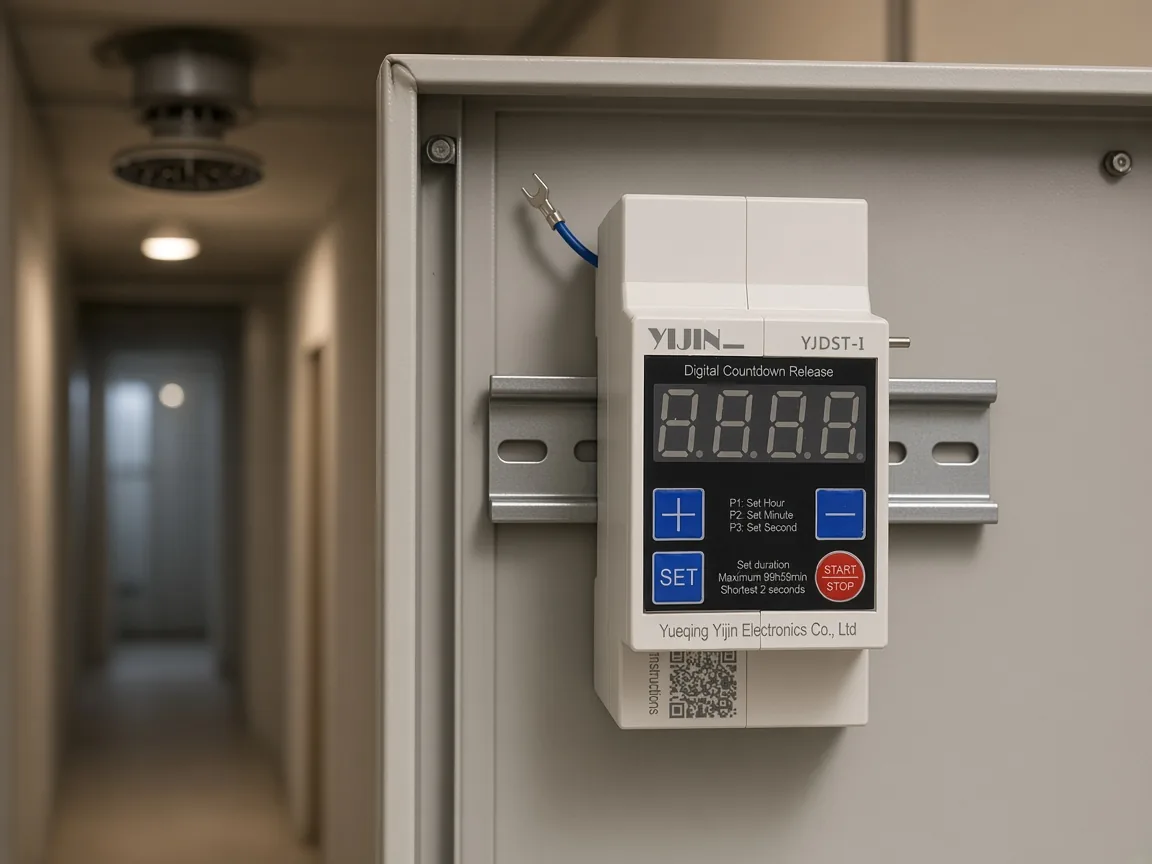
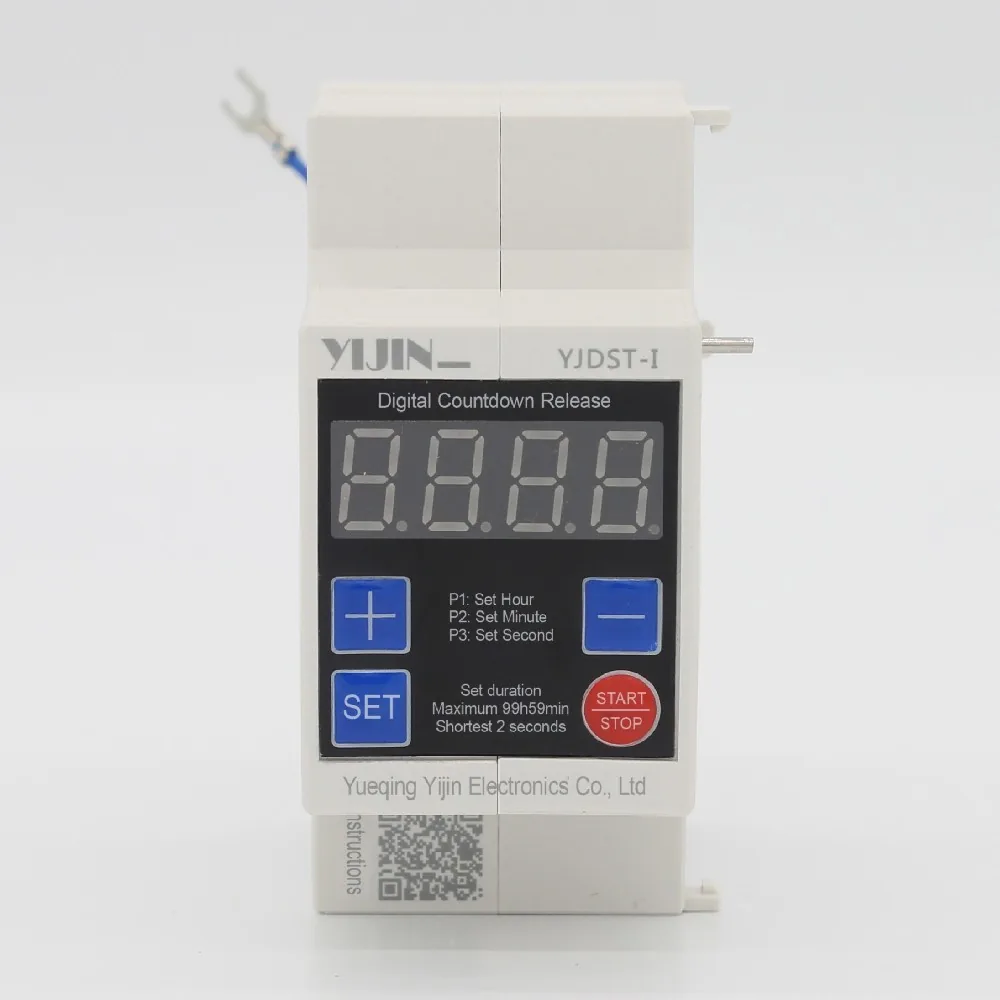
YJDST-I fits a protected-bay countdown that opens a small breaker. It does not occupy a bathroom wall box.
The bathroom job that actually resembles this product is simple: close a switch, let the fan run, then open the circuit after a set duration. The YJDST-I digital countdown release is that mechanism on a rail.
Timing starts after the switch is closed. The purpose line on the page is countdown power-off of small circuit breakers.
Look at the named match: Zhengtai NXB-63, at a width of two workstations. YJDST-II is the same countdown class, matched instead to Delixi DZ47s.
Neither page offers a decorator plate, a wet-location wall listing, or a red lead meant for a US switch box.
The YJDST-I digital countdown release is rated AC110V to AC240V at 50Hz/60Hz and mounts on a DIN standard rail. Its countdown window runs from 2 seconds to 99 hours, 59 minutes, and 59 seconds, and the housing is 36 millimeters wide.
Those figures describe a rail device that can hold a shower-length run or a much longer pump run. They do not move the device into the bathroom plate.
Use it when the fan circuit is already switched at a protected board and the breaker family matches the published pairing. Use a wall countdown when the switching point is the plate beside the mirror.
KG316T stays the clock option in the same timer switch family. It programs daily or weekly events and does not pretend to be a press-and-leave shower button.
The compact KG316TG36mm sibling is a modular 220V time control switch with an IP20 enclosure. Same cabinet class, smaller body, still the wrong object for a wet wall box.
If the purchase conversation is still which timer family, start at the category page and only then open the countdown release.
| Device | Where the page puts it | Timing behavior | Fit beside a shower plate |
|---|---|---|---|
| Wall countdown the videos install | Switch box | Duration toward zero | The class those installs use |
| YJDST-I digital countdown release | DIN standard rail | Countdown, then breaker open | Cabinet job only |
| YJDST-II digital countdown release | DIN standard rail | Same countdown class, different breaker match | Cabinet job only |
| KG316T time control switch | Control circuit, IP50 enclosure | Daily or weekly clock events | Cabinet job only |
FAQ
How do I wire a bathroom fan timer switch?
On the wall countdown the search results describe, the black lead takes the incoming hot, the red lead continues to the fan, the white lead joins the neutral bundle, and the green lead joins the ground. A rail countdown release is wired at the breaker in a protected board, using that model’s diagram, and it does not inherit those wall-box colors.
Should a bathroom fan be on a timer switch?
Yes when the failure is a fan left running, or a fan that should stop after a finite clear-out. No when nobody remembers to start it and moisture is the trigger — that job wants a humidity sensor. A weekly clock is for a fan that must follow the hour, not for a shower that just ended.
How do I know which wire to hook the red wire to on a timer switch?
On the common wall countdown, the red lead is the switched hot that continues to the fan. Confirm that against the sheet in the box you actually bought. If the timer has two hots and no color legend you trust, stop and mark the old fan conductor before you disconnect it.
Can you put a bathroom fan on a timer?
Yes, if the timer is rated for that motor and the box can feed the connections the timer expects. A lighting-only timer and a box with no neutral are the two stalls that turn a short swap into a callback.
Can I leave my bathroom exhaust fan on all the time?
You can, and some households do, but it is extra ventilation with an energy cost. A countdown gives the clear-out and then opens the circuit. Source control at the shower still matters more than a fan that never stops.
What kind of switch do I need for a bathroom exhaust fan?
Match the control to the failure and the place. A wall countdown handles a finite run after use.
A spring-wound mechanical timer fits a box with no neutral. A humidity sensor fits people who forget to start the fan.
A DIN-rail countdown release fits only when the switching point is a protected breaker.
Does a no-neutral box still take an electronic countdown timer?
Usually no. Electronic wall timers in the trade discussions expect a neutral in that box.
A spring-wound mechanical timer is the fallback those installers name when the whites are not there. Do not borrow a neutral from a neighboring circuit just to light the electronics.
References
- Timer — countdown definition and what a time switch does.
- Improving Indoor Air Quality — why extra ventilation is not the first move, and why it has an energy cost.
- What’s a good in-wall timer for bathroom fan? — neutral in the box, and a spring-wound fallback when it is missing.